 ProMapRanker
Best Listing Management Software for CPR Training Centers in 2026

All-in-one listing and GBP management · Pricing starts at: See website
Direct answer
Advice Local is my top pick for CPR training centers because it handles listing distribution, data cleanup and Google Business Profile work in one place, which suits businesses that run classes from several training rooms or partner sites. It has no free plan stated, so check its pricing page. Synup is a solid alternative for multi-location scheduling-heavy setups, and GatherUp fits centers that want to turn course completions into review requests.
I put this comparison together from vendor documentation and public sources rather than hands-on testing. I looked at what each tool says it does for listings, Google Business Profile management, review requests and call tracking, then matched those features to how CPR training centers actually get students. Where a tool's documentation was thin on a feature, I say so.
Key takeaways
- CPR training centers usually have one main training site plus satellite classrooms, so listing accuracy across every address matters more than raw listing volume.
- Class schedules, certification types and walk-in availability are the details students check before they call, so keep those fields consistent everywhere.
- Review requests work best when they go out right after a student passes a course, not weeks later.
- Google Business Profile categories and services need to reflect CPR, first aid and BLS training, not generic "school" labels.
- Pick software that syncs hours and location data automatically; manual edits across many directories go stale fast.
Quick comparison
| Pick | Great for | Pricing starts at | Free tier | |
|---|---|---|---|---|
| Advice Local | All-in-one listing and GBP management | See website | Not stated | Visit |
 Synup | Multi-location CPR centers | See website | Not stated | Visit |
 GatherUp | Review requests after course completion | See website | Free trial | Visit |
 SE Ranking | Local rank tracking around training sites | See website | Free trial | Visit |
 Localo | Single-location GBP management | See website | Free trial | Visit |
 Signpost | Review and customer messaging automation | See website | Not stated | Visit |
 CallTrackingMetrics | Tracking calls from class inquiries | See website | Free trial | Visit |
The best listing management software for CPR training centers compared
Advice Local is a listing management platform built around getting business data consistent across directories and data aggregators. For a CPR training center, that means the same name, address, phone number and hours showing up whether a student finds you through Google, Apple Maps or a directory. It fits centers with one main training room and a couple of satellite locations, and it also suits single-site businesses that want the directory work handled without spreadsheets.
The workflow that matters here is the audit-then-fix loop. You feed in your location data, the tool checks where it disagrees with existing listings, and you approve corrections. For a center that runs weekday evening classes and weekend skills sessions, keeping hours consistent across directories stops students from showing up to a locked door. You can also manage Google Business Profile details like categories, services and photos from the same place.
The main limit is that there is no free plan stated, so you need to talk to sales before you know the cost. If you only have one location and just want to fix your Google profile, a lighter tool may be enough.
- Listing distribution across many directories
- Google Business Profile management in the same dashboard
- data audit tools to find inconsistent listings
- No free plan stated
- pricing needs a sales conversation
Synup is a location marketing platform that combines listing management, review monitoring and local pages. It suits CPR training centers that operate from several addresses, such as a main training facility plus rooms rented inside gyms, community centers or partner clinics. When each site has its own hours and contact number, a single source of truth saves a lot of correction work.
In practice you would use Synup to push each location's details to directories and keep them aligned, then watch reviews per location. That matters when a student reviews the "downtown" branch and you need to know which site needs attention. Local pages can also give each training location its own web page with class schedule and directions.
The trade-off is setup time. Loading many locations with different hours takes planning, and there is no free plan stated. A single-room center with one address will find it heavier than needed.
- Location pages and listing sync in one system
- review monitoring alongside listings
- built for businesses with several addresses
- More setup work for large location lists
- no free plan stated
GatherUp is a customer experience and review management tool. For a CPR training center, the natural use is sending a review request to students shortly after they finish a course. People who just passed a certification class are usually willing to leave feedback, and that feedback helps the next student decide where to book.
You can set up campaigns that go out after a class ends, route happy students toward public review sites and catch unhappy ones privately first. That last part matters in training: a student who failed a skills check may be frustrated, and a private reply is better than a public argument. Review monitoring keeps every mention in one inbox.
The limit is scope. GatherUp does not replace a listing distribution platform, so you would pair it with something like Advice Local if directory accuracy is also a problem. There is a free trial, but check current terms on the site.
- Automated review request campaigns
- review monitoring across sites
- simple customer feedback flow
- Not a full listing distribution tool
- review-focused rather than citation-focused
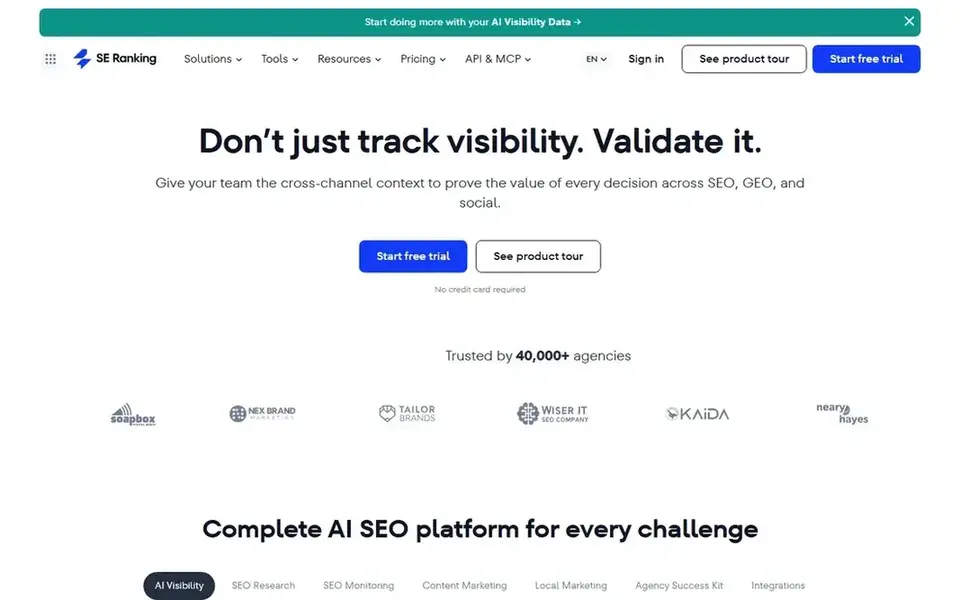
SE Ranking is an SEO platform with local rank tracking built in. For a CPR center, the useful part is seeing where you appear in map results for searches like "CPR class near me" or "BLS certification" across a neighborhood rather than from one fixed point. If your training room sits on the edge of a city, that difference is real.
You can track rankings for several locations and compare against other training providers in the area. The wider toolkit helps if you also run a website with class pages and blog content about certification requirements. It gives you a way to check whether those pages actually move local visibility.
The limit is that listing distribution is not what SE Ranking is built for. If your main problem is wrong addresses on directories, this is the wrong starting point. There is a free trial, and plan limits decide how many keywords and locations you can track.
- Local rank tracking by grid or area
- competitor visibility checks
- broader SEO toolkit alongside local features
- Listing management is not the core focus
- plan limits apply to tracked keywords
Localo is a Google Business Profile management tool aimed at small local businesses. A single-site CPR training center with one training room and a small admin team can use it to keep profile details current, publish updates about new class dates and watch reviews without opening several browser tabs.
The practical value is in the profile itself. You can adjust categories and services so the profile reflects CPR, first aid and BLS training rather than a vague education label, and you can post about upcoming sessions. For a center that fills classes through local search, that profile is often the first thing a student sees.
The limit is breadth. Localo does not push data to as many directories as a dedicated listing platform, so if citation consistency across dozens of sites is your goal, look elsewhere. There is a free trial to check the fit.
- Google Business Profile focused workflow
- simple interface for small teams
- review and post management in one place
- Fewer directory partners than larger suites
- not aimed at large multi-location chains
Signpost is a customer communication and review automation platform. CPR training centers have a natural repeat cycle: a student takes a basic course, comes back for a renewal, and may bring coworkers for a group session. Signpost's value is keeping that contact warm and asking for reviews at the right moment.
You would use it to send review requests after a class, follow up on renewals and keep messages consistent across staff. For a center that runs group bookings for workplaces, having a record of who was contacted and when helps avoid duplicate messages. Review monitoring keeps feedback visible.
The limits are pricing and scope. Signpost is quote-based, so you need to ask, and it does not handle directory listings. If citation cleanup is your main problem, this is a companion tool rather than a fix.
- Automated review requests
- customer communication in one place
- works for service businesses with repeat contact
- Quote-based pricing
- not a citation distribution tool
CallTrackingMetrics is a call tracking and contact center platform. CPR training centers get a lot of phone inquiries, especially from people who want to know whether a course counts for their employer or whether a skills session is available this week. Tracking which source produced those calls tells you whether your listings, your website or a directory is doing the work.
You can assign different numbers to different channels and see which one drives bookings. That helps when you are deciding whether to invest more in directory listings or in your own class pages. Call recording and routing can also send after-hours inquiries to the right person.
The limit is obvious: this is not listing management. It answers a different question, about where calls come from, and it should sit alongside a listing tool rather than replace one. There is a free trial to test the setup.
- Call attribution by source
- recording and routing options
- works with forms and chat as well as calls
- Not a listing management tool
- setup requires planning
How I chose
I built this list from vendor documentation and public sources, not from hands-on tests. I read what each vendor says about listing distribution, Google Business Profile management, review requests and call tracking, then checked whether those features map to how a CPR training center gets students: local search, phone inquiries, referrals from employers and repeat renewals. Tools that only do one of those jobs are included where that one job is the real bottleneck.
I also weighed limits. A single-room center does not need an enterprise location platform, and a center with five satellite classrooms should not rely on manual edits. Where pricing is quote-based or a free plan is not stated, I say so rather than guess. No vendor paid for placement, and I did not include ProMapRanker. The goal is a shortlist you can evaluate against your own site count, class volume and admin capacity.
What to check before you buy
- Count your real locations first, including any training rooms you rent inside gyms or community centers, because pricing and setup scale with location count.
- Confirm the tool can store and sync class-specific details such as certification types, renewal windows and walk-in availability, not just a generic business category.
- Check whether Google Business Profile management is included or sold separately, since that profile drives most local discovery for training centers.
- Ask how review requests are timed and whether you can trigger them after a course ends rather than on a fixed schedule.
- Verify that hours can differ per location and per season, because evening and weekend class schedules change more often than a standard retail week.
- Read the cancellation and data-export terms so you are not locked in if you change platforms.
Frequently asked questions
What is listing management software?
It is software that stores your business name, address, phone number, hours and other details in one place and pushes them to directories, data aggregators and maps platforms. For a CPR training center, the point is that a student searching for a class sees the same address and phone number everywhere, which reduces wrong turns and missed calls.
Do I need listing software if I only have one training location?
Not always. If your Google Business Profile is accurate and you rarely find wrong details on directories, manual fixes may be enough. Listing software earns its place when you have satellite classrooms, frequent schedule changes or several staff members editing details. Start with a profile audit before paying for a platform.
How do I get more reviews for my CPR classes?
Ask students right after they complete a course, when the experience is fresh. Use a review request tool to send a short message with a direct link, and reply to every review. Do not offer incentives for reviews or filter out unhappy students; that breaks Google's guidelines. A steady flow of honest reviews beats a burst of collected ones.
Can listing software help with group bookings from employers?
Indirectly. Accurate listings and a complete Google Business Profile make it easier for a workplace safety coordinator to find you and confirm you offer the right certification. Some tools also manage review and customer messaging, which helps when you follow up on renewals. For group sales, your website and phone handling still do most of the work.
Should I track calls as well as listings?
If most of your inquiries come by phone, yes. Call tracking shows which listings, pages or directories produce bookings, so you can put effort where it pays. It is a separate tool from listing management, so budget for it only after your listings and Google profile are clean and consistent.
Sources
See where you really rank - block by block
ProMapRanker scans Google Maps across a grid of your service area. Simple monthly plans from $19, white-label on every plan.
Start freeBrowse all guides
← Best Listing Management Software for Candy Stores in 2026Best Listing Management Software for Kitchen Cabinet Stores (2026) →
 best listing management software for board game cafes
Best Listing Management Software for Board Game Cafes in 2026
A practical guide to listing management software for board game cafes, covering Google Business Profile, citations, reviews and local rank tracking.
Read → best listing management software for barre studios
Best Listing Management Software for Barre Studios in 2026
A practical guide to the best listing management software for barre studios in 2026, comparing tools for Google Business Profile, citations and reviews.
Read → best google business profile management software for boxing gyms
Best Google Business Profile Software for Boxing Gyms in 2026
A guide to the best Google Business Profile management software for boxing gyms in 2026, covering listings, reviews, rank tracking and call tracking.
Read → local seo ranking report tool
Local SEO Ranking Report Tool: Building Reports Clients Actually Read
Choose a local SEO ranking report tool that produces clear, branded reports your clients understand and value.
Read → how to optimize gbp for local seo
How to Optimize GBP for Local SEO: The Field-by-Field Guide
A field-by-field guide to optimizing your GBP specifically for local SEO and map pack visibility.
Read → local seo for hvac
Local SEO for HVAC Companies: Heat Up Your Lead Flow
Local SEO for HVAC companies to capture seasonal demand and rank across your service area.
Read →More in Local SEO & Google Maps · All guides A to Z by date · Latest guides