 ProMapRanker
Best Listing Management Software for Bookstores in 2026
Direct answer
Moz Local is my first pick for bookstores because it pushes your name, address, phone number and store hours to the main data aggregators and directories that feed store-finder pages, which matters when a customer is deciding which branch to visit. Pricing is quote-based, so check its pricing page. Synup suits shops that want location pages and listings in one place, and BrightLocal fits owners who also want citation building and review help.
I put this comparison together from vendor documentation and public sources, and I did not run hands-on tests. I looked at how each tool handles the details a bookstore deals with: store hours, holiday closures, author events, multiple branches and review requests. Where a tool's public material was thin, I say so.
Key takeaways
- A bookstore's hours, holiday closures and event details change often, so pick software that lets you edit listings quickly across many directories.
- Data aggregators matter for bookstores because many "bookstore near me" results and map apps pull core store data from them.
- Google Business Profile is where most walk-in searches start, so any listing tool you choose should sync cleanly with it.
- Review requests sent after a sale or an event help a shop build trust without breaking Google's review rules.
- Multi-branch chains need location-level control, while a single shop can often get by with a lighter plan.
Quick comparison
| Pick | Great for | Pricing starts at | Free tier | |
|---|---|---|---|---|
 Moz Local | Directory and aggregator accuracy | See website | Not stated | Visit |
 Synup | Listings plus local landing pages | See website | Not stated | Visit |
 BrightLocal | Citations, audits and review tools | See website | Not stated | Visit |
 Whitespark | Careful citation building | See website | Not stated | Visit |
 Yext | Large multi-location bookstore chains | See website | Not stated | Visit |
 Local Falcon | Checking map visibility nearby | See website | Not stated | Visit |
 CallRail | Tracking calls from listings and ads | See website | Not stated | Visit |
The best listing management software for bookstores compared
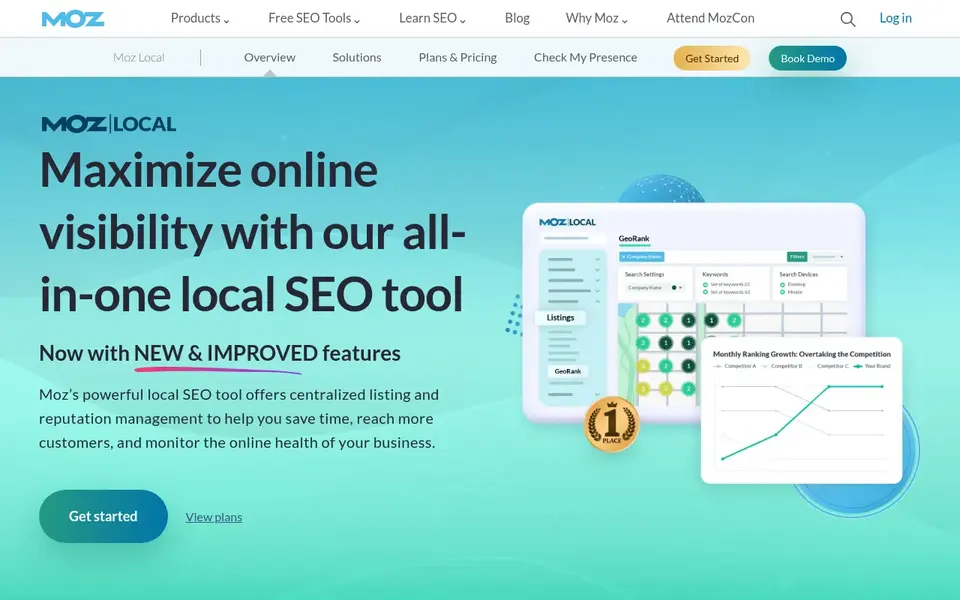
Moz Local is a listings tool built around getting your store name, address, phone number and hours consistent across the data aggregators and directories that many map apps and store-finder pages rely on. For a bookstore, that consistency is what stops a customer from turning up on a Sunday when your listing still says you close at 5pm on Saturdays.
The workflow suits an owner or a small agency. You enter your store details once, connect your Google Business Profile, and the tool checks where your data appears and flags mismatches. When you change holiday hours or add a second branch, you update the source record rather than editing each directory by hand.
The limits are on the review and social side. If you want to send review requests after every sale or run social posts from the same dashboard, you will need another tool. A single independent bookshop with a tight budget may also find it more than it needs.
- Pushes core store data to major aggregators
- checks listing accuracy across directories
- simple dashboard for a single shop
- Lighter on review and social features
- not built for large multi-location chains
Synup is a local marketing platform that manages listings, location pages and reviews in one place. It fits a bookstore with more than one branch, or a shop that wants a dedicated page for each section of the business, such as the main store and an events space.
For listings work, you connect your profiles and the tool keeps store details aligned across directories. You can build a location page that carries your hours, address and a short description, which helps when someone searches for a specific branch. Review monitoring lets you see new feedback and reply from the same screen.
The main limit is setup effort. A single shop with one address may not need the location-page machinery, and the platform is priced by quote, so you have to ask before you can compare it with lighter tools.
- Combines listings with location pages
- handles multiple branches
- includes review monitoring
- Setup takes time for one shop
- pricing needs a quote
BrightLocal is a local SEO toolkit with citation building, listing audits and review tools. It suits a bookstore owner who wants to check how the shop appears across directories and fix gaps, or an agency running local SEO for several shops.
The citation work is the part that matters most here. You can see where your store is listed, spot wrong hours or old addresses, and submit corrections. Review request tools help you ask customers for feedback after a purchase or an author event, as long as you follow Google's rules and never filter or buy reviews.
One limitation is that some pieces are sold separately, and the dashboard covers a lot of ground. A shop that only wants listings synced may find it broader than needed.
- Citation building and audit tools in one place
- review request features
- useful reporting for agencies
- Some features are add-ons
- interface has a lot to learn
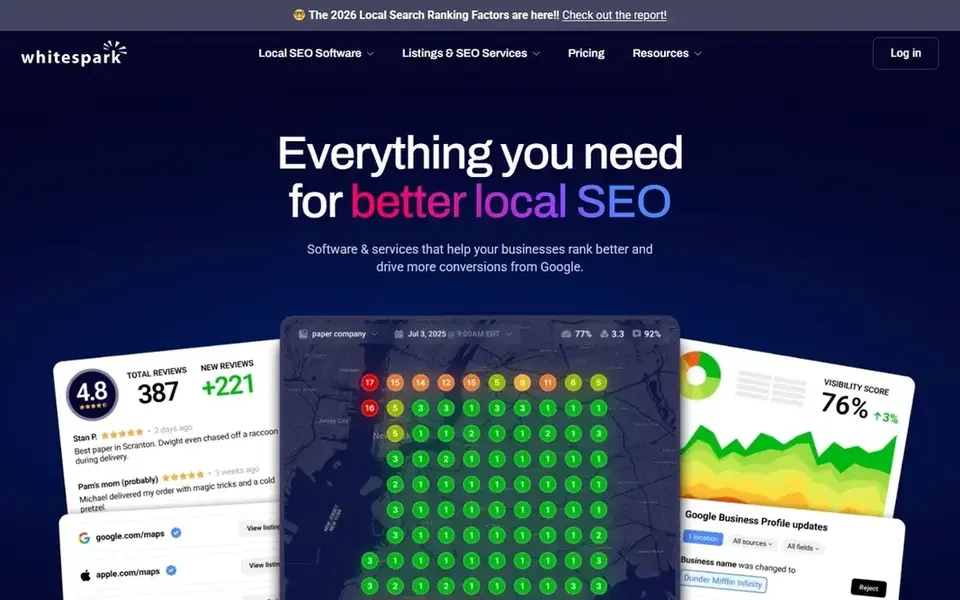
Whitespark is a local search company known for citation building and local ranking tools. It fits a bookstore that wants its listing placed in the directories that actually matter for books, such as local chamber pages, library and community listings, and regional guides.
The citation service is reviewed by people rather than pushed out automatically, which helps when a directory has odd formatting or a category list that does not include bookshops. You get a record of what was submitted and where.
It is not a full listings dashboard in the way Moz Local or Synup are. If you want one screen that shows every profile and lets you edit hours everywhere at once, this is a narrower fit.
- Citation opportunities reviewed by people
- local search focus
- useful for niche directories
- Less of an all-in-one listings dashboard
- manual work involved
Yext is an enterprise listings platform that manages store data across a large network of directories and apps. It fits a chain with several branches, where head office needs to push hours, addresses and holiday closures to every location at once.
For a bookstore chain, the value is control. You update a record centrally and the change flows to the listings that matter. You can also build location pages that carry branch details and event information.
For a single independent shop, it is usually more platform than you need, and pricing is quote-based. Smaller stores should weigh lighter tools first.
- Handles many locations from one account
- broad directory network
- pages and listings together
- Can be heavy for one shop
- quote-based pricing
Local Falcon is a local rank tracking tool that scans a grid of points around your store and shows where you appear in map results. For a bookstore, it answers a practical question: when someone two streets away searches for a bookshop, do you show up?
It does not submit listings or fix your data. It works best after your Google Business Profile and core listings are already accurate, so you can see whether changes to categories, photos or reviews move your visibility.
Skip it if your main problem is wrong hours across directories. That is a listings job, not a rank tracking one.
- Shows how the shop ranks across a map grid
- useful for spotting weak areas
- simple reports
- Not a listings submission tool
- needs a clean Google profile to be useful
CallRail is call tracking software. It fits a bookstore that takes phone orders, reserves event seats by phone, or wants to know which directory or ad actually produced a call.
You place a tracking number on a listing or landing page and the tool records the source. That helps you judge whether a paid directory listing or a local guide is worth keeping.
It does not manage your listings, so it is a companion tool rather than a replacement. A shop that gets few calls and mostly serves walk-ins can skip it.
- Tracks which listings and campaigns drive calls
- call recording and routing
- works with many marketing channels
- Not a listings management tool
- only useful if phone calls matter to you
How I chose
I started from vendor documentation and public sources for each tool, then checked how well the features map to how a bookstore actually operates. That means frequent hour changes, holiday closures, author events, review requests after a sale, and for chains, branch-level control. I did not run hands-on tests, so where a vendor's public material was unclear, I say so rather than guess.
I also weighed limits. A tool that is strong for a chain can be too heavy for one shop, and a citation service is not the same as a listings dashboard. I ranked Moz Local first because directory and aggregator accuracy is the foundation a bookstore needs before anything else, then placed the others by how well they cover the remaining jobs.
What to check before you buy
- Confirm the tool syncs with Google Business Profile and lets you edit hours and holiday closures quickly.
- Check whether it covers the directories that matter for bookshops, such as local guides, chamber pages and library listings.
- Ask how it handles multiple branches if you run more than one store, and whether each location has its own record.
- Look for review request features that follow Google's rules and never filter, gate or buy reviews.
- Make sure you can export your listing data and leave without losing your records.
- Check whether pricing is a flat plan or a quote, and what is included versus sold as an add-on.
Frequently asked questions
Do bookstores need listing management software?
Not strictly, but it helps. A single shop can keep its Google Business Profile accurate by hand. Once you have several directories, changing hours, or more than one branch, software saves time and reduces the chance that an old address or wrong closing time sends a customer to the wrong place.
What is the most important listing detail for a bookstore?
Your hours, including holiday closures and event nights. Bookshops often open late for author events or close early on quiet days, and a stale listing is the most common reason a customer arrives to a locked door. Keep the source record updated and let the tool push changes out.
Can listing software help with review requests?
Some tools, such as BrightLocal, include review request features. Use them to ask every customer for honest feedback after a sale or event. Do not filter out unhappy customers, offer rewards for positive reviews, or buy reviews, because those practices break Google's guidelines.
Is a citation service the same as listing management software?
No. A citation service like Whitespark submits and corrects your store details in specific directories, often with human review. Listing management software keeps a central record and syncs it across many profiles. Some businesses use both, and some platforms bundle parts of each.
How do I choose between a single-shop tool and a chain platform?
Count your locations and how often data changes. One shop with steady hours can use a light tool or manual updates. A chain with several branches, seasonal hours and shared events needs a platform like Yext or Synup that pushes changes to every location from one account.
Sources
See where you really rank - block by block
ProMapRanker scans Google Maps across a grid of your service area. Simple monthly plans from $19, white-label on every plan.
Start freeBrowse all guides
← Best Listing Management Software for Bathroom Remodelers in 2026Best Listing Management Software for Catering Companies in 2026 →
 best google business profile management software for toy stores
Best Google Business Profile Software for Toy Stores in 2026
A toy store owner's guide to Google Business Profile management software for 2026, compared from vendor documentation and public sources.
Read → best google business profile management software for food trucks
Best Google Business Profile Software for Food Trucks in 2026
A food truck owner's guide to Google Business Profile management software in 2026, covering listings, reviews, location changes and call tracking.
Read → best call tracking software for travel agencies
Best Call Tracking Software for Travel Agencies (2026)
A practical guide to the best call tracking software for travel agencies in 2026, compared from vendor documentation and public sources.
Read → local seo for tow truck companies
Local SEO for Tow Truck Companies
A local SEO guide for towing companies: 24/7 GBP setup, service-area targeting, and emergency-search visibility.
Read → spot spam competitors geo grid
How to Spot Spammy Competitors in Your Geo-Grid Data
How to spot spammy competitors in your geo-grid data and report listings that violate policy.
Read → why is my google maps ranking dropping
Why Is My Google Maps Ranking Dropping? 8 Causes to Check
Eight common reasons your Google Maps ranking is dropping and how to recover quickly.
Read →More in Local SEO & Google Maps · All guides A to Z by date · Latest guides