 ProMapRanker
Best Life Sciences Software in 2026

Key takeaways
- Veeva Vault is the broadest pick for large pharma teams that need clinical, regulatory and quality work on one platform.
- Benchling is the strongest fit for biotech R&D teams that live in molecular biology, notebooks and sample tracking.
- Medidata Rave remains the default electronic data capture choice for sponsors whose trial sites already know it.
- Smaller labs get real value from LabArchives, Labguru and Scilife without an enterprise contract.
- Almost every enterprise platform here is quote-only, so budget for implementation and validation on top of the licence.
Quick comparison
| Pick | Great for | Pricing starts at | Free tier | |
|---|---|---|---|---|
 Veeva Vault | Large pharma lifecycle management | See website | No | Visit |
 Benchling | Biotech R&D and molecular biology | See website | Yes | Visit |
 Medidata Rave | Clinical trial data capture | See website | No | Visit |
 LabVantage | Enterprise LIMS for regulated labs | See website | No | Visit |
 STARLIMS | Quality and lab operations at scale | See website | No | Visit |
 IQVIA | Commercial analytics and real world data | See website | No | Visit |
 Labguru | Mid-size labs needing ELN and LIMS | See website | No | Visit |
 Scilife | Quality management for device and biotech firms | See website | No | Visit |
 LabArchives | Academic and small labs on a budget | $575 per user per year | Yes | Visit |
The best life sciences software
Life sciences software covers a wide span, from the bench to the clinic to the regulator's desk, and no single tool does all of it well. We compared official feature pages, pricing pages, app listings and public reviews to sort the platforms by the job they actually do.
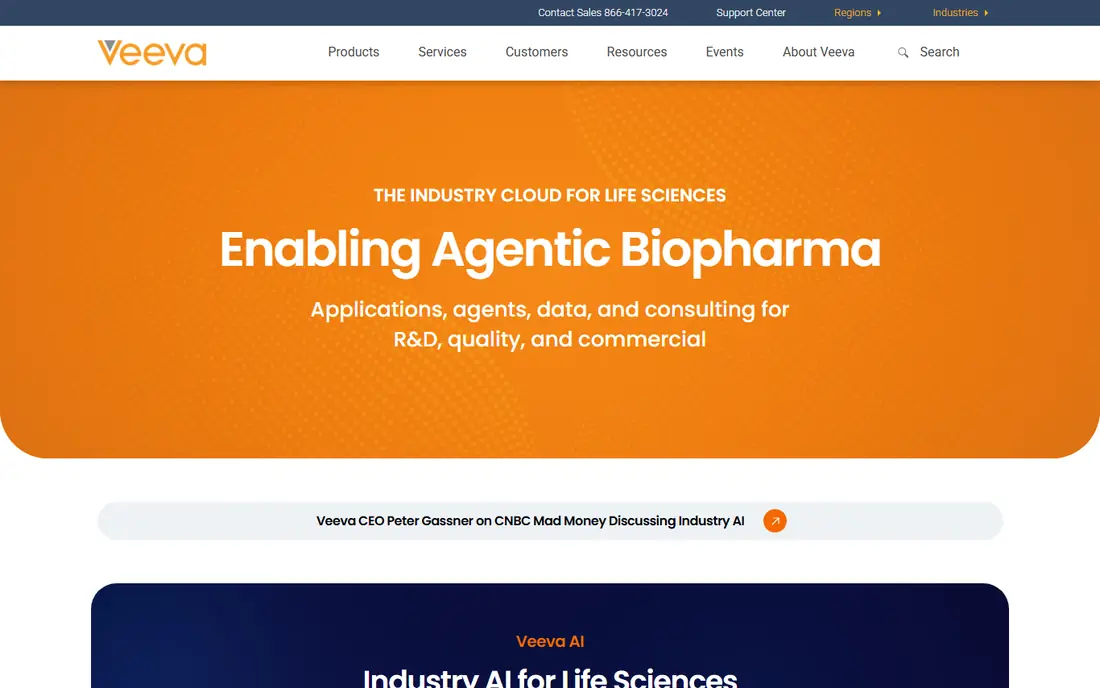
Veeva Vault sits at the centre of many large pharma operations because it was built for this industry from the start, rather than adapted from a generic content platform. Its clinical, regulatory and quality applications share one data model, so a document approved in quality can feed a regulatory submission without being re-keyed or copied between systems. For teams running global trials and filings at the same time, that shared foundation cuts down on version mismatches and audit surprises.
The trade-off is scale and cost. Veeva sells through enterprise agreements, and a full rollout usually needs configuration, validation and change management that smaller companies may find heavy. If your team is a single lab or an early startup, Vault will feel like far more machine than you need. For a company with multiple products in development and a regulator-facing quality system, it is the platform most often chosen for a reason.
- Unified clinical, regulatory and quality applications
- Purpose built for life sciences compliance
- Strong document control and audit trails
- Quote-only enterprise pricing
- Long implementation for large deployments
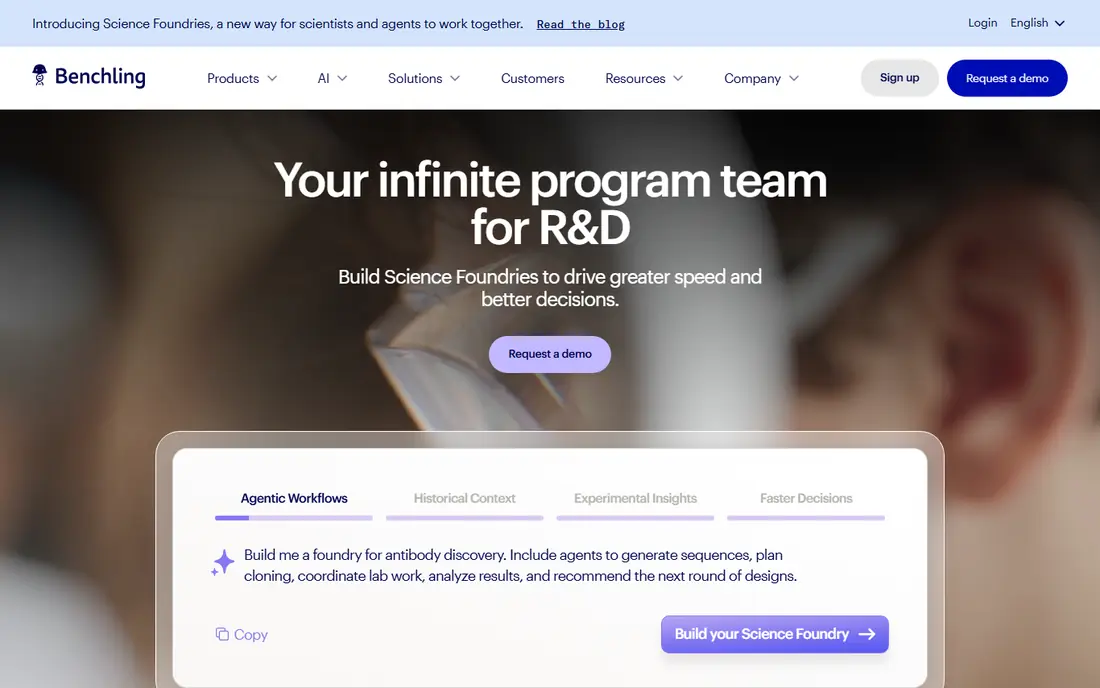
Benchling grew out of academic research and it still shows in the best way, with a notebook, molecular biology tools and sample tracking that feel designed by people who have run experiments. Scientists can design sequences, record experiments, track samples and link results in one place, which keeps data structured instead of scattered across spreadsheets and shared drives. Academic researchers can use it free, which has made it a common first system in university labs and spinouts.
Commercial teams face a different picture. Paid plans are quote-only and third party reports put them in the thousands of dollars per user per year, so a growing biotech should get a written quote early and check what is included. Some users also report that adapting Benchling to unusual workflows takes admin effort. Even with those caveats, for discovery and early development work, few platforms match its fit for biology-led teams.
- Free for academic researchers
- Strong sequence design and notebook tools
- Modern interface scientists adopt quickly
- Commercial pricing is quote-only and reported as high
- Configuration can take time
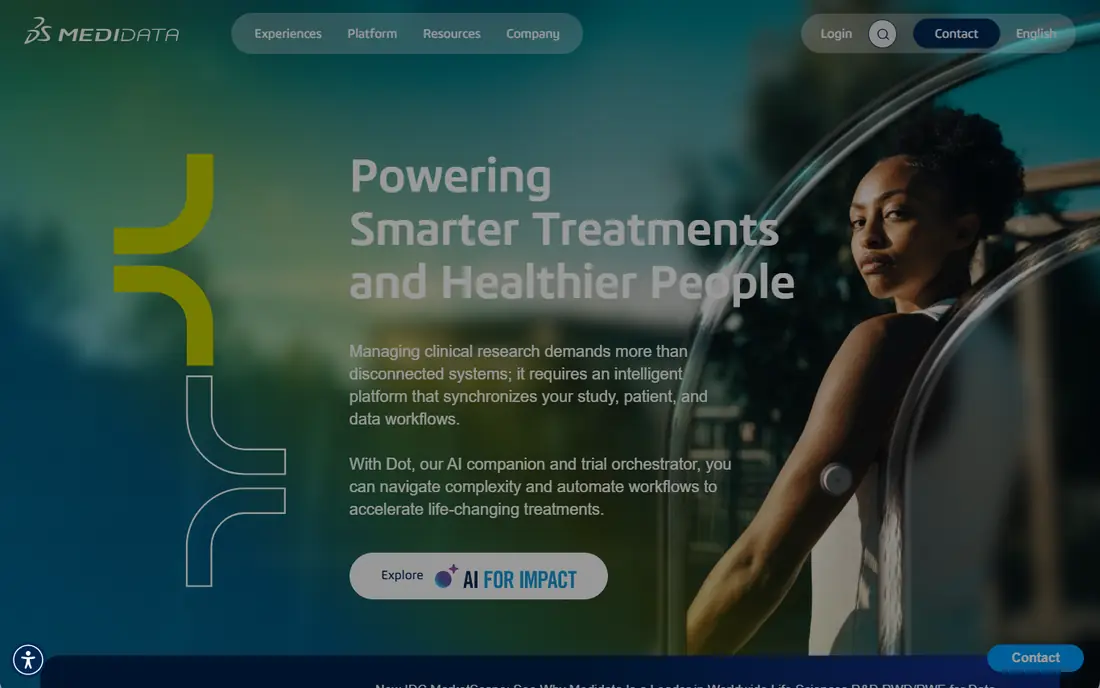
Medidata Rave is the electronic data capture system that many trial sites already know, and that familiarity is a practical advantage when you are training coordinators across dozens of sites. It captures participant data, manages protocol amendments and connects to related modules for outcomes, consent, randomisation and imaging. Medidata states that amendments deploy without downtime, which matters for adaptive designs where a study cannot pause for weeks while a system is rebuilt.
Cost is the honest catch. Medidata does not publish pricing, and public reviews frequently describe it as expensive, especially for smaller companies. A small biotech running its first study may get a better deal from a lighter EDC, and should weigh that against the time saved by using a system sites already trust. For sponsors running complex, multi-site trials, Rave remains the safe, well supported choice.
- Most widely recognised EDC among trial sites
- Handles mid-study amendments without downtime
- Connected eCOA, eConsent and imaging modules
- Pricing is not published
- Reviewers often call it expensive for smaller sponsors
LabVantage is a laboratory information management system aimed squarely at regulated labs that process high volumes of samples under strict quality rules. It manages sample login, testing workflows, results, instruments and reporting, with the audit trails and controls that GMP and GLP environments demand. Large pharma, contract labs and public health labs use it to keep sample data consistent across sites instead of letting each lab run its own spreadsheets.
That depth comes with enterprise weight. Pricing is quote-only, and a deployment typically involves configuration and validation work that a small lab will not need. If your lab runs a handful of samples a week, a lighter ELN or LIMS will serve you better and cost far less. For a lab network where traceability and regulatory inspection readiness are daily requirements, LabVantage is one of the established names for a reason.
- Deep LIMS depth for regulated environments
- Broad instrument and system integration
- Scalable across sites
- Enterprise pricing and implementation effort
- Overkill for a single small lab
STARLIMS, part of Abbott Informatics, has served regulated laboratories for many years, and its strength lies in tying lab execution to quality management. Samples, tests, specifications, deviations and corrective actions can live in one system, which gives quality teams a clearer line from a result back to the sample, the analyst and the method. That matters when an auditor asks how a single out-of-specification result was handled.
The platform is clearly aimed at larger operations. Pricing is not published, and smaller labs may find the implementation effort and cost hard to justify against simpler tools. Teams that already run Abbott instruments or need deep quality workflows will get more from it than a team that only needs a notebook. For enterprise lab networks, STARLIMS remains a credible, battle tested option.
- Long track record in regulated labs
- Strong quality management and workflow tools
- Part of a large vendor group
- Quote-only pricing
- Implementation can be complex for mid-size labs
IQVIA sits on the commercial and data side of life sciences rather than the bench. It combines healthcare data, analytics and technology services to help pharma companies understand markets, launch products, run real world studies and measure commercial performance. For a company deciding where to launch, which physicians to engage or how a therapy performs after approval, IQVIA's data depth is hard to match from a standalone software vendor.
This is not a tool a small lab buys off a pricing page. Engagements are enterprise scale, priced by quote, and often blend software with services and data licences. A startup still in discovery will find little here for its daily work. For a commercial organisation that needs trusted healthcare data and analytics at global scale, IQVIA is one of the first names in the conversation.
- Huge healthcare data assets and analytics depth
- Strong commercial and real world evidence offerings
- Global scale
- Enterprise only in practice
- Pricing is quote-only and opaque
Labguru aims at the middle of the market, where a lab is too big for spreadsheets but not ready for an enterprise LIMS project. It combines an electronic lab notebook, a LIMS and inventory management, so experiments, samples, stocks and protocols sit together instead of in three disconnected tools. Scientists can design experiments from templates, capture structured and unstructured data, and track reagents alongside results.
The platform covers both molecular biology and chemistry workflows, which suits labs that work across disciplines. Pricing is quote-only, so buyers should ask for a full breakdown that includes users, implementation and support. Configuration of templates and workflows also takes some upfront effort. For a growing biotech or contract research lab, Labguru offers a practical balance of depth and usability.
- Combines ELN, LIMS and inventory in one platform
- Molecular biology and chemistry tools included
- Cloud based with mobile access
- Pricing is quote-only
- Smaller teams may need time to configure templates
Scilife focuses on the quality side of life sciences, which is often the part teams buy last and regret postponing. It covers document control, corrective and preventive actions, training records, audits and supplier management in a single cloud system, with the controls that medical device and biotech firms need for ISO 13485 and FDA-aligned quality systems. For a company preparing for its first audit or certification, having those processes in one place beats stitching together shared drives and email approvals.
Scilife is less of an R&D notebook than Benchling or Labguru, so research-heavy teams may still need a separate ELN. Pricing is quote-only, which makes budgeting harder for small firms. The fit is clearest for device startups and growing biotech companies that need a defensible quality system before they scale manufacturing or face their first major inspection.
- Quality management built for life sciences
- Document control, CAPA and training in one system
- Cloud based
- Quote-only pricing
- Narrower R&D depth than Benchling or Labguru
LabArchives is the pragmatic choice for academic groups and small labs that need a proper electronic notebook without an enterprise negotiation. Its Professional plan is published at $575 per user per year for corporate users, with a lower academic rate and a free edition for basic use. Paid plans include electronic signatures and audit trails that support 21 CFR Part 11 style workflows, which matters for labs that need defensible records.
The notebook itself is solid rather than flashy. It handles experiment records, attachments, inventory and sharing well, but it does not match Benchling's molecular biology depth or Labguru's combined LIMS breadth. Some users describe the interface as functional rather than modern. For a lab that needs compliant records, a published price and a quick start, LabArchives is hard to beat on value.
- Published corporate pricing
- Free edition available
- Electronic signatures and audit trails on paid plans
- Less R&D depth than Benchling for molecular biology
- Interface feels dated to some users
How we picked these
We compared official feature pages, pricing pages, app store listings, privacy and compliance documentation and public reviews for each platform. We favoured tools that are live and supported in October 2026, that genuinely serve life sciences work rather than generic project management, and that cover different stages of the product lifecycle, from discovery and lab work through clinical trials, quality and commercial use. Where a vendor does not publish pricing, we say so instead of guessing a figure.
What to check before you buy
Start with the job, not the vendor list. A discovery team needs a notebook and sample tracking, a clinical team needs an EDC and trial master file, and a quality team needs document control and CAPA. Buying one platform to cover all three only works if it genuinely does all three well, and most teams end up with two or three systems that integrate.
Check compliance scope in writing for the tier you plan to buy. Features such as electronic signatures, audit trails and validation support often sit on higher tiers, and a demo of the top tier does not prove the entry tier includes them. Ask for the full first year cost, including implementation, validation, training and data migration, since quote-only enterprise tools can double in year one once services are added.
Finally, run a pilot with real data and real users. Give scientists, coordinators or quality staff a genuine workflow to complete, and watch where they get stuck. A platform that looks complete in a sales demo but slows daily work will cost far more in lost time than the licence ever did.
Frequently asked questions
What is life sciences software?
Life sciences software is a broad category covering tools for drug and device research, laboratory work, clinical trials, quality management, regulatory submissions and commercial analytics. Different products serve different stages, so the right choice depends on whether your team works at the bench, in the clinic or in quality and regulatory affairs.
Is Benchling free?
Benchling is free for academic researchers, including its notebook and molecular biology tools. Commercial and industry use requires a paid plan, which is quote-only and reported in third party coverage at several thousand dollars per user per year. Academic teams should confirm their eligibility directly with Benchling.
Which life sciences software is best for a small biotech startup?
For a small biotech, Benchling fits biology-led R&D, Labguru suits labs that also need LIMS and inventory, and LabArchives offers the lowest published price for a compliant notebook. Start with the workflow your team uses daily, and avoid enterprise platforms until trial or quality demands justify them.
What does Veeva Vault do?
Veeva Vault is a cloud platform with applications for clinical operations, regulatory submissions, quality management and commercial content, all built for life sciences. Large pharma teams use it to manage documents, trials and quality processes on one system with shared data and audit trails.
How much does life sciences software cost?
Costs range from free academic and entry plans to quote-only enterprise contracts. LabArchives publishes corporate pricing at $575 per user per year, while Veeva, Medidata, LabVantage and IQVIA price by quote and usually require implementation services. Always ask for a written first year total before signing.
Do I need validated software for regulated work?
If your work falls under FDA or EU GMP, GLP or GCP rules, you need software that supports electronic signatures, audit trails and validation, and you should confirm the scope in writing for your tier. Software alone does not make an organisation compliant, and your quality team should review validation documentation before purchase.
Sources
See where you really rank - block by block
ProMapRanker scans Google Maps across a grid of your service area. Simple monthly plans from $19, white-label on every plan.
Start freeKeep reading
 who has best internet service
Who Has the Best Internet Service in 2026
Who has best internet service for US homes? We compare fiber, cable, fixed wireless and satellite providers on speed, price, availability and terms today.
Read → which survey tool has the best analytics
Which Survey Tool Has the Best Analytics in 2026
Find which survey tool has the best analytics in 2026, comparing Qualtrics, SurveyMonkey, Typeform, Alchemer, and more on reports, text, and stats today.
Read → which streaming service has the best movies
Which Streaming Service Has the Best Movies in 2026
Answering which streaming service has the best movies, with Netflix, Max, Criterion and more compared on libraries, prices and free options in this guide.
Read →