 ProMapRanker
Best Learning Experience Platforms in 2026

Key takeaways
- Degreed and Cornerstone suit large enterprises with a skills strategy, while Docebo suits multi-audience training at enterprise scale.
- 360Learning suits companies where internal experts create courses, and LinkedIn Learning and Udemy Business suit teams that need a large ready course library fast.
- Absorb LMS and LearnUpon suit mid-market teams that need structured training with a learning experience feel.
- The best platform is the one staff actually open, so trial content discovery, mobile use and manager reporting with real learners before buying.
Quick comparison
| Pick | Great for | Pricing starts at | Free tier | |
|---|---|---|---|---|
 Degreed | Enterprise skills strategy | See website | No | Visit |
 Docebo | AI-led enterprise training | See website | No | Visit |
 Cornerstone | Learning plus talent suite | See website | No | Visit |
 360Learning | Collaborative course creation | $8 per user per month | No | Visit |
 LinkedIn Learning | Large expert course library | $379 per user per year | No | Visit |
 Udemy Business | On-demand skills catalogue | $360 per user per year | No | Visit |
 Absorb LMS | Mid-market LMS and LXP hybrid | See website | No | Visit |
 Skillsoft Percipio | Content-led IT and leadership | See website | No | Visit |
 LearnUpon | Employee, customer and partner training | See website | No | Visit |
The best learning experience platforms
A learning experience platform, or LXP, personalises learning around skills, roles and interests, pulling content from internal courses and external libraries into one feed. It differs from a traditional learning management system, which focuses more on assigning and tracking formal courses. We compared official vendor pages, published pricing where available, and independent 2026 LXP comparisons for skills features, content, authoring, mobile use and reporting.
Pricing for enterprise LXPs is often quote-based, so we use See website where a single figure would mislead. Published per-user figures for 360Learning, LinkedIn Learning and Udemy Business are shown where comparisons agree on them.
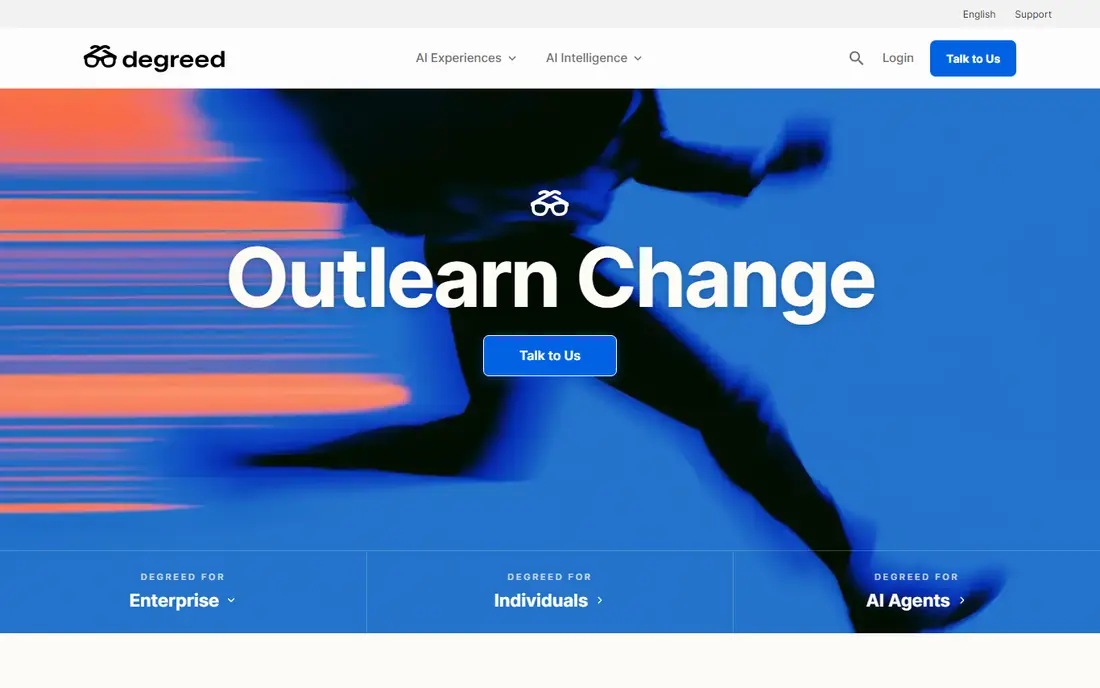
Degreed is the reference LXP for large enterprises that have moved from course completion to skill acquisition. It curates internal and external content around skills, tracks learning from many sources, and shows skill gaps and pathways that link learning to roles and careers. For a large firm with a skills taxonomy and a learning team to run it, Degreed gives the clearest skills picture in this list.
That maturity requirement is the catch. Degreed needs content governance, skills data and manager buy-in to work well, and its enterprise pricing reflects that scale. Smaller firms without a skills strategy will find a simpler platform faster to launch and easier to keep current.
- Skills-based architecture
- Multi-source content curation
- Career pathways and skill gap views
- Quote-based enterprise pricing
- Needs a mature skills strategy to give full value
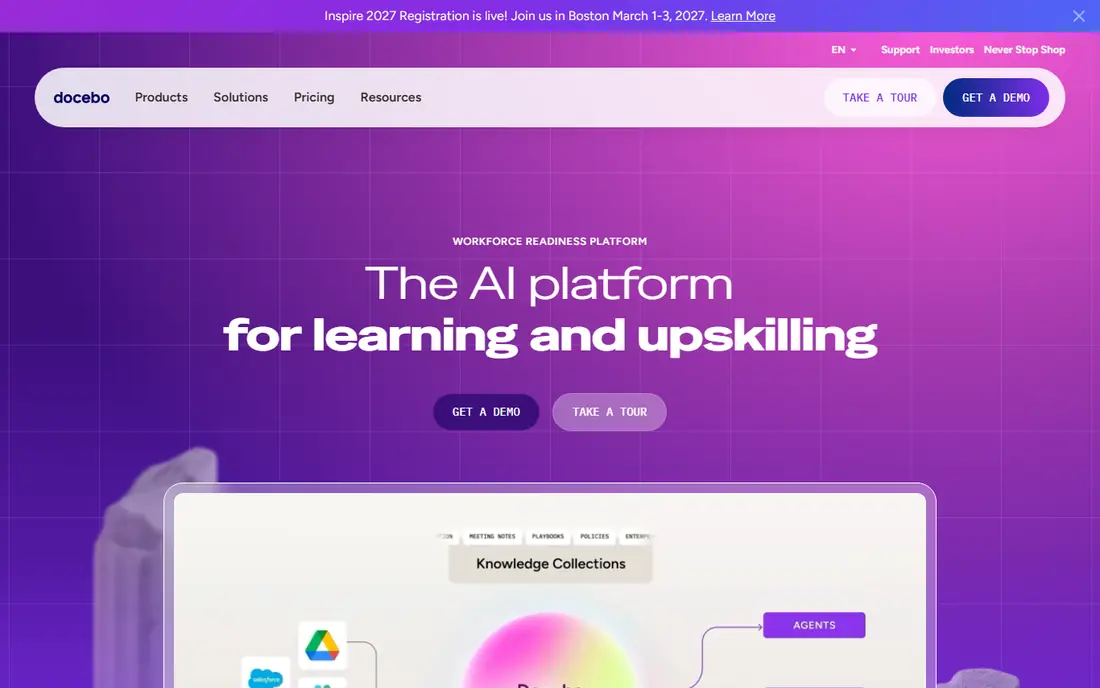
Docebo suits enterprises that train more than one audience from one system, such as employees plus customers or partners. Its AI features personalise recommendations and automate enrolment and notifications, while its course creation and multi-audience tools handle different brands, languages and portals. Reviewers often praise its ease of use and scalability for large programmes.
Multi-audience power brings setup work. Configuring portals, audiences, languages and integrations takes planning, and pricing is quoted per programme. Docebo fits best when a company has outgrown a single-audience system and needs one platform for several learner groups.
- AI-driven personalisation and automation
- Scales across employees, customers and partners
- Strong course creation
- Quote-based pricing
- Implementation needs planning for multi-audience use
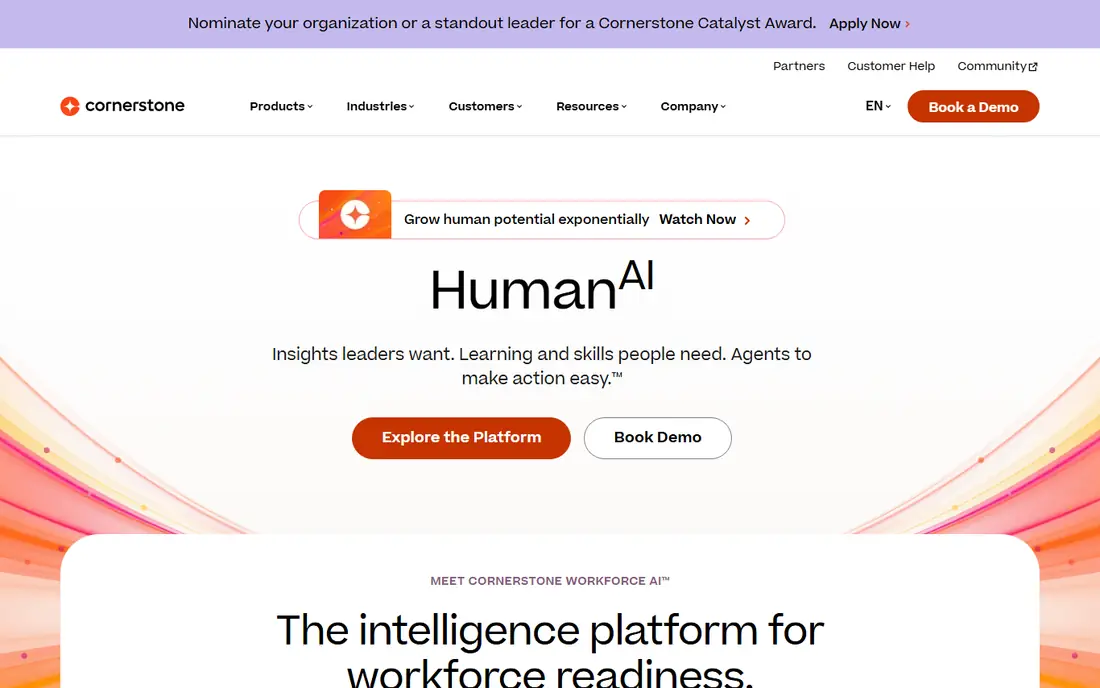
Cornerstone, including its EdCast-based LXP, suits global enterprises that want learning inside a wider talent suite. Learning, skills, performance and career mobility sit in one system, which helps HR teams link training to roles, succession and internal moves. Its large enterprise base also means deep compliance, reporting and integration experience.
Breadth is the trade-off. A full suite takes longer to implement than a focused LXP, and smaller firms may pay for talent features they do not use. Cornerstone fits when learning is part of a wider talent strategy, not a standalone content library.
- Learning joined with talent, skills and career mobility
- Large enterprise installed base
- AI learning intelligence
- Quote-based pricing
- Suite breadth can make setup slower than a standalone LXP
360Learning turns internal experts into course creators, with a guided authoring workflow that helps a subject expert build a useful course without instructional design training. That model produces training that matches company processes and language, and it speeds up creation compared with a central team writing everything. Its starting price of $8 per user per month makes it accessible to mid-size firms.
The model depends on participation. If internal experts lack time or incentive to create, the library stays thin, and external content cannot fully replace company-specific training. 360Learning fits companies with willing experts and a culture of sharing knowledge, not firms that want a ready-made catalogue alone.
- Peer-led course creation from $8 per user per month
- Guided authoring workflow
- Internal expert content
- External content library is smaller than LinkedIn Learning or Udemy Business
- Needs internal experts willing to create
LinkedIn Learning gives teams fast access to a large library of expert-led courses across business, technology and creative skills, with learning paths that guide a learner from beginner to job-ready topics. Microsoft 365 integration helps firms already inside that ecosystem, and LinkedIn profile features let learners show completed courses. Its published enterprise figure near $379 per user per year reflects that library depth.
General content is the limit. LinkedIn Learning teaches widely used skills well, but it cannot teach a company's own products, processes or compliance rules. It works best paired with internal training, or as a broad upskilling library for a team that needs many skills quickly.
- Large expert-led course library
- Microsoft 365 integration
- Learning paths and certificates
- Content is general rather than company-specific
- Per-user price adds up for large teams
Udemy Business offers on-demand courses across a huge range of practical skills, from software and data to management and marketing, at a published figure near $360 per user per year in 2026 comparisons. Teams can assign learning paths, track progress and let staff choose courses that fit their roles. That breadth suits firms with varied skill needs and limited time to build courses.
Quality varies, since courses come from many instructors with different depth and production standards. Learning teams should curate paths rather than opening the full catalogue without guidance, and they still need internal content for company-specific topics. For broad, practical upskilling, Udemy Business is strong value.
- Huge on-demand course catalogue
- Practical skills focus
- Flexible learning paths for teams
- Course quality varies by instructor
- Company-specific training needs separate internal content
Absorb LMS suits mid-market teams that need structured training plus a modern learner experience. It handles assigned courses, compliance tracking and reporting like a traditional LMS, while its learner interface and AI features give it an LXP feel. Reviewers often praise its intuitive interface and support, which matters for a lean learning team.
The hybrid model is not for everyone. Firms that want a pure, social discovery feed may find Absorb more structured than a platform such as Degreed or 360Learning. For teams that need compliance plus engagement in one system, that structure is a strength.
- Polished LMS and LXP hybrid
- AI grounded in your own content
- Strong customer support reputation
- Quote-based pricing
- Hybrid model may feel structured for firms that want a pure discovery feed
Skillsoft Percipio is a content-led platform with a large library for technology, leadership, business and compliance training, plus skill benchmarks that help learners see where they stand. Its mobile experience supports learning on the move, and its enterprise history means strong reporting for compliance-heavy firms. Large organisations with broad IT and leadership needs will find its catalogue deep.
Its model leans toward curated content rather than peer creation, so firms that want staff to build most training internally may prefer 360Learning. Percipio fits when a ready, professionally produced library matters more than internal authoring, especially for IT certification and leadership topics.
- Large content library for IT, leadership and compliance
- Skill benchmarks
- Mobile learning
- Quote-based pricing
- Content-led model suits some firms less than collaborative creation
LearnUpon suits firms that train several audiences and want one system for all of them. Employees, customers and partners can learn through branded portals with separate content and reporting, which suits software firms, franchisors and training providers. Its reporting is clear enough for a small learning team to run without a data specialist.
The starting point is the limit. LearnUpon is quoted from 100 users in comparisons, so very small teams may find a simpler tool cheaper. For a growing firm that already trains customers or partners alongside staff, LearnUpon's multi-audience design is a strong fit.
- Trains employees, customers and partners from one login
- Quoted from 100 users
- Clear reporting
- Quote-based pricing with a 100-user starting point
- Smaller firms may find entry terms high
How we picked these
We compared official vendor pages, published pricing where available, and independent 2026 LXP comparisons for skills features, content breadth, authoring, mobile use, multi-audience support and reporting. We favoured platforms with live LXP or hybrid products in October 2026 and a clear fit for a company size or learning model. We left out pure course marketplaces with no enterprise learning management, and single-topic training apps that do not manage a full learning programme.
How to choose a learning experience platform
Start with a trial using real learners, not just a vendor demo. Give a small group your actual courses and content, ask them to find learning for a real role, and watch where they struggle. Discovery, search and mobile use decide adoption more than a feature list, and a platform staff avoid will not improve skills however good its catalogue looks.
Next, check skills and reporting together. Ask how skills are defined, who maintains them, and whether managers can see progress by team, role and skill gap. A platform that tracks completions but cannot show skill movement will not support a skills strategy, while a skills platform without manager reporting will stall at rollout.
Finally, confirm content and integration costs. External libraries, internal authoring, HR system integration, single sign-on and customer or partner portals each affect price and setup time. Get a total cost for year one, including implementation, content and support, and confirm who owns your courses and learner data if you leave.
Frequently asked questions
What is a learning experience platform?
A learning experience platform personalises learning around a learner's role, skills and interests, pulling internal and external content into one feed. It differs from a traditional learning management system, which focuses more on assigning, tracking and reporting formal courses. Many modern platforms blend both models.
What is the best learning experience platform?
Degreed suits large enterprises with a skills strategy, Docebo suits multi-audience enterprise training, and Cornerstone suits learning inside a wider talent suite. 360Learning suits collaborative creation, LinkedIn Learning and Udemy Business suit large ready libraries, and Absorb LMS and LearnUpon suit mid-market and multi-audience needs. Trial with real learners before choosing.
How much do learning experience platforms cost?
Enterprise LXPs such as Degreed, Docebo and Cornerstone are quote-based. Published figures include 360Learning from $8 per user per month, LinkedIn Learning near $379 per user per year, and Udemy Business near $360 per user per year. Total cost also includes implementation, integrations and content, so ask for a year-one total.
Is an LXP better than an LMS?
An LXP suits discovery, personalisation and skills-based learning, while an LMS suits assigned, tracked and compliance training. Many firms need both, which is why hybrid platforms such as Absorb LMS are popular. Choose by whether your priority is learner-led discovery or manager-led compliance, or whether you need both in one system.
Can a small business use a learning experience platform?
Yes, with a simpler platform. 360Learning, TalentLMS-style tools and catalogue platforms such as LinkedIn Learning and Udemy Business suit smaller teams, while enterprise LXPs suit larger firms. Small firms should start with a clear skill need, a small pilot group and a platform they can run without a large learning team.
How do LXPs handle skills?
LXPs map content to skills, assess gaps through tests, manager input or work data, and recommend learning paths to close those gaps. Degreed and Cornerstone emphasise skills architecture, Docebo uses AI recommendations, and Skillsoft Percipio uses skill benchmarks. Ask how skills are maintained, since a stale skills list quickly loses value.
Sources
See where you really rank - block by block
ProMapRanker scans Google Maps across a grid of your service area. Simple monthly plans from $19, white-label on every plan.
Start freeKeep reading
 who has best internet service
Who Has the Best Internet Service in 2026
Who has best internet service for US homes? We compare fiber, cable, fixed wireless and satellite providers on speed, price, availability and terms today.
Read → which survey tool has the best analytics
Which Survey Tool Has the Best Analytics in 2026
Find which survey tool has the best analytics in 2026, comparing Qualtrics, SurveyMonkey, Typeform, Alchemer, and more on reports, text, and stats today.
Read → which streaming service has the best movies
Which Streaming Service Has the Best Movies in 2026
Answering which streaming service has the best movies, with Netflix, Max, Criterion and more compared on libraries, prices and free options in this guide.
Read →