 ProMapRanker
Best Lead Scoring Software in 2026


CRM-native rule and predictive scoring · Pricing starts at: See website
Key takeaways
- HubSpot and Salesforce Einstein suit teams that want scoring inside the CRM sales already uses every day.
- Zoho CRM, Freshsales and ActiveCampaign suit smaller teams that need rule-based scoring without enterprise pricing.
- MadKudu and 6sense suit larger teams that want predictive models and account-level intent signals.
- Leadfeeder suits teams that want website visitor identification as a scoring input, not a full CRM replacement.
- Good scoring depends on clean CRM data and a shared sales and marketing definition of a qualified lead.
Quick comparison
| Pick | Great for | Pricing starts at | Free tier | |
|---|---|---|---|---|
| HubSpot | CRM-native rule and predictive scoring | See website | No | Visit |
 Salesforce Einstein Lead Scoring | Predictive scoring in Sales Cloud | See website | No | Visit |
 Zoho CRM | Affordable rule and AI scoring | See website | No | Visit |
 Freshsales | AI scoring for small sales teams | See website | Yes | Visit |
 ActiveCampaign | Budget rule-based scoring | See website | No | Visit |
 MadKudu | Explainable predictive scoring | See website | No | Visit |
 6sense | Account-level intent scoring | See website | No | Visit |
 Leadfeeder | Website visitor scoring | See website | No | Visit |
The best lead scoring software
We compared official product pages, pricing pages and public scoring comparisons for tools active in October 2026. Lead scoring assigns points or a predicted likelihood to each lead based on fit, such as company size and job title, and behavior, such as email opens, website visits and demo requests. The tools below cover rule-based scoring, predictive scoring and account scoring, so you can match the model to your deal size and data volume.
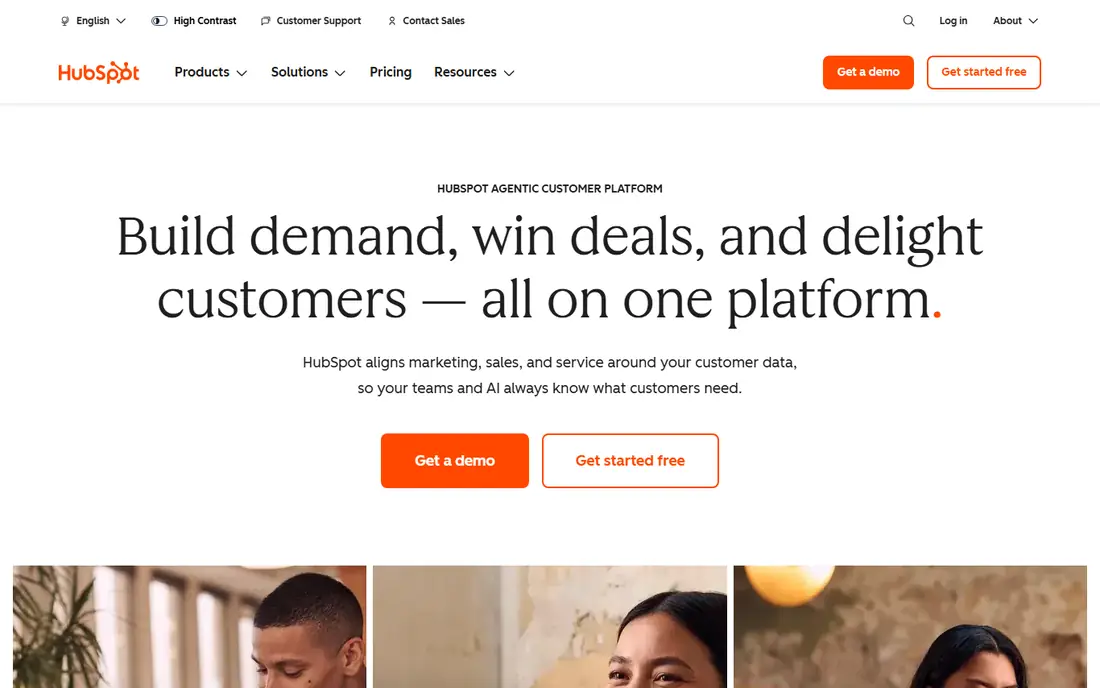
HubSpot is the simplest choice for teams already on HubSpot, because scoring, workflows and sales views share the same contact record. Marketing and sales can build rule-based scores from page views, form fills, email engagement and company properties, then route high scores to reps automatically. That tight fit is why many teams start with HubSpot scoring and never add a separate tool.
Predictive scoring is the catch. HubSpot estimates likelihood to close and contact priority on Enterprise tiers, which puts its best model out of reach for smaller teams. Contact and seat pricing also adds up as you grow. HubSpot suits teams that want scoring without a new system, and who can use rule-based scoring well until Enterprise makes sense.
- Scoring lives on the contact record
- Rule-based scoring on lower tiers
- Predictive scoring on Enterprise tiers
- Predictive scoring needs Enterprise
- Costs rise fast with contacts and seats
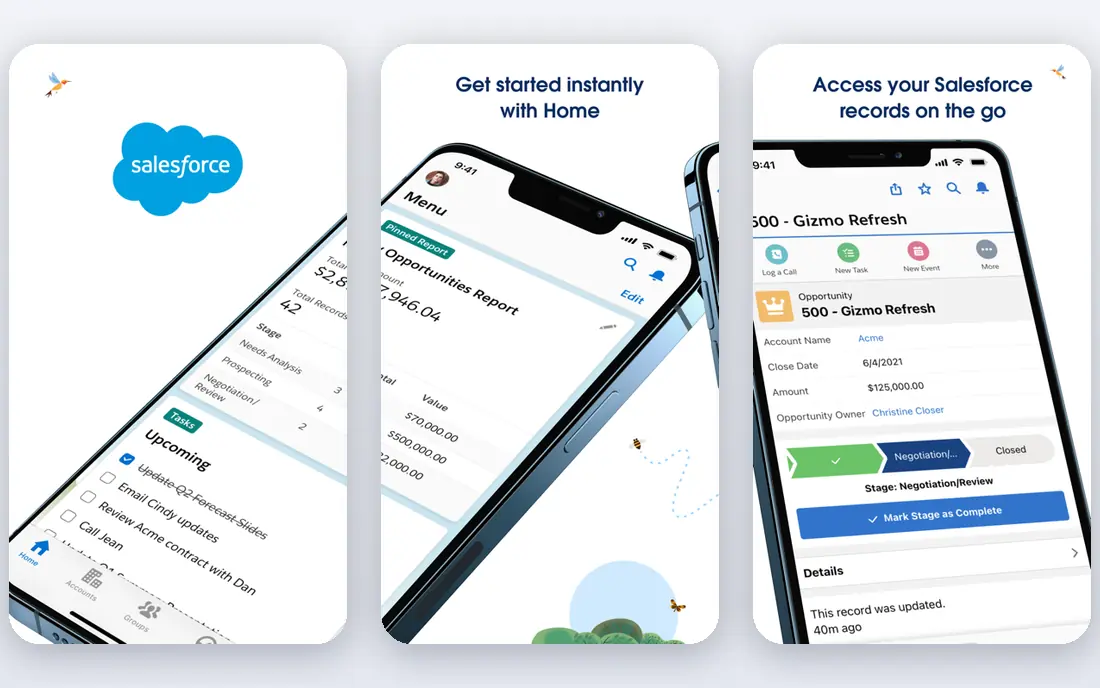
Salesforce Einstein Lead Scoring fits Sales Cloud teams that already live in Salesforce. It scores leads by how closely they match past conversion patterns, and it shows which fields influenced each score, so reps can see why a lead ranked high. That explainability helps sales trust the score, which is often the hardest part of rolling out predictive scoring.
Data volume is the limit. Einstein needs a substantial history of leads and conversions to train, so small teams or new orgs may not qualify. It is also tied to Sales Cloud editions and Einstein pricing, which adds cost. For established Salesforce teams with enough history, it is a strong native option that avoids syncing scores from another system.
- Scores inside Sales Cloud
- Shows top influencing fields
- Learns from past conversions
- Needs a large lead history to train
- Extra cost on some editions
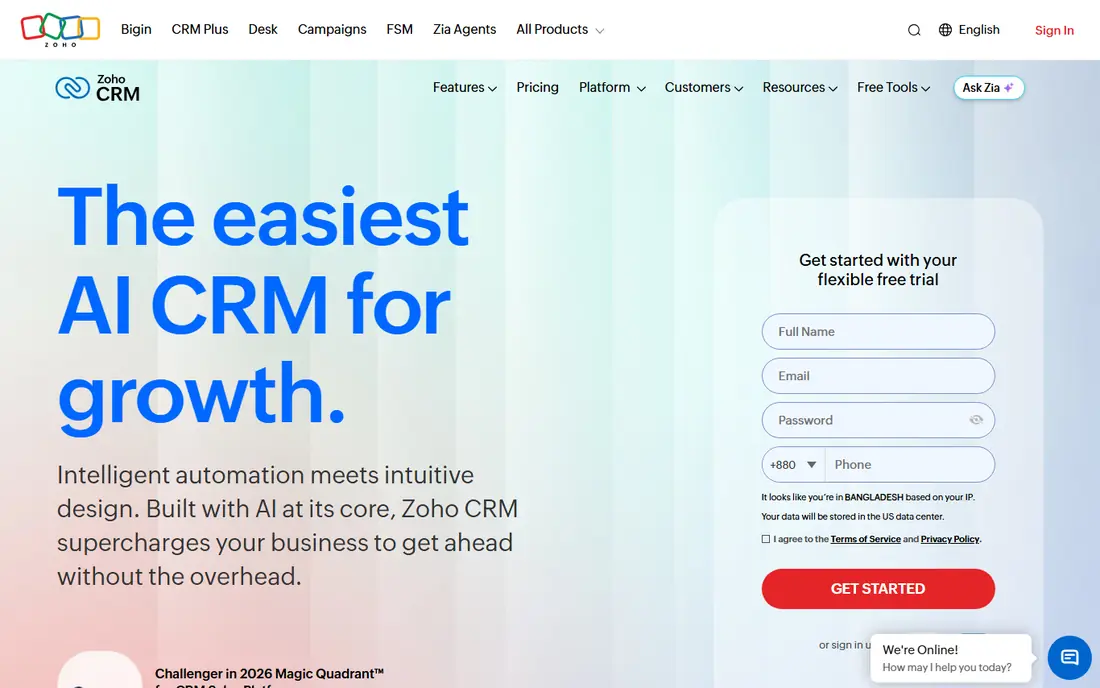
Zoho CRM is a good value pick for small and mid-sized teams that need scoring plus a full CRM. Rule-based scoring lets you assign points for actions and attributes, while Zia, Zoho's AI assistant, adds predictive scoring and best-time-to-contact suggestions on higher tiers. That combination gives smaller teams a path from simple rules to AI scoring without changing CRM.
The weakness is tuning. A score built from too many weak signals will rank busy but unqualified leads highly, so you need to review and prune rules regularly. Zoho also rewards teams that use its wider suite, so standalone scoring buyers may find the CRM itself is the bigger commitment. For cost-conscious teams that want CRM and scoring together, Zoho is hard to beat.
- Low entry price
- Rule-based scoring plus Zia AI scoring on higher tiers
- Broad CRM features
- AI scoring needs higher tiers
- Setup takes care to avoid noisy scores
Freshsales, from Freshworks, suits small sales teams that want AI scoring without enterprise complexity. Freddy AI scores leads based on engagement and fit signals, and reps can see scores in the pipeline view they already use. A free plan lets you test the CRM and basic scoring before paying, which lowers the risk of a trial.
Freshsales is not a dedicated predictive platform, so its models are lighter than MadKudu or 6sense. Teams with complex account scoring or large data science needs will outgrow it. For small teams that want a simple CRM with sensible AI scores and a low starting cost, Freshsales is a practical pick.
- Freddy AI scoring built in
- Free plan to test
- Simple sales pipeline and phone features
- Predictive depth is lighter than dedicated platforms
- Advanced scoring needs paid tiers
ActiveCampaign is a budget-friendly choice for teams that mainly need rule-based scoring tied to email and automation. You can assign points for opens, clicks, site visits, form fills and purchases, then trigger nurture or sales alerts when a contact crosses a threshold. That model is transparent and easy to explain to sales, which helps adoption.
The limit is prediction. ActiveCampaign does not offer the same predictive modeling as HubSpot Enterprise or MadKudu, so scores reflect rules you set, not patterns the system learned. Account-level scoring is also weaker than 6sense. ActiveCampaign suits marketing-led teams with modest budgets who want clear, controllable scoring inside their automation platform.
- Affordable plans
- Flexible rule-based scoring
- Strong email and automation features
- No true predictive model on most plans
- Scoring is contact-focused, not account-focused
MadKudu, now part of HG Insights, is a dedicated predictive scoring platform for teams that want models they can explain. It builds propensity models from CRM history, product usage and enrichment signals, and it shows why an account or lead scored highly. That transparency matters, because reps act on scores they understand and ignore scores that feel like a black box.
Pricing is enterprise-level, and MadKudu performs best with clean, complete CRM data. Teams with messy records should fix data quality first, or the model will learn from noise. MadKudu suits RevOps and sales teams with enough volume to justify a dedicated platform, and who need product-led and account scoring that a basic CRM cannot provide.
- No-code predictive models
- Explainable scores for reps
- Product usage and CRM signals
- Enterprise pricing
- Needs clean CRM data to perform well
6sense is an account-based platform, not a simple lead scorer, and it scores accounts on fit, intent and buying stage. It draws on third-party intent signals across the web, plus your CRM history, to flag accounts that are actively researching. That account view suits B2B teams selling to buying committees, where one hot lead may not reflect the whole account.
Cost and complexity are the drawbacks. 6sense contracts are enterprise-priced, and the platform needs setup, integration and ongoing management. Small teams with low deal sizes will not see a return. For mid-market and enterprise ABM teams, though, 6sense offers account scoring depth that CRM-native tools cannot match.
- Strong third-party intent signals
- Account fit, buying stage and in-market scores
- ABM orchestration
- Enterprise pricing and contracts
- Overkill for small teams and low deal sizes
Leadfeeder takes a different angle. It identifies companies that visit your website, even when no form was filled, and passes that activity to your CRM and sales tools. Sales can then score and prioritize those companies for outbound follow-up, turning anonymous traffic into a workable lead list. That makes Leadfeeder a useful input to scoring, rather than a replacement for it.
The limit is identity. Leadfeeder usually reveals the company, not the named person, so reps still need to find the right contact. It also works best when paired with a CRM scorer such as HubSpot or Salesforce. Leadfeeder suits B2B teams with meaningful website traffic who want to catch in-market companies earlier.
- Identifies companies visiting your site
- Feeds scores into CRM and sales tools
- Useful for outbound follow-up
- Identifies companies, not individual visitors in most cases
- Works best as a complement, not a standalone scorer
How we picked these
We compared official product pages, pricing pages and public scoring comparisons for tools operating in October 2026, focusing on scoring type, CRM fit, data needs, explainability and pricing transparency. We included CRM-native, dedicated predictive and visitor-identification tools, and we left out pure enrichment or prospecting tools with no scoring model. We did not claim hands-on testing, and we treated vendor pricing as variable, because many enterprise tools quote by volume.
How to build a score sales will trust
Start with a shared definition of a qualified lead, agreed by sales and marketing, before you buy any tool. Pick a small set of fit signals, such as industry, company size and job role, and a small set of behavior signals, such as pricing page visits and demo requests. Score those signals, route the top tier to sales quickly, and review conversion by score band each month. A score that no one checks will decay fast, while a score reviewed monthly stays useful.
Rule-based or predictive
Rule-based scoring suits smaller teams, because it is transparent and easy to change. Predictive scoring suits larger teams with enough conversion history, because it can find patterns humans miss. Many teams start rule-based, prove the routing works, and add predictive scoring later. Avoid buying a predictive platform before your CRM data is clean, because a model trained on stale titles and bounced emails will mislead reps.
Frequently asked questions
What is the best lead scoring tool for small businesses?
Zoho CRM, Freshsales and ActiveCampaign are the strongest small business picks, because they combine affordable pricing with rule-based scoring. HubSpot also works for small teams, but its predictive scoring needs Enterprise tiers.
What is the difference between rule-based and predictive lead scoring?
Rule-based scoring assigns fixed points you define for each action or attribute. Predictive scoring uses past conversions to learn which signals predict a sale, and it updates as new data arrives. Rule-based models are transparent, while predictive models can be more accurate with enough data.
How much does lead scoring software cost?
Costs range from free or low-cost CRM plans to enterprise contracts for dedicated platforms. CRM-native scoring is often included or tiered by plan, while dedicated predictive and account platforms usually quote by volume and contract length.
Do I need a CRM to use lead scoring software?
Most scoring tools work best with a CRM, because they need contact history, deal outcomes and sales activity to score well. Dedicated platforms such as MadKudu and 6sense sync with a CRM, while Leadfeeder feeds visitor data into one.
What is the best lead scoring platform for B2B account-based teams?
6sense is the strongest account-based pick here, thanks to its intent signals and account buying-stage scores. MadKudu is a strong alternative for teams that want explainable predictive scoring at the account and lead level.
Sources
See where you really rank - block by block
ProMapRanker scans Google Maps across a grid of your service area. Simple monthly plans from $19, white-label on every plan.
Start freeKeep reading
 best seo management software
Best SEO Management Software in 2026
We compared the best seo management software for audits, rank tracking and keyword research, so you can choose a tool that fits your budget and team today.
Read → best pos software
Best POS Software in 2026: 8 Systems Compared
Compare the best POS software in 2026 for retail and restaurants, with starting prices, processing rates, hardware notes and honest trade-offs for each pick.
Read → best podcast hosting platform
Best Podcast Hosting Platform in 2026
Compare the best podcast hosting platforms for 2026, with pricing, free plans, upload limits, analytics, and distribution, to pick a host for your show.
Read →