 ProMapRanker
Best Podcast Hosting Platform in 2026


First-time podcasters who want it simple · Pricing starts at: $18 per month
Key takeaways
- Buzzsprout is the easiest paid starting point for a first show, with a free plan for testing and clear upload limits.
- Spotify for Creators is the best free host for beginners, with unlimited audio and video hosting.
- Transistor and Captivate suit shows that run several podcasts or need team access, since they do not cap shows per account in the same way.
- Podbean offers strong value on annual billing, with unlimited audio uploads on its paid audio plan.
- Check whether a host caps upload hours, downloads, or episodes, since that cap decides the real price for your schedule.
Quick comparison
| Pick | Great for | Pricing starts at | Free tier | |
|---|---|---|---|---|
| Buzzsprout | First-time podcasters who want it simple | $18 per month | Yes | Visit |
 Podbean | Affordable hosting with monetisation | $17 per month | Yes | Visit |
 Transistor | Creators running several shows | $19 per month | No | Visit |
 Captivate | Growth-focused shows and teams | $19 per month | No | Visit |
 Libsyn | Long-running shows that value stability | $5 per month | No | Visit |
 Spotify for Creators | Free unlimited hosting for beginners | Free | Yes | Visit |
 Acast | Shows ready to earn from advertising | $25 per month | Yes | Visit |
 RSS.com | Simple hosting with a free start | Free | Yes | Visit |
The best podcast hosting platforms for beginners and growing shows in 2026
A podcast host stores your audio files and creates the RSS feed that Apple Podcasts, Spotify, and other apps read. Without a host, your show cannot reach every listening app. The hosts below differ in upload caps, download caps, analytics, and monetisation, so match the host to how often you publish and how many shows you run.
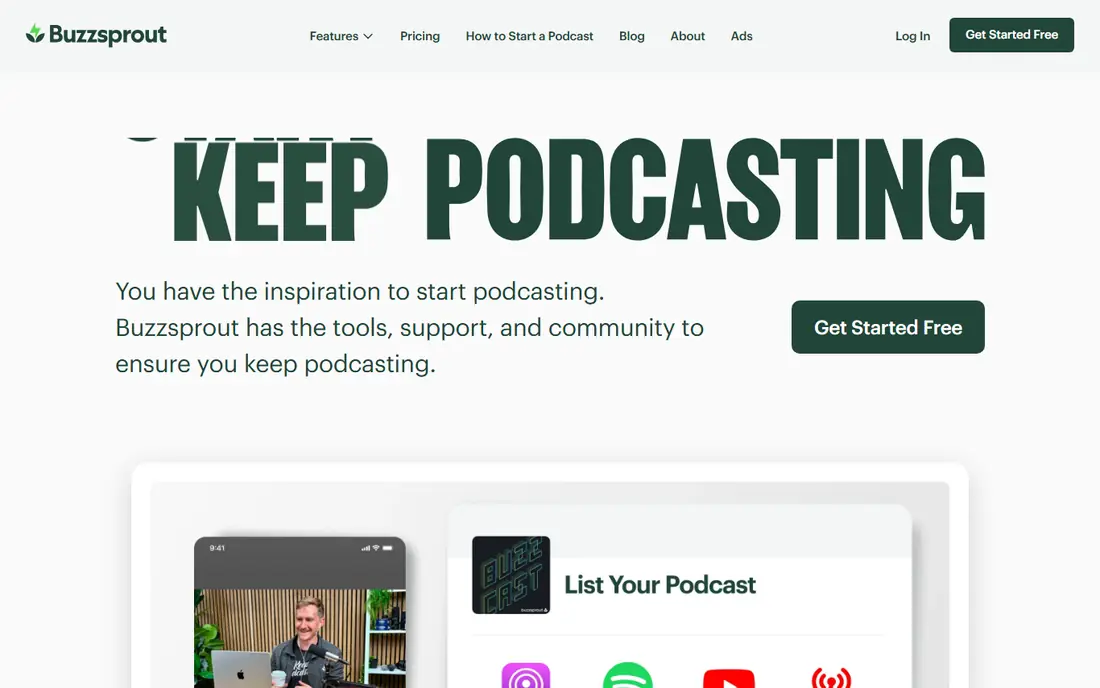
Buzzsprout is the most beginner-friendly host in this list. You upload an episode, add a title and description, and Buzzsprout distributes it to Apple Podcasts, Spotify, and other directories. Paid plans start at $18 per month on monthly billing, or $15 per month on annual billing, with higher plans for more upload hours and for video. A free plan lets you test the workflow, though episodes are removed after 90 days. The strength is simplicity. The dashboard, the episode tools, and the analytics are easy to read, and add-ons such as Magic Mastering and transcripts help a new podcaster sound cleaner without extra software. The limit is upload hours. A weekly hour-long show needs a plan that covers about four hours a month, so check the hour cap before you pick the cheapest tier. For a first show with a regular schedule, Buzzsprout is a safe pick.
- Very easy upload and distribution
- Free plan for testing
- IAB-certified analytics on paid plans
- Upload hours are capped per plan
- Episodes on the free plan are removed after 90 days
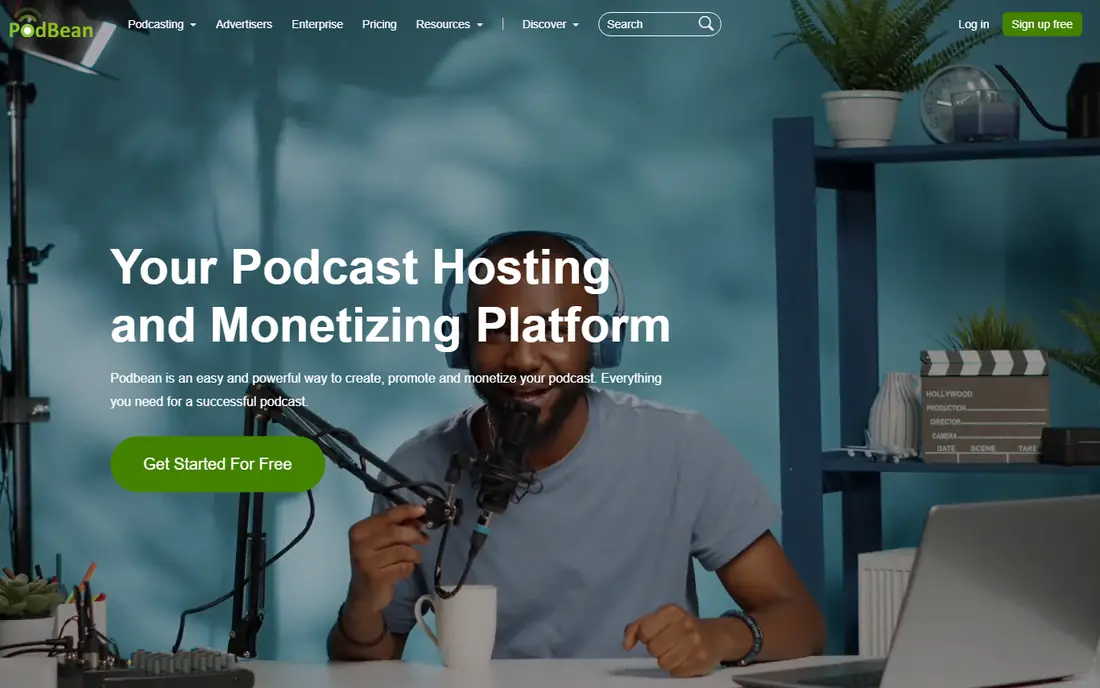
Podbean is an all-in-one host with podcasting, live streaming, and monetisation tools in one account. The free plan covers a limited total upload amount, while Unlimited Audio costs $17 per month on monthly billing or $12 per month on annual billing. That annual price makes Podbean one of the best-value paid hosts for a show that publishes weekly. The monetisation tools are a plus, including patron support, ads, and premium episodes, along with a Podbean app where listeners can follow your show. Video support is available, though the fullest video features sit on higher tiers. The main limit is the free plan, which is for testing rather than a long-running show. For a regular show on a budget, Podbean on annual billing is hard to beat.
- Unlimited audio uploads on paid audio plan
- Live streaming and video options
- Monetisation tools built in
- Free plan has a total upload limit
- Advanced video features need higher tiers
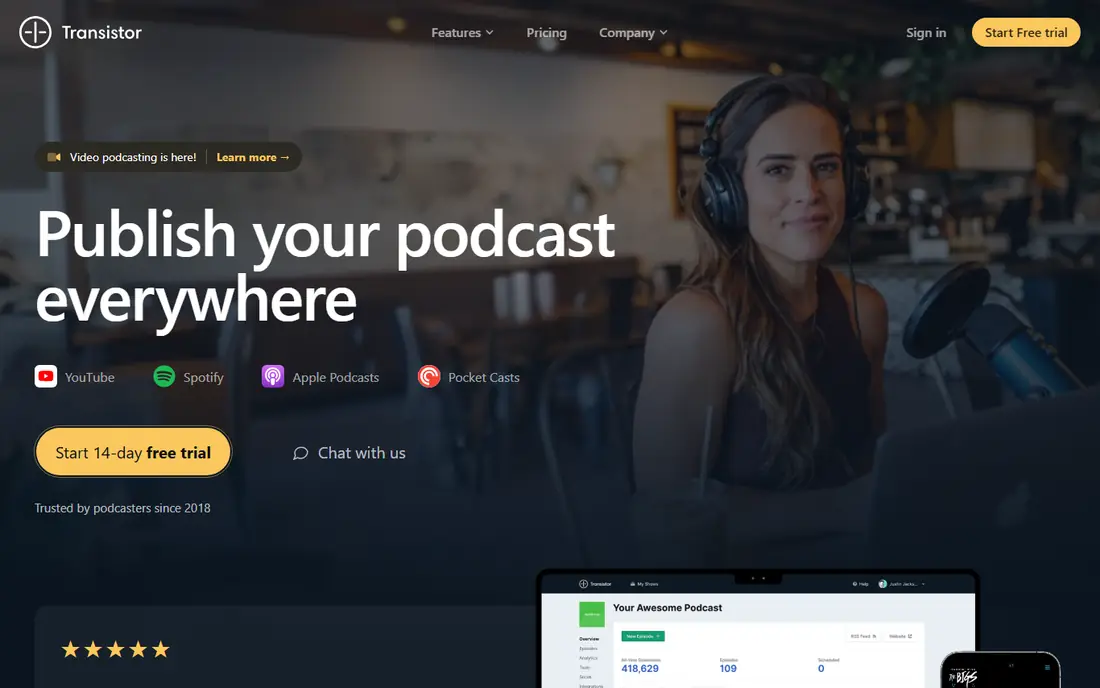
Transistor lets you run unlimited podcasts on one account, which sets it apart from hosts that charge per show. Starter costs $19 per month, or $15.83 per month on annual billing, with higher tiers for more downloads and team features. A 14-day trial is available, but there is no permanent free plan. That multi-show model suits networks, agencies, and creators who run a main show plus a bonus or private feed. Transistor also offers private podcasting, subscriber-only feeds, and a modern dashboard that is easy for a team to use. The limit is downloads. Lower tiers cap monthly downloads, so a show that grows fast may need to move up a tier sooner than on an hours-capped host. Check your download trend before you commit to a tier.
- Unlimited podcasts per account
- Clean dashboard and team access
- Good analytics and private feeds
- No permanent free plan
- Download caps apply on lower tiers
Captivate is built for growth and teams. Personal costs $19 per month on monthly billing or $17 per month on annual billing, with unlimited shows, storage, and team members on paid plans. Features include smart links that send listeners to their preferred app, growth analytics, and a marketplace for monetisation, along with private podcasting for internal shows. The unlimited shows and team access make Captivate a strong pick for agencies and networks, similar to Transistor. The limit is the same download-cap model, so a popular show can outgrow the entry tier, and video podcasting needs an add-on on some plans. For a team that publishes several shows and wants growth tools in the same dashboard, Captivate is worth the entry price, though beginners may prefer a free host first.
- Unlimited shows, storage, and team members
- Smart links and growth tools
- Private podcasting
- No free plan
- Download caps on lower tiers
- Video needs an add-on on some plans
Libsyn, short for Liberated Syndication, is one of the oldest podcast hosts, with more than 20 years in the field. Entry plans start at $5 per month, with higher tiers for more storage, and the platform includes IAB-certified analytics and access to the AdvertiseCast marketplace for ads. Distribution covers Apple Podcasts, Spotify, and other major directories. The strength is stability. Shows that have hosted on Libsyn for years rarely move, and the low entry price suits a show that publishes short episodes infrequently. The weakness is the interface, which feels dated next to Buzzsprout or Transistor, and storage-based pricing, which is less intuitive than hours or downloads for new podcasters. Libsyn suits established shows that value a proven host over a modern dashboard.
- Long history and reliable distribution
- Low entry price
- Built-in ad marketplace
- Interface feels dated
- Storage-based pricing can confuse new users
- No free plan
Spotify for Creators, formerly Spotify for Podcasters and Anchor, is a free host from Spotify. It offers unlimited audio and video hosting at no cost, distributes your show to Spotify and other podcast apps through an RSS feed, and includes basic recording, editing, and audience tools. There is no paid tier needed to start, which makes it the lowest-risk way to launch a show. The strength is price and reach. A beginner can publish without a monthly bill and still reach Spotify listeners directly. The limit is depth. Analytics and monetisation are tied to Spotify tools, and advanced features such as detailed IAB analytics, private feeds, and team workflows are thinner than on paid hosts. Start here if you are testing a show idea, and move to a paid host when you need deeper analytics or a multi-show setup.
- Free unlimited audio and video hosting
- Direct Spotify distribution
- Simple recording and editing tools
- Fewer advanced analytics than paid hosts
- Monetisation is tied to Spotify tools
Acast is a host with a strong focus on advertising and monetisation. A free plan exists for testing, while Essential costs $25 per month on monthly billing or $14.99 per month on annual billing, with higher tiers for more features and video. Acast distributes to Apple Podcasts, Spotify, and other apps, and its marketplace connects shows with advertisers. The ad focus is the draw for shows that already have an audience and want to earn from it without managing sponsors directly. The limit is price and audience size. The paid entry is higher than Podbean or Buzzsprout on monthly billing, and ad revenue depends on audience size, so a new show with few listeners will earn little from ads at first. Acast suits a growing show that is ready to monetise, rather than a first show still finding listeners.
- Ad marketplace and monetisation focus
- Free plan for testing
- Broad distribution
- Paid entry is higher than some rivals
- Best ad features suit larger audiences
RSS.com offers a free plan for starting a podcast, with paid plans for unlimited episodes, more storage, and fuller features. The free plan lets a beginner test hosting and distribution without paying, while paid plans suit a regular show that wants a simple host without a complex dashboard. Distribution covers major podcast apps through an RSS feed, and the interface stays simple. The strength is simplicity and a low starting cost. RSS.com does not try to be a full media suite, which helps a solo podcaster who just wants to publish and distribute. The limit is depth. Analytics, monetisation, and team tools are thinner than on Captivate, Transistor, or Podbean. For a simple show with a steady schedule, RSS.com is a solid low-cost pick, and the free start makes it easy to test before paying.
- Free plan for starting
- Unlimited episodes on paid plans
- Simple dashboard and distribution
- Free plan limits need checking
- Advanced features are thinner than larger hosts
How we picked these
We checked each vendor pricing page, feature list, and free plan terms in October 2026, along with distribution and analytics details. We kept hosts that are live now, that create a full RSS feed for distribution to Apple Podcasts and Spotify, and that a podcaster can start on a free plan, a trial, or a clear paid tier. Recording-only tools without full hosting were left out, since they do not replace a host.
How to choose a podcast host for your schedule
Start with your publishing schedule. Count episodes per month and their average length, then check whether a host caps hours, downloads, or storage. An hours-capped host such as Buzzsprout suits a predictable schedule, while a download-capped host such as Transistor or Captivate suits a show with a steady audience that does not spike sharply. A free host such as Spotify for Creators suits a test show, while a paid host suits a show you plan to run for a year or more. Also check ownership of your feed. You should be able to redirect your RSS feed if you move hosts later, without losing subscribers. Test the dashboard with a real episode, check how the show page looks on a phone, and confirm that transcripts, chapters, and show notes work the way you expect before you publish your first full season.
Frequently asked questions
What is the best podcast hosting platform for beginners?
Buzzsprout is the easiest paid starting point, with a simple dashboard and clear limits, while Spotify for Creators is the best free starting point, with unlimited hosting. Start free on Spotify for Creators to test your show idea, and move to Buzzsprout or Podbean when you want deeper analytics and a paid plan.
Do I need a podcast host if I publish on Spotify?
Yes, if you want listeners outside Spotify as well. A host creates the RSS feed that Apple Podcasts and other apps read. Spotify for Creators is itself a free host, so you can use it to reach other apps too, not just Spotify. YouTube can import a show from an RSS feed, but it does not create a feed for you.
How much does podcast hosting cost?
Most paid hosting starts between $5 and $19 per month, depending on the host and billing term. Libsyn starts at $5, Podbean at $12 on annual billing, Buzzsprout at $15 on annual billing, and Transistor and Captivate at $19 on monthly billing. Free hosts such as Spotify for Creators cost $0, though they offer fewer advanced features.
What is the difference between upload hours and download caps?
Upload hours cap how much audio you can publish each month, while download caps limit how many times listeners can download episodes. An hours cap suits a predictable schedule, while a download cap suits a show with a stable audience. Check which cap your host uses, and pick a tier that fits your schedule and your audience size.
Can I move my podcast to another host later?
Yes, in most cases, by redirecting your RSS feed from the old host to the new one. That redirect tells podcast apps where to find new episodes, so subscribers should follow the show without re-subscribing. Check that your current host allows a feed redirect before you move, and test the new feed before you cancel the old account.
Which podcast host is best for video podcasts?
Spotify for Creators offers free video hosting, while Buzzsprout offers video on its Audio plus Video plan and Podbean offers video on higher tiers. Transistor and Captivate also support video on higher plans or with add-ons. Pick based on whether video is your main format or an extra, since video tiers cost more than audio-only plans.
Sources
See where you really rank - block by block
ProMapRanker scans Google Maps across a grid of your service area. Simple monthly plans from $19, white-label on every plan.
Start freeKeep reading
 best seo management software
Best SEO Management Software in 2026
We compared the best seo management software for audits, rank tracking and keyword research, so you can choose a tool that fits your budget and team today.
Read → best pos software
Best POS Software in 2026: 8 Systems Compared
Compare the best POS software in 2026 for retail and restaurants, with starting prices, processing rates, hardware notes and honest trade-offs for each pick.
Read → best payroll services for nonprofits
Best Payroll Services for Nonprofits in 2026
Compare the best payroll services for nonprofits on price, tax filing, fund tracking, benefits, multi-state coverage, and support for small and growing teams.
Read →