 ProMapRanker
Best Lead Generation Companies for Contractors in 2026

Key takeaways
- Most marketplace leads are shared with other contractors, so speed of response matters more than the headline lead price.
- Thumbtack and Bark suit testing a market with no contract, while Angi suits contractors who can handle volume and a membership model.
- Modernize and Service Direct suit higher-ticket trades where one signed job can cover many lead costs.
- Track cost per signed job, not cost per lead, and pause any channel that does not convert after a fair trial.
Quick comparison
| Pick | Great for | Pricing starts at | Free tier | |
|---|---|---|---|---|
 Angi Leads | high volume | See website | No | Visit |
 Thumbtack | testing demand | See website | No | Visit |
 CraftJack | lower-cost shared leads | See website | No | Visit |
 Modernize | high-ticket home improvement | See website | No | Visit |
 Networx | smaller trade volume | See website | No | Visit |
 Bark | hand-picked leads | See website | No | Visit |
 Service Direct | pay-per-call leads | See website | No | Visit |
 Houzz Pro | remodelers and design firms | $249 per month | Free trial | Visit |
The best lead generation companies for contractors
We compared marketplaces and pay-per-call services that are live in the United States and that serve home service and improvement trades.
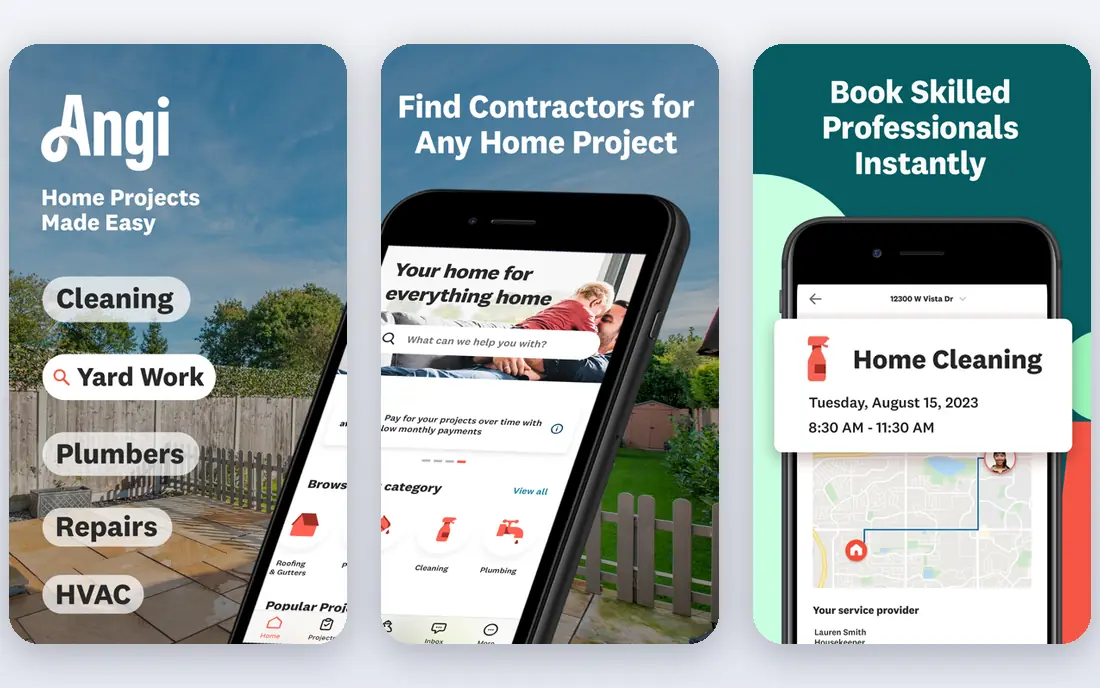
Angi Leads, formerly HomeAdvisor, gives contractors fast access to homeowners who are already asking for work. That volume helps a new trade or a new area get jobs quickly, without waiting for search rankings or referrals to build. The profile and review system also helps contractors with strong ratings stand out.
The model has real costs, since leads are shared and a membership fee often sits on top of per-lead fees. Contractors who call back slowly will pay for leads they never book, so response speed and a clear follow-up process matter. Read contract and renewal terms before signing, and track cost per signed job from week one.
- Largest homeowner audience among marketplaces
- Fast volume for new trades or areas
- Profile and review system
- Leads shared with several contractors
- Membership and lead fees stack up
- Contract terms need careful reading
Thumbtack suits contractors who want to test a market without a long contract, since you pay per contact and can pause when work is full. Budget caps help control spend, and the broad trade list covers many home services. For a new contractor, that low commitment is a real advantage.
The catch is reply rate, since a share of paid contacts never respond, which raises the true cost per booked job. Dynamic pricing also means competitive markets cost more. Use Thumbtack as a test channel first, track replies and bookings closely, and keep it only if the signed-job math works.
- Pay per contact with no long contract
- Budget caps and pause controls
- Broad trade coverage
- Paid contacts include homeowners who never reply
- Pricing varies by market and trade
- Shared leads
CraftJack appeals to contractors who want shared leads at a lower price point than the largest marketplaces. Leads are often shared with fewer contractors, and answering fast can earn a discount in some setups. That combination helps small teams that answer the phone well.
Quality still varies, and shared leads mean you will lose some jobs to faster rivals no matter how good your work is. Treat CraftJack as a volume channel with strict tracking, not as a guaranteed pipeline. If your team answers fast, the lower cost can make the math work.
- Often lower per-lead cost than larger marketplaces
- Shared with fewer contractors in many cases
- Fast-response discounts in some plans
- Still a shared-lead model
- Lead quality varies by trade and market
- Owned by the same parent as Angi
Modernize focuses on big-ticket home improvement trades, where one signed roofing or window job can cover many lead costs. That focus makes it a better fit for high-value work than for small repair jobs. Contractors in solar, roofing, windows, HVAC, and siding get the most value from the platform.
Pricing is quoted by market, and leads are shared, so the first contractor to reach the homeowner often wins the visit. Teams that return calls hours later will waste money here. If your average job value is high and your office answers fast, Modernize is worth a trial.
- Focus on high-ticket trades like roofing, solar, and windows
- Strong homeowner request flow
- Suits larger jobs
- Pricing is not published
- Leads are shared
- Best only for teams that follow up within minutes
Networx gives smaller trades and smaller markets another source of homeowner requests, with a per-lead model that some contractors find easier to budget. The platform covers a wide trade list, so niche services can still find demand. In areas where larger marketplaces are thin, that coverage helps.
Shared leads and variable quality remain the limits, and the deposit and credit rules should be read before you fund an account. Track which trades and areas convert, and pause the ones that do not. For a small contractor, Networx works best as one channel among several, not the only one.
- Covers many home service trades
- Per-lead model with a refundable credit deposit in some setups
- Useful in smaller markets
- Shared leads
- Lead quality varies by area
- Deposit and credit rules need reading
Bark lets contractors see a lead before spending credits on it, which gives more control than automatic lead delivery. That choice helps contractors pick jobs that fit their trade, area, and schedule. No long contract also makes it easy to test and pause.
The credit system can hide the real cost, since credit prices and lead costs in credits are easy to misread. Credits may also expire, and refund rules catch some contractors out. Convert credits to dollars before you compare Bark with per-lead rivals, and track cost per signed job in dollars only.
- See leads before spending credits
- No long-term contract
- Broad service coverage
- Credit system hides the true dollar cost
- Leads sold to several pros
- Credits can expire
Service Direct sells live calls from homeowners, which often convert better than form fills because the caller is already on the phone. Pay-per-call pricing also makes the cost model clearer than shared form leads. For trades where a phone conversation closes jobs, that format is a real advantage.
Call costs vary by trade and market, and a missed or poorly handled call wastes the spend. Staffing the phone during business hours, with a clear script and booking process, is essential. If your team answers well, pay-per-call can beat shared form leads on cost per signed job.
- Live inbound calls rather than form fills
- Pay per qualified call model
- No long contract in many setups
- Call costs vary widely by trade
- Missed calls still cost time and money
- Call handling quality decides results
Houzz Pro suits remodelers, designers, and design-build firms that win work with photos, portfolios, and proposals. The platform combines a directory profile with CRM, estimates, and client communication tools, so a firm can manage leads and projects in one place. That fit matters for high-value, visual work.
It is not a pure lead marketplace, so contractors expecting a stream of cheap form leads may be disappointed. The monthly cost also stacks with any paid placement. For design-led firms with strong photos and reviews, Houzz Pro is a good long-term channel, not a quick volume fix.
- Strong visual portfolio and review presence
- CRM and proposal tools in one place
- Suits design-led firms
- Monthly software cost on top of any ad spend
- Lead flow is not a pure pay-per-lead model
- Weaker for small repair trades
How we picked these
We compared vendor pages, 2026 marketplace guides, and contractor cost breakdowns, and we kept only services that are live and that serve contractors in the United States. We favoured a mix of shared leads, hand-picked leads, pay-per-call, and software-plus-directory models, since different trades need different lead types. We marked pricing as See website where vendors quote by market or trade, rather than inventing a fixed price.
How to buy contractor leads without wasting money
Start with your numbers before you buy anything. Work out your average job value, gross margin, and the close rate you need to make a lead channel pay. That math gives you a maximum cost per signed job, and any channel that cannot hit it after a fair trial should be paused, no matter how busy it feels.
Next, fix response speed and follow-up before you increase spend. Call new leads within minutes, send a short message if no one answers, and try again at a different time. Many contractors lose shared leads in the first hour, not because the lead was bad, but because a rival called first. A simple follow-up script and a shared inbox help more than a bigger lead budget.
Finally, track every channel separately for at least 90 days. Record leads, replies, booked visits, signed jobs, and revenue, then work out cost per signed job for each channel. Keep the winners, pause the losers, and never let one marketplace become your only source of work. Owned channels like referrals, reviews, and local search should grow alongside any paid leads.
Frequently asked questions
What is the best lead service for contractors?
There is no single best service, since the right pick depends on trade, job value, and response speed. Thumbtack suits testing with no contract, Angi suits volume, and Modernize suits high-ticket trades. Test one channel at a time, track cost per signed job, and keep the channel that converts for your trade and area.
Are shared leads worth it?
Shared leads can work when your job value is high enough and your team answers fast, since the first caller often books the visit. They waste money when follow-up is slow or job value is low, since several contractors pay for the same homeowner. Track cost per signed job, not lead count, to judge any shared channel fairly.
How much do contractor leads cost?
Costs vary by trade, market, and lead type, and most vendors quote by market rather than publishing a fixed list. Shared form leads often cost far less per lead than exclusive calls, but they also convert at a lower rate. Ask vendors for a written quote for your trade and area, and compare cost per signed job across channels.
Should new contractors use lead marketplaces?
Yes, for a short test, since marketplaces can bring jobs while referrals and search rankings build. Set a budget cap, answer fast, and track results weekly. Do not sign a long contract before you know the channel converts, and build owned channels at the same time so you are not dependent on one marketplace.
What is the difference between pay-per-lead and pay-per-call?
Pay-per-lead usually means a form fill or request sent to several contractors, while pay-per-call means a live phone call from a homeowner. Calls often convert better because the homeowner is already engaged, but they cost more per contact and need staff to answer. Choose the format your team can handle well, not just the cheaper headline price.
Sources
See where you really rank - block by block
ProMapRanker scans Google Maps across a grid of your service area. Simple monthly plans from $19, white-label on every plan.
Start freeKeep reading
 twitch alternatives
Twitch Alternatives in 2026
Explore the best Twitch alternatives in 2026 for live streaming, with free platforms, monetisation options, audiences, chat tools, and tips for new streamers.
Read → firebase alternatives
Best Firebase Alternatives in 2026
Looking for Firebase alternatives? We compare 9 backend platforms for auth, databases, realtime, storage, functions, self-hosting, and pricing for your app.
Read → companies with best work life balance
Companies With Best Work Life Balance in 2026
See companies with best work life balance in 2026, ranked by employee ratings, with flexible work options, benefits, and what to check before applying.
Read →