 ProMapRanker
Best Laboratory Software in 2026

Key takeaways
- Large regulated labs still rely on LabWare, STARLIMS, and LabVantage, while smaller labs get more value from cloud tools with published prices.
- Benchling and SciNote fit research work best, because they combine experiment records with sample and inventory tracking.
- QBench is the clearest mid-market option with a published starting price, at $275 per user per month.
- Quote-only pricing is the norm at the enterprise end, so budget for implementation and validation as well as the licence itself.
- A short pilot with real samples and real instruments tells you more than any demo.
Quick comparison
| Pick | Great for | Pricing starts at | Free tier | |
|---|---|---|---|---|
 LabWare LIMS | Large regulated labs | See website | No | Visit |
 STARLIMS | Regulated multi-industry labs | See website | No | Visit |
 Benchling | Biotech research teams | See website | Free trial | Visit |
 LabVantage LIMS | Global quality and research labs | See website | No | Visit |
 Thermo Scientific SampleManager | Instrument-heavy labs | See website | No | Visit |
 QBench | Growing testing labs | $275 per user per month | Free trial | Visit |
 CloudLIMS | Small and mid-size labs | See website | Free trial | Visit |
 LabCollector | Research labs on a budget | See website | Yes | Visit |
 SciNote | Academic and startup labs | See website | Yes | Visit |
The best laboratory software
We compared official product pages, pricing pages, and public documentation for laboratory information management systems, electronic lab notebooks, and combined research platforms. The list below covers enterprise systems and smaller cloud options, so a lab can compare scale, compliance support, and cost in one place.
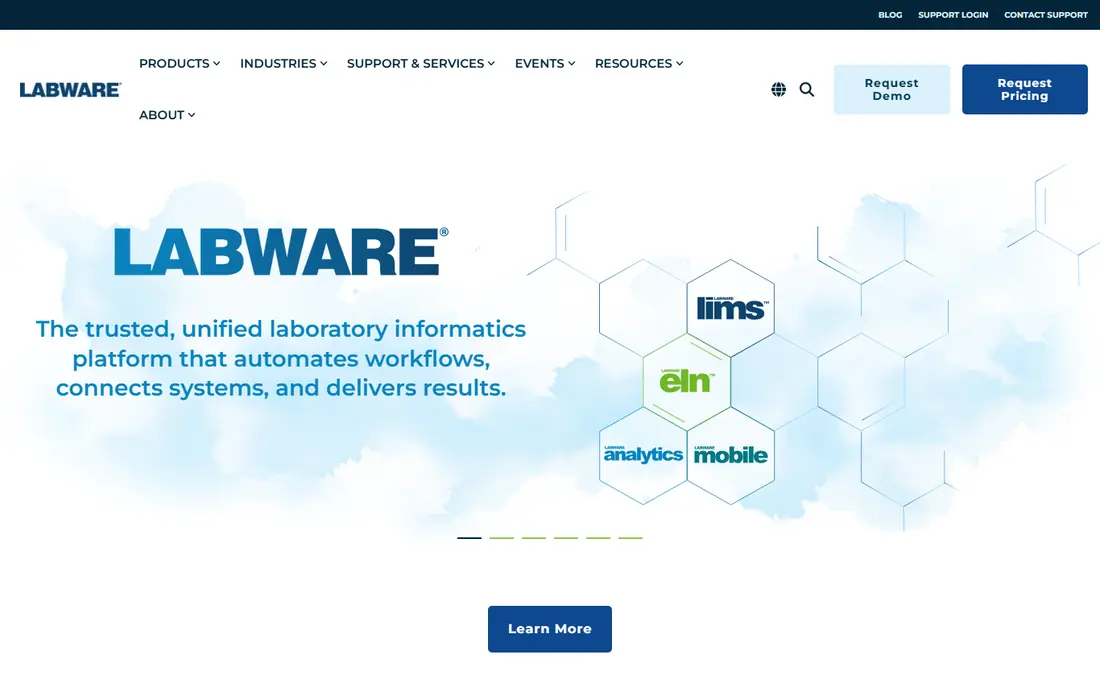
LabWare LIMS suits large laboratories that run the same controlled processes across several sites. It handles sample login, testing workflows, results, reporting, and audit trails in one system, and it is built for labs that must show exactly who did what and when. That depth is the reason many pharmaceutical and manufacturing quality labs standardise on it.
The trade-off is effort. Configuration, validation, and training take real time, and small labs will find the project heavier than the day-to-day benefit. If your lab needs strict control, complex approvals, and integration with instruments and enterprise systems, LabWare is a strong shortlist candidate. If you need to go live in weeks, look at the cloud options further down this list first.
- Deep configurability
- Strong compliance tooling
- Proven at multi-site scale
- Long implementation
- Needs trained administrators
- Quote-only pricing
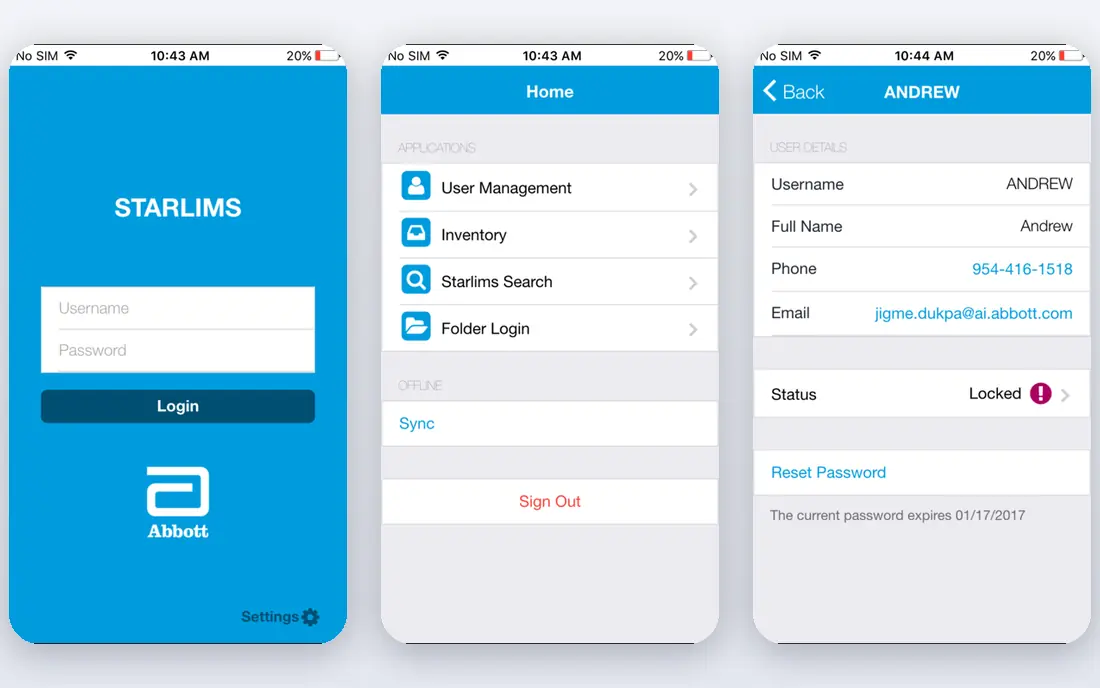
STARLIMS covers the full path from sample receipt to reporting, with workflow tools for quality control, public health, food, environmental, and pharmaceutical labs. It supports audit trails, electronic signatures, and controlled data handling, which matter when results feed regulatory submissions or customer certificates. The platform also connects with instruments and other business systems.
For a mid-size lab, the main question is scope. STARLIMS can do a great deal, but buying the full platform for a narrow testing workload can add cost and administration. It fits best when a lab has varied sample types, several departments, or strict regulatory duties. Ask for a phased plan and a written implementation estimate before you commit.
- Broad industry coverage
- End-to-end workflow support
- Strong compliance features
- Enterprise cost and complexity
- Implementation takes months
- Quote-only pricing
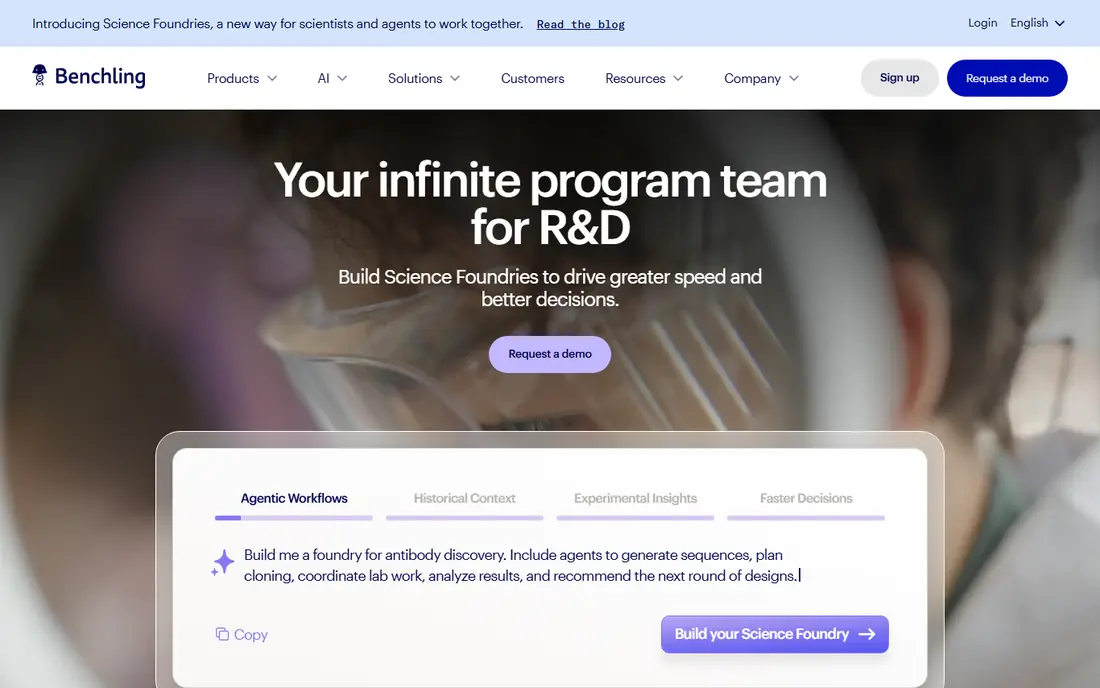
Benchling is built for research and development teams in biotech and life sciences. It brings experiment records, molecular biology tools, sample tracking, and inventory into one workspace, so scientists spend less time hunting for notes and results across separate files. Collaboration is a clear strength, with shared projects, comments, and controlled access for team members.
Benchling is less of a fit for a traditional quality control lab that needs certificate generation, batch release, and heavy instrument scheduling as its core work. Research teams will get the most from it, especially when experiments, plasmids, cell lines, and assay results need to stay linked. Request a trial with your own experiment types before judging the interface.
- Modern research interface
- Combined notebook and sample tracking
- Good collaboration tools
- Less suited to high-volume manufacturing quality control
- Pricing is quote-based
- Advanced modules add cost
LabVantage combines laboratory management with quality and analytics tools, which helps labs that want sample data, stability data, and quality events in one place. It supports regulated workflows, configurable testing, and reporting across sites, and it offers both cloud and on-premise deployment. That range makes it a practical choice for organisations that run research and quality work side by side.
The catch is the same as with other enterprise systems. You will need a structured rollout, clear workflow definitions, and time for validation in regulated settings. LabVantage earns its place for labs with scale and complexity. A small testing lab with one workflow will likely find a simpler cloud system faster and cheaper to run.
- Single platform for lab and quality data
- Strong analytics
- Global deployment options
- Enterprise pricing
- Setup needs specialist help
- Smaller labs may not use the full range
SampleManager, from Thermo Fisher Scientific, is designed for labs where instruments drive the work. It manages samples, scheduling, instrument connections, results, and reporting, and it suits high-throughput environments in pharma, food, environmental, and industrial testing. The instrument focus is a real advantage when manual result entry is a source of errors and delays.
As with other enterprise tools, the setup is the hard part. Workflows, instrument interfaces, and reporting need careful design, and that work should be priced into the project from the start. SampleManager fits labs that already have a large instrument estate and a clear need for automation. Smaller labs should weigh that setup cost against a cloud tool that covers fewer instruments but goes live sooner.
- Strong instrument integration
- Handles high sample volumes
- Broad laboratory coverage
- Complex to configure
- Enterprise pricing
- Training burden for new staff
QBench is a cloud laboratory system aimed at testing labs that want configurability without an enterprise project. Labs can shape workflows, fields, and automations without code, and the platform covers sample tracking, inventory, reporting, and customer portals. That mix suits contract labs, food and beverage labs, environmental labs, and materials testing teams.
Published pricing is a genuine advantage here, since most rivals hide prices behind a sales call. The Foundation tier starts at $275 per user per month, with Growth and Advanced tiers above it. The per-user model means headcount drives cost, so count every person who needs full access, not just bench staff. Trial it with a real workflow, including a customer report, before you sign.
- Published pricing
- No-code workflow configuration
- Customer portal included on higher tiers
- Per-user cost rises fast with team size
- Quality tools sit on higher tiers
- Implementation still needs planning
CloudLIMS is a cloud-based laboratory system for testing, research, and clinical labs that want to avoid servers and local IT work. It covers sample tracking, test management, inventory, reporting, and audit trails through a browser, which keeps access simple for staff across sites. For labs without a dedicated IT team, that delivery model removes a whole layer of work.
The limit is scale and customisation. Very large labs with complex manufacturing workflows or deep instrument estates may need more configurability than CloudLIMS offers. For a small or mid-size lab that wants a controlled, traceable system without a long project, it is a sensible pick. Confirm pricing for your user count, since published figures vary by plan and term.
- Pure cloud delivery
- Quick deployment
- Compliance features for testing and clinical work
- Less depth than enterprise systems
- Pricing varies by plan
- Large custom projects may stretch it
LabCollector, from AgileBio, is a modular system that combines sample management, inventory, experiment records, and workflows. Research labs, core facilities, biotech firms, and clinical trial teams use it to centralise reagents, samples, equipment, and results. The modular approach lets a lab start with the pieces it needs and add more later, rather than paying for a full enterprise suite on day one.
Pricing depends on modules and user numbers, so get a written quote for the exact modules you plan to use. A free starter option exists, which helps small academic teams test the basics. LabCollector is not the slickest tool on this list, but it offers strong value for research labs that need real traceability without enterprise budgets.
- Modular design
- Combined LIMS and notebook
- Cloud and on-premise options
- Module pricing can add up
- Interface feels dated in places
- Setup help may be needed for complex labs
SciNote is an electronic lab notebook with inventory management and compliance features, aimed at academic, government, and startup labs. It helps teams record protocols, results, and inventory in one place, with audit trails and access controls that support good laboratory practice. For a research group moving off paper notebooks and spreadsheets, it is an easy step up.
SciNote will not replace a full manufacturing quality system, and labs with heavy certificate or batch-release work should look at the enterprise options above. Its strength is accessibility: a free tier, a clear interface, and a setup that a small team can handle without consultants. If your lab is research-led and budget-conscious, SciNote deserves a trial.
- Accessible pricing
- Inventory and compliance features
- Good fit for academic teams
- Less depth for manufacturing quality control
- Advanced features sit on paid plans
- Reporting is simpler than enterprise tools
How we picked these
We compared official feature pages, pricing pages, and public documentation, and we favoured tools that are live and supported in October 2026. We included enterprise systems for regulated scale, cloud systems for faster deployment, and research platforms for experiment-led work. We left out tools that are retired, merged into a different product, or priced only as part of a wider suite with no laboratory focus. Where pricing was not published, we wrote See website rather than guessing a figure.
What to check before you buy
Start with your sample journey, not a feature list. Map how a sample arrives, who logs it, which tests run, how results are approved, and what the customer or regulator receives at the end. That map shows which workflows matter, which integrations are essential, and which features are nice to have. A tool that matches the map will feel simple in daily use, while a tool with extra features but a poor fit for that path will slow every shift.
Compliance and data control come next. Ask how audit trails, electronic signatures, user permissions, and data exports work, and ask for a sample audit report. If your lab works under good laboratory practice, good manufacturing practice, or ISO 17025, confirm the vendor can support validation and show relevant customer examples. Also check data export and contract terms, so you can leave with your records intact if you switch later.
Finally, run a pilot with real work. Use real sample types, real instruments, and a real report format, and include the people who will use the system every day. Measure login-to-result time, report turnaround, and how many steps need manual workarounds. Pilot results, plus a written quote for licences, implementation, training, and support, give you a fair total cost to compare across vendors.
Frequently asked questions
What is the difference between LIMS software and an electronic lab notebook?
A LIMS manages samples, tests, workflows, and results across a laboratory, while an electronic lab notebook records experiments, protocols, and observations. Many research tools now combine both, but quality control labs usually need the sample and reporting depth of a LIMS first.
What is the best laboratory software for a small lab?
For a small lab, LabCollector, CloudLIMS, SciNote, and QBench are the most practical starting points, because they offer cloud delivery and faster setup than enterprise systems. The right pick depends on sample volume, compliance needs, and budget, so trial two options with the same workflow.
How much does laboratory software cost?
Costs range from free starter tiers for small research teams to quote-only enterprise contracts that include implementation and validation. Mid-market cloud tools often charge per user per month, so total cost depends on how many staff need full access.
How long does it take to implement laboratory software?
Cloud tools can go live in weeks for a straightforward workflow, while enterprise systems often take six to eighteen months when validation, instrument interfaces, and multi-site rollout are involved. The workflow design and validation work, not the software install, usually takes the most time.
Does laboratory software work for labs in India?
Yes, several tools on this list serve labs in India, including cloud systems that need no local servers. Check data hosting options, local support hours, currency and tax handling on invoices, and compliance with any local laboratory accreditation rules before you buy.
Can laboratory software connect to instruments?
Most tools on this list offer instrument connections, either directly or through an interface layer, but coverage varies by instrument brand and model. List your instruments by make and model during evaluation and ask the vendor to confirm each connection in writing.
Sources
See where you really rank - block by block
ProMapRanker scans Google Maps across a grid of your service area. Simple monthly plans from $19, white-label on every plan.
Start freeKeep reading
 who has best internet service
Who Has the Best Internet Service in 2026
Who has best internet service for US homes? We compare fiber, cable, fixed wireless and satellite providers on speed, price, availability and terms today.
Read → which survey tool has the best analytics
Which Survey Tool Has the Best Analytics in 2026
Find which survey tool has the best analytics in 2026, comparing Qualtrics, SurveyMonkey, Typeform, Alchemer, and more on reports, text, and stats today.
Read → which streaming service has the best movies
Which Streaming Service Has the Best Movies in 2026
Answering which streaming service has the best movies, with Netflix, Max, Criterion and more compared on libraries, prices and free options in this guide.
Read →