 ProMapRanker
Best Keyword Tracking Tools in 2026


Best overall value in a full suite · Pricing starts at: $129 per month
Key takeaways
- Dedicated trackers such as SE Ranking, AccuRanker, and Nightwatch price mainly by how many keywords you track and how often they check.
- Full suites such as Semrush and Ahrefs make sense when you also need keyword research, audits, and competitor data in the same subscription.
- Google Search Console is free and shows real average positions, but it does not track a custom keyword list the way paid tools do.
- Daily updates matter for competitive terms and local packs, while weekly updates are enough for slow-moving informational pages.
- Check a handful of rankings by hand during any trial, because two tools can report different positions for the same term in the same city.
Quick comparison
| Pick | Great for | Pricing starts at | Free tier | |
|---|---|---|---|---|
| SE Ranking | Best overall value in a full suite | $129 per month | Free trial (14 days) | Visit |
 Semrush | All-in-one SEO plus rank tracking | $139 per month | Free trial (7 days) | Visit |
 Ahrefs | Tracking bundled with research | $29 per month | Yes | Visit |
 AccuRanker | Fast, accurate agency tracking | $249 per month | Free trial (14 days) | Visit |
 Nightwatch | Unlimited seats and AI search tracking | See website | Free trial (14 days) | Visit |
 Wincher | Simple tracking for small sites | $49 per month | Free trial | Visit |
 Mangools SERPWatcher | Easiest tracker for beginners | $29.90 per month | Free trial (10 days) | Visit |
 ProRankTracker | Detailed agency reporting | $99 per month | Free trial | Visit |
 Google Search Console | Free first-party position data | Free | Yes | Visit |
The best keyword tracking tools
Keyword tracking answers a simple question: where do you actually rank, for the terms that bring business, in the places your customers search from. The tools below differ in update speed, local precision, reporting, and price per keyword, and those differences matter more than a long feature list.
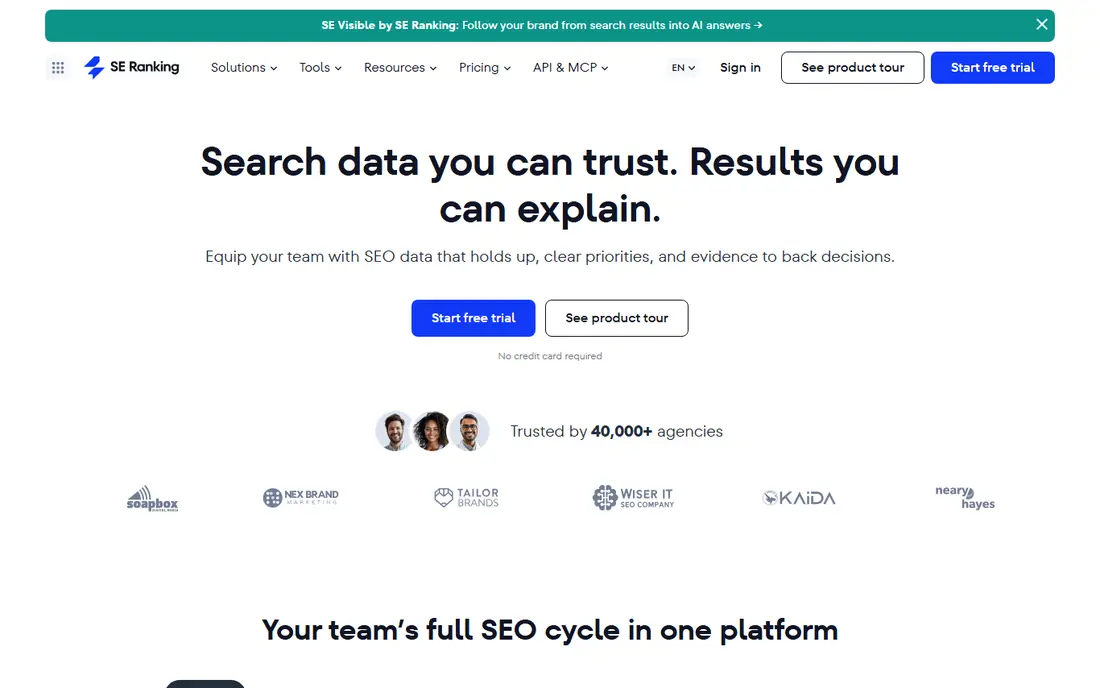
SE Ranking earns the top spot for most small agencies and in-house teams because its Core plan tracks a large set of keywords daily without enterprise pricing. You get rank tracking alongside site audits, keyword research, backlink checks, and client reporting, which means one subscription can replace two or three separate tools. For a team tracking a few hundred terms across several sites, that bundle is hard to beat on cost per keyword.
The catch is that newer AI search features sit behind add-ons rather than inside the base plan, so budget for them if tracking ChatGPT, Gemini, or AI Overviews matters to your clients. Setup also takes an afternoon if you want location, device, and competitor tracking configured properly.
- Daily tracking for a large keyword allowance
- Audits, research, and reporting in one plan
- Clear per-keyword value at the Core tier
- Advanced AI search tracking costs extra as an add-on
- Interface covers many tools, so setup takes time
- Lower tiers limit some features
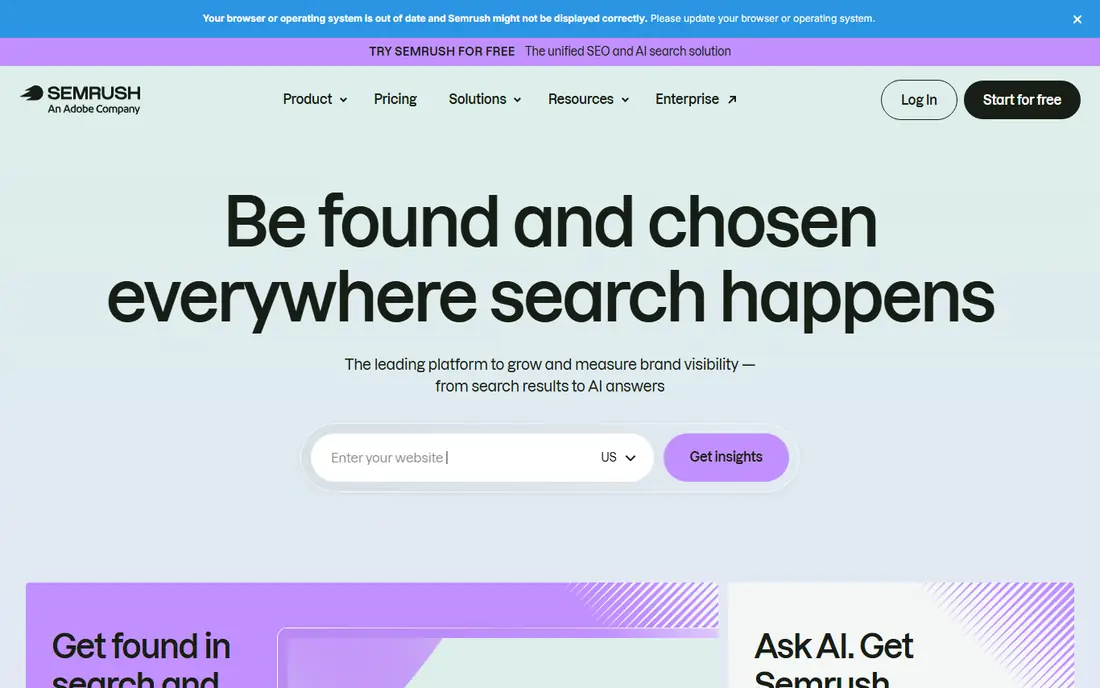
Semrush is the best choice when rank tracking is one part of a wider SEO job. Its Position Tracking tool shows daily movement, SERP features, and competitor positions, and it sits next to keyword research, site audits, and content tools that help you act on what the rankings show. If your team already uses Semrush for research, adding tracking there avoids another login, another bill, and another report format.
The entry SEO plan tracks 500 keywords, which is enough for a single site but tight for an agency with many clients, and reaching 5,000 keywords requires a much higher tier. The free account gives a taste with limited reports, and the trial lasts seven days, so prepare your keyword list before you start it.
- Daily position tracking with strong competitor context
- Huge research database behind the tracker
- Reporting templates for clients
- Entry plan covers fewer tracked keywords than some rivals
- Higher tiers climb fast
- The full platform can feel large for a tracking-only job
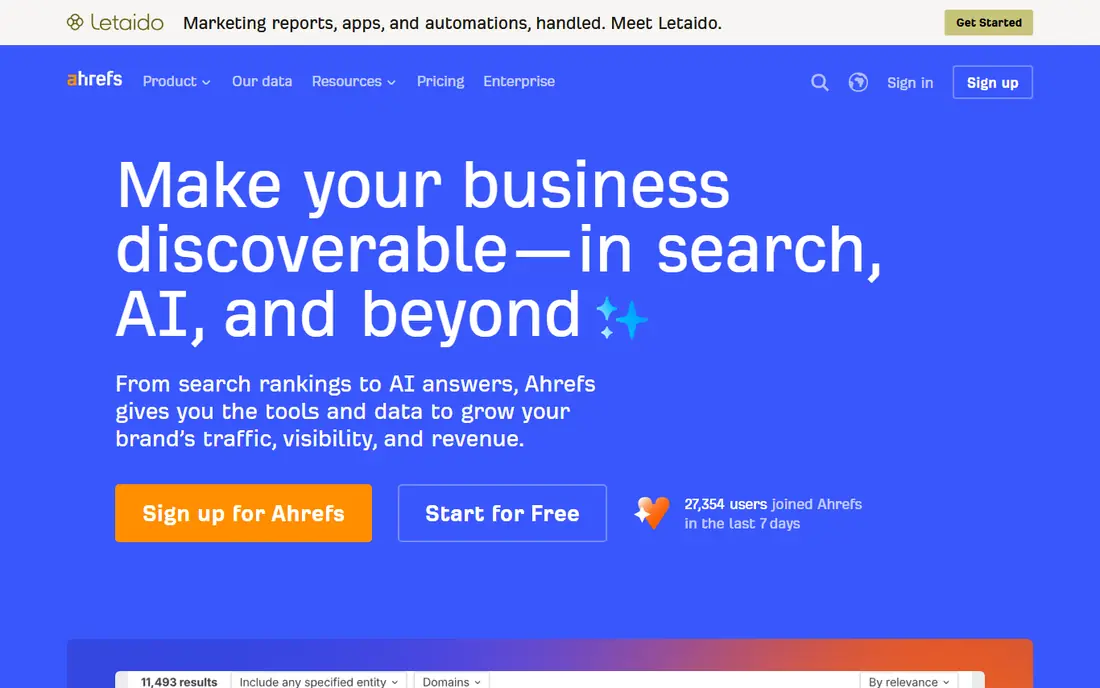
Ahrefs is the tool many SEO professionals open first for research, and its Rank Tracker is a useful part of that workflow rather than the main reason to buy it. You can watch your own rankings, compare them with competitors, and jump straight into the keywords and pages behind a move. For your own verified sites, Ahrefs Webmaster Tools gives free Site Explorer and audit access, which is a genuine free starting point.
The limit for tracking-only buyers is update speed and allowance. Lower plans update weekly, and daily updates cost extra, while the Starter plan at $29 per month covers a small keyword set. If you already pay for Ahrefs, use its tracker and spend the saved money elsewhere. If tracking is the whole job, compare it against SE Ranking or AccuRanker on keywords per dollar before you decide.
- Rank Tracker sits inside a deep research platform
- Free Webmaster Tools for your own verified sites
- Strong backlink and keyword data
- Rank updates are weekly on lower plans unless you pay for daily
- Keyword allowances are smaller than dedicated trackers
- Lite plan costs $129 per month
AccuRanker is built for agencies and larger teams where rank data speed and accuracy are the job itself. It refreshes daily, lets you refresh on demand when a client asks what changed today, and organizes thousands of keywords by tag, landing page, and location. That structure matters when you manage many clients, because a flat list of ten thousand terms is useless without filters and scheduled reports.
The price is the honest barrier. At $249 per month for the Professional plan, it costs more than a full suite for a small site, and a solo blogger will not use most of what it offers. For an agency that lives in rank reports, though, the speed and segmentation often pay for themselves in saved spreadsheet time. Test it with your messiest client account during the trial, not your cleanest one.
- Daily and on-demand refreshes
- Strong segmentation, tagging, and API access
- Built for large keyword sets and agency reporting
- Highest entry price on this list
- Overpowered for a single small site
- Some advanced features need higher tiers
Nightwatch suits small teams and agencies that want everyone on the same data without paying per seat. Unlimited users on its plans means account managers, writers, and clients can all see reports without extra seat fees, and white-label reporting keeps client-facing documents clean. It also tracks AI search visibility alongside classic rankings, which is becoming a standard client question rather than a bonus feature.
Pricing needs a live check, because Nightwatch lists plans in euros and the entry price shifts with annual billing and keyword allowance. The Starter allowance is smaller than some rivals, so count your keywords across all locations and devices before you pick a tier. If your team is seat-heavy and AI visibility matters, Nightwatch is worth a trial against SE Ranking.
- Unlimited users and white-label reporting on plans
- Daily plus on-demand updates
- AI search visibility tracking included in its positioning
- Pricing is in euros and varies by billing term
- Entry allowances are smaller than SE Ranking
- Interface rewards careful setup
Wincher is the tracker for site owners who want a clear answer without a suite attached. You add websites, add keywords, and get daily positions with simple charts and email reports. That simplicity is a feature, not a gap, for a freelancer or a small business owner who checks rankings once a week and wants to know whether the trend is up, flat, or down.
The trade-off is depth. Wincher does not replace a research or audit platform, and its AI search coverage is thinner than Nightwatch or Semrush. If you need competitor research, backlink data, and technical audits, pair it with a free tool or a suite. If you need reliable daily tracking for a handful of sites at a fair price, Wincher is one of the easiest tools here to live with.
- Clean, simple daily tracking
- Tracks many websites on one account
- Automated reports without a steep learning curve
- Fewer research and audit tools than full suites
- AI Overview coverage is limited
- Higher keyword volumes need higher tiers
Mangools SERPWatcher is the friendliest tracker on this list, and that matters for bloggers, freelancers, and small teams who do not want to learn an agency platform. Its Dominance Index rolls your tracked keywords into one daily score, so you can see overall movement at a glance without reading a long table. The wider Mangools suite adds keyword research and link tools in the same style.
Weekly updates on the Basic plan are the main limit, because a ranking drop on Monday may not show until the next check. Daily tracking sits on the Agency tier, which changes the price math for anyone who needs fresh data. For a beginner tracking a few hundred terms, the Basic plan is a gentle start, and the ten-day trial is enough to learn whether the interface clicks for you.
- Very easy interface for beginners
- Dominance Index gives a quick site-level view
- Part of a friendly research suite
- Weekly updates on lower plans
- Keyword allowances are modest
- Daily tracking requires the Agency tier
ProRankTracker has been a dedicated rank tracker for years, and it shows in the reporting depth. You can track across search engines, devices, and many locations, slice the data by tag or group, and send branded reports to clients on a schedule. For consultants who sell reporting as part of their service, that depth is the product, not an extra.
A single-site owner will find it heavier than Wincher or Mangools, and the $99 per month Starter plan is a real commitment for a small list. Use the trial to build one full client report end to end, including a PDF export, before you pay. If that report looks like something you would happily send, ProRankTracker earns its price. If it feels like too much, a simpler tool will serve you better.
- Detailed reports across search engines and locations
- White-label options for agencies
- AI visibility features in current plans
- Entry price is higher than simpler trackers
- Interface is dense for a single site
- Free tier is limited and short-lived
Google Search Console belongs on every list of keyword tracking tools, even though it works differently from the paid tools above. It is free, it comes from Google itself, and it shows the actual queries your site appears for, with impressions, clicks, and average position. That data often reveals terms you were not tracking at all, including page-two terms that are close to driving traffic.
It does not replace a paid tracker. You cannot enter a list of target keywords and get a daily position per location and device, and its average position smooths over the day-to-day movement a paid tool shows. Use Search Console as the free foundation, and add a paid tracker when you need list-based tracking, competitor comparison, or client reports. Every site owner should have it set up, regardless of which paid tool they choose.
- Free, with real Google impression, click, and average position data
- Shows the queries your site already appears for
- No keyword allowance to buy
- Does not track a custom keyword list
- Positions are averages, not daily rank snapshots
- No competitor tracking or scheduled client reports
How we picked these
We compared official pricing pages, keyword allowances, update frequencies, and feature pages, plus public reviews, for tools still sold in October 2026. We favored tools with a clear tracking job, published pricing or a trial, and a verified official homepage. We left out tools that only research keywords without tracking a list, and we noted where a price depends on billing term or keyword volume.
We did not claim hands-on lab testing. Our method rests on published allowances and update speeds, and we recommend a trial with your real keyword list, checked against Search Console and a few manual searches, before you commit to a plan.
How to choose the right tracker
Start by counting keywords honestly, including every location and device variant. A tool that looks cheap at 200 keywords can become expensive at 2,000, and a tool that looks expensive at entry can be cheap per keyword at scale. Write down your real list, multiply by locations and devices, and compare plans on that number, not on the headline price.
Next, decide how fresh the data must be. Daily tracking suits competitive terms, local packs, and client work where a drop needs a same-week response. Weekly tracking suits slow informational content and personal blogs, where trends matter more than daily noise. Local businesses should also check map and local pack coverage, because a classic organic tracker may not show the grid of positions that drives calls.
Finally, think about who reads the reports. A solo owner needs a clear chart and an email summary. An agency needs tags, filters, white-label exports, and scheduled delivery. Pick the tool whose report you would actually send, test it with a real client or a real site, and keep Search Console running alongside it as a free second opinion.
Frequently asked questions
Which tool is best for keyword tracking on a small budget?
For a small budget, start with Google Search Console for free, then add Wincher or Mangools if you need list-based tracking. Wincher gives simple daily tracking from $49 per month, while Mangools is easier for beginners, though its lower plans update weekly rather than daily.
What is the best SEO competition tool for tracking rivals?
Semrush and Ahrefs are the strongest choices when competitor tracking is the goal, because both pair rank tracking with large research databases. SE Ranking also covers competitor positions well inside a cheaper suite, so compare its Core plan before paying for a larger platform.
How often should a keyword tracker update?
Daily updates suit competitive terms, local rankings, and agency reporting, where a change needs a fast response. Weekly updates are enough for slow-moving pages and personal sites, where the trend over a month matters more than a single day of movement.
Can a free tool track keyword rankings?
Google Search Console tracks average positions for free, but it does not follow a custom keyword list with daily snapshots per location. Some paid tools offer limited free plans or trials, and those are useful for testing, but a serious tracking list usually needs a paid plan.
Is SE Ranking better than Semrush for rank tracking?
SE Ranking gives more tracked keywords per dollar on its Core plan, which suits tracking-heavy work. Semrush gives deeper research and competitor context around those rankings, which suits teams that also plan content and audits in the same platform. The better pick depends on whether tracking volume or research depth matters more to you.
Why do two trackers show different rankings for the same keyword?
Rankings vary by location, device, search history, and the exact time of the check, and tools also differ in how they record SERP features and local packs. Compare tools on the same location and device settings, check a few terms by hand, and judge the trend over weeks rather than a single day.
Sources
See where you really rank - block by block
ProMapRanker scans Google Maps across a grid of your service area. Simple monthly plans from $19, white-label on every plan.
Start freeKeep reading
 top custom software development company
Top Custom Software Development Company in 2026
Looking for a top custom software development company? We compare 9 firms for web, mobile, and enterprise software, covering strengths and fit for 2026.
Read → tableau alternatives
Tableau Alternatives in 2026
Compare the best Tableau alternatives for 2026, from Power BI to Metabase, with prices, hosting options, and picks for small teams and enterprises today.
Read → microsoft teams alternatives
Best Microsoft Teams Alternatives in 2026
Looking for microsoft teams alternatives? We compare 9 chat and video tools for 2026, covering free plans, pricing, meetings, and integrations for teams.
Read →