 ProMapRanker
Best Inventory Management Software for Small Business in 2026

Key takeaways
- Zoho Inventory is the best value pick for small sellers, with a free plan and paid plans from $29 per month billed annually.
- Cin7 Core is the strongest choice for multichannel sellers that need purchasing, manufacturing and warehouse depth.
- inFlow suits B2B and wholesale businesses that need showrooms, invoicing and structured order handling.
- Sortly is the simplest visual tracker for teams that mainly need to know what is where, not full order management.
- Square for Retail is the easiest pick for a single shop that already runs its counter on Square.
Quick comparison
| Pick | Great for | Pricing starts at | Free tier | |
|---|---|---|---|---|
 Zoho Inventory | Small sellers watching cost | $29 per month | Yes | Visit |
 Cin7 Core | Multichannel sellers with complexity | $349 per month | Free trial | Visit |
 inFlow | B2B and wholesale operations | $99 per month | Free trial | Visit |
 Sortly | Simple visual tracking | $49 per month | Yes | Visit |
 Square for Retail | Shops already on Square | See website | Yes | Visit |
 Katana | Small manufacturers | $299 per month | Free trial | Visit |
 Fishbowl | QuickBooks-based warehousing | $229 per month | No | Visit |
 Odoo | Flexible open-source inventory | Free | Yes | Visit |
 Ordoro | Multichannel ecommerce shipping | $349 per month | Free trial | Visit |
The best inventory management software for small business
We compared these tools on stock tracking, order handling, purchase orders, barcode scanning, integrations and price for a small team. The best inventory software for a small business is rarely the one with the longest feature list. It is the one that matches how you actually sell, whether that is in a shop, online, wholesale or a mix.
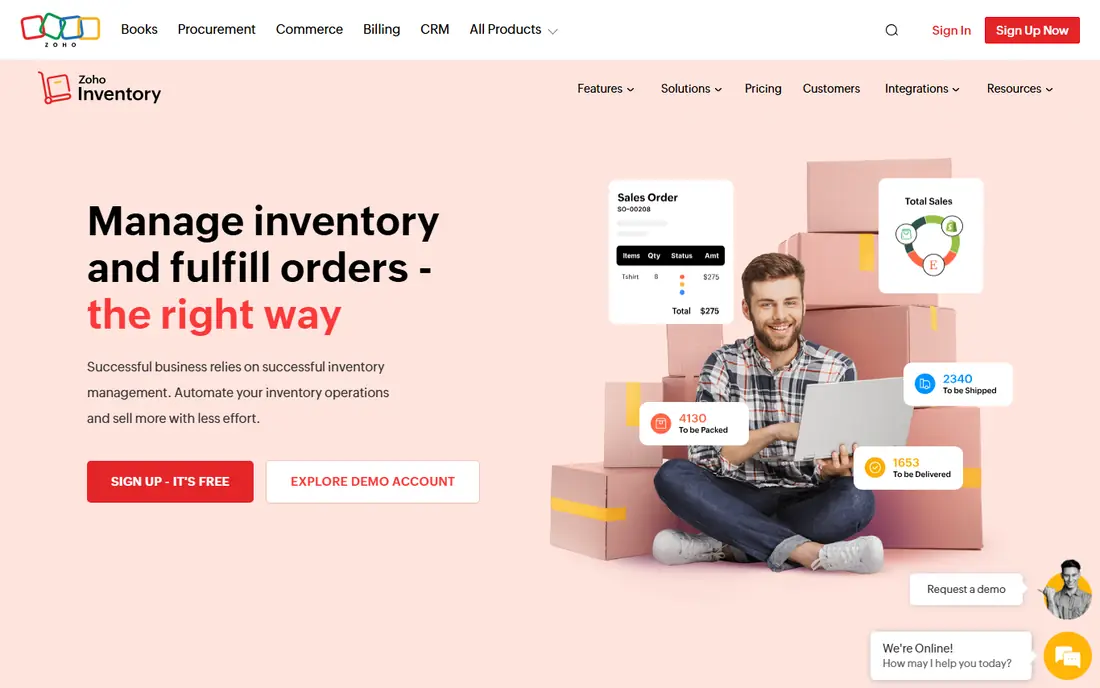
Zoho Inventory is our pick for most small businesses because it covers the core job at a low price. You can track stock across locations, manage purchase orders and sales orders, sync orders from online channels, and track batches and serial numbers where that matters. The free plan covers up to 50 orders per month, which is enough for a side business or a slow start.
The limits are order volume and depth. As order counts grow, you will need a paid plan, and businesses with complex warehouse workflows may outgrow Zoho faster than they expect. If you already use Zoho Books or other Zoho apps, the integration makes Zoho Inventory even more attractive. For a small seller who wants the most for the least money, it is the benchmark.
- Genuine free plan for very small sellers
- Paid plans from $29 per month billed annually
- Multi-channel order sync and batch tracking
- Order caps on lower tiers
- Advanced warehousing needs higher plans
- Interface can feel busy for first-time users
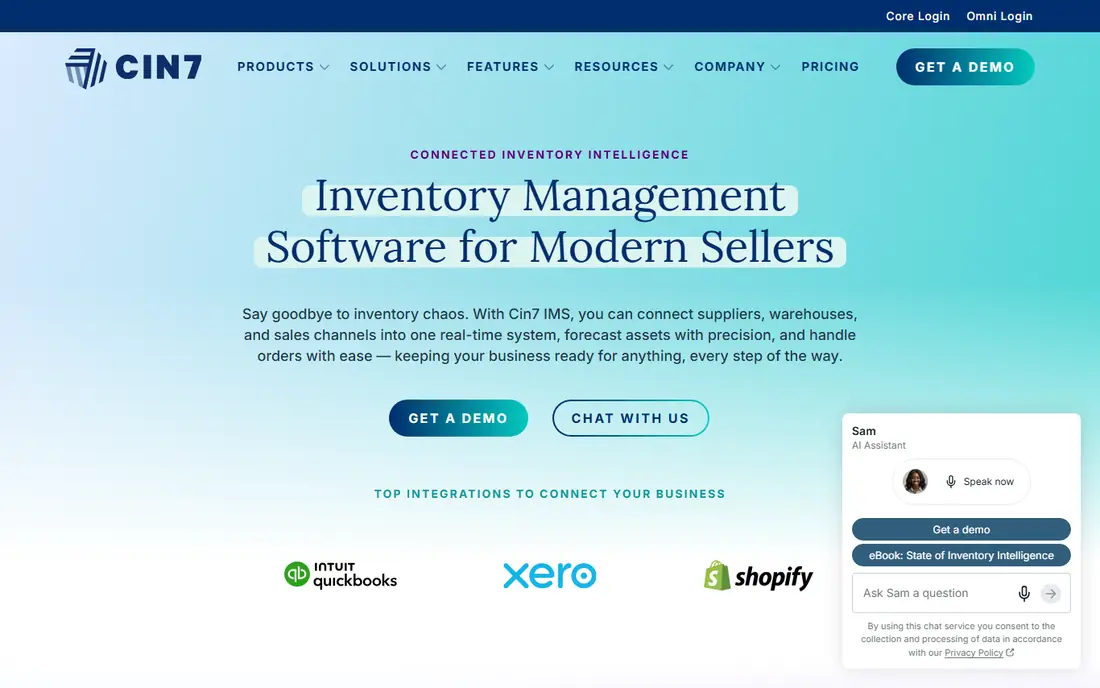
Cin7 Core, formerly Dear Systems, is built for product businesses that have outgrown a basic tracker. It connects sales channels, manages purchasing and supplier orders, handles manufacturing and bills of materials, and supports warehouse workflows with stock movements across locations. For a brand selling on its own site, Amazon and a retail store at once, that central control prevents overselling and stock confusion.
The price is the barrier. At $349 per month, Cin7 Core only makes sense once order volume and complexity justify it, and the setup process rewards a team that can invest time in configuration. Smaller sellers should start with Zoho Inventory or inFlow and move to Cin7 when manual workarounds start costing real time. When you reach that point, Cin7 is the most complete small-business option here.
- Deep multichannel sync across marketplaces and stores
- Purchasing, manufacturing and warehouse features in one system
- Large integration range
- $349 per month entry price is steep for small sellers
- Setup takes time
- Annual contract is the norm
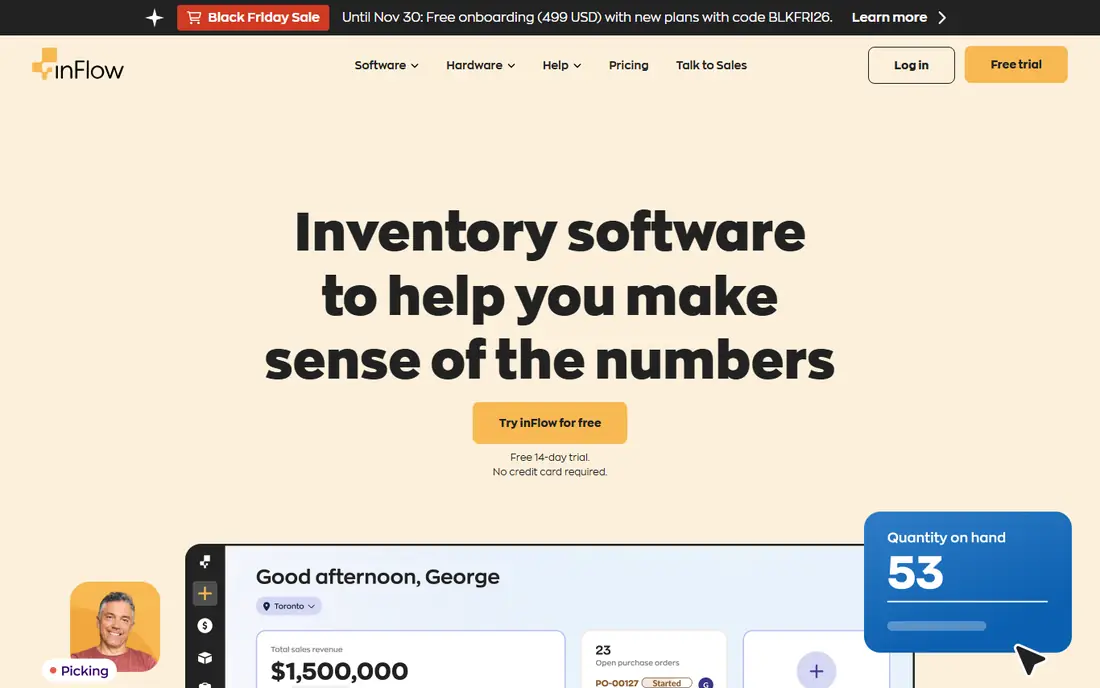
inFlow is the inventory tool we recommend first for wholesale and B2B sellers. Its showroom portal lets wholesale customers browse products and prices set for them, place orders and see availability, which cuts down on phone and email ordering. It also handles invoicing, purchase orders, barcoding and manufacturing basics in a structured way that suits a warehouse or back-office team.
The price starts at $99 per month when billed annually, with a higher monthly rate if you pay month to month, so it is a step up from Zoho. Retail-only sellers may also find its point-of-sale features less central than Square. For a wholesaler or distributor that needs clean order handling and a professional customer portal, inFlow is a strong and focused choice.
- B2B showroom portal for wholesale customers
- Strong invoicing and purchase order handling
- Multi-level bills of materials
- Entry price is higher than Zoho
- Best features sit on higher tiers
- Less suited to pure retail point-of-sale work
Sortly is the simplest tool on this list, and that simplicity is its appeal. You build a visual catalog with photos, organize items into folders, scan QR codes or barcodes with a phone, and log items in and out. Teams that track equipment, supplies, tools or materials will find it far easier to adopt than a full inventory and order system.
Sortly is not the right tool for a busy ecommerce seller that needs order sync, shipping and purchasing in one place. Its paid plans start at $49 per month, and some features that other tools include at entry level sit on higher tiers. If your main question is what you have, where it is and who has it, Sortly answers it with the least training. If your main question is how to fulfill orders faster, look at Zoho or Ordoro.
- Photo-based visual catalog that is easy to learn
- QR and barcode scanning on mobile
- Check-in and check-out logs for equipment
- Not a full order management system
- Purchase orders and advanced stock counts need higher plans
- Item caps on lower tiers
Square for Retail suits a brick-and-mortar shop that already takes payments with Square. Stock counts update as you sell at the counter, you can manage multiple locations, and purchase orders and vendor handling are included on paid plans. The free tier covers basic inventory for a very small shop, which makes it easy to start without a new subscription.
The limitation is depth. Square is a point-of-sale system with inventory, not a warehouse management system, so businesses with complex manufacturing, wholesale portals or heavy marketplace selling will outgrow it. If your shop already runs on Square, adding its retail inventory is the lowest-friction choice. If you sell mainly online, a dedicated inventory tool will serve you better.
- Inventory built into the point of sale
- Real-time stock counts across locations
- Free plan for basic retail inventory
- Advanced warehouse features are limited
- Best value only inside the Square ecosystem
- Paid plans are per location
Katana is built for small manufacturers and makers who need to turn raw materials into finished products. It tracks ingredients and components, manages bills of materials, plans production and shows what is available to promise. That production view is what sets it apart from a generic stock tracker, which can tell you what you have but not what you can make.
The price starts at $299 per month, so Katana only fits makers with enough production volume to justify it. Pure resellers who never manufacture will pay for features they never use, and some advanced manufacturing options cost extra. If you make what you sell, Katana is the most focused small-manufacturer tool here. If you only resell, Zoho or Cin7 will be cheaper and simpler.
- Raw material to finished goods tracking
- Visual production planning
- Unlimited users on paid plans
- $299 per month entry price is high for makers
- Manufacturing features on higher tiers need add-ons
- Overkill for pure resellers
Fishbowl is the classic choice for small manufacturers and distributors that run their accounts on QuickBooks. It syncs inventory, orders and manufacturing data with QuickBooks, so stock movements and accounting stay aligned without manual re-entry. Warehouse features, including location tracking and barcode scanning, suit businesses with a real warehouse rather than a back room.
Fishbowl is not a light tool. Pricing starts at $229 per month for Essentials billed annually, and implementation rewards a team that can invest in setup. Newer cloud tools also feel more modern. If QuickBooks is your accounting system and warehouse control matters, Fishbowl remains a strong, proven pairing. If you do not use QuickBooks, that main advantage disappears.
- Deep QuickBooks integration for accounting and stock
- Warehouse and manufacturing features
- Barcode and asset tracking
- $229 per month entry price billed annually
- Setup and training take time
- Interface feels dated compared with newer tools
Odoo Inventory appeals to businesses that want flexibility and control. The inventory app itself can be used free as a single app, with features for stock locations, forecasting, replenishment rules and barcode operations. If you later add sales, accounting or manufacturing modules, they share the same data, which gives Odoo the feel of a full ERP system at a small-business scale.
The trade-off is effort. Configuring Odoo well takes time and some technical confidence, and the paid suite is priced per user, so a larger team pays more than on a flat-rate tool like Katana. Self-hosting the open-source version also puts maintenance on you. For a team with technical skill that wants a system it can shape, Odoo is excellent value. For a team that wants to start in an afternoon, Zoho or Sortly is faster.
- Inventory app is free as a single app
- Highly flexible with many modules
- Forecasting and automated purchase orders
- Full suite pricing is per user and adds up
- Setup and configuration take skill
- Support depends on your hosting choice
Ordoro suits ecommerce brands that want inventory, orders and shipping in one workflow. It syncs stock across sales channels, forwards orders to suppliers or warehouses automatically, and helps sellers forecast demand so they reorder before they run out. For a brand shipping hundreds of orders a month across several marketplaces, that combined workflow saves real time.
The price is the main barrier, with inventory plans starting at $349 per month, and the shipping strength matters less if you sell in a shop or wholesale. Smaller ecommerce sellers should start with Zoho Inventory and add a separate shipping tool if needed. Larger multichannel sellers who want one system for stock, orders and shipping will find Ordoro a coherent, if pricey, choice.
- Combines inventory, order and shipping workflows
- Automated order forwarding
- Forecasting for ecommerce sellers
- $349 per month inventory pricing is steep
- Shipping features matter less for non-ecommerce sellers
- Setup needs care for many channels
How we picked these
We compared official pricing pages, feature documentation and public comparisons of small-business inventory tools. We favored tools that are actively sold in 2026, offer a clear small-business plan or trial, and serve a distinct way of selling, from retail to wholesale to manufacturing. We left out enterprise ERP suites priced only by quote and tools that only track assets without stock or order handling.
How to choose inventory software for a small business
Start by mapping how stock moves in your business. A shop needs point-of-sale stock, an online seller needs channel sync, a wholesaler needs customer pricing and portals, and a maker needs bills of materials. The tool that matches that flow will save more time than a tool with a longer feature list that fits a different flow.
Next, count your real constraints. How many orders per month, how many stock locations, how many users, and which accounting or sales tools must it connect to? Check order caps, per-location pricing and per-user pricing before you buy, since those are where a cheap headline price can grow.
Finally, trial with real data. Import a sample of your products, run a week of typical orders, and test a purchase order, a stock count and a return. A tool that feels clear on your own products in a trial will feel clear in daily use. A tool that feels confusing in a trial will not improve after you pay.
Frequently asked questions
What is the best inventory management software for small business?
Zoho Inventory is the best inventory management software for small business for most sellers, because it combines a free plan, paid plans from $29 per month billed annually, and multi-channel order handling. Cin7 Core is better for complex multichannel sellers, and inFlow is better for wholesale businesses.
What is the best inventory management software for small businesses with multiple channels?
Cin7 Core and Ordoro are the strongest multichannel options in this list. Cin7 Core offers deeper purchasing, manufacturing and warehouse features, while Ordoro combines inventory with shipping workflows for ecommerce sellers. Both start at $349 per month, so they fit sellers with enough volume to justify the cost.
What is the best stock management software for a small shop?
Square for Retail is the best stock management software for a small shop that already uses Square, because stock updates at the counter in real time. Sortly is better for a shop or team that mainly needs visual tracking of equipment and supplies, while Zoho Inventory is better for a shop that also sells online.
Is there a free inventory management app for small business?
Yes. Zoho Inventory offers a free plan for up to 50 orders per month, Sortly offers a free plan with limited items, Square for Retail offers basic free inventory, and Odoo Inventory can be used free as a single app. Free plans suit very small sellers, while growing sellers usually need a paid plan for higher order limits and more locations.
What is the best inventory software for small business that also manufactures?
Katana is the best choice for small manufacturers, with raw material tracking, bills of materials and production planning from $299 per month. Fishbowl is a strong alternative for manufacturers that use QuickBooks, while inFlow covers lighter manufacturing needs at a lower entry price.
How much does inventory management software cost?
Costs range from free plans to $349 per month for advanced multichannel tools. Zoho Inventory starts at $29 per month billed annually, Sortly starts at $49 per month, inFlow starts at $99 per month billed annually, Fishbowl starts at $229 per month billed annually, and Katana starts at $299 per month. Always check order caps and per-location fees, since they affect the real monthly cost.
Sources
See where you really rank - block by block
ProMapRanker scans Google Maps across a grid of your service area. Simple monthly plans from $19, white-label on every plan.
Start freeKeep reading
 best saas ecommerce platforms
Best SaaS Ecommerce Platforms in 2026
Compare the best SaaS ecommerce platforms for 2026, from Shopify and BigCommerce to Wix and Squarespace, with pricing, features and honest limits today.
Read → best rated seo platform for b2b
Best Rated SEO Platform for B2B in 2026
Compare the best rated SEO platforms for B2B teams, including Semrush, Ahrefs, Moz Pro, SE Ranking, Surfer, and Screaming Frog tools for B2B teams in 2026.
Read → best penetration testing tools
Best Penetration Testing Tools in 2026
Compare the best penetration testing tools for authorised testing in 2026, from network mapping and web testing to scanning, with free and paid options.
Read →