 ProMapRanker
Best Internal Audit Management Software in 2026

Key takeaways
- Optro, formerly AuditBoard, is the default enterprise choice for SOX and internal audit programs.
- Workiva suits teams that connect audit work to financial reporting and disclosure.
- TeamMate+ suits traditional internal audit departments that want proven workflows.
- Onspring and LogicGate suit mid market teams that want flexible, configurable workflows.
- Most enterprise pricing is quote based, so scope your modules and user count before requesting a quote.
Quick comparison
| Pick | Great for | Pricing starts at | Free tier | |
|---|---|---|---|---|
 Optro | Enterprise SOX and internal audit | See website | No | Visit |
 Workiva | Audit linked to financial reporting | See website | No | Visit |
 TeamMate+ | Traditional internal audit workflows | See website | No | Visit |
 MetricStream | Large regulated GRC programs | See website | No | Visit |
 Diligent | Integrated GRC and audit | See website | No | Visit |
 LogicGate Risk Cloud | Configurable risk workflows | See website | No | Visit |
 Onspring | Flexible mid market audit | See website | No | Visit |
 Ideagen | Quality and compliance audit | See website | No | Visit |
 Resolver | Risk and audit in one platform | See website | No | Visit |
The best internal audit management software
We compared audit platforms on planning, workpapers, control testing, issue tracking, and reporting. The best platform depends on company size, regulation, and whether audit sits inside a broader risk program.
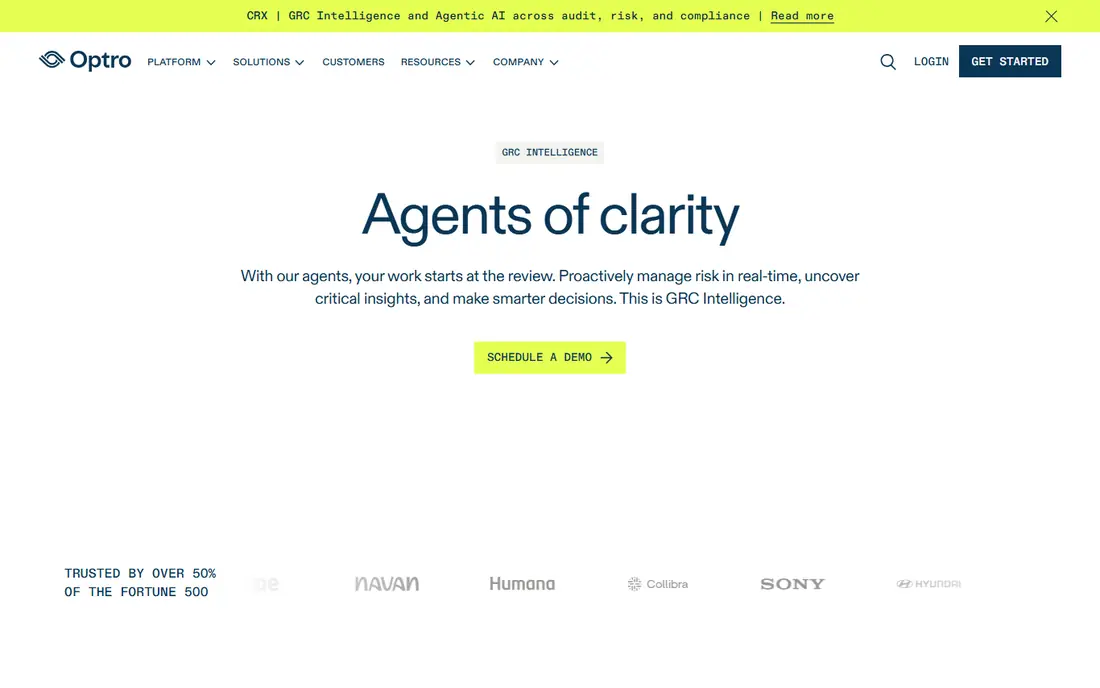
Optro, formerly AuditBoard, fits large enterprises running SOX programs and risk based internal audit plans. It connects audit planning, testing, workpapers, issues, and reporting in one platform, so teams can trace a control from risk assessment to remediation. That connected view is why it remains the default choice for many large audit functions.
The catch is cost and setup. Pricing is quote based and varies by modules and users, and implementation often needs dedicated admin time. Smaller teams doing a first compliance audit may find it larger than needed. For enterprise audit teams replacing spreadsheets, Optro gives the most complete audit core.
- Deep SOX and internal audit workflows
- Connected risk, controls, and reporting
- Widely used by large enterprises
- Quote based pricing with no public tiers
- Implementation needs dedicated admin time
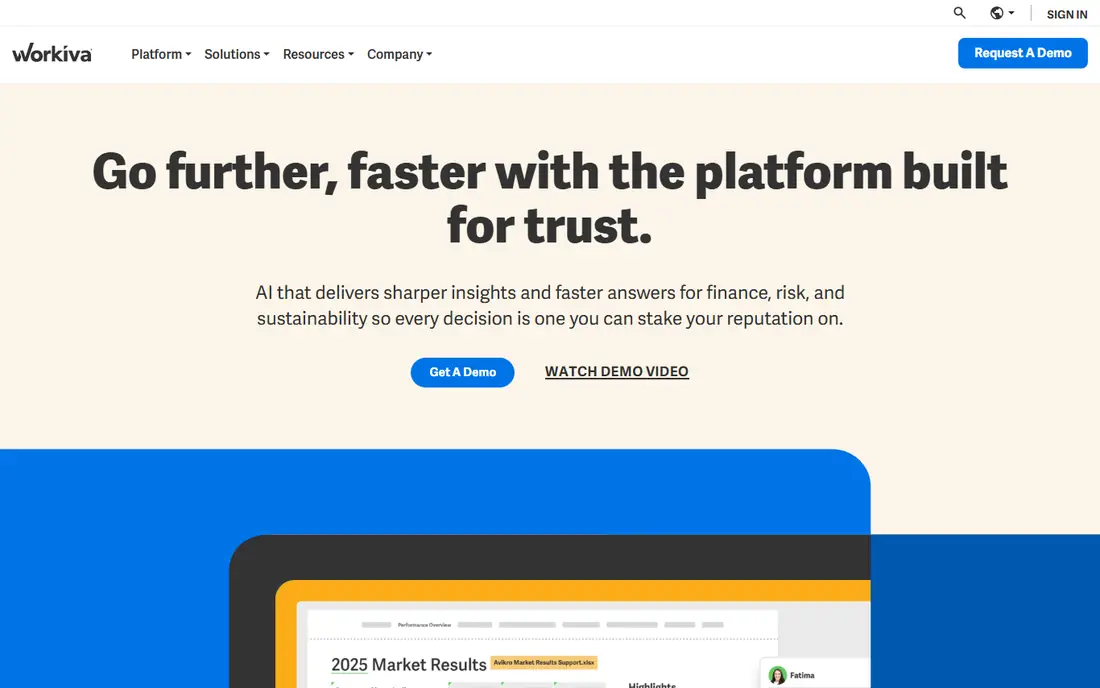
Workiva fits teams where audit work must tie directly to financial reporting and disclosure. Controls, evidence, and reports can live beside financial statements, which reduces copy errors and version confusion. Collaboration tools help finance, audit, and external reviewers work from the same source.
For operational audits outside finance, a dedicated audit tool may offer deeper fieldwork workflows. Workiva still covers internal audit, but its strength is the reporting connection. Companies with heavy SEC or financial reporting needs should shortlist it first.
- Connected reporting for finance and audit
- Collaboration and version control
- Strong for SEC reporting teams
- Less focused on operational audits than a pure audit tool
- Quote based pricing
TeamMate+ fits established internal audit departments that want proven workflows rather than a new way of working. Planning, risk assessment, fieldwork, and reporting follow a familiar audit method, which helps teams with formal standards and long standing procedures. Its track record in large audit functions is a real asset.
The trade off is pace and look. Implementation can take longer than a lighter cloud tool, and the interface feels traditional. Teams that value method and stability over speed will accept that. Teams that want fast, no code setup may prefer Onspring or LogicGate.
- Proven internal audit methodology
- Structured planning and fieldwork
- Long track record in audit departments
- Implementation can take longer than newer cloud tools
- Interface feels traditional beside newer rivals
MetricStream fits global enterprises in regulated industries that run audit inside a broad risk program. Internal audit can sit beside risk management, compliance, and third party risk, with shared data and reporting. Agile audit support helps teams that plan in shorter cycles rather than one annual plan.
The limit is scale. Pricing is quote based and typically tied to multi module deals, and implementation needs significant resources. Small internal audit teams will find it too large. For large regulated firms, MetricStream gives a unified GRC base.
- Integrated GRC platform with audit
- Agile risk based audit support
- Strong for banks and regulated firms
- Enterprise pricing and complexity
- Overkill for small audit teams
Diligent fits organisations that want audit, risk, and compliance in one integrated platform, with board level reporting nearby. Continuous monitoring and analytics help teams spot control issues between formal audits, rather than only at year end. That breadth suits larger firms with several assurance functions.
Audit only teams may find the broader GRC scope adds cost and complexity. If your main need is a focused audit tool, a narrower platform may be cheaper. If you already use Diligent for governance, adding audit there can reduce duplicate systems.
- Integrated GRC platform
- Continuous monitoring and analytics
- Board and audit reporting in one family
- Broad scope can increase cost
- Audit only teams may pay for features they do not use
LogicGate Risk Cloud fits teams that want to build audit and risk workflows without heavy coding. Business users can design forms, workflows, and reports around their own method, rather than forcing their method into a fixed template. That flexibility helps mid market firms with changing processes.
The catch is ownership. Flexible tools need someone to design and maintain them, and a team without that capacity may get a weaker result than a prescriptive audit tool. For teams with a clear method and an admin owner, LogicGate gives strong control.
- No code workflow building
- Flexible risk and audit processes
- Good for business users who configure their own tools
- Needs internal capacity to configure well
- Less prescriptive than out of the box audit tools
Onspring fits mid market audit and risk teams moving off spreadsheets and email. No code configuration lets admins build audit plans, workflows, and dashboards without developer help, and setup is often faster than heavy GRC suites. That balance of power and simplicity is its main appeal.
Very large enterprises with complex global programs may need deeper audit depth from Optro or MetricStream. For mid market teams that want a configurable tool without enterprise cost and complexity, Onspring is a strong fit.
- No code configuration
- Fast setup for mid market teams
- Dashboards for audit status
- Less depth for very large enterprise programs
- Configuration still needs internal time
Ideagen fits organisations where audits focus on quality, safety, and ISO compliance as well as internal control. Workflows cover audit planning, findings, corrective actions, and evidence trails in a regulated setting. That focus helps manufacturing, healthcare, and other quality driven sectors.
General internal audit teams may prefer a broader audit platform with stronger SOX or financial workflows. For quality led audit programs, Ideagen gives depth where general tools stay shallow.
- Strong quality and ISO compliance workflows
- Audit trails and corrective actions
- Suits regulated operations
- More specialised than general audit tools
- Pricing is quote based
Resolver fits organisations that want risk and audit together, with shared data for assurance reporting. Teams can link risks to audits, controls, and issues, and report on coverage across the program. Configurable workflows help teams adapt the platform to their method.
Audit only teams may find the broader platform larger than needed, and pricing requires a quote. For firms that already manage risk in a separate system, Resolver can reduce duplicate work by bringing audit into the same platform.
- Risk, audit, and compliance in one platform
- Configurable workflows
- Analytics for assurance reporting
- Broad platform can feel large for audit only use
- Pricing is quote based
How we picked these
We compared official product pages, buyer guides, and current pricing notes for audit platforms still operating in October 2026. We favored platforms with real internal audit workflows, not just generic compliance checklists, and we covered enterprise, mid market, and quality led needs. Where pricing was quote based, we used See website rather than publishing estimates as facts.
How to choose internal audit management software
Start with your audit universe and regulation. SOX programs need control testing and workpaper depth, operational audits need fieldwork flexibility, and ISO programs need corrective action trails. List must have workflows before demos, and ask vendors to show those exact workflows with your sample data.
Next, check users, modules, and total cost. Enterprise platforms price by module and user count, so a narrow scope can save a large sum. Ask about implementation time, admin needs, data migration from spreadsheets, and how reports are shared with audit committees. A short pilot with one audit cycle will reveal usability better than a sales demo.
Frequently asked questions
What is the best internal audit management software?
Optro is the strongest enterprise choice for SOX and internal audit, while Workiva suits audit linked to financial reporting. TeamMate+ suits traditional audit departments, and Onspring suits flexible mid market teams.
What is the best audit management software for small teams?
Onspring and LogicGate suit smaller and mid market teams that want configurable workflows without enterprise GRC complexity. Start with a narrow scope, such as one audit cycle, and expand only if the tool proves easy to maintain.
How much does internal audit software cost?
Most enterprise platforms use quote based pricing tied to modules, users, and term length, so no single price fits all buyers. Request quotes with the same scope from each vendor, and include implementation and admin time in the total.
Can audit software replace spreadsheets?
Yes, for planning, workpapers, testing, and issue tracking, audit software gives version control, audit trails, and reporting that spreadsheets lack. Migration still needs care, especially for historical workpapers and control libraries.
What is the difference between audit software and GRC software?
Audit software focuses on the audit cycle: planning, fieldwork, testing, issues, and reporting. GRC software covers governance, risk, and compliance more broadly, and many GRC platforms include audit as one module. Choose audit software for a focused audit job, and GRC when risk and compliance must share the same data.
Sources
See where you really rank - block by block
ProMapRanker scans Google Maps across a grid of your service area. Simple monthly plans from $19, white-label on every plan.
Start freeKeep reading
 vimeo alternatives
Best Vimeo Alternatives in 2026
Looking for Vimeo alternatives? We compare 9 video hosting platforms for reach, branded embeds, marketing, sales, live events, and pricing for your team.
Read → sendgrid alternatives
SendGrid Alternatives in 2026
Compare SendGrid alternatives for transactional email, from Resend and Postmark to Mailgun, Amazon SES, Brevo, Mailjet and other email APIs for developers.
Read → midjourney alternatives
Best Midjourney Alternatives in 2026
Looking for Midjourney alternatives? We compare 9 AI image tools for art, photos, text in images, game assets, and commercial use for projects in 2026.
Read →