 ProMapRanker
Best Inbound Marketing Companies in 2026

Key takeaways
- HubSpot gives small teams a place to start with free tools, while full agency programs are usually quoted by scope.
- WebFX is the clearest on published starting prices, with custom digital marketing plans listed from $3,000 per month.
- Most agencies on this list price by retainer or project, so ask for deliverables, reporting, and contract length in writing.
- The best fit depends on size: a solo founder needs a different partner than a mid-market B2B team with a sales team to feed.
Quick comparison
| Pick | Great for | Pricing starts at | Free tier | |
|---|---|---|---|---|
 HubSpot | All-in-one inbound platform | Free | Yes | Visit |
 SmartBug Media | HubSpot-centered inbound programs | See website | No | Visit |
 WebFX | Data-led full-service marketing | $3,000 per month | No | Visit |
 Thrive Internet Marketing Agency | Month-to-month marketing support | See website | No | Visit |
 Directive | B2B SaaS pipeline growth | See website | No | Visit |
 Ironpaper | B2B inbound and account-based work | See website | No | Visit |
 New Breed | Revenue operations and inbound | See website | No | Visit |
 IMPACT | Content-led inbound training | See website | No | Visit |
 Kuno Creative | Industrial and manufacturing inbound | See website | No | Visit |
The best inbound marketing companies
Inbound marketing works when useful content, search visibility, and follow-up turn strangers into leads over time. These companies differ in size, platform focus, and price, so we compare what each one actually sells, not just its reputation.
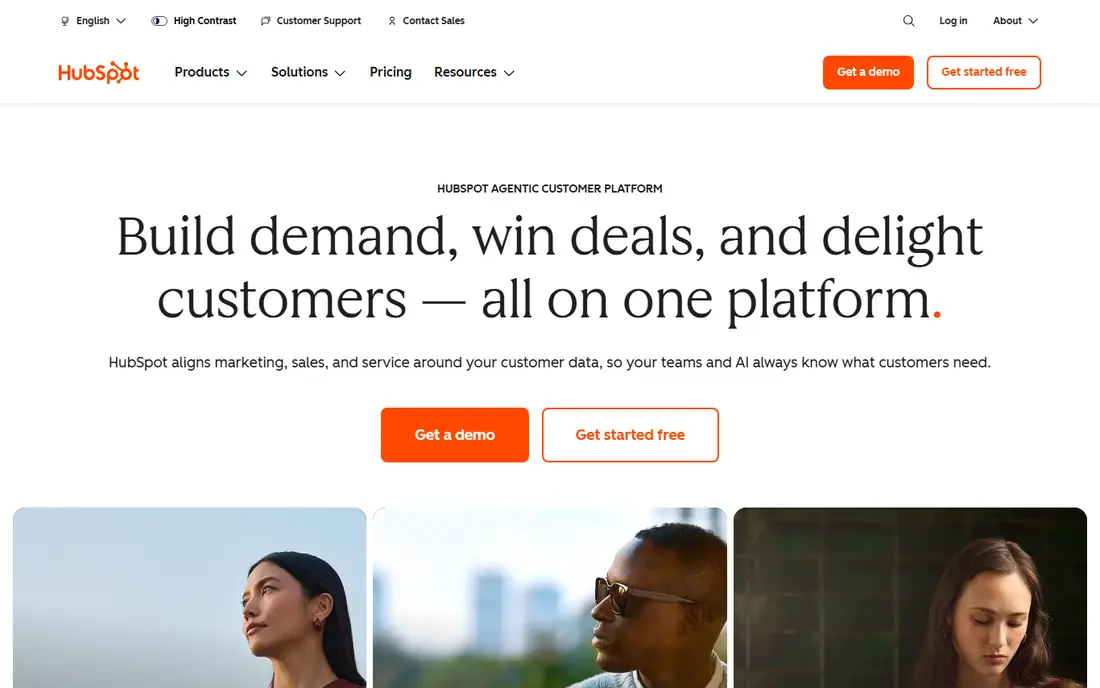
HubSpot is the company behind much of modern inbound marketing, and its platform covers forms, email, automation, CRM records, and reporting in one place. That matters for teams that now juggle five separate tools and lose track of which channel produced a lead. The free tools let a small team capture contacts and send basic email without a large upfront bill, and paid hubs add automation and reporting as volume grows.
Pricing is the main catch. Marketing Hub Professional is listed from around $800 to $890 per month in recent 2026 pricing summaries, with onboarding fees at that tier, so the total first-year cost is well above the headline rate. HubSpot is a strong pick when a team wants one system and has staff to run it, and a weaker pick for a business that only needs occasional blog posts or local SEO.
- Free CRM and marketing tools
- Large integration library
- Clear upgrade path
- Costs rise sharply at Professional
- Onboarding fees apply at higher tiers
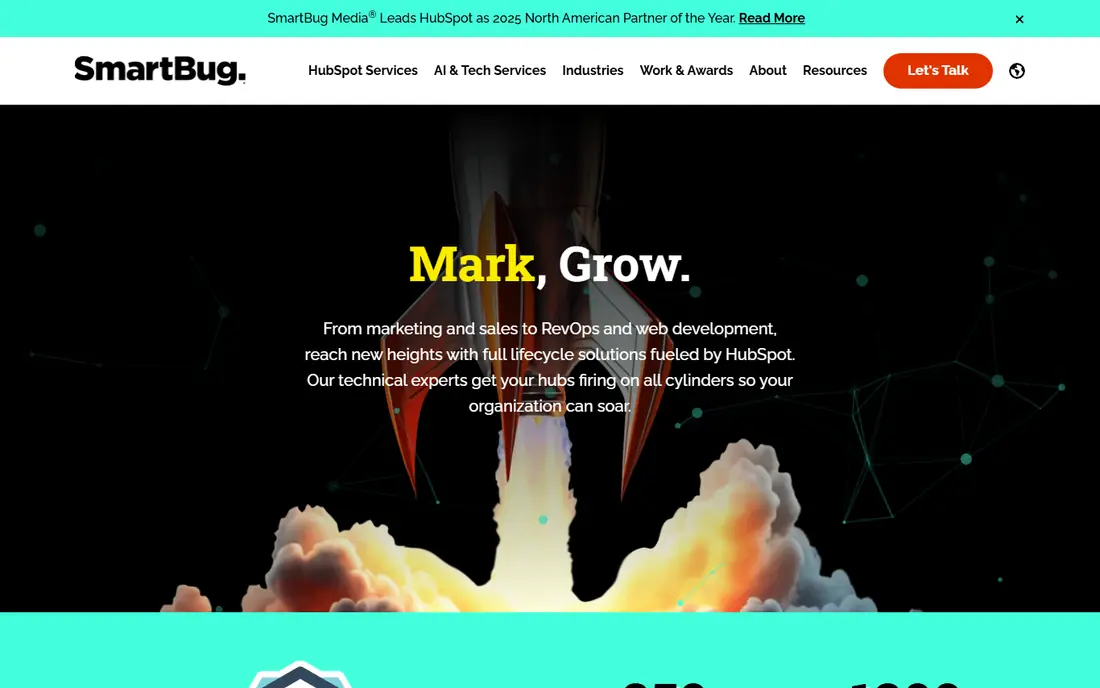
SmartBug Media is a full-service agency built around HubSpot, covering inbound strategy, content, SEO, paid media, revenue operations, and web development. That breadth helps companies that want one partner to own the whole funnel, from first visit to closed deal, rather than hiring separate firms for content and CRM work. Its HubSpot partner status also means it handles migrations, integrations, and automation that smaller agencies often avoid.
The trade-off is price and fit. Engagements are quoted by scope, and third-party summaries put ongoing retainers in the mid four-figure to low five-figure range per month, which rules out many small businesses. Ask for a scope that names content volume, ad management, and reporting cadence, and confirm who owns the HubSpot portal if the relationship ends.
- HubSpot Elite partner experience
- Full-funnel services
- RevOps and web work in one team
- Custom pricing only
- Retainers suit mid-market budgets more than tiny ones
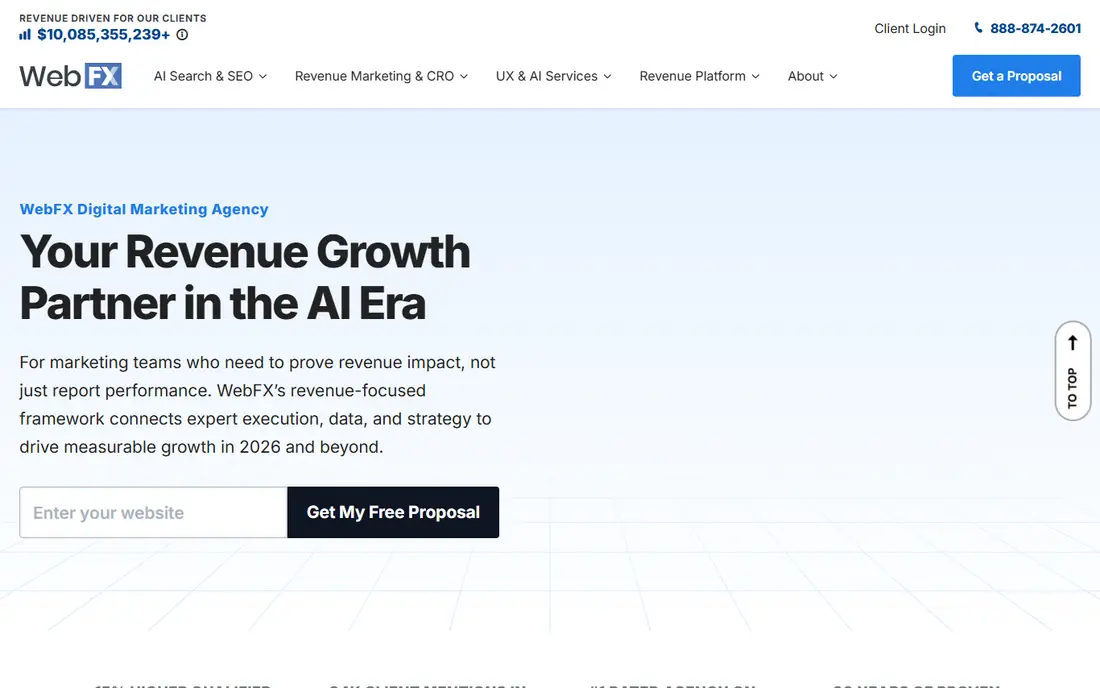
WebFX stands out in this group because it publishes starting prices, including custom digital marketing plans from $3,000 per month and content marketing from $1,800 per month. That transparency makes early budgeting easier, and its large team covers SEO, paid search, content, social media, web design, and conversion work under one roof. For mid-market firms that want reporting tied to revenue, not just traffic, that combination is appealing.
Scale cuts both ways. A team of hundreds can feel impersonal for a small account, and custom pricing means two clients can pay very different amounts for similar-sounding plans. Before signing, ask which specialists will work on the account, how often reporting reviews happen, and what happens to data and assets if the contract ends.
- Published starting prices
- Large in-house team
- Revenue tracking through RevenueCloudFX
- Entry point is high for small firms
- Custom plans vary widely by industry
Thrive Internet Marketing Agency offers SEO, paid search, web design, social media, and content work with month-to-month terms, which is rare among larger agencies. That flexibility suits businesses that want to test an agency for a few months without a long lock-in, and its broad menu means a client can add services without changing firms. Founded in 2005, it has a long record serving small and mid-sized businesses.
Custom pricing makes comparison harder, and published summaries place typical engagements in the low thousands per month, depending on scope. Month-to-month terms help, but they do not replace a clear scope: confirm deliverables per month, who writes content, and how success will be measured before the first invoice arrives.
- Month-to-month terms
- Broad service menu
- Long operating history
- Pricing is custom
- Quality can vary by account team
Directive focuses on B2B software and technology companies, combining SEO, paid media, content, and conversion work around pipeline and revenue goals. That focus helps SaaS teams that need more than traffic: they need qualified demos, trials, and deals that sales can close. Its case material and service pages stress account-based work and performance reporting, which suits firms with longer sales cycles.
The catch is fit and cost. Directive is built for B2B SaaS and technology budgets, and third-party summaries place engagements from around $10,000 per month, so it is not a small-business option. Local shops, restaurants, and consumer brands will usually find better value with a generalist agency that knows their market.
- Strong B2B SaaS focus
- Paid and organic work tied to pipeline
- Senior strategy
- Quote-based and premium
- Less suited to local consumer businesses
Ironpaper works with B2B companies on inbound marketing, content, demand generation, and websites, with account-based approaches for firms that sell to named accounts. That mix suits industrial, technology, and professional services firms where a handful of large deals matter more than thousands of small leads. Its team handles strategy, content, and HubSpot-related work, which keeps the funnel in fewer hands.
Pricing is quoted by scope, and summaries place it in the higher mid-market range, so small firms should get a written scope before assuming fit. Also confirm how account-based work will be reported: impressions alone do not show whether target accounts moved toward a sales conversation.
- B2B specialization
- Combines inbound with account targeting
- Content and web services
- Custom pricing
- Enterprise-leaning scope
New Breed pairs inbound marketing with revenue operations, meaning it works on CRM setup, lifecycle stages, attribution, and sales handoff as well as content and campaigns. That matters when marketing generates leads that sales ignores because the handoff is messy. Its HubSpot partner standing and RevOps focus make it a good fit for growing B2B firms that already have sales staff and need cleaner systems.
Cost and complexity are the limits. Summaries place engagements from around $10,000 per month, and RevOps projects take time to show results because they fix data and process first. A company without a sales team to receive leads will get less value until that team exists.
- RevOps depth
- HubSpot Elite partner
- Marketing and sales alignment
- Premium retainers
- Best for firms with an existing sales team
IMPACT is known for They Ask, You Answer, a content method that answers buyer questions directly through articles, videos, and sales content. Its programs combine coaching, content production, and website work, with an emphasis on teaching the client team to keep producing after the engagement. That model suits firms that want lasting capability, not only rented agency output.
The trade-off is effort. Training-led programs require staff time for interviews, reviews, and publishing, and website projects have been reported in the $50,000 to $120,000 range for longer programs. Firms that want a hands-off agency should choose a different partner, while firms willing to invest staff time may keep more value in-house.
- They Ask, You Answer framework
- Training that builds in-house skill
- Website and content work
- Project pricing can reach five figures
- Training model needs internal time
Kuno Creative focuses on manufacturing, industrial, and B2B companies, where buyers research technical products for months before contacting sales. Its services cover inbound strategy, content, SEO, paid media, and HubSpot implementation, with messaging built around engineers and procurement teams rather than consumer shoppers. That specialization helps firms whose products need explanation, diagrams, and proof.
The limit is scope. Kuno is less relevant for consumer brands, restaurants, or local services, and pricing is quoted by project or retainer. Manufacturing firms should ask for examples in their sub-industry and confirm whether content writers understand the technical terms their buyers use.
- Manufacturing and industrial focus
- Content and HubSpot services
- Long track record
- Narrow industry fit
- Custom pricing
How we picked these
We compared official service pages, published pricing, and partner pages for each company, and we checked third-party agency summaries only where the vendor does not publish a rate. We favored firms with a clear inbound focus, a current website, and services a US buyer can actually purchase in October 2026.
We did not treat this list as a verified ranking, and we did not invent scores, client counts, or results. Agency outcomes vary by industry, budget, and internal follow-up, so readers should treat these profiles as a shortlist for calls and proposals, not as a promise of a set return.
How to choose an inbound partner without overpaying
Start with the job, not the agency size. A firm that needs local leads needs local SEO and review work, while a B2B software firm needs content, paid search, and CRM follow-up. Write down the monthly lead target, the sales capacity to handle those leads, and the budget ceiling before any sales call, and use that sheet to judge every proposal.
Ask every finalist the same five questions: what will be delivered each month, who will do the work, how will results be reported, what is the contract length and exit process, and who owns the content, ad accounts, and CRM data. Vague answers on any of these points are a warning sign, even when the pitch sounds polished.
Watch the contract details
Check whether the retainer covers content writing, design, ad spend, and software fees, or whether those items are billed separately. Confirm the notice period, the handover of logins and files, and whether early exit triggers a fee. A short trial or a three-month initial term lowers risk for a first engagement.
Measure leads, not just traffic
Traffic can rise while sales stay flat if the wrong audience arrives or follow-up is slow. Track qualified leads, booked meetings, and closed deals by source, and review that report monthly with the agency. If reporting only shows visits and clicks after three months, ask for a change in plan.
Frequently asked questions
What is the best inbound marketing company?
There is no single best firm for every business. HubSpot suits teams that want a platform to run in-house, WebFX suits mid-market firms that want one full-service partner, and SmartBug or New Breed suit HubSpot-centered B2B teams with larger budgets.
How much does inbound marketing cost?
Costs vary widely. Platform tools can start free or at a low seat price, while agency retainers on this list often start in the low thousands per month and rise with scope. Always get a written scope, because headline rates rarely include ad spend or software fees.
What is the best inbound marketing company for small business?
Small businesses usually do better with a smaller agency, a month-to-month partner such as Thrive, or HubSpot free tools plus focused SEO help. Large retainers only make sense once the business can handle and follow up on a steady flow of leads.
How long does inbound marketing take to work?
Most firms should expect several months before steady lead flow, because content needs time to rank and nurture sequences need time to convert. Any promise of instant results from content and SEO alone should be treated with caution.
Should I hire an agency or use HubSpot myself?
Use HubSpot yourself when you have staff time for content and automation and a modest budget. Hire an agency when you need strategy, writing, design, and reporting at a pace your team cannot sustain alone.
Sources
See where you really rank - block by block
ProMapRanker scans Google Maps across a grid of your service area. Simple monthly plans from $19, white-label on every plan.
Start freeKeep reading
 who has best internet service
Who Has the Best Internet Service in 2026
Who has best internet service for US homes? We compare fiber, cable, fixed wireless and satellite providers on speed, price, availability and terms today.
Read → which survey tool has the best analytics
Which Survey Tool Has the Best Analytics in 2026
Find which survey tool has the best analytics in 2026, comparing Qualtrics, SurveyMonkey, Typeform, Alchemer, and more on reports, text, and stats today.
Read → which streaming service has the best movies
Which Streaming Service Has the Best Movies in 2026
Answering which streaming service has the best movies, with Netflix, Max, Criterion and more compared on libraries, prices and free options in this guide.
Read →