 ProMapRanker
Best Identity Verification Service in 2026


Transparent self-serve pricing · Pricing starts at: $0.80 per verification
Key takeaways
- Veriff and Sumsub are the most transparent on price, with published per-check rates and monthly minimums.
- Persona suits product teams that need configurable flows, while Jumio and Entrust IDV suit regulated enterprises at scale.
- Most enterprise identity verification is quote based, so budget by monthly minimums and add-on checks, not headline per-check rates alone.
- Test with real documents from your actual markets, since coverage and accuracy vary sharply by country and document type.
Quick comparison
| Pick | Great for | Pricing starts at | Free tier | |
|---|---|---|---|---|
| Veriff | Transparent self-serve pricing | $0.80 per verification | Free trial | Visit |
 Persona | Configurable onboarding flows | See website | Free trial | Visit |
 Jumio | Regulated enterprise onboarding | See website | No | Visit |
 Entrust IDV | Enterprise document and biometric checks | See website | Free trial | Visit |
 Sumsub | KYC, AML and monitoring in one place | $1.35 per verification | Free trial | Visit |
 Trulioo | Global data-based verification | See website | No | Visit |
 Socure | US fraud and identity risk signals | See website | Free trial | Visit |
 Stripe Identity | Stripe users | $1.50 per verification | Free trial | Visit |
 iDenfy | Global small business KYC | See website | Free trial | Visit |
The best identity verification services
We compared vendor pricing pages, coverage notes and feature pages for services live in October 2026. Per-check prices are shown only where vendors publish them or where recent pricing surveys report them clearly, and we show See website for quote-based vendors.
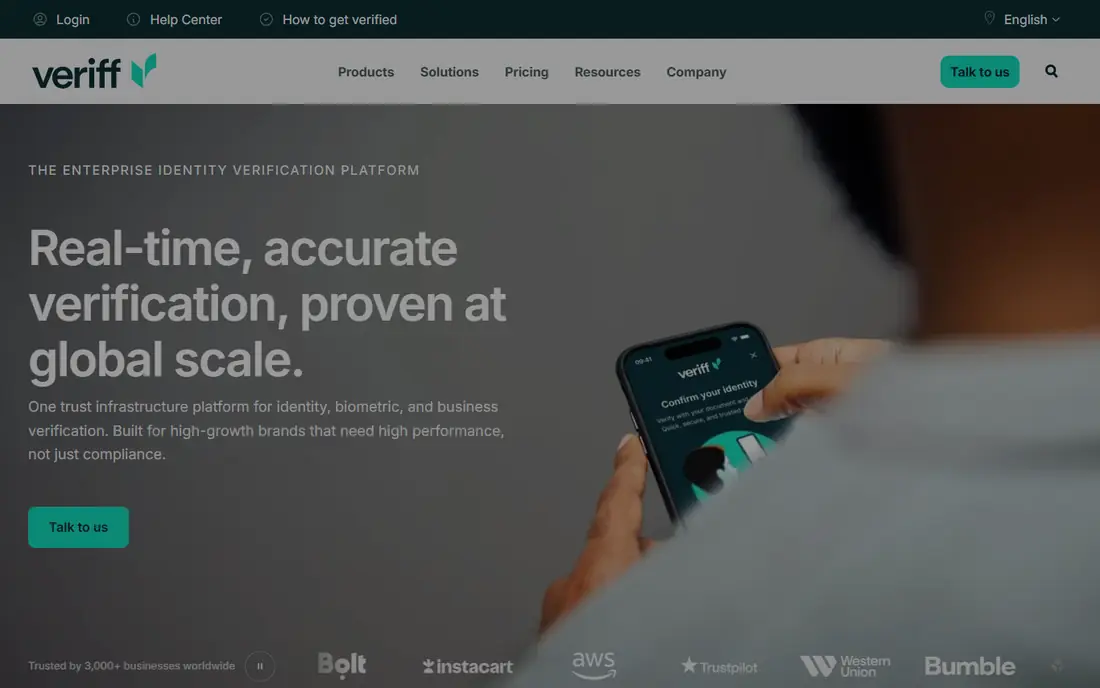
Veriff is the easiest service in this list to price. Self-serve plans publish a per-verification rate with a monthly minimum, plus SDKs and a hosted verification page for quick integration. Document verification, biometric checks and fraud signals run in one flow, with automation handling most standard cases.
The monthly minimum and add-on pricing are the details to check. A low per-check rate can still cost more than expected if you need extra AML screening, watchlist checks or manual review. For startups and scaling fintechs, though, Veriff transparency is a genuine advantage.
- Published pricing from $0.80 per check
- Broad document coverage
- Fast automated decisions
- Monthly minimum applies
- Add-on checks cost extra
- Enterprise features need higher tiers
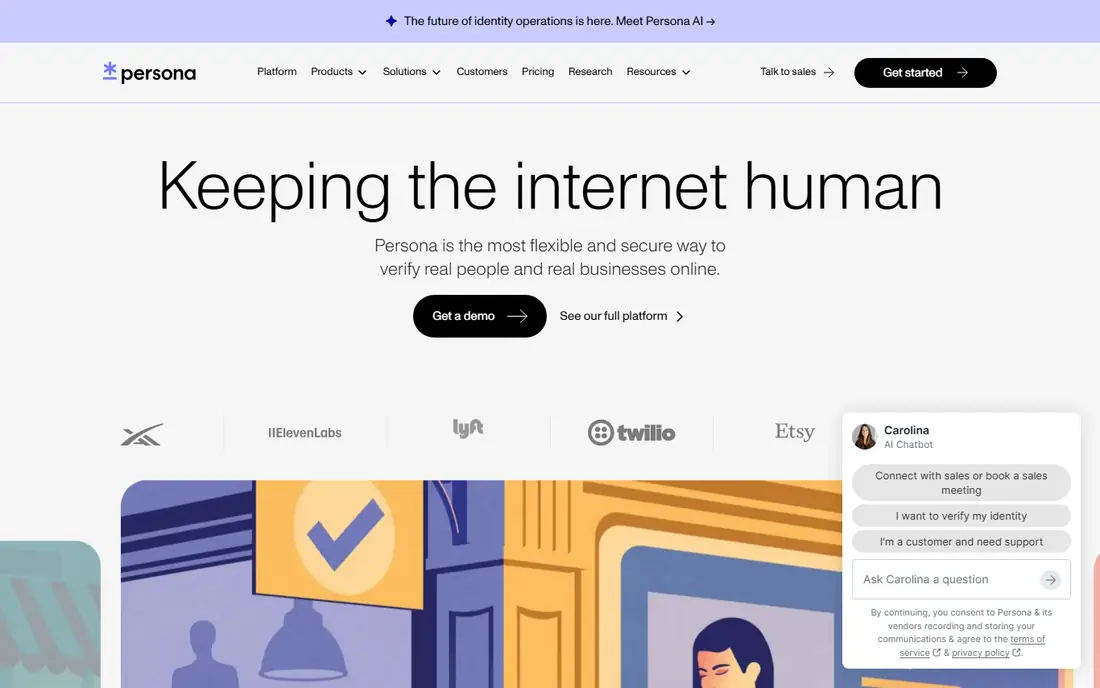
Persona suits product teams that want to build different verification flows for different users, such as stricter checks for high-risk signups and lighter checks for returning users. A low-code builder, dynamic risk rules and case management help teams handle edge cases without rebuilding the flow each time. Government and healthcare use cases are also supported, with compliance options for US data.
Pricing transparency is weaker than Veriff, with self-serve entry reported around a monthly fee and enterprise pricing by quote. Confirm minimums, per-check rates and contract length before building on Persona.
- Low-code flow builder
- Case management
- KYC, KYB and AML in one platform
- Pricing is not fully published
- Contract minimums reported
- Setup needs product time

Jumio serves banks, marketplaces and crypto platforms that need strong document and biometric verification at scale. Liveness detection, face matching and fraud signals help block spoofing and deepfake attempts, while reusable credentials can reduce friction for returning users. Its long history in regulated onboarding is a reason many large firms shortlist it first.
Small teams will find the sales-led process slow and the price opaque. Jumio is best when compliance, scale and fraud defence justify an enterprise contract.
- Deep financial services experience
- Liveness and face-match checks
- Reusable credentials for returning users
- Quote-only pricing
- Enterprise sales process
- Integration needs developer time
Entrust IDV, formerly Onfido, provides document verification, biometric face matching and workflow orchestration for fintech, gig and marketplace platforms. Its Studio tool lets teams build conditional flows without code, adding extra checks for high-risk applicants and skipping steps for low-risk users. Document coverage spans many countries and document types.
Like Jumio, Entrust IDV is quote based and enterprise focused, with a developer sandbox for testing but no simple self-serve production tier. Existing Entrust customers gain the most from the combined identity stack.
- Formerly Onfido, now under Entrust
- Workflow studio
- Large document coverage
- Quote-only pricing
- Enterprise focus
- Rebrand can confuse older documentation
Sumsub combines identity verification with AML screening, business verification and transaction monitoring, which suits fintech, crypto and gaming platforms that need end-to-end risk tools. Published pricing makes budgeting easier than with quote-only rivals, and document coverage spans many countries and document types.
Check the monthly minimum and which monitoring features sit on each tier. Sumsub is strongest when a team needs several risk tools together, rather than a single document check alone.
- Published pricing from $1.35 per check
- KYC, KYB, AML and transaction monitoring
- Broad document coverage
- Monthly minimum applies
- Advanced monitoring costs extra
- Support depth varies by plan
Trulioo verifies identities using data from hundreds of sources across many countries, which can verify users without a document upload in some markets. That data-based approach reduces friction where document capture is hard, and business verification options support KYB use cases. Global enterprises with users in many countries are the core audience.
Document-heavy flows may suit Veriff or Jumio better, since Trulioo strength is data coverage rather than document forensics. Confirm coverage for your exact markets, since data depth varies by country.
- Large data source network
- Global coverage
- Business verification options
- Quote-only pricing
- Document checks are less central than data checks
- Integration needs planning
Socure focuses on US identity risk, using device, network and data signals to score fraud risk during onboarding. That signal layer helps US fintechs and lenders approve good users faster while blocking synthetic identities and fraud rings. Document verification can sit alongside risk scoring for higher-risk cases.
Global document coverage is less central than US risk scoring, so international teams should test document flows carefully. Socure is best when US fraud prevention is the main problem, not just document capture.
- Strong US fraud signals
- Risk scoring
- Document verification options
- Quote-only pricing
- US focus stronger than global document coverage
- Enterprise sales process
Stripe Identity suits teams already running payments on Stripe. Integration is straightforward, verification flows can be embedded or hosted, and pricing is published per check with an initial free allowance in some setups. Document and selfie checks cover standard onboarding for marketplaces, fintechs and platforms.
Teams not on Stripe gain less, and workflow customisation is lighter than Persona. If you already use Stripe, though, the integration saving can outweigh the higher per-check price.
- Simple integration for Stripe users
- First checks free in some plans
- Document and selfie checks
- Per-check price higher than Veriff
- Fewer workflow options than Persona
- Tied to Stripe ecosystem value
iDenfy offers document verification, liveness detection and AML screening with pay-as-you-go tiers aimed at fintechs and global small businesses. The absence of a monthly minimum on some tiers helps low-volume teams that cannot justify a fixed contract. Coverage spans many document types and countries, with manual review for edge cases.
Enterprise buyers may prefer Jumio or Entrust for scale and support depth. Small and midsize teams that need flexible, low-commitment KYC should shortlist iDenfy alongside Veriff and Sumsub.
- Pay-as-you-go options
- Document, liveness and AML checks
- No monthly minimum on some tiers
- Pricing tiers vary
- Brand recognition lower in US enterprise market
- Support varies by plan
How we picked these
We compared vendor pricing pages, coverage descriptions and feature pages for services live in October 2026. We kept services that verify real users for onboarding, KYC or fraud prevention, and we left out single-purpose age gates and consumer login tools that do not serve business onboarding. Prices are published rates where available, and See website where vendors price by quote.
How to choose an identity verification service
Start with your markets and document types. A service that excels on US passports may struggle with documents from your second or third market, so test with real documents from each country you serve. Check pass rates, manual review rates and decision times, since a strict service that rejects good users costs revenue.
Pricing, privacy and compliance
Model total cost including monthly minimums, per-check rates, AML add-ons and manual review fees. Review data residency, retention and privacy policies, since verification data is sensitive personal data. Confirm compliance support for your regulations, such as KYC, AML or age verification rules, and get data processing terms in writing before launch.
Frequently asked questions
What is the best identity verification online service?
Veriff is the best transparent self-serve pick, Persona is best for configurable flows, and Jumio and Entrust IDV are best for regulated enterprises. The right pick depends on volume, markets and whether you need KYC, KYB or AML together.
What are the best identity verification platforms for startups?
Veriff, Sumsub and iDenfy suit startups best, thanks to published or pay-as-you-go pricing and quick integration. Stripe Identity is also strong for teams already on Stripe, while Persona suits startups with complex flow needs.
How much does identity verification cost per check?
Published rates in this list range from $0.80 per verification at Veriff to $1.50 at Stripe Identity, with Sumsub from $1.35, plus monthly minimums where they apply. Quote-based vendors such as Jumio and Entrust IDV vary by volume and contract.
What is the difference between KYC and identity verification?
Identity verification confirms that a person is who they claim to be, usually with a document and selfie check. KYC is the broader process, including identity verification plus risk assessment, AML screening and ongoing monitoring for regulated businesses.
Can identity verification work globally?
Yes, but coverage varies by country and document type. Veriff, Sumsub, Trulioo and Jumio cover many countries, while Socure is strongest in the US. Test documents from each market you serve before launch.
Sources
See where you really rank - block by block
ProMapRanker scans Google Maps across a grid of your service area. Simple monthly plans from $19, white-label on every plan.
Start freeKeep reading
 whats the best ai app to use
Whats the Best AI App to Use in 2026
Wondering whats the best ai app to use in 2026? We compare ChatGPT, Claude, Gemini, Copilot, and more on price, free plans, and best everyday uses today.
Read → life360 alternatives
Life360 Alternatives in 2026
Life360 alternatives compared: 9 family location apps with live maps, arrival alerts and privacy controls to help your family stay in touch every day.
Read → captcha alternatives
CAPTCHA Alternatives in 2026
CAPTCHA alternatives compared: 9 reCAPTCHA alternatives that block bots with less friction, from free Turnstile to privacy-first proof-of-work tools included.
Read →