 ProMapRanker
Best Human Capital Management Platforms in 2026


Enterprises wanting HR and finance together · Pricing starts at: See website
Key takeaways
- Workday HCM remains the enterprise default when HR and finance must share one governed platform.
- Oracle HCM Cloud and SAP SuccessFactors suit global enterprises with multi-country payroll and deep ERP links.
- UKG Pro and Dayforce win with large hourly and shift-based workforces where scheduling and labor cost matter most.
- ADP Workforce Now and Paylocity serve the mid-market, while Paycom offers a unified single-database design.
- Rippling and BambooHR are the only options here with clear published pricing, and they fit smaller companies where HR and IT can share one platform.
Quick comparison
| Pick | Great for | Pricing starts at | Free tier | |
|---|---|---|---|---|
| Workday HCM | Enterprises wanting HR and finance together | See website | No | Visit |
 Oracle HCM Cloud | Global enterprises on Oracle | See website | No | Visit |
 SAP SuccessFactors | SAP enterprises needing a full HR suite | See website | No | Visit |
 UKG Pro | Large hourly and shift workforces | See website | No | Visit |
 Dayforce | Payroll, time, and talent on one database | See website | No | Visit |
 ADP Workforce Now | Mid-market compliance certainty | See website | No | Visit |
 Paylocity | Mid-market modern experience with payroll depth | See website | No | Visit |
 Paycom | Employees owning their payroll data | See website | No | Visit |
 Rippling | Growing companies wanting HR, payroll, and IT together | $8 per user per month | Free trial | Visit |
 BambooHR | Small and mid-size companies wanting HR simplicity | $10 per employee per month | Free trial | Visit |
The best human capital management platforms
Human capital management, or HCM, covers core HR, payroll, talent, time, and workforce planning in one system, and the right platform depends heavily on company size.
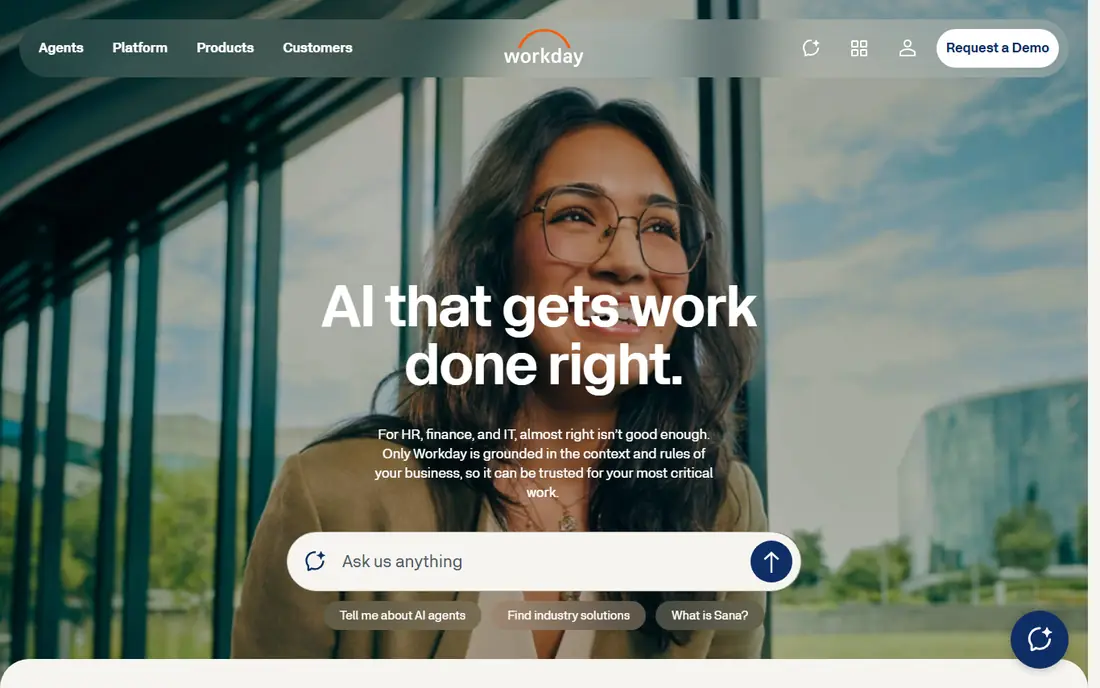
Workday HCM is the enterprise default for companies that want HR, payroll, talent, and finance data to share one system of record. Its strength is governance: one employee record, consistent reporting, and workforce planning that ties headcount to finance plans. Recent HCM guides also note AI self-service features, such as agents that help employees answer HR questions without a ticket.
The cost is scale and effort. Workday does not publish a core subscription price on its main pages, and implementation is a major project with training and change management. Small companies should not buy Workday for simplicity, because its value shows at enterprise scale, where control and reporting matter most.
- HR and finance on one governed platform
- Strong workforce planning and analytics
- Global scale for large employers
- No published subscription price
- Implementation takes months
- Best fit is large employers, not small teams
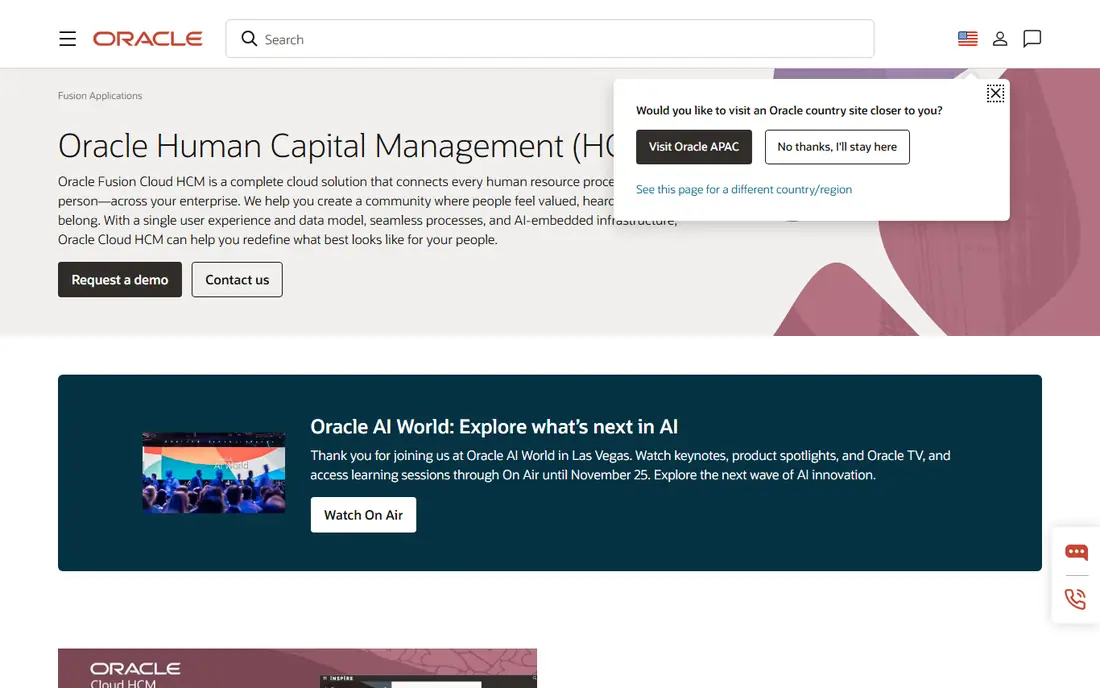
Oracle HCM Cloud suits global enterprises that already run Oracle systems, because HR, payroll, talent, and finance can share data and processes. Its global payroll and compliance coverage helps companies with staff in many countries, and its analytics support workforce planning across regions. Talent tools cover recruiting, learning, and performance in the same suite.
The trade-off is complexity. Oracle HCM needs skilled implementation partners and internal owners, and smaller companies will find the depth more burden than benefit. For Oracle-standard enterprises, though, the integration value is hard to match with a standalone HR tool.
- Deep global HR and payroll coverage
- Strong Oracle ERP links
- Broad talent and workforce tools
- No published price
- Complex implementation
- Interface and setup need expertise
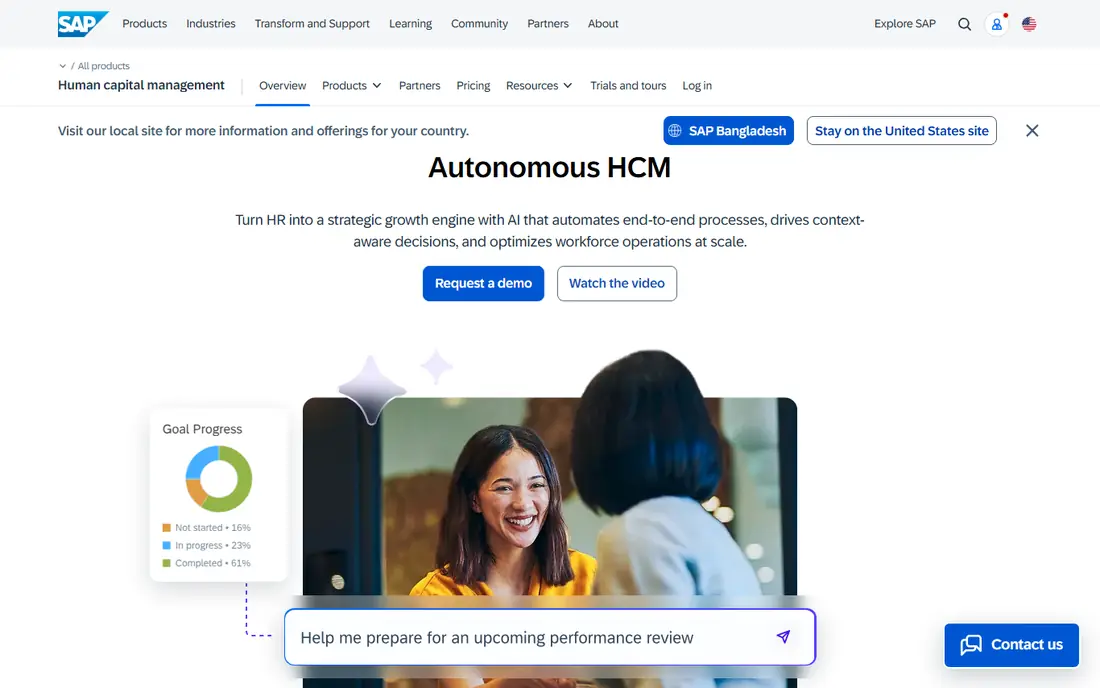
SAP SuccessFactors covers core HR, payroll links, recruiting, onboarding, learning, performance, and succession in one cloud suite. That breadth suits SAP enterprises that want HR data to flow into finance, operations, and planning without custom bridges. Global compliance and multi-country support are core strengths, not add-ons.
The honest catch is usability and setup. SuccessFactors rewards teams with SAP expertise and clear process design, and it can feel heavy for companies that want a simple HR tool. For SAP-standard global employers, the suite fit outweighs that weight, especially for talent and succession work.
- Complete HR suite from core HR to talent
- Strong global compliance
- Deep SAP ecosystem links
- No published price
- Interface feels complex to some users
- Customization needs expertise
UKG Pro, formerly UltiPro, is built for large organizations with hourly and shift-based workforces, where scheduling, time, attendance, and labor cost drive daily decisions. It combines core HR, payroll, talent, and workforce management, with scheduling tools that help managers balance coverage, overtime, and compliance. That focus sets it apart from HCM tools built mainly for salaried office staff.
The limit is fit and price transparency. UKG Pro does not publish a simple price, and implementation takes planning, especially for multi-site employers. Companies with mostly salaried staff and simple scheduling may get equal value from a simpler platform at lower effort.
- Strong scheduling and time tools for hourly staff
- Labor cost and workforce management depth
- Large-employer scale
- No published price on main plan pages
- Implementation is a project
- Simpler HR needs may not need this depth
Dayforce, from Ceridian, puts HR, payroll, time, talent, and benefits on one database, so a time change flows through to pay without batch reconciliation. Its continuous calculation approach helps employers see pay effects as schedules and time entries change, which matters for hourly and shift teams. Talent, recruiting, and learning sit in the same record, which helps mid-enterprise employers avoid point tools.
The catch is pricing clarity. Dayforce does not publish a dollar entry price on its payroll pages, and buyers must speak to sales for a quote. That is normal at this scale, but budget holders should request a full scope quote covering payroll, time, talent, and implementation before comparing Dayforce with simpler tools.
- Single database for payroll, time, and talent
- Continuous pay calculation
- Strong for mid-enterprise employers
- No published dollar price
- Payroll page directs buyers to sales
- Implementation needs careful data work
ADP Workforce Now is the compliance-first mid-market choice, built on ADP payroll depth and tax expertise. It covers core HR, payroll, time, talent, and benefits, with compliance tools that help employers track tax, wage, and reporting rules across US states. For companies that worry most about getting pay and tax right, ADP scale is reassuring.
The trade-off is transparency and polish. ADP product pages offer pricing forms and a sales phone number rather than a dollar figure, and user experience varies by module. Companies that want a modern, self-serve feel may prefer Paylocity or Rippling, while companies that rank compliance first will find ADP hard to fault.
- Reliable payroll processing
- Strong compliance support
- Scalable from mid-market toward enterprise
- No dollar price on product pages
- Support experience varies by region
- Interface feels dated to some users
Paylocity serves mid-market companies that want a modern HR experience without losing payroll depth. Its platform covers core HR, payroll, time, talent, benefits, and engagement, with mobile self-service that employees actually use for pay, time off, and documents. That usability matters, because HR tools fail when staff avoid them.
Pricing is module-based and quoted, so budget comparisons need a like-for-like scope. Paylocity also has less global payroll depth than Oracle, SAP, or Dayforce at enterprise scale. For US mid-market employers with 50 to 5,000 staff, Paylocity balances usability and payroll strength well.
- Modern user experience
- Payroll depth for mid-market employers
- Engagement and learning tools
- No clear published entry price in recent checks
- Cost varies by modules
- Smaller global payroll depth than Oracle or SAP
Paycom stands out for its single-database design and its Beti feature, which lets employees review and approve their own payroll data before pay runs. That shift cuts payroll errors and back-and-forth, because staff catch mistakes in their own hours, deductions, and pay before money moves. Core HR, payroll, talent, time, and benefits share that one record.
The model needs adoption. If employees do not review payroll data on time, the benefit fades, and managers must still chase approvals. Paycom also suits US mid-market employers more than global enterprises with complex multi-country payroll. For companies that want employees to own payroll accuracy, Paycom is a distinct and credible pick.
- Unified single-database design
- Employee self-service for payroll checks
- Strong mid-market payroll tools
- No published price
- Self-service model needs employee adoption
- Global depth is narrower than enterprise suites
Rippling is the platform for growing companies that want HR, payroll, devices, app access, and spend to share one employee record. Onboarding can provision accounts and devices, offboarding can revoke access, and payroll can follow the same record, which cuts the manual joins between HR and IT. Its platform is advertised from $8 per user per month, with HR, IT, and finance products priced on top, and a $40 base fee noted in recent checks.
The catch is total cost. The base price is only the start, and each module adds per-employee cost, so a full quote matters more than the headline figure. Rippling also offers guided demos rather than a self-serve free trial in some reports. For tech-forward teams hiring across countries, that unified record often justifies the quote work.
- HR, payroll, IT, and finance on one record
- Strong automation and device provisioning
- Global hiring options
- Platform base plus module prices stack up
- No permanent free plan
- Full quote needs a guided demo
BambooHR is the simplicity-first HCM pick for small and mid-size companies. Core is listed at $10 per employee per month, with Pro at $17 and Elite at $25, and companies with 25 or fewer staff pay a flat rate from $250 per month. The interface is clear, onboarding workflows are strong, and reporting covers the HR basics most small teams need without enterprise complexity.
The limits are payroll and global scope. Payroll and benefits administration are add-ons for US employees, and global hiring runs through embedded partners rather than a native global payroll engine. For a US small or mid-size team that wants HR clarity first, BambooHR is the easiest platform in this list to buy and run.
- Published pricing from $10 per employee per month
- Simple interface and onboarding
- 7-day free trial
- Payroll is US-only and an add-on
- Enterprise depth is limited
- Global features are narrower than Rippling
How we picked these
We compared vendor pricing pages, product documentation, and October 2026 HCM guides, and we kept platforms that are live and that cover core HR plus payroll, talent, or workforce management at real scale. We favored breadth of coverage, global or hourly depth where relevant, and pricing transparency, and we marked See website where vendors do not publish a dollar price. That approach keeps enterprise suites and small-team tools in the same honest frame, even though their buyers differ.
How to choose the right platform
Match size first, then geography, then payroll complexity. A 50-person US company, a 2,000-person hourly workforce, and a 20,000-person global enterprise should not shortlist the same tools, even though all three buy HCM software.
Price the full scope, not the headline
Ask every vendor for the same scope in writing: core HR, payroll, time, talent, benefits, implementation, training, and support. Enterprise quotes hide implementation and module costs, while Rippling and BambooHR headline prices exclude add-ons. Compare total first-year cost at your headcount, not the lowest plan name.
Test onboarding and payroll with real data
Run a pilot with real employee records, a real pay cycle, and a real time-off case before you sign. Check how errors surface, how approvals work, and how reports export to finance. The platform that handles a messy onboarding and a corrected timesheet cleanly is the one your HR team will live with.
Frequently asked questions
What is the best human capital management software?
Workday HCM leads for large enterprises that need HR and finance together, while ADP Workforce Now and Paylocity lead for the mid-market. Rippling and BambooHR lead for growing and small companies that want simpler buying and faster rollout. The best pick depends on headcount, geography, and payroll complexity, not on a single ranking.
What is top human capital management software for global companies?
Oracle HCM Cloud, SAP SuccessFactors, Workday HCM, and Dayforce lead for global employers, with multi-country payroll, compliance, and talent tools. Rippling also supports global hiring through its global payroll and employer-of-record options. For many countries at once, shortlist the enterprise suites first and test local payroll coverage country by country.
What is the best HCM software for small business?
BambooHR suits small US teams that want clear pricing and simple HR, while Rippling suits growing teams that also need IT and global hiring on one record. Gusto, covered in related HR guides, suits very small US payroll-first teams. Avoid enterprise suites at small scale, because implementation effort outweighs their depth.
How much does HCM software cost?
Costs range from $10 per employee per month for BambooHR Core to custom enterprise quotes for Workday, Oracle, and SAP, with Rippling advertised from $8 per user per month plus modules. Implementation, training, and add-on modules often add more than the headline subscription. Request a full first-year quote at your headcount before you compare.
What is the difference between HCM and HRIS?
HCM is the broader term for managing the full employee lifecycle, including talent, workforce planning, and analytics, while HRIS often means the core HR system of record for employee data, time, and benefits. In practice, vendors use the terms loosely, and most platforms in this list cover both. Judge a platform by the modules you need, not by its label.
Sources
- https://www.workday.com
- https://www.oracle.com/human-capital-management/
- https://www.sap.com/products/hcm.html
- https://www.ukg.com
- https://www.dayforce.com
- https://www.adp.com
- https://www.paylocity.com
- https://www.paycom.com
- https://www.rippling.com
- https://www.bamboohr.com
- https://rankite.com/blog/top-human-capital-management-software
- https://www.workzoom.com/blog/hr-software-pricing-guide-2026/
See where you really rank - block by block
ProMapRanker scans Google Maps across a grid of your service area. Simple monthly plans from $19, white-label on every plan.
Start freeKeep reading
 twitch alternatives
Twitch Alternatives in 2026
Explore the best Twitch alternatives in 2026 for live streaming, with free platforms, monetisation options, audiences, chat tools, and tips for new streamers.
Read → firebase alternatives
Best Firebase Alternatives in 2026
Looking for Firebase alternatives? We compare 9 backend platforms for auth, databases, realtime, storage, functions, self-hosting, and pricing for your app.
Read → companies with best work life balance
Companies With Best Work Life Balance in 2026
See companies with best work life balance in 2026, ranked by employee ratings, with flexible work options, benefits, and what to check before applying.
Read →