 ProMapRanker
Best HRIS Software in 2026

Key takeaways
- BambooHR and Rippling are the easiest starting points for midsize teams, with BambooHR favoring HR simplicity and Rippling favoring HR plus IT in one system.
- ADP Workforce Now, Paylocity, Workday HCM and Paycor suit larger or more complex midsize companies, but most use quote-based pricing.
- Gusto suits smaller midsize teams that want payroll first, while HiBob suits teams that value engagement and performance tools.
- Our pick for most midsize companies is BambooHR for core HR, with Rippling as the best choice if you also need device and app management.
Quick comparison
| Pick | Great for | Pricing starts at | Free tier | |
|---|---|---|---|---|
 BambooHR | HR simplicity for midsize teams | See website | No | Visit |
 Rippling | HR, payroll and IT in one system | See website | No | Visit |
 Gusto | Payroll-first HR for smaller teams | See website | No | Visit |
 ADP Workforce Now | Compliance depth for mid-market | See website | No | Visit |
 Paylocity | Mid-market payroll and reporting | See website | No | Visit |
 HiBob | Engagement-led mid-market HR | See website | No | Visit |
 Workday HCM | Scaling toward enterprise | See website | No | Visit |
 Paycor | Payroll flexibility for mid-market | See website | No | Visit |
The best hris software
An HRIS is the system of record for employee data, time off, benefits and payroll. Midsize companies should weigh core HR depth, payroll strength, integrations and implementation time, not just monthly price, since switching systems later is costly.
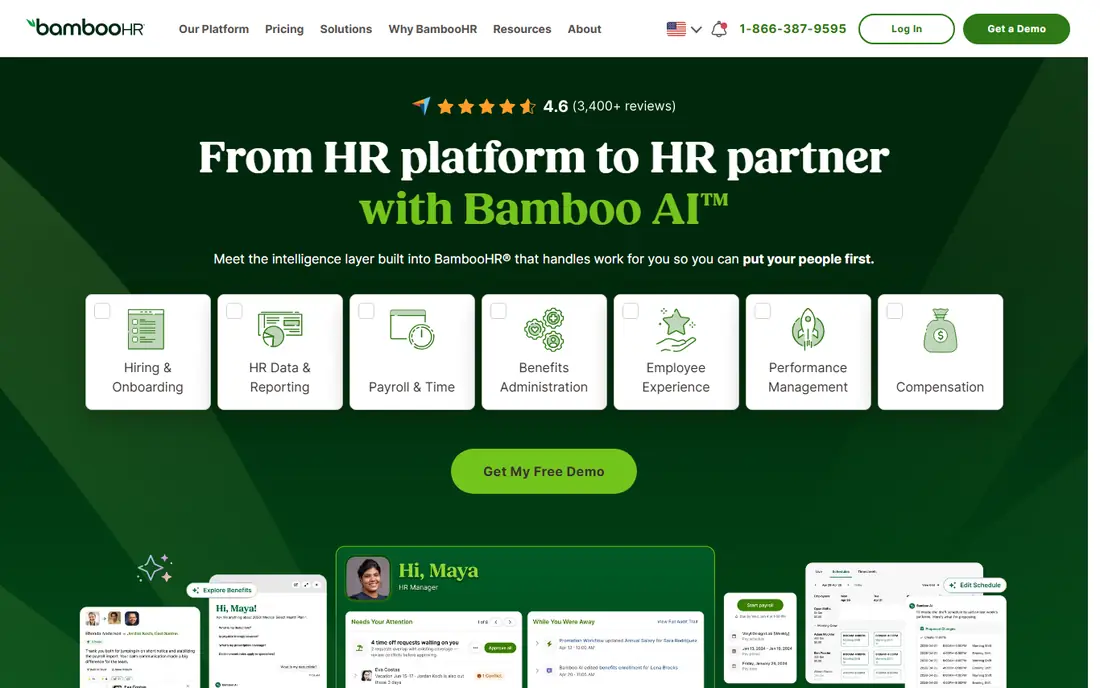
BambooHR is our pick for most midsize companies because it keeps core HR simple. Employee records, time off, hiring, onboarding, performance and reporting live in one system with an interface that managers and staff learn quickly. That simplicity matters when HR teams are small and cannot spend months on implementation.
Payroll and benefits are add-ons rather than core parts of every plan, so confirm what is included in your quote. If you need deep global payroll or complex shift rules, ADP, Paylocity or Workday may fit better. If you want clean core HR that your team will actually use, BambooHR is a strong default.
- Clear interface and fast setup
- Hiring, onboarding, time off and reporting in one place
- Payroll and benefits add-ons
- Pricing is quote-based on the current site
- Advanced payroll needs the add-on
- Very large global payroll needs a specialist
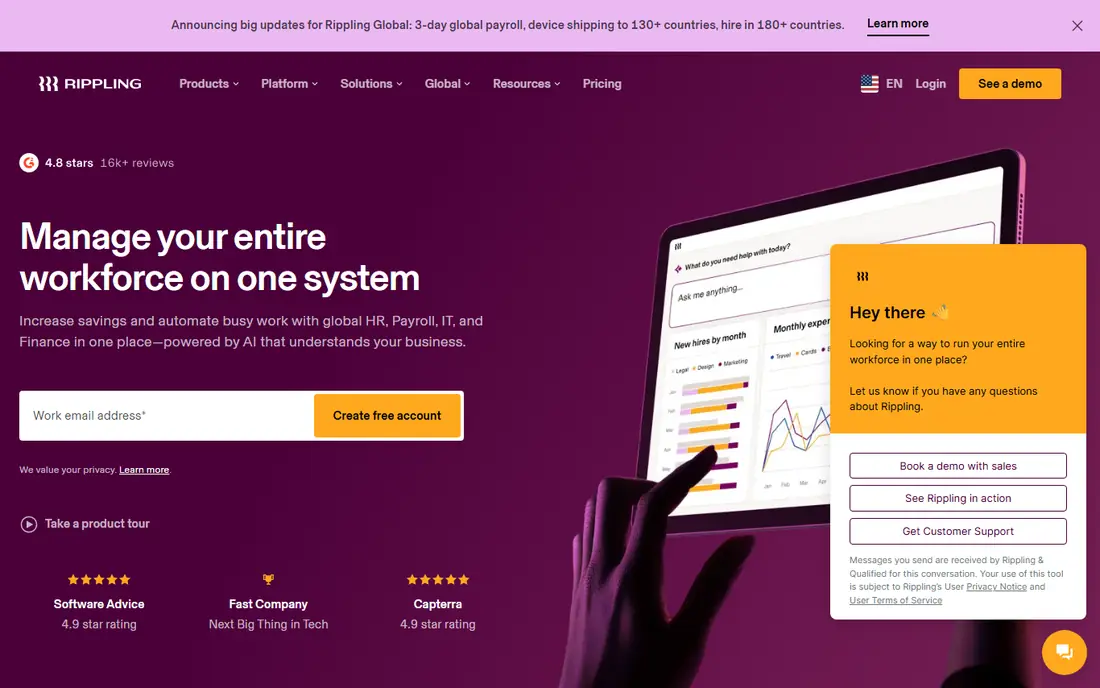
Rippling stands out by joining HR with IT. When you hire someone, Rippling can create accounts, assign apps and order devices, and when someone leaves, it can revoke access and stop payroll in the same workflow. That automation saves time for growing companies where HR and IT tasks often overlap.
The platform covers a lot, so small teams should start with the modules they need and add more later. Pricing depends on the bundle, so get a written quote for HR, payroll and IT together. If your company is tech-heavy and scaling fast, Rippling is often the best fit in this list.
- One employee record across HR, payroll, IT and finance
- Device and app provisioning automation
- Global payroll options
- Pricing varies by bundle
- Breadth can overwhelm small HR teams
- Implementation needs planning for IT workflows
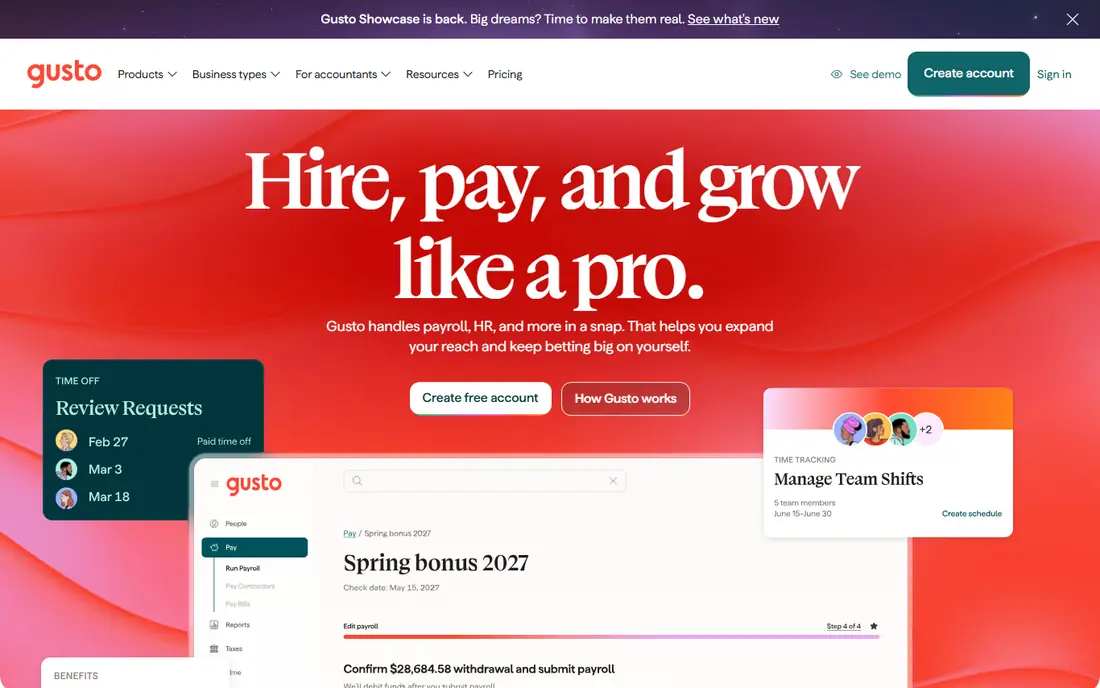
Gusto is payroll-first, which suits smaller midsize companies that want payroll, benefits and basic HR in one simple system. Setup is fast, tax filings are handled for payroll customers, and the interface is friendly for owners and managers without HR training. Contractor payments and benefits enrollment add to the core payroll strength.
As headcount grows past a few hundred, or if you need deep performance, learning or global HR tools, Gusto may feel limited. At that point, BambooHR, Rippling or Paylocity offer more HR depth. For teams under about 200 people, Gusto is a practical, low-friction choice.
- Clear payroll, benefits and compliance tools
- Simple setup for small teams
- Contractor payments included
- Less depth for large midsize HR needs
- Advanced talent tools are lighter
- Pricing rises with add-ons
ADP Workforce Now is the compliance-heavy choice for mid-market companies. It handles multi-state payroll, tax filings, benefits and time tracking with depth built from decades of payroll work. Companies with staff in many states, complex pay rules or union and shift requirements often choose ADP for that certainty.
The trade-off is complexity and price opacity. Pricing is quote-based, and the system can feel dense for small HR teams. If compliance risk is your top concern and you have the team to run a fuller system, ADP is a strong pick. If you want fast setup and a simple interface, start with BambooHR or Gusto.
- Deep payroll and tax compliance across US states
- Broad benefits and time tools
- Large support and service network
- Quote-based pricing
- Interface can feel dense
- Implementation takes longer than simpler rivals
Paylocity combines payroll depth with workforce management, time, scheduling, learning and performance tools in a modern interface. Midsize companies that need payroll plus reporting and employee experience features often find Paylocity a good middle ground between simple HR tools and enterprise suites such as Workday.
Pricing is quote-based and varies by module, so compare the full bundle you need, not just a base price. Data migration and payroll setup also take planning. If you want one vendor for payroll, time and talent at mid-market scale, Paylocity deserves a demo.
- Strong payroll plus workforce management
- Modern reporting and employee experience tools
- Learning and performance modules
- Quote-based pricing
- Module pricing adds up
- Implementation needs careful data migration
HiBob, often called Bob, focuses on people experience as much as records. It offers engagement surveys, performance reviews, time off, onboarding and people analytics in a modern interface that suits distributed teams. Companies that want HR to support culture and retention, not just administration, often prefer HiBob.
Payroll is not its core strength, so many HiBob customers run payroll through a partner or integrated provider. If payroll depth is your top need, choose ADP, Paylocity or Rippling. If engagement, performance and people data matter most, HiBob is a strong mid-market pick.
- Strong engagement, performance and culture tools
- Clear people analytics
- Good for distributed and hybrid teams
- Payroll is handled through partners or integrations
- Quote-based pricing
- Less payroll depth than ADP or Paylocity
Workday HCM is the enterprise-grade option for midsize companies that plan to scale well beyond 1,000 staff or operate globally. It joins HR, payroll, finance and planning in one governed system, with strong analytics for workforce planning and skills. Large and public companies often choose Workday for that scale and control.
For a typical midsize team, Workday is heavy. Implementation takes months, pricing is quote-based at enterprise levels, and the system needs dedicated administrators. Choose Workday if you are already scaling toward enterprise complexity. If you have under 500 staff and want fast value, BambooHR or Rippling will serve you sooner.
- Unified HR and finance platform
- Strong analytics and workforce planning
- Global payroll and compliance depth
- Quote-based enterprise pricing
- Implementation takes months
- More system than most midsize teams need
Paycor serves mid-market companies that need payroll flexibility plus HR, time, benefits and talent tools. It handles hourly, shift and multi-location workforces well, which suits retail, healthcare, manufacturing and service companies with varied schedules. Managers get self-service tools for time, scheduling and approvals.
Module depth varies, so demo the exact combination you need, including payroll, time and performance, before you commit. If you want a single mid-market vendor with payroll strength and HR breadth, Paycor is a solid alternative to ADP and Paylocity.
- Flexible payroll and time tools for mid-market
- HR, benefits and talent modules
- Good for hourly and shift workforces
- Quote-based pricing
- Interface and depth vary by module
- Large global needs may need a bigger suite
How we picked these
We compared official vendor sites, pricing pages, product documentation and public HRIS comparisons. We kept only systems that serve midsize companies today, with core HR, payroll or benefits coverage and US availability. We favored systems with clear mid-market fit and noted where pricing is quote-based, since that affects how easily buyers can compare total cost.
How to choose an HRIS for a midsize company
Start with headcount and payroll complexity. Companies under 100 staff often do well with Gusto or BambooHR, while companies with 200 to 1,000 staff, multi-state payroll or shift workforces should demo ADP, Paylocity, Rippling and Paycor as well. Map your must-have modules, such as payroll, benefits, time, performance and learning, before you talk to vendors.
Next, test the system with real data. Run a trial or guided demo using your own org structure, pay rules and time-off policies. Check how managers approve time off, how staff update details, and how payroll data flows without double entry. Ask about implementation time, data migration help and support hours, since those factors decide whether launch succeeds.
Finally, get total pricing in writing. Include base fees, per-employee fees, payroll fees, implementation fees and add-on modules. A low base price can grow quickly once payroll, benefits and performance modules are added. Compare three vendors on the same scope before you sign.
Frequently asked questions
What is the best HRIS software for midsize companies?
BambooHR is best for core HR simplicity, and Rippling is best if you also need IT and payroll in one system. ADP Workforce Now and Paylocity suit larger midsize companies with complex payroll needs, while Gusto suits smaller teams.
What is the best HRIS platform for HR and payroll together?
Rippling, ADP Workforce Now, Paylocity and Paycor all combine HR and payroll, with different strengths. Rippling adds IT automation, ADP adds compliance depth, and Paylocity and Paycor add workforce management for shift-based teams.
How much does HRIS software cost?
Most midsize HRIS pricing is quote-based or varies by headcount and modules, so vendors give a written quote after a demo. Simpler tools may publish per-employee starting prices, but payroll, benefits and implementation fees can change the total, so compare full quotes.
Is BambooHR good for midsize companies?
Yes, for core HR, hiring, onboarding, time off and reporting at midsize scale. It suits teams that value ease of use and fast setup, though payroll is an add-on and very large global payroll may need a specialist system.
How long does it take to implement an HRIS?
Simple systems can launch in weeks, while mid-market payroll and benefits implementations often take one to three months. Enterprise systems such as Workday can take six months or more. Plan data cleanup and payroll parallel runs into your timeline.
Sources
See where you really rank - block by block
ProMapRanker scans Google Maps across a grid of your service area. Simple monthly plans from $19, white-label on every plan.
Start freeKeep reading
 best seo management software
Best SEO Management Software in 2026
We compared the best seo management software for audits, rank tracking and keyword research, so you can choose a tool that fits your budget and team today.
Read → best pos software
Best POS Software in 2026: 8 Systems Compared
Compare the best POS software in 2026 for retail and restaurants, with starting prices, processing rates, hardware notes and honest trade-offs for each pick.
Read → best podcast hosting platform
Best Podcast Hosting Platform in 2026
Compare the best podcast hosting platforms for 2026, with pricing, free plans, upload limits, analytics, and distribution, to pick a host for your show.
Read →