 ProMapRanker
Best Hotel Management Software in 2026


Independent hotels wanting one system · Pricing starts at: See website
Key takeaways
- The best hotel management software for most independent hotels is an all-in-one system with reservations, a channel manager, and a booking engine in one place.
- Small bed and breakfasts should favor simple setup and low monthly cost over large chain features they will never use.
- Large hotels and groups should check integrations, multi-property reporting, and payment handling before they sign a contract.
- Pricing varies by room count, property count, and add-ons, so always get a quote for your exact property size.
Quick comparison
| Pick | Great for | Pricing starts at | Free tier | |
|---|---|---|---|---|
| Cloudbeds | Independent hotels wanting one system | See website | No | Visit |
 Mews | Modern boutique hotels and groups | See website | No | Visit |
 Hotelogix | Budget hotels and small chains | See website | No | Visit |
 eZee Absolute | Hotels needing a full front desk suite | See website | No | Visit |
 SiteMinder | Hotels focused on distribution | See website | No | Visit |
 Little Hotelier | Small hotels and bed and breakfasts | See website | Free trial | Visit |
 RoomRaccoon | Independent hotels in Europe and beyond | See website | No | Visit |
 WebRezPro | Small to mid-size hotels in North America | See website | No | Visit |
 innRoad | Independent hotels in the United States | See website | No | Visit |
The best hotel management software
We compared systems on reservations, channel management, booking engines, housekeeping, payments, and support. The picks below cover small inns, boutique hotels, and larger groups.
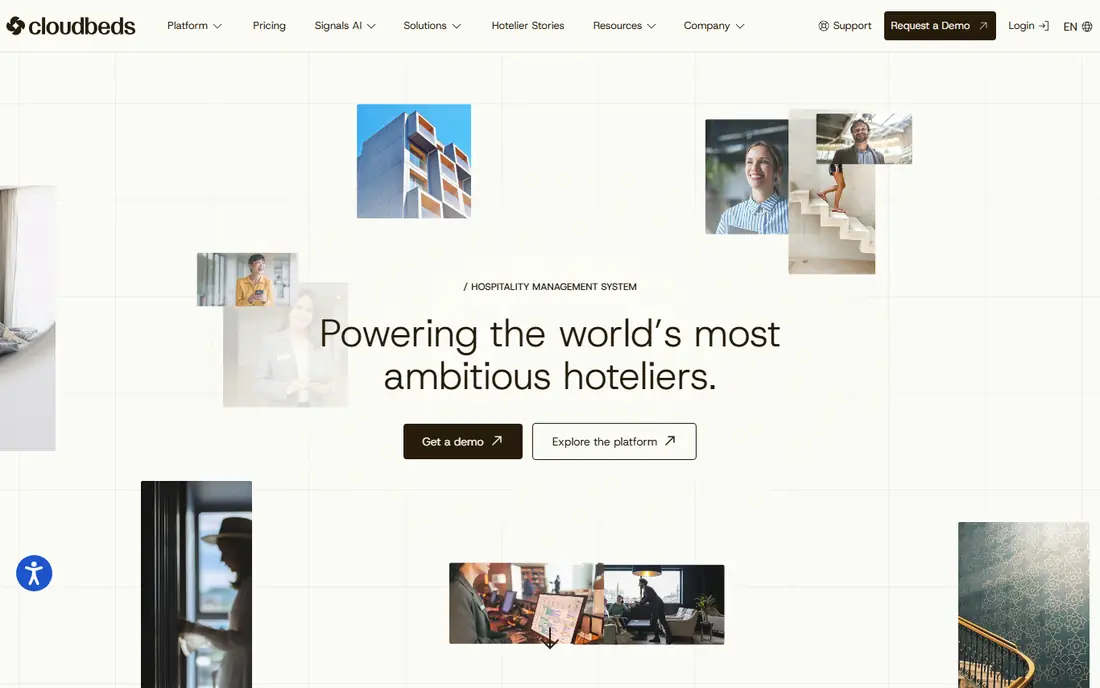
Cloudbeds suits an independent hotel that wants fewer vendors and one login for daily work. Reservations, rates, availability, and guest messages sit together, which helps a small front desk team avoid double bookings. The channel manager connects the property to major booking sites, and the booking engine supports direct bookings from the hotel website.
The trade-off is cost and scope. Because pricing depends on property size and the modules chosen, a very small inn should compare the total quote against a simpler tool. Larger independents and small groups tend to get more value, since they can use the reporting, payments, and integration options more fully.
- All-in-one reservations, channel manager, and booking engine
- Wide channel and integration range
- Built-in payments option
- Pricing is quote based
- Smaller properties may pay for features they do not need
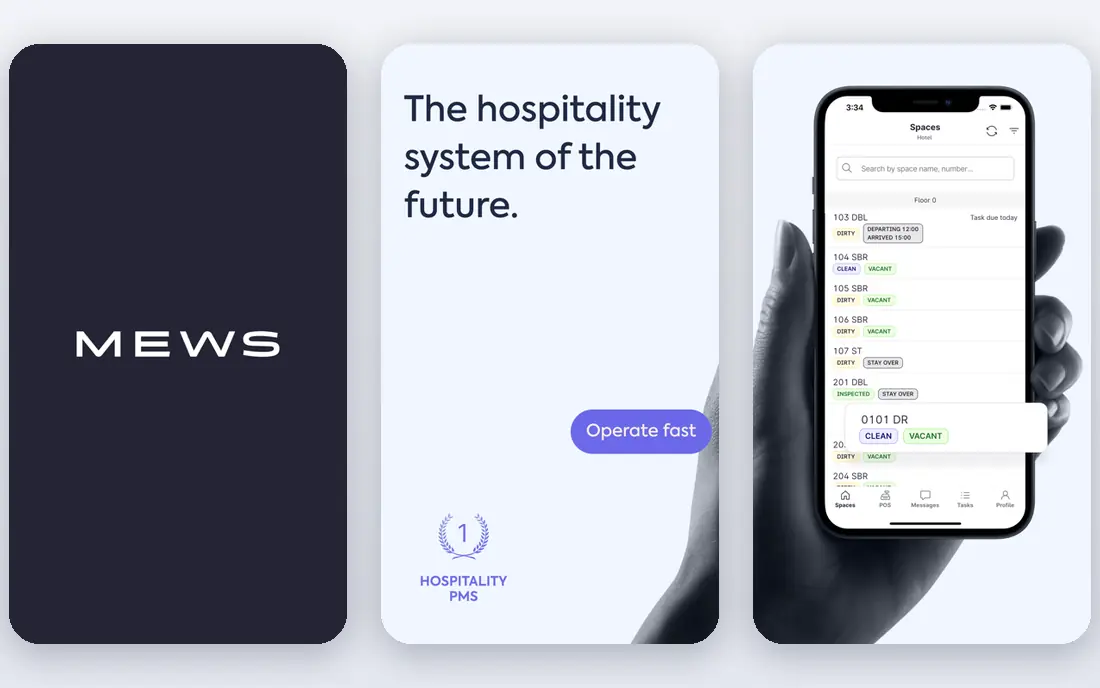
Mews is a strong pick for boutique hotels that want a modern guest journey, from online check-in to payment and checkout. Its marketplace lets a hotel add tools for revenue, messaging, and guest experience without replacing the core system. That flexibility matters for groups that run several brands or property types under one roof.
The catch is that flexibility needs decisions. Teams should map their current tools, payment provider, and accounting flow before migration. Hotels that want a fixed, simple package with little setup may prefer a smaller system, while design-led and growing groups will like what Mews offers.
- Modern cloud design
- Open API and marketplace
- Automation for check-in, payments, and guest messaging
- Pricing is quote based
- Setup can take more planning for complex properties
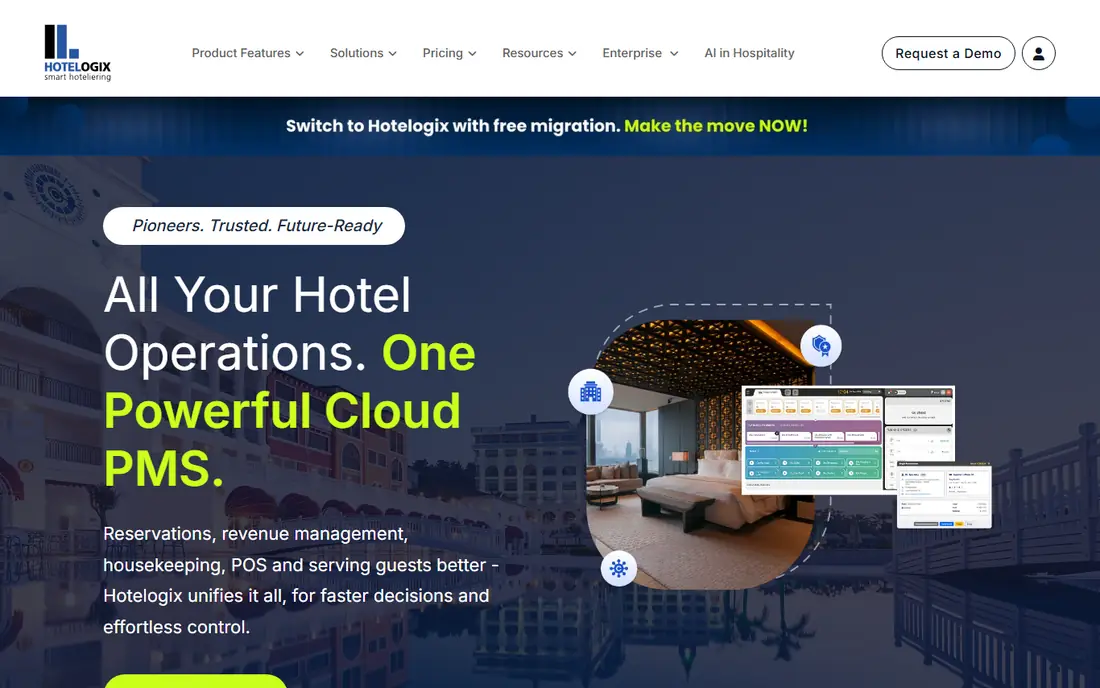
Hotelogix fits budget hotels and small chains that need reliable daily operations without a long implementation project. The system covers reservations, front desk work, housekeeping status, and basic distribution. Staff can learn the core screens quickly, which helps properties with seasonal hiring.
It is less suited to a hotel that wants advanced forecasting or a large integration library as the main reason to buy. For that buyer, a specialist revenue tool or a larger platform may be a better fit. For straightforward operations at a controlled cost, Hotelogix is a sensible shortlist option.
- Straightforward front desk and reservations tools
- Multi-property support
- Practical for smaller teams
- Pricing is quote based
- Advanced revenue tools are less deep than specialist tools
eZee Absolute is a full property management system for hotels that want depth in front office work, billing, and housekeeping. It also offers companion tools for channel management and direct bookings, so a hotel can build a fuller stack from one vendor. Properties in Asia, the Middle East, and other regions where eZee has a strong base may find local support helpful.
The main weakness is look and feel. Teams used to modern consumer apps may find some screens less polished than Mews or Cloudbeds. If staff ease of use matters more than feature depth, test the interface with real front desk tasks before committing.
- Broad front office, housekeeping, and billing features
- Channel manager and booking engine options
- Long track record in hospitality
- Interface feels dated next to newer cloud systems
- Pricing and modules need a sales quote
SiteMinder is best viewed as a distribution specialist rather than a complete hotel system. Its channel manager keeps rates and availability in sync across booking sites, which cuts overbookings and manual updates. Hotels that already like their front desk system but struggle with channel work often add SiteMinder for that job.
Buyers should be clear about what they still need. If the hotel has no property management system at all, SiteMinder alone will not cover front desk, housekeeping, and billing. Pair it with a compatible system, and confirm the combined cost before signing.
- Strong channel manager
- Booking engine and payments options
- Useful for hotels that sell through many channels
- Not a full property management system on its own
- Total cost depends on add-ons
Little Hotelier is made for small hotels, guesthouses, and bed and breakfasts. It bundles the essentials, including reservations, a channel manager, and a booking engine, in a package a small owner can run without a revenue manager. Setup is shorter than with enterprise systems, which matters when the owner also works the front desk.
Growth is the limit. A property that adds several sites, complex rate plans, or group reporting may need to move to a larger platform later. For a single small property that wants direct bookings and fewer double bookings, it is one of the easiest starting points on this list.
- Built for small properties
- Includes channel manager and booking engine
- Faster to set up than large systems
- Limited multi-property depth
- Larger hotels may outgrow it
RoomRaccoon gives independent hotels a single system for reservations, distribution, and payments. It is a practical choice for a hotel that wants to cut manual channel updates and take more direct bookings. The built-in payments option also helps small teams collect deposits and balances without a separate payment setup.
Before buying, check that your most important booking channels are supported and that payment terms suit your country. Hotels outside RoomRaccoon core markets should also ask about support hours. When those checks pass, it is a clean all-in-one option for independents.
- All-in-one property system with channel manager and booking engine
- Built-in payments option
- Good fit for independents
- Pricing is quote based
- Channel coverage should be checked for your market
WebRezPro suits small to mid-size hotels, inns, and lodges that want a dependable cloud system without enterprise complexity. It covers reservations, front desk tasks, housekeeping, and reports, with tools for direct bookings. Properties with seasonal staff benefit from a system that is easy to teach.
It will not win on modern design alone. Hotels that put guest-facing style first may prefer Mews or RoomRaccoon. Hotels that put steady daily operation, clear reports, and responsive support first will find WebRezPro a solid fit.
- Cloud property system with reservations, housekeeping, and reporting
- Direct booking support
- North American support base
- Pricing is quote based
- Design is functional rather than flashy
innRoad is built for independent hotels that need reservations, channel distribution, and rate management in one place. It helps owners set rates, watch pickup, and keep availability consistent across channels. That combination is useful for a property that relies on both direct bookings and online travel sites.
The limit is scale. A large chain with complex group and multi-property needs should compare innRoad against Mews and Cloudbeds on reporting and integrations. A single independent hotel or a small group in the United States will find it a focused and practical choice.
- Reservations, distribution, and reporting in one system
- Built for US independents
- Useful revenue and rate tools
- Pricing is quote based
- Larger chains may need deeper multi-property tools
How we picked these
We compared official feature pages, pricing pages, and public product descriptions, and we favored systems that are still sold and supported in 2026. We looked for real coverage of reservations, distribution, housekeeping, payments, and reporting, not just a booking button. Where a vendor does not publish a price, we wrote See website rather than guessing a figure.
What to check before you buy hotel software
Start with your booking mix. A hotel that gets most bookings from two channels has different needs from a hotel that sells on many sites and its own website. List the channels, payment methods, and reports you use every week, then test each shortlisted system against that list.
Match the system to your size
Small properties should favor fast setup, simple training, and a clear monthly cost. Large properties should favor integrations, multi-property views, and permission controls. Ask each vendor how long migration takes, what data moves over, and what training is included.
Test payments and housekeeping
Payments and housekeeping cause the most daily friction. Check deposit rules, card handling, refunds, and how housekeeping status updates reach the front desk. A demo that only shows reservations will not reveal those problems, so ask for a housekeeping and payment walkthrough.
Frequently asked questions
What is the best hotel management software for a small hotel?
Little Hotelier, WebRezPro, and innRoad are strong starting points for small properties. They cover reservations and distribution without the setup load of a large chain system. Compare their quotes for your room count before deciding.
What is the best software for hotel management across many channels?
Cloudbeds, SiteMinder, and RoomRaccoon stand out for distribution work. Cloudbeds and RoomRaccoon add full property management, while SiteMinder is best as a channel specialist paired with another system. Check that your key channels are supported.
How much does hotel management software cost?
Most vendors price by room count, property count, and modules, so published prices are often quotes only. Small properties may pay a modest monthly fee, while groups pay more for extra properties and integrations. Always ask for the total monthly cost, including payments and add-ons.
Do I need a channel manager and a booking engine?
Most hotels benefit from both. A channel manager keeps rates and availability in sync across booking sites, and a booking engine takes commission-free direct bookings on your own site. Systems that bundle both reduce manual work and double booking risk.
What is the best hotel review management tool?
Review tools are often add-ons or separate products, not the core property system. If reviews matter most, ask your shortlisted vendor about its review and guest messaging options, or pair your system with a dedicated reputation tool. Do not buy a full system only for reviews.
Sources
See where you really rank - block by block
ProMapRanker scans Google Maps across a grid of your service area. Simple monthly plans from $19, white-label on every plan.
Start freeKeep reading
 twitch alternatives
Twitch Alternatives in 2026
Explore the best Twitch alternatives in 2026 for live streaming, with free platforms, monetisation options, audiences, chat tools, and tips for new streamers.
Read → firebase alternatives
Best Firebase Alternatives in 2026
Looking for Firebase alternatives? We compare 9 backend platforms for auth, databases, realtime, storage, functions, self-hosting, and pricing for your app.
Read → companies with best work life balance
Companies With Best Work Life Balance in 2026
See companies with best work life balance in 2026, ranked by employee ratings, with flexible work options, benefits, and what to check before applying.
Read →