 ProMapRanker
Best Home Finance Software in 2026

Key takeaways
- Monarch Money is the strongest all-round pick for households that want budgeting, investments, and net worth in one dashboard.
- YNAB suits households that want a hands-on, zero-based budget where every dollar gets a job before it is spent.
- Quicken Simplifi is a good low-cost option for automatic tracking and cash-flow forecasts, while Empower offers useful free investment tools.
- Tiller is best for spreadsheet fans who want bank feeds in Google Sheets or Excel, and Goodbudget suits envelope budgeting without bank linking.
- This is not financial advice. These tools help you track money, but they do not replace professional advice for investing, debt, or tax decisions.
Quick comparison
| Pick | Great for | Pricing starts at | Free tier | |
|---|---|---|---|---|
 Monarch Money | household dashboard | $14.99 per month | Free trial | Visit |
 YNAB | zero-based budgeting | $14.99 per month | Free trial | Visit |
 Quicken Simplifi | automatic tracking | $5.99 per month | Free trial | Visit |
 Quicken Classic | full desktop finance | See website | No | Visit |
 Empower | free investment tracking | Free | Yes | Visit |
 Tiller | spreadsheet budgeting | $79 per year | Free trial | Visit |
 EveryDollar | simple zero-based budget | Free | Yes | Visit |
 Goodbudget | envelope budgeting | Free | Yes | Visit |
 Copilot | Apple household tracking | $13 per month | Free trial | Visit |
The best home finance software
We compared budgeting, bank sync, bill tracking, investment views, and pricing for home finance software that households actually use in 2026. The best home finance software depends on how hands-on you want to be. Some households want a tool that tracks everything automatically, others want a strict budget they control each week, and spreadsheet fans want the data in a format they can shape themselves.
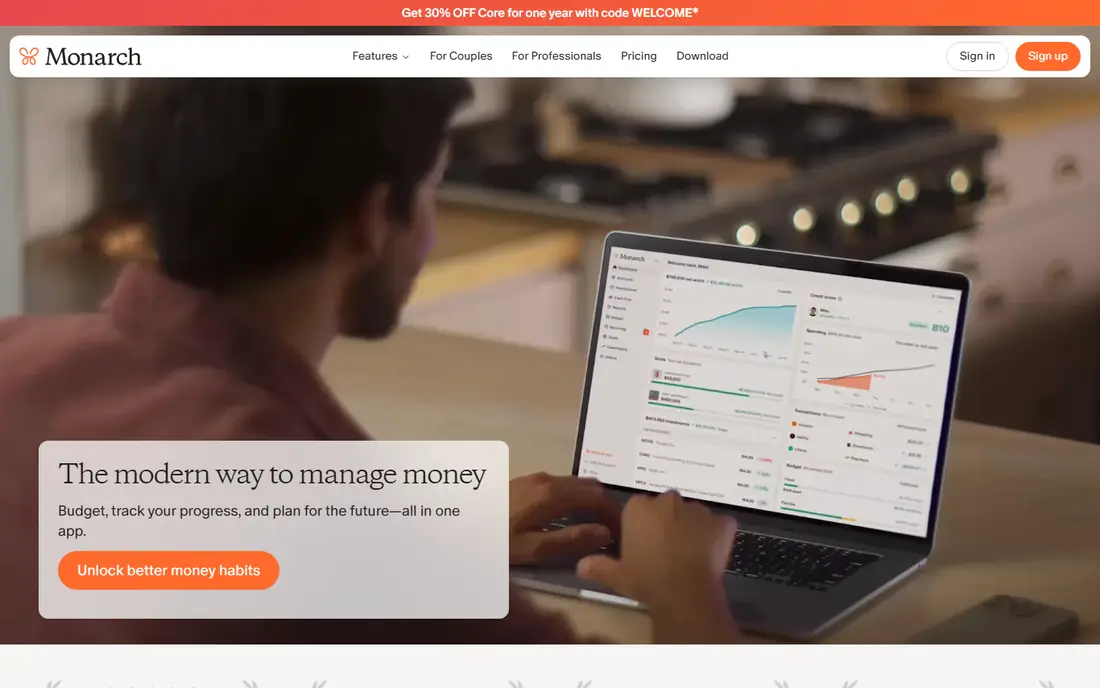
Monarch Money is our pick for households that want the full picture in one place. Budgets, accounts, investments, and net worth sit on customizable dashboards, and couples can share the same household view with separate logins. That shared view helps partners see spending, goals, and upcoming bills without exporting data or comparing separate apps.
The main drawback is price. At $14.99 per month, or $99.99 per year on annual billing, Monarch costs more than simpler tools, and there is no permanent free tier beyond the trial. Households that only need basic budgeting may find EveryDollar or Goodbudget enough, but households that want investments and net worth alongside budgeting will value the combined dashboard.
- Budgeting, investments, and net worth in one view
- Good for couples and shared households
- Customizable dashboards and reports
- No free plan beyond a trial
- Price is higher than Simplifi or EveryDollar
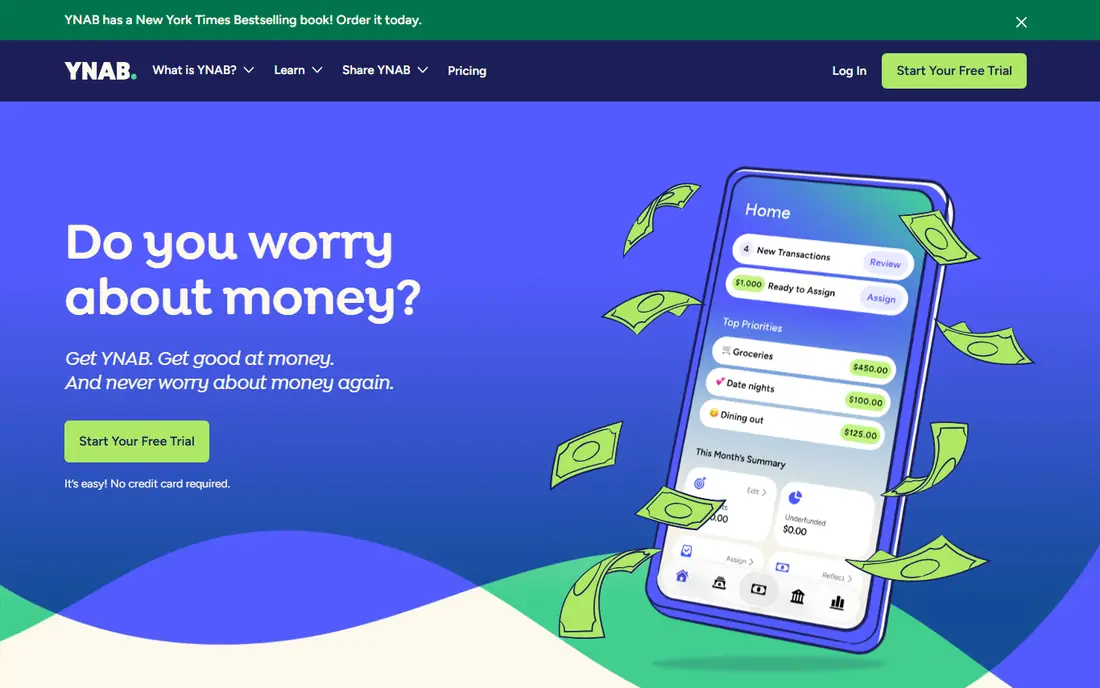
YNAB, short for You Need A Budget, is built around a simple rule: give every dollar a job before you spend it. That method helps households that overspend or live paycheck to paycheck, because it forces a plan for bills, savings, and debt before money leaves the account. Goal tracking and debt payoff tools support that plan, and the learning resources help new users stick with the method.
It is not a passive tracker. YNAB works best when you check it often and adjust categories as life changes, and the $14.99 per month price, or $109 per year, is steep if you only want to glance at balances. Households that commit to the method often find it changes spending habits, while households that want automation alone may prefer Monarch or Simplifi.
- Strict zero-based method that assigns every dollar a job
- Strong debt payoff and goal tools
- Good education and support
- Real learning curve for new users
- Price is high for passive trackers
- 34-day trial, then paid only
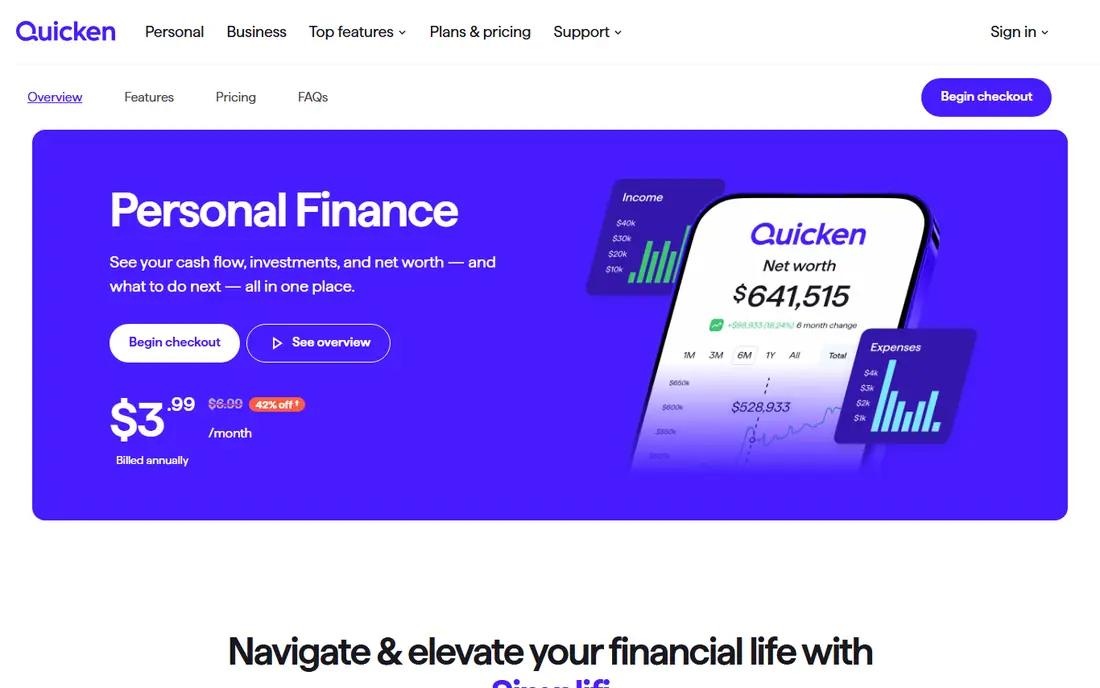
Quicken Simplifi is a good middle ground for households that want tracking without a strict budgeting method. It syncs bank and card accounts, categorizes spending, and projects cash flow so you can see whether a slow month or a large bill will strain your balance. Spending plans and watchlists help you spot trends without assigning every dollar in advance.
The price is reasonable for a paid tool, at $5.99 per month or $71.88 per year, though introductory rates can differ from renewal rates, so check the renewal price before you commit. Simplifi is less of a behavior-change tool than YNAB, and its budgeting structure is lighter, but for hands-off tracking it is strong value.
- Automatic account sync and categorization
- Cash-flow projections for upcoming months
- Low price for a paid tracker
- No free plan beyond a trial
- Less strict budgeting structure than YNAB or Goodbudget
Quicken Classic is the long-running desktop option for households that want detailed control over accounts, investments, bills, and even rental property. Its reports go deeper than most mobile-first tools, and users who have used Quicken for years often value the continuity and the desktop data file. It suits households with complex finances that need more than a simple budget app.
The trade-off is feel and cost. The interface is more traditional than Simplifi or Monarch, and it requires a paid subscription with no free tier. New users may prefer a modern web and mobile tool, but households with rental property, detailed investment tracking, or years of Quicken data will find Classic hard to replace.
- Deep desktop features for accounts, investments, and rental property
- Long track record
- Detailed reports
- Desktop interface feels dated to some users
- Subscription required
- Less modern than Simplifi or Monarch
Empower, formerly Personal Capital, offers the best free dashboard for households focused on investments and net worth. You can link accounts, see your portfolio allocation, track net worth over time, and use retirement planning tools without paying a subscription. That makes it a useful companion to a budgeting app, or a standalone tracker for investment-heavy households.
Budgeting is not its strength. Categories and budgets exist, but they are lighter than YNAB, Monarch, or Simplifi, and Empower will present paid advisory services, since that is how the free tools are funded. If you want free investment tracking and can ignore the advisory offers, Empower is hard to beat on price.
- Free dashboard for accounts, investments, and net worth
- Retirement planning tools
- No subscription for core tools
- Budgeting features are thinner than YNAB or Monarch
- Expect offers for paid wealth management advice
Tiller is the pick for households that love spreadsheets and want bank data in a format they control. It feeds transactions into Google Sheets or Excel templates, where you can build custom budgets, charts, and debt payoff plans without being limited by an app's fixed views. Spreadsheet users often find this flexibility worth more than any dashboard.
It is not a guided app. You need to be comfortable with spreadsheets, and there is no hand-holding for new budgeters. The $79 per year price, after a 30-day trial, is reasonable for what it does, but households that want a polished mobile app should look at Monarch or Simplifi instead.
- Bank feeds flow into Google Sheets or Excel
- Full control over categories and reports
- Templates for budgets and debt payoff
- It is still a spreadsheet, with no guided app experience
- No free plan after the 30-day trial
EveryDollar offers a simple, free way to start zero-based budgeting. You create categories, assign income to each one, and track spending manually, which keeps the method clear for beginners. The interface is straightforward, and it follows the budgeting approach taught by Ramsey Solutions, which many households already know.
Bank sync sits behind the paid Premium plan, so free users must enter transactions by hand. That manual step helps some people stay aware of spending, but it becomes tedious with many accounts. If you want automatic sync at a lower price, Simplifi or Monarch may fit better, but for a free, simple start, EveryDollar works well.
- Free manual zero-based budgeting
- Simple interface for beginners
- Premium adds bank sync
- Bank sync requires the paid plan
- Premium price is high for what it adds over free tools
Goodbudget brings the cash envelope method to phones and the web. You divide money into envelopes for groceries, rent, transport, and other categories, then spend from each envelope until it runs out. That visual limit helps households control discretionary spending, and the free tier lets you try the method without linking a bank account.
The free tier caps the number of envelopes and devices, and the paid Plus plan, at $10 per month or $80 per year, removes those limits. Goodbudget is not built around bank sync, so households that want automatic tracking should look elsewhere. For manual, envelope-based budgeting, especially for couples sharing envelopes, it is a clear and calm tool.
- Digital envelope method that is easy to understand
- Free tier for basic use
- Works without linking bank accounts
- Free tier limits envelopes and devices
- Bank sync is not the focus
Copilot is the best-looking option for households that live on Apple devices. Its iPhone, Mac, and web apps present spending, budgets, and investments in a clean design, and its categorization and insights help you spot trends without digging through menus. Apple-focused users often find it the most pleasant finance app to open each day.
The limits are platform and price. There is no Android app, so mixed-device households cannot use it together, and at $13 per month or $95 per year, it costs more than Simplifi. If your household is all Apple and design matters to you, Copilot is worth a trial. If you need Android, Monarch or Simplifi are better fits.
- Polished design for Apple devices
- Automatic categorization and insights
- Good for iPhone and Mac households
- No Android app
- No free plan beyond a trial
- Price is higher than Simplifi
How we picked these
We compared official pricing pages, feature pages, and app listings for home finance software that is actively maintained in October 2026. We favored tools that cover a clear household job, from zero-based budgeting to investment tracking to spreadsheet control, and we left out tools that were discontinued or no longer actively developed. Where introductory and renewal prices differed, we reported the standard rate and noted the difference where it mattered.
How to choose the right tool for your household
Start with your budgeting style. Hands-on budgeters should try YNAB or EveryDollar, automatic trackers should try Simplifi or Monarch, envelope fans should try Goodbudget, and spreadsheet fans should try Tiller. Then check device fit, since Copilot excludes Android and some tools work better on desktop than on mobile.
Next, link a small set of accounts during a trial and check sync reliability for your banks, since a tool that misses transactions will frustrate you fast. Review the renewal price, not just the first-year offer, and check whether you need investment tracking, which points to Monarch, Empower, or Quicken Classic. This is not financial advice, and for investing, debt, or tax decisions, talk to a qualified professional about your own situation.
Frequently asked questions
What is the best finance software for home use?
Monarch Money is the best all-round pick for households that want budgeting, investments, and net worth together, while YNAB is best for strict zero-based budgeting. Simplifi is a good lower-cost option for automatic tracking, and Empower is best if you mainly want free investment tools.
What is the best home finance software for couples?
Monarch Money and Goodbudget both work well for couples, with Monarch offering shared dashboards and investment views, and Goodbudget offering shared envelopes. YNAB also supports sharing with household members, which helps partners follow the same budget.
Is Quicken Simplifi better than YNAB?
Simplifi is better for automatic tracking and cash-flow forecasts at a lower price, while YNAB is better for households that want a strict zero-based method and behavior change. Choose Simplifi if you want a light-touch tracker, and YNAB if you want a disciplined budgeting system.
What is the best free home finance software?
Empower offers the most useful free dashboard for investments and net worth, while EveryDollar and Goodbudget offer free budgeting tiers. Free tiers work well for basic tracking, but bank sync and advanced features usually require a paid plan.
Do I need home finance software if I already use my bank app?
A bank app shows balances and transactions for one bank, while home finance software pulls all accounts together, adds budgets, and tracks net worth over time. If you have several banks, cards, and investment accounts, a combined tool gives a clearer household picture.
Sources
See where you really rank - block by block
ProMapRanker scans Google Maps across a grid of your service area. Simple monthly plans from $19, white-label on every plan.
Start freeKeep reading
 best tour operator software
Best Tour Operator Software in 2026
Compare the best tour operator software for bookings, channel management, waivers and payments, with pricing models for day tours and multi-day trips.
Read → best time clock app for small business
Best Time Clock App for Small Business in 2026
We compare the best time clock app for small business options, with free plans, GPS clock ins, scheduling and payroll links for hourly teams and payroll help.
Read → best test automation tools
Best Test Automation Tools in 2026
Compare the best test automation tools, from Playwright and Selenium to Cypress, Katalon and BrowserStack, with prices, languages and best uses explained.
Read →