 ProMapRanker
Best Home Buying Companies in 2026

Key takeaways
- Opendoor and Offerpad are the main national iBuyers, with an online offer process and a service fee on top of repair adjustments.
- HomeVestors and other as-is buyers accept homes in poor condition, but the offer is usually lower than a traditional listing price.
- Marketplaces such as Sundae and HomeLight Simple Sale put a home in front of several investors, which can widen the range of offers.
- Cash offers vary by home, condition, and market, so compare written terms from at least two buyers before accepting.
- This article is general information only, not financial advice, and a fast sale trades price for speed and certainty.
Quick comparison
| Pick | Great for | Pricing starts at | Free tier | |
|---|---|---|---|---|
 Opendoor | Widest national iBuyer coverage | See website | No | Visit |
 Offerpad | Flexible closing date | See website | No | Visit |
 HomeVestors | Homes needing major work | See website | No | Visit |
 Sundae | Investor marketplace offers | See website | No | Visit |
 House Buyers of America | As-is sale in served markets | See website | No | Visit |
 Express Homebuyers | Distressed homes | See website | No | Visit |
 HomeGo | Fast as-is sale | See website | No | Visit |
 HomeLight Simple Sale | Comparing cash offers online | See website | No | Visit |
The best home buying companies
A home buying company buys a house directly for cash, or connects a seller with investors who do, instead of listing the home on the open market. The appeal is speed, fewer showings, and no repair work before sale. The cost is usually a lower net price than a competitive listing. We compared official company pages, published fee descriptions, and recent market comparisons, and we kept only companies that are live in the United States in October 2026.
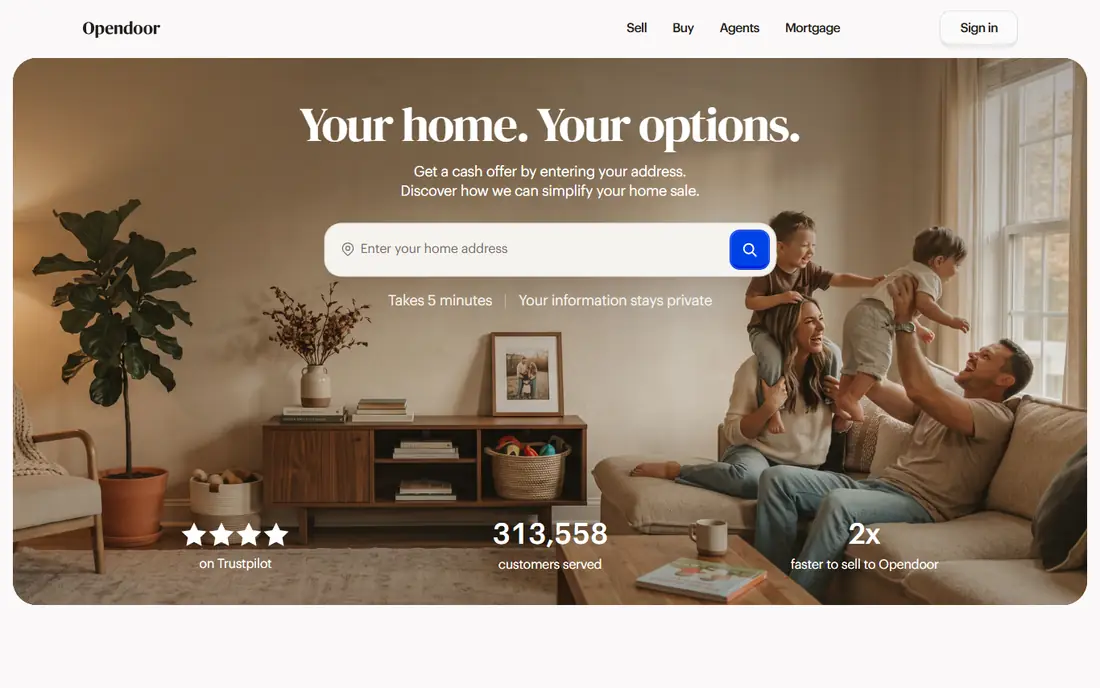
Opendoor is the largest iBuyer in the United States, and it works best for a standard home in good condition in one of its served markets. You enter the address online, answer questions about the home, and receive an initial offer, followed by a final offer after an assessment. Closing can take as little as 14 days, with a window that extends to 60 days in published descriptions, which helps sellers who need to line up a move.
The price needs close reading. Opendoor charges a program fee, makes a condition adjustment after the assessment, and adds title and escrow costs, so the headline offer is not the net amount. Opendoor suits sellers who value a set process and a known date over squeezing out the top price.
- Online offer request
- Seller picks a closing date in a set window
- Operates in many markets
- Service fee plus repair adjustments
- Stricter condition and location limits than as-is buyers
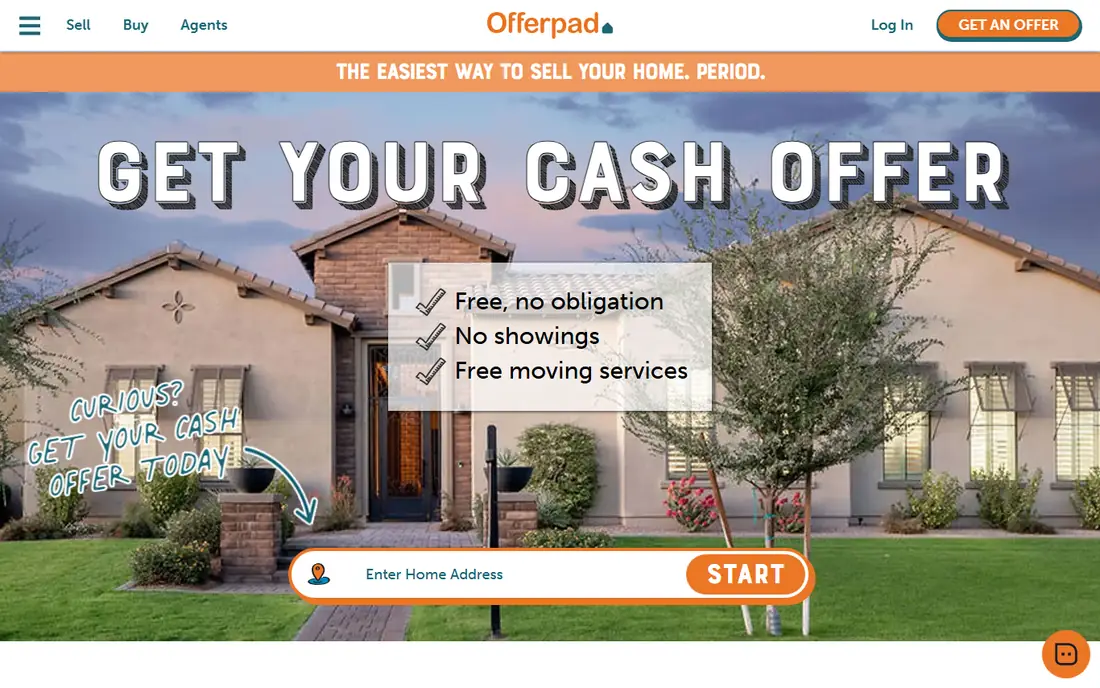
Offerpad follows the same iBuyer model as Opendoor, with a longer closing window that appeals to sellers who need time to buy their next home. Published descriptions put the closing range at 8 to 90 days, seller selected, and Offerpad has promoted a free local move within a set distance.
The trade-off is similar. Offerpad charges a service fee, reported in recent comparisons at 5 to 8 percent, plus repair deductions after assessment, and its coverage is narrower than Opendoor, with around 16 metros in some counts. Get the final written offer, including every deduction, before comparing it with Opendoor or with a traditional listing. Offerpad is a strong choice when the closing date matters as much as the price.
- Closing window up to 90 days in published descriptions
- Free local move offer in some cases
- Online process
- Service fee of 5 to 8 percent in recent comparisons
- Final offer can fall after assessment

HomeVestors is the company behind the We Buy Ugly Houses brand, and each office is independently owned and operated. That local structure is both the strength and the risk. A local buyer can look at a home with serious repair needs, problem tenants, or an inherited property situation, and make an as-is offer without asking the seller to fix anything first. Closing in as little as three weeks is stated on the company site in some descriptions.
Because each franchise sets its own offer math and service, experience varies by market. Vet the local office, ask for proof of funds, and insist on a written offer with closing costs spelled out. HomeVestors is not the right pick for a clean, updated home in a hot market, where a listing would likely bring more. It is the right pick when condition is the obstacle and a fast, as-is exit matters most.
- Buys as-is, including distressed homes
- Local franchise buyers
- Can close in as little as three weeks in some cases
- Offer varies by local franchise
- Price is usually well below market value for homes in good shape
Sundae runs a marketplace rather than buying every home itself. It visits the home, then puts it in front of its network of investors, who bid. That competition can help a seller who would otherwise take the first low offer from a single buyer, and Sundae states closing in as little as 10 days or as long as 60 days. A cash advance of up to 20,000 dollars is mentioned on its site for sellers who may qualify.
Coverage is the limit. Sundae lists markets in states including California, Florida, Nevada, Oklahoma, South Carolina, Tennessee, and Utah, so many sellers will fall outside its area. It also works best for homes that investors want to renovate and resell, rather than for a pristine home that would sell well on the open market. Use Sundae when you want several investor eyes on a home, and compare its best bid with a direct buyer offer.
- Home shown to a network of investors
- Closing window from 10 to 60 days
- Possible cash advance in some cases
- Limited market coverage
- Final price depends on investor bids, not a single guaranteed offer
House Buyers of America buys homes as-is in the markets it serves, with a process that starts online and moves to an in-person or virtual review. Sellers who want to avoid repairs, cleaning, and showings will find the model familiar, and closing timelines in recent comparisons run from 7 to 45 days depending on the home and title work. The company states no seller fees in its model, but the offer itself reflects repair and resale costs, so the net result still needs checking.
The main caution is the same as with any as-is buyer. An offer that looks simple can still be well below what a renovated home would fetch on the open market, and the exact number depends on condition, location, and comparable sales. Ask for the offer in writing, ask what happens if title issues appear, and compare it with at least one other buyer. House Buyers of America fits sellers who need a clean exit from a home they do not want to repair.
- As-is purchases
- No agent commission in its stated model
- Closing often within weeks
- Offer range is broad and depends on condition
- Coverage is not nationwide for every home type
Express Homebuyers focuses on homes that need work, including distressed properties where a traditional buyer using a mortgage might struggle to close. The seller does not need to stage, repair, or host showings, and recent comparisons put closing at 7 to 30 days. That speed helps in situations such as a probate sale, a relocation deadline, or a home with damage that would scare off retail buyers.
The price reflects that focus. A buyer who takes on major repairs will price those repairs into the offer, so a seller should not expect a near market price for a home in poor shape. Express Homebuyers is worth a call when the home itself is the problem, and less useful when the home is already in good, market ready condition.
- Focus on distressed and as-is homes
- Fast closing in many cases
- No repair work required from the seller
- Narrower focus than national iBuyers
- Offer will reflect heavy repair costs
HomeGo is a direct cash buyer that aims for a fast, as-is sale, with closing in 7 to 14 days in recent market comparisons. The process starts online, and the seller avoids agent commissions, repairs, and open houses in the stated model. For a seller with a firm deadline, that timeline is the main selling point, and it is faster than most iBuyer windows.
Coverage and offer strength vary by market, since a cash buyer can only pay what local resale conditions support. A home in a market with strong investor demand will draw a better offer than the same home in a thin market. HomeGo fits a seller who needs speed first and is willing to accept a discount for it.
- Fast closing, often 7 to 14 days in comparisons
- As-is purchase
- Simple online start
- Limited coverage in some areas
- Offer depends heavily on local investor demand
HomeLight Simple Sale is a marketplace that connects a seller with cash buyers, rather than buying the home itself. Recent comparisons put closing at 7 to 21 days, and there is no obligation to accept an offer, which makes it a low pressure way to test the cash route.
The limit is that a marketplace offer is still a cash investor offer, with repair and resale costs built in. It will usually sit below a competitive open market price, and the best offer on the platform may still be weaker than a listing in a strong market. Use HomeLight Simple Sale as a comparison step, alongside a local agent estimate, and treat any single offer as one data point, not as a valuation. For sellers who want choice without a long search, it is a practical starting point.
- Connects sellers with cash buyers in one place
- No obligation to accept
- Useful alongside a listing estimate
- It is a marketplace, not a single buyer, so offers vary
- Not a substitute for a full market listing
How we picked these
We compared official company pages, published fee and timeline descriptions, and recent market comparisons for companies that buy homes for cash in the United States. We included both direct iBuyers and as-is buyers, plus marketplaces that connect sellers with investors, because the keyword covers all three models. We left out companies that no longer buy homes directly, such as Redfin Now, which shut down its direct buying program. Where fees or timelines differed between sources, we used the range or the most recent published description, and we note that cash offers vary by home and market.
What to compare before accepting an offer
Read the net amount, not the headline. A cash offer becomes meaningful only after the service fee, repair adjustments, title and escrow costs, and any other deductions are listed. Ask for that breakdown in writing, and ask when the price becomes final. Some offers change after an assessment, and that change is where many sellers feel caught out.
Next, check the timeline and the exit terms. Ask for the closing date in writing, what happens if title work takes longer, and whether you can cancel before closing without a penalty. Opendoor states cancellation before closing with no cost in some descriptions, but terms vary by company and by contract, so do not assume the same rule applies everywhere. Finally, get a second opinion. A local agent estimate, even if you do not list, gives a useful check on what the open market might pay, and it costs little compared with accepting a low cash offer.
Cash for homes companies: when a low offer still makes sense
A low offer can still be the right choice when the home needs major work, when a deadline is firm, when tenants or title issues block a normal sale, or when the seller lives far away and cannot manage repairs. In those cases, the saving is in time, risk, and management, not in price. If none of those pressures apply, a traditional listing usually deserves a serious look first.
Questions to ask every buyer
Ask for proof of funds, ask whether the buyer uses a licensed title company, and ask whether any money is due upfront. A legitimate cash buyer should not ask a seller to pay upfront fees to receive an offer. Also ask who handles closing costs, whether the buyer will re-trade the price after inspection, and how long the offer stays valid. Clear answers to those questions separate a solid buyer from a risky one.
Frequently asked questions
What is the best home buying company for a fast sale?
Opendoor and Offerpad are the most established national iBuyers, with closing windows starting near two weeks in published descriptions. As-is buyers such as HomeGo and Express Homebuyers can close in as little as seven days in some cases, but speed depends on title work and market coverage. The fastest company for your home is the one that serves your area and can close on your title without delay.
How do best cash for home companies set their offer?
Most use comparable sales, then subtract repair costs, resale costs, and a margin for risk and profit. iBuyers add a service fee and a condition adjustment after assessment. As-is buyers build repair costs into a lower headline offer, often with no separate fee. That is why two buyers can offer very different numbers for the same home, and why a written breakdown matters.
Is selling to a best house buying company safe?
It can be, if you check the buyer, use a licensed title company, and get every term in writing. Avoid buyers who ask for upfront money, who will not show proof of funds, or who pressure you to sign on the spot. A marketplace such as Sundae or HomeLight Simple Sale can add a layer of comparison, but you still need to read the contract for the buyer you actually choose.
Will a cash buyer buy a home in any condition?
Many as-is buyers will, including HomeVestors, Express Homebuyers, and House Buyers of America, but iBuyers such as Opendoor and Offerpad have stricter condition, location, and price limits. A home with major structural damage, fire damage, or unusual features may only fit an as-is buyer. Check eligibility for your address before counting on a specific company.
Should I list my home instead of selling for cash?
Listing usually brings a higher price when the home is in good condition, in a served market, and when you have time for showings and a mortgage buyer timeline. A cash sale usually wins on speed, certainty, and avoiding repairs. Compare a written cash offer, net of all deductions, with a local agent estimate, net of agent fees and likely repairs, before deciding.
What fees do best companies that buy houses for cash charge?
It depends on the model. iBuyers charge a service fee, often around 5 percent, plus repair adjustments and title costs. As-is buyers often state no seller fees, but they pay less for the home to cover repairs and resale. Marketplaces may charge the buyer, not the seller, or take a fee from the transaction. Always ask for the net amount you will receive at closing.
Sources
See where you really rank - block by block
ProMapRanker scans Google Maps across a grid of your service area. Simple monthly plans from $19, white-label on every plan.
Start freeKeep reading
 whats the best ai app to use
Whats the Best AI App to Use in 2026
Wondering whats the best ai app to use in 2026? We compare ChatGPT, Claude, Gemini, Copilot, and more on price, free plans, and best everyday uses today.
Read → life360 alternatives
Life360 Alternatives in 2026
Life360 alternatives compared: 9 family location apps with live maps, arrival alerts and privacy controls to help your family stay in touch every day.
Read → captcha alternatives
CAPTCHA Alternatives in 2026
CAPTCHA alternatives compared: 9 reCAPTCHA alternatives that block bots with less friction, from free Turnstile to privacy-first proof-of-work tools included.
Read →