 ProMapRanker
Best Government Procurement Software in 2026


Agencies wanting a wider government suite · Pricing starts at: See website
Key takeaways
- Government procurement software covers solicitations, bids, vendor registration, evaluation, and audit trails for public agencies.
- OpenGov and Tyler suit agencies that want procurement inside a wider government platform, while Bonfire and PlanetBids focus on sourcing.
- Most tools are quote only, so expect demos, implementation planning, and pricing tied to agency size and modules.
- An audit trail and fair evaluation workflow matter more than extra features, because public buying faces scrutiny.
- Software supports procurement rules, but it does not replace them: agencies must still follow their own laws and policies.
Quick comparison
| Pick | Great for | Pricing starts at | Free tier | |
|---|---|---|---|---|
| OpenGov Procurement | Agencies wanting a wider government suite | See website | No | Visit |
 Bonfire | Sourcing and evaluation for public buyers | See website | No | Visit |
 PlanetBids | Bid and vendor management for agencies | See website | No | Visit |
 Jaggaer | Large public and enterprise sourcing | See website | No | Visit |
 Euna OpenBid | State and local bid networks | See website | No | Visit |
 Tyler Technologies | Agencies standardising on Tyler systems | See website | No | Visit |
 Periscope S2G | Supplier and bid management for government | See website | No | Visit |
 BidNet Direct | Agencies reaching a wide vendor network | See website | No | Visit |
The best government procurement software
Government procurement software helps public agencies publish solicitations, register vendors, collect bids, evaluate proposals fairly, award contracts, and keep an audit trail. The eight tools below serve that job for agencies of different sizes, from a small city buying through a bid network to a large state agency running complex sourcing. We focused on tools built for public-sector buying, not general business procurement alone.
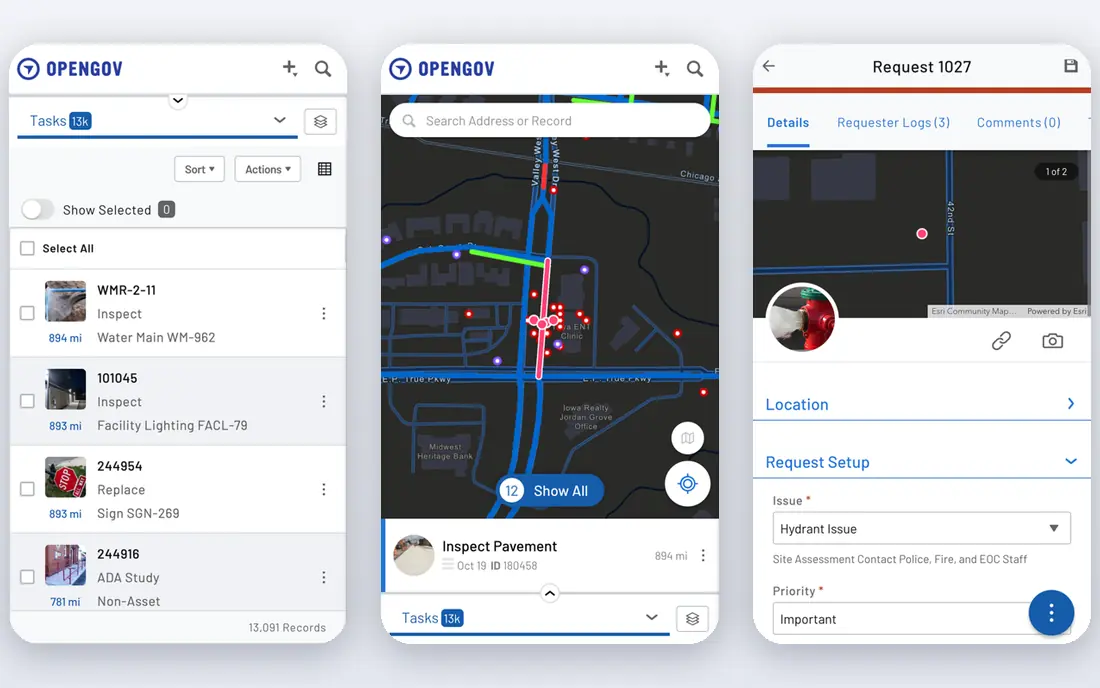
OpenGov Procurement sits inside the OpenGov cloud platform, which also covers budgeting, permitting, licensing, asset management, and reporting. For an agency that wants fewer vendors and one login across departments, that consolidation is the main pitch. Procurement tools cover solicitations, vendor registration, bid intake, evaluation, and contract workflows, with transparency features that help agencies show how decisions were made.
The catch is scope and price. Pricing is quote-based, sized for cities and counties rather than small towns, and procurement depth should be tested against sourcing-focused rivals. OpenGov fits best for agencies planning a wider digital shift, where procurement is one part of a larger platform decision. If procurement alone is the need, compare Bonfire or PlanetBids first, and judge OpenGov on its full suite value.
- Procurement inside a wider budgeting, permitting, and reporting suite
- Vendor portal and solicitation tools
- Public-sector focus
- Pricing is quote only and enterprise-level
- Procurement depth varies by module
- Smaller agencies may need only part of the suite
Bonfire is a sourcing platform used by public-sector and other procurement teams to run projects from intake through evaluation and award. Buyers can publish solicitations, collect vendor responses, score proposals with evaluation panels, and track decisions with an audit trail. Reviewers often praise its ease of use for both procurement staff and evaluators, which matters when evaluation panels include staff outside procurement.
The honest limit is flexibility after submission. Some users report that changing requests after submission takes extra care, so teams should plan solicitation details before release. Bonfire fits best for agencies that run frequent competitive solicitations and want a clear, fair evaluation process. Test a full cycle, from intake to scoring to award, with a real evaluation panel before you commit.
- Clear sourcing, bid intake, and evaluation workflows
- Collaboration for evaluators
- Audit trails for public buying decisions
- Pricing is quote only
- Editing submitted requests can be awkward in some workflows
- Mobile features are more limited
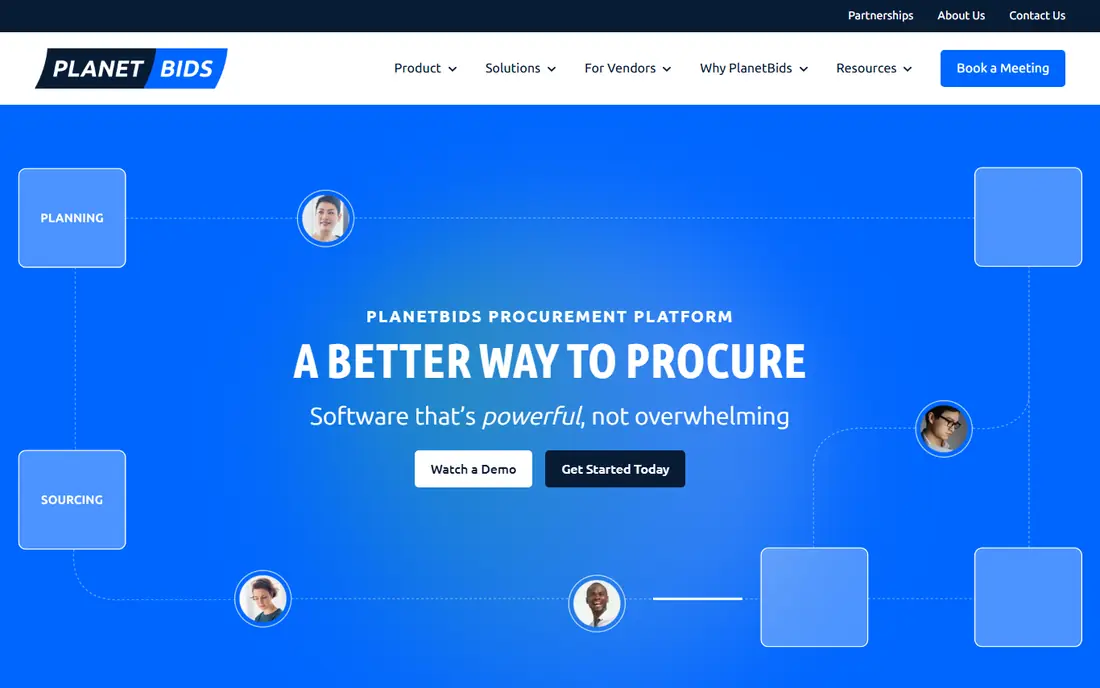
PlanetBids helps public agencies post bids, manage vendor registrations, distribute documents, and collect responses online. Its vendor portal lets suppliers register, receive notices, and submit bids, while agency staff track solicitations, addenda, and awards in one place. Many cities, counties, and special districts use it, which means vendors in those regions already know the system.
The trade-off is modern polish. PlanetBids is practical and proven, but its interface can feel more traditional than newer sourcing platforms, and buyers should check current features against Bonfire or OpenGov. It fits best for agencies that want a reliable bid and vendor system without a wider platform overhaul. Ask for references from agencies of similar size, and test vendor registration from the supplier side.
- Bid posting, vendor registration, and document management
- Used by many public agencies
- Straightforward vendor portal
- Pricing is quote only
- Interface can feel traditional next to newer tools
- Feature depth varies by agency package
Jaggaer is a large sourcing and procurement suite used by public agencies, universities, and enterprises with complex buying needs. It covers sourcing events, supplier management, contracts, spend analysis, and category management, with workflows that handle multi-stage solicitations and large supplier bases. For a large agency with formal category programs, that depth is the reason to consider it.
The catch is effort. Jaggaer implementations need dedicated staff, clear scope, and training, and small agencies will find it more platform than they need. It fits best for large agencies and institutions that run high-volume, high-value sourcing and want analytics alongside it. Smaller agencies should start with Bonfire, PlanetBids, or a bid network, and revisit Jaggaer as volume and complexity grow.
- Deep sourcing, supplier management, and contract tools
- Suits large, complex buying programs
- Strong analytics and category work
- Pricing is quote only and enterprise-level
- Implementation needs planning and staff
- More platform than small agencies need
Euna OpenBid, formerly part of the bid network family serving state and local agencies, helps agencies post solicitations and reach vendors through a shared network. Agency staff can manage solicitations, vendor lists, and bid intake, while vendors can find opportunities across participating agencies. That network effect matters: a bid posted to a wider vendor pool can draw more competition than a standalone portal.
The trade-off is coverage. Network value depends on how many vendors in your region and category use the network, so check coverage for your main buying categories before committing. Euna OpenBid fits best for state and local agencies that want bid management plus vendor reach in one tool. Compare it with BidNet Direct on vendor coverage for your categories, not just on features.
- Bid posting plus access to a state and local vendor network
- Solicitation and vendor tools for agencies
- Part of the Euna government suite
- Pricing is quote only
- Network value depends on region and vendor coverage
- Wider Euna modules may exceed a small agency need
Tyler Technologies is one of the largest public-sector software vendors in the US, covering finance, ERP, courts, public safety, and related systems. Its procurement tools sit alongside those systems, so agencies already running Tyler finance or ERP software can keep buying, budgeting, and payment workflows in one family of products. That integration appeals to agencies standardising on a single vendor.
The catch is scale. Tyler decisions are often suite-wide and multi-year, and procurement alone rarely justifies a Tyler purchase. It fits best for agencies already committed to Tyler systems, or planning a wider Tyler rollout, where procurement integration is part of the case. Agencies buying procurement alone should compare sourcing-focused tools first, and judge Tyler on total suite value.
- Procurement alongside finance, ERP, and public-sector systems
- Strong fit for agencies already using Tyler products
- Long public-sector record
- Pricing is quote only
- Procurement is part of a wider suite decision
- Implementation can be a multi-year program
Periscope S2G, from Periscope Holdings, serves government buyers with supplier management, sourcing, and bid tools. Agencies can manage supplier records, run solicitations, track bids, and support contract work, with workflows shaped for public buying rules. Its public-sector focus means features and terminology match agency practice more closely than a general business tool.
The honest limit is comparison data. Periscope has a smaller public profile than the largest rivals, so buyers should test it directly rather than relying on general reviews. It fits best for agencies that want a government-focused supplier and bid system without a full enterprise suite. Run a real solicitation type, such as a request for proposals with evaluation scoring, in the demo, and check reporting for audit review.
- Supplier management and bid tools for government buyers
- Sourcing and contract support
- Public-sector focus
- Pricing is quote only
- Smaller profile than OpenGov or Jaggaer
- Feature fit needs a direct demo for your buying types
BidNet Direct connects public agencies to a vendor network for state and local bidding. Agencies post solicitations, manage vendor notifications, and collect bids, while vendors search opportunities across participating agencies in their region. For an agency that struggles to attract bidders, that network reach can matter more than any single feature, because more competition often means better prices and terms.
The trade-off is fit. Network value depends on vendor coverage in your region and categories, and agency-side tools vary by package, so check both before signing. BidNet Direct fits best for agencies that want bid distribution plus vendor reach, especially smaller agencies without a large supplier base. Compare vendor coverage for your top categories against Euna OpenBid, and test the vendor signup flow yourself.
- Wide vendor network for state and local bids
- Solicitation posting and bid intake
- Vendors already use the network in many regions
- Pricing is quote only
- Network value depends on region
- Agency tools vary by participating network and package
How we picked these
We compared official product pages, pricing pages, and public reviews for government procurement tools that exist and work today, and we kept only tools built for public-sector buying, solicitation, evaluation, or bid networks. We favoured a mix of sourcing-focused tools, bid networks, and wider government suites, so agencies of different sizes have useful choices. Where pricing was quote only, we wrote See website rather than guessing. We did not claim hands-on testing, and we compared public pages, pricing, and documented features.
What to check before you buy government procurement software
Start with your solicitation types, not the feature list. Bring a real request for proposals, a simple bid, and a cooperative purchase to each demo, and watch how intake, publication, vendor questions, evaluation, and award work for each. Check how addenda are issued, how late bids are handled, and what audit trail the system keeps for every decision, because those details face scrutiny after award.
Next, check vendor experience and integration. Register as a vendor, receive a notice, ask a question, and submit a bid, because a confusing vendor flow reduces competition. Also check links to finance, ERP, and contract systems, and confirm data security, access controls, and records retention fit your agency policy. Agree on implementation, training, and support, including help during your first live solicitation, not just during setup.
Finally, get a written quote tied to agency size, user count, modules, and vendor network access, and confirm what happens when solicitation volume grows. This is general information only, not legal advice, and software alone does not make a purchase compliant. Your procurement office and legal advisers should confirm that any tool and workflow fit your state and local procurement laws, thresholds, and policies.
Frequently asked questions
What is the best government procurement software?
OpenGov Procurement suits agencies wanting a wider government suite, while Bonfire suits agencies focused on sourcing and fair evaluation. PlanetBids and BidNet Direct suit agencies that want reliable bid management plus vendor reach. The best choice depends on agency size, solicitation volume, and whether procurement sits inside a wider platform decision.
How much does government procurement software cost?
Most tools in this guide are quote only, with pricing tied to agency size, user count, modules, and network access. Expect a demo and a written quote, and budget separately for implementation, training, and support. Compare total cost for your solicitation volume, not just the licence figure.
Does procurement software guarantee compliance with procurement law?
No. Software supports solicitation, evaluation, and audit trails, and it can make fair process easier to show, but compliance depends on your laws, thresholds, policies, and staff decisions. Procurement and legal teams should review workflows and templates before live use, and confirm duties for your jurisdiction.
What is the difference between a bid network and sourcing software?
A bid network, such as BidNet Direct or Euna OpenBid, helps agencies reach vendors and distribute solicitations widely. Sourcing software, such as Bonfire or Jaggaer, focuses on running the solicitation, evaluation, and award process in depth. Some tools do both, but check vendor coverage and evaluation depth separately before you buy.
Can small agencies use government procurement software?
Yes, but scope matters. Small agencies often do better with a focused bid tool or bid network, such as PlanetBids or BidNet Direct, rather than a full enterprise suite. Start with your most common solicitation types, test vendor registration, and add wider modules only when volume and staff capacity justify them.
Sources
See where you really rank - block by block
ProMapRanker scans Google Maps across a grid of your service area. Simple monthly plans from $19, white-label on every plan.
Start freeKeep reading
 who has best internet service
Who Has the Best Internet Service in 2026
Who has best internet service for US homes? We compare fiber, cable, fixed wireless and satellite providers on speed, price, availability and terms today.
Read → which survey tool has the best analytics
Which Survey Tool Has the Best Analytics in 2026
Find which survey tool has the best analytics in 2026, comparing Qualtrics, SurveyMonkey, Typeform, Alchemer, and more on reports, text, and stats today.
Read → which streaming service has the best movies
Which Streaming Service Has the Best Movies in 2026
Answering which streaming service has the best movies, with Netflix, Max, Criterion and more compared on libraries, prices and free options in this guide.
Read →