 ProMapRanker
Best Google Business Profile Software for Spas in 2026

Profile audits, reviews and local rank in one place · Pricing starts at: See website
Direct answer
BrightLocal is my top pick for spas because it combines Google Business Profile audits, review monitoring and local rank tracking in one dashboard, which suits a business that lives on bookings and reviews. It has no free plan stated, so check its pricing page. For review-first workflows, Birdeye fits; for multi-location listings control, Yext is the stronger option.
I compared these tools from vendor documentation and public sources, reading feature pages, help centres and published product descriptions. I did not run hands-on tests, so treat this as a fit-and-limits comparison rather than a lab review. Each pick below is framed around how a spa actually uses its profile: bookings, treatment menus, hours, photos and reviews.
Key takeaways
- Spas depend on accurate hours, service menus and photos, so profile accuracy matters more than post frequency.
- Review monitoring and reply tools matter because treatment quality shows up in review text, not star averages alone.
- Local rank tracking should follow the suburb-level searches people use when choosing a spa near home or work.
- Multi-location spas need listing sync across Google, Apple Maps and directory sites, not just Google.
- No tool fixes a weak profile if categories, services and hours are wrong at the source.
Quick comparison
| Pick | Great for | Pricing starts at | Free tier | |
|---|---|---|---|---|
| BrightLocal | Profile audits, reviews and local rank in one place | See website | Not stated | Visit |
 Birdeye | Review requests and reputation workflow | See website | Not stated | Visit |
 Yext | Multi-location listing and profile control | See website | Not stated | Visit |
 Local Falcon | Grid-based local rank visibility | See website | Not stated | Visit |
 Whitespark | Citation building and local search audits | See website | Not stated | Visit |
 Semrush | Local SEO inside a broader SEO suite | See website | Not stated | Visit |
 Moz Local | Directory listing cleanup and consistency | See website | Not stated | Visit |
The best Google Business Profile management software for spas compared
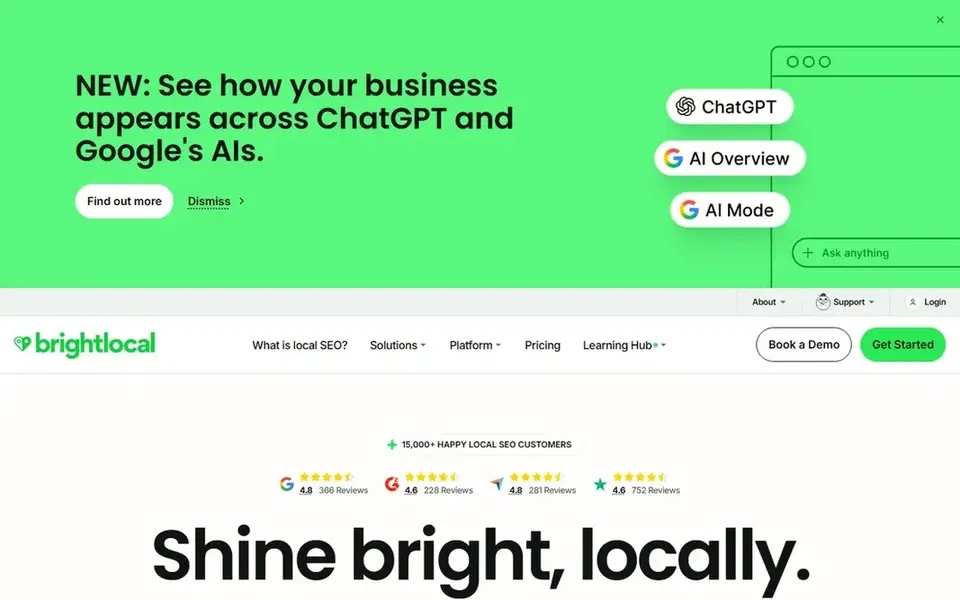
BrightLocal is a local SEO platform built around Google Business Profile auditing, review management, citation tracking and local rank grids. For a spa, the useful part is the audit: it flags missing categories, incomplete service listings, duplicate profiles and inconsistent hours across directories. That matters because a spa's hours change with therapist schedules and holiday closures, and stale hours drive both bad visits and bad reviews.
The workflow suits a small spa team. You run an audit, fix the profile fields it flags, then monitor reviews and reply from the same dashboard. Local rank tracking lets you see whether you appear for searches like "day spa near me" or "massage [suburb]" across a grid rather than one point. Review monitoring also catches mentions on directory sites, which spas often ignore.
The limits are practical. Credits run out, and the platform is deeper than a single-location spa needs. If you only want to reply to Google reviews and post photos, a lighter tool is enough. Skip it if you will not use audits or rank tracking.
- GBP audit with fix guidance
- review monitoring and reply support
- local rank tracking by location
- citation checks
- Credit-based pricing needs planning
- interface has a learning curve
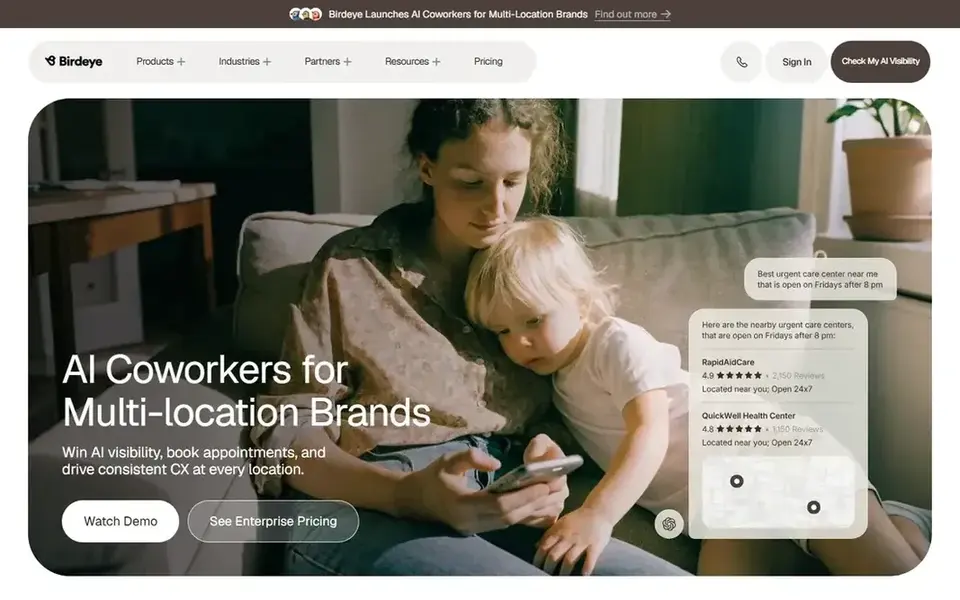
Birdeye is a reputation and customer experience platform with review requests, a messaging inbox and listing management. Spas fit it well because most bookings end with a treatment and a follow-up message. Birdeye lets you send a review request after an appointment, route replies into one inbox, and keep Google Business Profile details consistent alongside other listings.
For spas, the review request timing matters. A request sent the same day, while the treatment is fresh, tends to get more responses than a weekly batch. Birdeye supports automated request flows, and its inbox keeps Google, Facebook and directory reviews in one place so a manager can reply without logging into several sites. Listing sync keeps hours and contact details aligned.
The trade-off is scale. Birdeye is built for teams with multiple staff and locations, and the setup is heavier than a single-room spa needs. Pricing is quote-based, so ask for a demo and a written scope before committing. Skip it if you want a simple, low-cost review reply tool.
- Automated review requests
- unified inbox for replies
- listing and profile management
- Aimed at larger teams
- pricing is quote-based
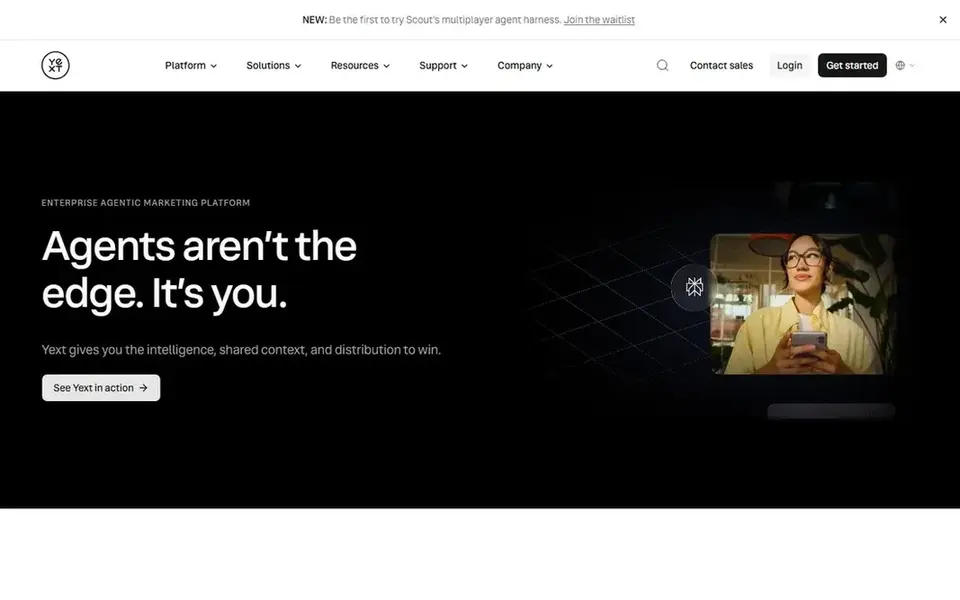
Yext is a listings and digital presence platform that pushes business data to Google Business Profile, Apple Maps, directory sites and other endpoints from one source of truth. A spa group with several branches benefits because hours, services and contact details are edited once and published everywhere, which reduces the mismatch that confuses both customers and Google.
For spas, the service and category fields are the valuable part. A spa that offers massage, facials and waxing needs those services listed clearly, and Yext lets you manage those fields centrally. It also handles location pages and structured data, which helps search engines understand each branch.
The limits are cost and commitment. Yext is priced for organisations with several locations and usually involves an annual contract. A single spa will pay for endpoints it does not need. Skip it unless you run multiple sites or plan to.
- Central control of listings
- strong multi-location support
- profile field management
- Annual contracts common
- overkill for one site
Local Falcon is a local rank tracking tool that scans Google Maps results across a grid of points around a business. For a spa, that shows how visible it is in nearby suburbs, not just at its own pin. A spa on a high street may rank well at its address but disappear three suburbs away, where many clients actually live.
The workflow is simple: set a scan around the spa's location, choose the keywords that matter, and review the heat map. Keywords like "spa near me", "massage [suburb]" and "facial [suburb]" show where visibility drops. Running scans monthly shows whether profile changes, review growth or new photos moved the needle.
The limit is scope. Local Falcon reports rank; it does not fix your profile, request reviews or sync listings. Pair it with a management tool. Skip it if you only want one dashboard for everything.
- Map grid rank scans
- competitor comparison
- scan history over time
- Rank data only
- no review or listing workflow
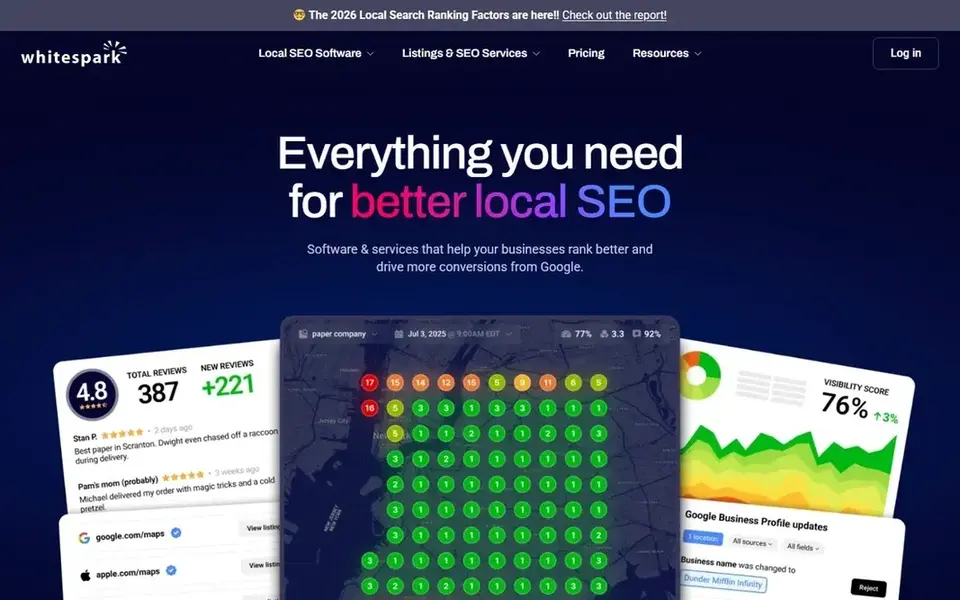
Whitespark is a local search toolkit known for citation building, a local rank tracker and Google Business Profile audit tools. For spas, citation building is the useful piece: it finds directory sites where the spa is missing or listed with wrong details, then helps you fix them. Consistent name, address and phone data supports the profile's credibility.
The workflow is deliberate rather than automated. You run a citation finder report, review the opportunities, and submit or correct listings. That suits an owner or agency willing to do the work properly. The rank tracker and audit tools round it out, so you can check profile completeness and local visibility in the same place.
The limit is that it is not a daily operations dashboard. There is no review inbox or social posting. Skip it if you want one tool to handle reviews and posts; use it alongside a management platform.
- Citation finder and building
- local rank tracker
- GBP audit tools
- Less of a daily dashboard
- citation work is manual
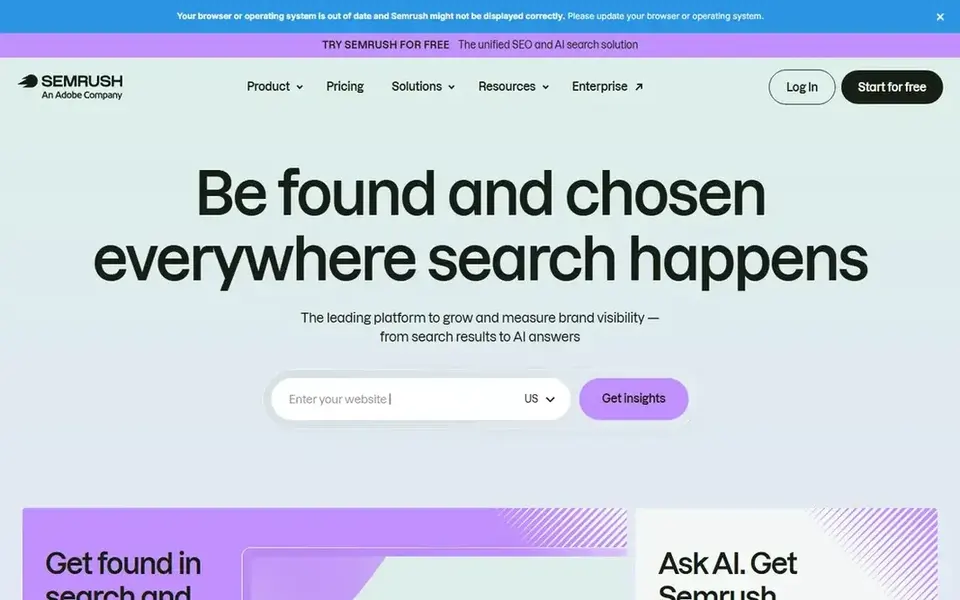
Semrush is a broad SEO platform with a local listings management add-on and keyword, competitor and site audit tools. A spa with a website and a content plan can use it to research treatment-related searches, check the site for technical issues, and manage listings from the same account.
For spa profiles, the listing management module handles Google Business Profile and directory sync, while the keyword tools show what people search before booking, such as "deep tissue massage [city]" or "couples spa [suburb]". That helps align the profile description and services with real demand. Site audits catch broken booking links, which cost bookings directly.
The limit is focus. Semrush is built for broad SEO work, and the local module is one part of a large subscription. A spa that only needs profile management will pay for features it never opens. Skip it unless you also need keyword and site work.
- Listing management add-on
- keyword and competitor data
- site audit tools
- Local features are one module
- pricing is high for local only
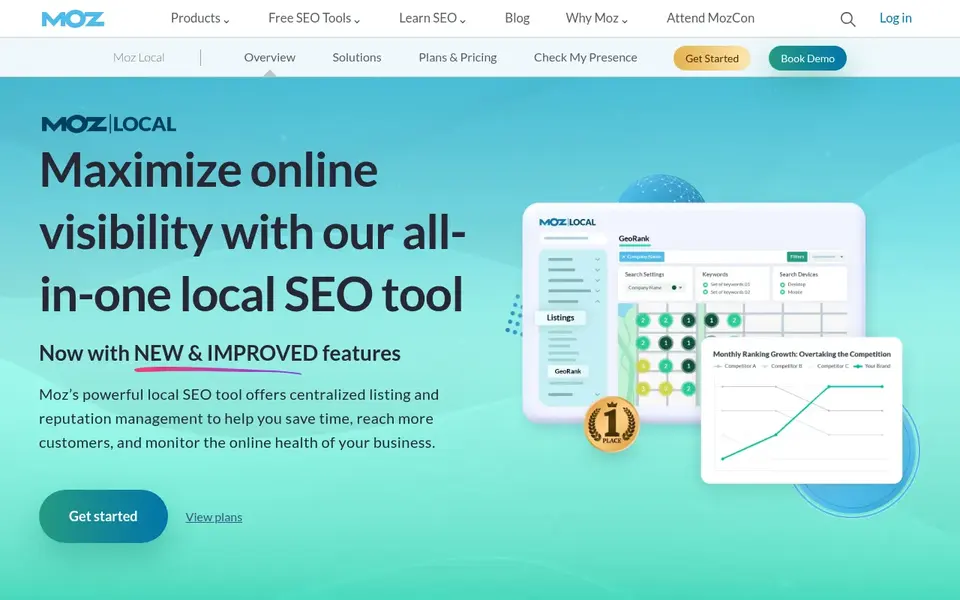
Moz Local is a listings management product that distributes business data to major directories and data aggregators, and flags duplicate or inconsistent listings. For a spa, that means the name, address, phone and hours shown on Google, Apple Maps and directory sites stay aligned, which reduces confusion for clients and supports the profile.
The workflow is straightforward: connect the business, review the listings it finds, fix mismatches and let the tool push updates. Duplicate detection is useful for spas that have moved premises or changed names, a common source of split reviews and wrong directions. The dashboard is simple enough for a front-desk manager to use.
The limits are clear. Moz Local is not a full profile management tool: posting updates, photo management and review replies are limited compared with dedicated platforms. Skip it if you need an all-in-one dashboard; use it for listing hygiene alongside another tool.
- Listing distribution to major directories
- duplicate detection
- simple dashboard
- Limited profile posting
- fewer review workflow features
How I chose
I chose these tools by reading vendor documentation, help centres and public product pages, then matching features to how spas operate: appointment-based bookings, treatment menus, changing hours, photo-heavy profiles and review-driven reputation. I did not run hands-on tests, so the comparison reflects published capabilities and stated limits rather than my own trial results.
I weighted profile accuracy and review workflow highest, because those two areas drive bookings for spas. Listing sync came next for multi-location businesses, and rank tracking last, since it informs decisions but does not fix anything by itself. I left out tools whose public documentation was too thin to judge, and I avoided any tool that encourages review gating or keyword-stuffed business names, since those break Google's guidelines.
What to check before you buy
- Confirm the tool can audit and fix Google Business Profile categories, services and hours, since spas change schedules often.
- Check whether review requests can be triggered after an appointment rather than on a fixed schedule.
- Ask how many locations and listings the plan covers, and what happens when you add a second branch.
- Verify listing sync covers the directories your clients actually use, not just Google.
- Check whether rank tracking scans a grid around each location, which matters for suburban spas.
- Confirm the tool follows Google's review policies and does not offer review gating or incentives.
Frequently asked questions
What should a spa manage first on its Google Business Profile?
Start with accuracy: categories, services, hours, phone number and photos. A spa with wrong hours or missing services loses bookings before reviews matter. After that, set up review requests and replies, then add posts and photos on a regular schedule. Rank tracking comes last, once the basics are stable.
Do spas need review software or is the Google app enough?
The Google app handles replies but not requests across channels or monitoring of other sites. Review software helps send requests after appointments and keeps replies in one inbox. A single-location spa with steady reviews can start with the free Google tools and add software when volume grows.
How important are photos for a spa profile?
Photos matter a lot because clients judge treatment rooms, reception and atmosphere before booking. Add real photos of the space, not stock images, and refresh them seasonally. Tools that let you schedule photo uploads help keep the profile active without manual reminders.
Can one tool handle several spa locations?
Yes, but check the plan. Yext and BrightLocal support multiple locations, and Birdeye handles multi-location review workflows. Confirm the per-location cost and whether listing sync covers every branch. A single-location spa rarely needs this and can start with a simpler tool.
Does rank tracking help a spa get more bookings?
It shows where you appear in Maps results across nearby suburbs, which helps you decide where to focus. It does not create bookings by itself. Use it alongside profile fixes and review growth, and check whether visibility drops in suburbs where many clients live.
Sources
See where you really rank - block by block
ProMapRanker scans Google Maps across a grid of your service area. Simple monthly plans from $19, white-label on every plan.
Start freeBrowse all guides
← Best Google Business Profile Software for Hotels in 2026Best Listing Management Software for Daycares in 2026 →
 best google business profile management software for churches
Best Google Business Profile Software for Churches in 2026
A practical guide to Google Business Profile management software for churches, covering listings, reviews, scheduling and local visibility tools.
Read → best google business profile management software for car washes
Best Google Business Profile Software for Car Washes in 2026
A guide to the best Google Business Profile management software for car washes, compared from vendor docs and public sources, with GBP, reviews and listings tips.
Read → best call tracking software for roofers
Best Call Tracking Software for Roofers in 2026
A roofer's guide to call tracking software in 2026: CallRail, CallTrackingMetrics, WhatConverts, Ringba and more, compared by fit, features and limits.
Read → ranking in google maps
Ranking in Google Maps: A Beginner's Roadmap
A beginner's roadmap to ranking in Google Maps without the SEO jargon.
Read → digital marketing local business
Digital Marketing Local Business: A Complete Guide
Everything you need to know about digital marketing local business: what it is, why it matters for local SEO, and exactly how to act on it.
Read → local seo for pest control
Local SEO for Pest Control Companies: More Jobs From Maps
A pest control local SEO guide: service-area GBP, reviews, and geo-grid tracking to book more jobs.
Read →More in Local SEO & Google Maps · All guides A to Z by date · Latest guides