 ProMapRanker
Best Freight Software in 2026

Key takeaways
- Shippers who need rate shopping should start with Freightview or FreightPOP, while carriers who need dispatch and accounting should start with AscendTMS or Alvys.
- project44 and FourKites are visibility tools, not full transport management systems, so pair them with a TMS if you also need tendering and invoicing.
- Oracle and Blue Yonder suit large global shippers with complex networks, while smaller firms will find them costly and slow to implement.
- Freight pricing is often quote based, so compare first-year cost, implementation fees, and per-shipment charges rather than a headline monthly number.
Quick comparison
| Pick | Great for | Pricing starts at | Free tier | |
|---|---|---|---|---|
 Freightview | Small and midsize shippers | $149 per month | Free trial | Visit |
 FreightPOP | Shippers comparing freight and parcel rates | See website | No | Visit |
 AscendTMS | Small carriers and brokers | Free | Yes | Visit |
 Alvys | Modern carrier and broker TMS | See website | No | Visit |
 project44 | Multimodal shipment visibility | See website | No | Visit |
 FourKites | Supply chain visibility | See website | No | Visit |
 Oracle Transportation Management | Global enterprise shippers | See website | No | Visit |
 Blue Yonder | Large shippers with complex planning | See website | No | Visit |
 McLeod Software | Established carriers needing depth | See website | No | Visit |
The best freight software
We compared official product pages, feature ranges, pricing disclosures, and fit for shippers, carriers, and freight forwarders. The best freight management software below covers rate shopping, dispatch, visibility, and full transport management, so start with your role before comparing features.
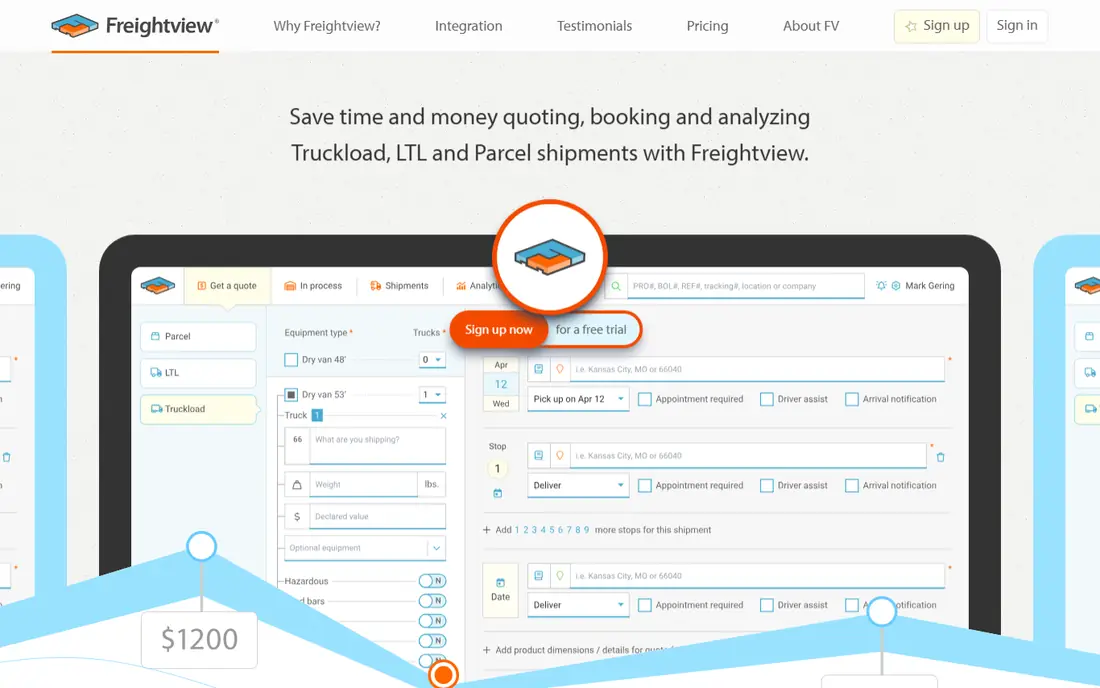
Freightview is a clear starting point for shippers because it publishes a starting price of $149 per month for up to 50 shipments, with higher volumes quoted separately. It pulls negotiated carrier rates into one screen, so a shipping team can compare options without logging into several carrier portals. That simplicity helps small and midsize firms that ship regularly but do not need a full enterprise transport system.
The limit is scale. Very large shippers with complex contracts, multi-modal freight, and global trade rules will outgrow Freightview. It also focuses on shipper execution rather than carrier dispatch, so carriers should look at AscendTMS or Alvys instead. For a shipper with steady domestic volume, Freightview offers rare price transparency in this category.
- Published starting price
- Rate shopping across carriers
- Simple shipper workflow
- Higher shipment volumes need a quote
- Less depth for large enterprise networks
FreightPOP suits shippers who handle both freight and parcel, which is rarer than it sounds. Many tools do one well and the other poorly, while FreightPOP brings both into one rate-shopping view and links to ERP systems such as NetSuite and Microsoft Dynamics. That integration reduces manual entry and helps finance teams match shipping costs to orders without separate spreadsheets.
Pricing is quote based and directory figures around $10,000 per year should only be used for shortlisting, not budgeting. Setup also depends on how clean your carrier contracts and ERP data are, so bring a sample contract to the demo. If your volume is low, Freightview may be cheaper, but FreightPOP is stronger for mixed freight and parcel operations.
- Freight and parcel rate shopping in one dashboard
- ERP integrations
- AI help for shipping tasks
- Pricing is quote based
- Setup can take time for complex ERP links
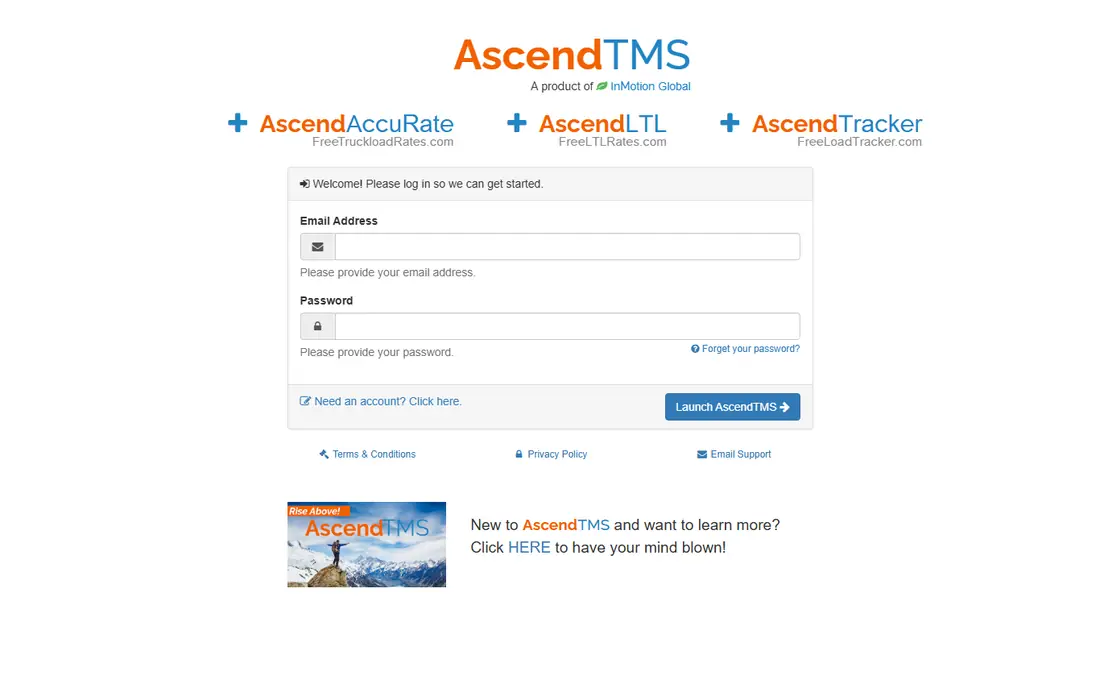
AscendTMS is the easiest entry point for a small carrier or broker. Its free plan supports small teams and covers dispatch, load tracking, documents, and basic accounting, which is enough for many owner-operators and small fleets. Paid plans add users and features, and the system includes IFTA filing help and a free truckload rate index that small carriers often value.
The free plan has user limits, and larger carriers with complex accounting, EDI, and multi-branch needs may need a deeper system such as McLeod or Alvys. Support and setup also matter more as team size grows. For a small operation that needs a working TMS today without a large upfront cost, AscendTMS is a practical first choice.
- Free plan for small teams
- Dispatch, accounting, and document tools
- IFTA filing help
- Paid plans are per user
- Less depth for very large enterprise shippers
Alvys is a modern cloud TMS built for carriers and brokers in the 10 to 500 truck range. It covers dispatch and planning, fleet and driver management, settlement, accounting, and payroll, plus a driver mobile app. Pricing is load based rather than per seat, so adding dispatchers does not raise the bill in the same way, and native EDI removes a separate vendor many carriers still pay for.
The catch is maturity and price transparency. Alvys does not offer a free tier, and pricing is quote based, so small carriers should compare total cost with AscendTMS. It also lacks McLeod decades of edge cases, though its modern interface and AI document handling appeal to teams that want to avoid a legacy implementation project.
- Load-based pricing
- Dispatch, settlement, and driver app in one system
- Native EDI
- No free tier
- Newer vendor than McLeod with less legacy depth
project44 is the visibility layer many large shippers add to an existing system. It connects to carriers, telematics devices, and port data to show where freight actually is, with predictive ETAs and alerts when shipments go off plan. The API also lets companies embed tracking into customer portals, which reduces status calls and emails.
Be clear about what you are buying. project44 does not tender loads, rate freight, or audit invoices on its own, so you still need a TMS or forwarder for execution. Pricing is enterprise and quote based, so bring shipment volumes and carrier lists to the first call. If your main pain is not knowing where freight is, project44 is a strong pick.
- Large carrier network
- Predictive ETAs and exception alerts
- Strong API
- Visibility only, not a full TMS
- Enterprise pricing
- Value depends on carrier coverage
FourKites is a direct alternative to project44 for shippers who need real-time visibility across modes and carriers. It tracks shipments, flags exceptions, and connects to TMS and ERP systems so operations teams can act on delays rather than just watch them. For companies with complex supply chains, that exception focus matters more than a simple tracking map.
Like project44, FourKites is not a full TMS, and its value depends on carrier participation. Onboarding carriers takes time, and enterprise pricing means small shippers may find it out of reach. Compare carrier coverage on your actual lanes before choosing between FourKites and project44, since coverage on your lanes matters more than total network size.
- Broad visibility network
- Exception management
- Integrations with TMS and ERP systems
- Enterprise pricing
- Implementation needs carrier onboarding work
Oracle Transportation Management is the benchmark for global shippers with complex networks. It covers planning, execution, freight payment, trade compliance, and analytics across modes and countries, which few other systems match. Companies with dozens of countries and hundreds of carriers use Oracle because it handles rules and scale that mid-market tools cannot.
That breadth comes with cost and time. Implementation is a major project, pricing is enterprise, and change management is real work for staff. Shippers with straightforward domestic truckload needs should look at Freightview, FreightPOP, or Tai TMS instead. Oracle earns its place for global complexity, not for simplicity.
- Deepest TMS functionality
- Global trade and compliance
- Massive scalability
- Enterprise pricing and long implementation
- Too complex for simple domestic shipping
Blue Yonder positions transportation inside a wider supply chain platform, with machine learning for load planning, carrier selection, and disruption response. For companies already using Blue Yonder for planning or warehousing, the transport module completes the picture and shares data across functions. Its optimization strength shows most when shipment decisions are complex enough to benefit from modeling.
Blue Yonder is enterprise software with enterprise pricing and timelines, so small and midsize shippers should not start here. If your network is simpler, a mid-market TMS will deliver faster value. For large shippers with complex planning needs, Blue Yonder is a serious contender alongside Oracle.
- Strong planning and optimization
- AI-assisted load planning
- Fits wider supply chain suite
- Enterprise pricing
- Implementation is a major project
McLeod Software is the established carrier TMS against which newer tools are measured. It offers deep dispatch, accounting, driver management, and reporting features built over decades of carrier use. Large and midsize carriers that need edge cases, complex settlements, and detailed reporting often find McLeod covers needs that newer systems are still building.
The trade-off is implementation. McLeod is not a quick self-serve signup, and training matters for staff who will use it daily. Smaller carriers may find AscendTMS or Alvys faster to adopt. For an established carrier that wants depth and staying power, McLeod remains a strong, if less flashy, choice.
- Deep carrier TMS feature set
- Long industry history
- Broad dispatch and accounting tools
- Pricing is quote based
- Implementation and training take time
How we picked these
We compared official vendor pages, feature coverage for shippers, carriers, and forwarders, and pricing transparency. We favored tools active in 2026 with clear product information, and we used See website where pricing is quote based. We did not rank a visibility tool as a full TMS, and we noted where a tool suits shippers rather than carriers.
How to choose freight software without a costly mistake
Start with your role
Shippers need rate shopping and execution, carriers need dispatch and settlement, and forwarders need quote, booking, and document tools. A tool built for one role will disappoint in another, even if the feature list looks similar.
Test with your worst lane and contract
Bring your most complex carrier contract and your hardest lane to the demo. Time how long it takes to quote, book, and track that shipment. That test reveals more than a polished demo with clean sample data.
Compare first-year total cost
Ask for implementation fees, integration fees, training, support tier, and any per-shipment or per-user charges. A low monthly fee with high implementation cost can be more expensive in year one than a higher monthly fee with included setup.
Frequently asked questions
What is the best freight software for small businesses?
Freightview suits small shippers, while AscendTMS suits small carriers and brokers because it offers a free plan. Both are easier to adopt than enterprise systems such as Oracle or Blue Yonder.
What is the best freight forwarding software?
For forwarders, look for quote management, booking, document handling, and carrier integrations in one system. FreightPOP and Tai TMS suit shipper and forwarder workflows, while McLeod and Alvys suit carrier and broker operations, so match the tool to your role.
What is the best freight management software for large shippers?
Oracle Transportation Management and Blue Yonder lead for large global shippers with complex networks. project44 or FourKites can add visibility on top of either system.
Is there free freight software?
Yes, AscendTMS offers a free plan for small teams. Free plans have user and feature limits, so check whether dispatch, accounting, and document tools in the free tier cover your daily work.
How much does freight software cost?
Costs range from free for small carrier plans to $149 per month for Freightview at its starting tier, up to enterprise quotes for Oracle, Blue Yonder, project44, and FourKites. Always ask for first-year total cost.
Should I buy a TMS or a visibility tool first?
If you cannot quote, book, and invoice freight cleanly, buy a TMS first. If execution is already handled but you cannot see where shipments are, add a visibility tool such as project44 or FourKites.
Sources
See where you really rank - block by block
ProMapRanker scans Google Maps across a grid of your service area. Simple monthly plans from $19, white-label on every plan.
Start freeKeep reading
 best tour operator software
Best Tour Operator Software in 2026
Compare the best tour operator software for bookings, channel management, waivers and payments, with pricing models for day tours and multi-day trips.
Read → best time clock app for small business
Best Time Clock App for Small Business in 2026
We compare the best time clock app for small business options, with free plans, GPS clock ins, scheduling and payroll links for hourly teams and payroll help.
Read → best test automation tools
Best Test Automation Tools in 2026
Compare the best test automation tools, from Playwright and Selenium to Cypress, Katalon and BrowserStack, with prices, languages and best uses explained.
Read →