 ProMapRanker
Best Foreign Language Apps in 2026

Key takeaways
- Duolingo is the best free starting point, with gamified daily lessons that build a habit fast.
- Babbel and Busuu suit structured learners who want grammar explanations and feedback from native speakers.
- Pimsleur is the strongest choice for audio learners and commuters, with 30-minute speaking lessons.
- Rosetta Stone suits immersion fans who prefer learning without translation, while Memrise shines for vocabulary.
- No app alone makes you fluent: pair your pick with real conversation practice for the fastest progress.
Quick comparison
| Pick | Great for | Pricing starts at | Free tier | |
|---|---|---|---|---|
 Duolingo | Free, gamified daily practice | Free | Yes | Visit |
 Babbel | Structured lessons for real conversations | See website | No | Visit |
 Rosetta Stone | Immersion without translation | See website | No | Visit |
 Busuu | Feedback from native speakers | Free | Yes | Visit |
 Pimsleur | Audio lessons and speaking confidence | See website | Free trial | Visit |
 Memrise | Vocabulary with native speaker video | Free | Yes | Visit |
 LingoDeer | Learning Asian languages well | Free | Yes | Visit |
 Mondly | Short daily lessons across many languages | Free | Yes | Visit |
The best foreign language apps
Learning a language on your phone works best when the app matches how you like to study. Some people need a game to stay consistent, others want grammar explained properly, and others just want to speak from day one. These eight apps cover those styles across dozens of languages.
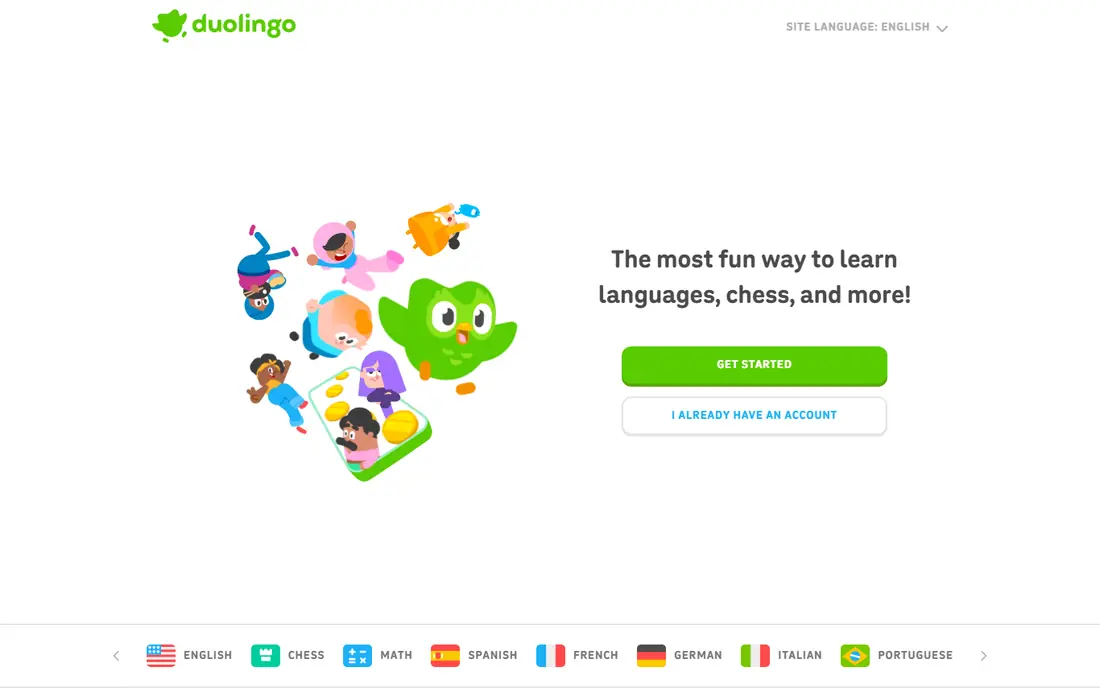
Duolingo is the easiest app to start with, and that is a real advantage: the free tier covers full courses, lessons take a few minutes, and streaks, leagues and rewards turn daily practice into a habit. It offers dozens of languages, from Spanish and French to Japanese and Welsh, and its bite-sized exercises mix listening, speaking, reading and typing. For a beginner who has never studied a language, Duolingo removes every excuse not to begin.
The limits appear as you progress. Grammar is taught mostly by example rather than explanation, and the app does not prepare you well for open-ended conversation with a real person. Treat Duolingo as your daily habit builder and add conversation practice elsewhere when you are ready. For a free, friendly start, nothing else here beats it.
- Free tier covers full courses
- Streaks and leagues keep habits going
- Wide language choice
- Grammar explanations are thin
- Conversation practice is limited
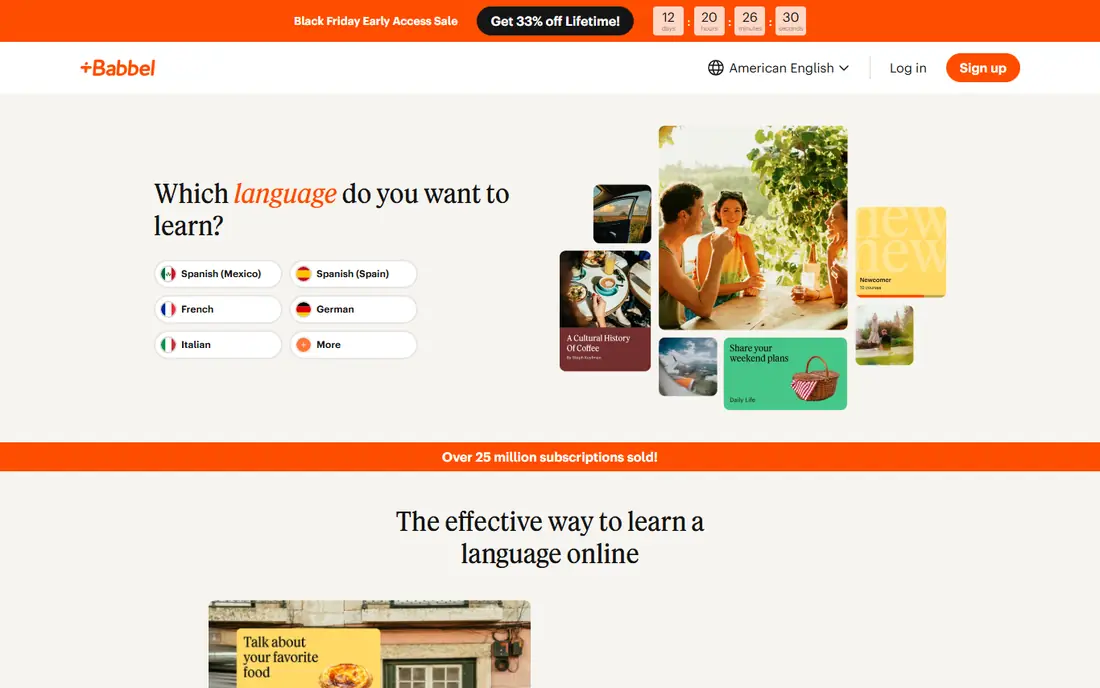
Babbel takes a more classroom-like approach than Duolingo, with lessons organized around real situations such as travel, work and daily life, and grammar explained in plain terms as you go. Each lesson is short, usually 10 to 15 minutes, and the review system brings back words and phrases at intervals to help them stick. That structure suits learners who want to understand why a sentence works, not just repeat it.
The trade-off is scope: Babbel covers 14 languages, far fewer than Duolingo, and there is no full free tier, only first lessons to try. If your language is among them and you like orderly progress, Babbel is our pick for most serious beginners. If you want a rare language or a free ride, look elsewhere on this list.
- Clear grammar explanations
- Lessons built around real situations
- Review system for retention
- Only 14 languages
- No permanent free tier beyond first lessons
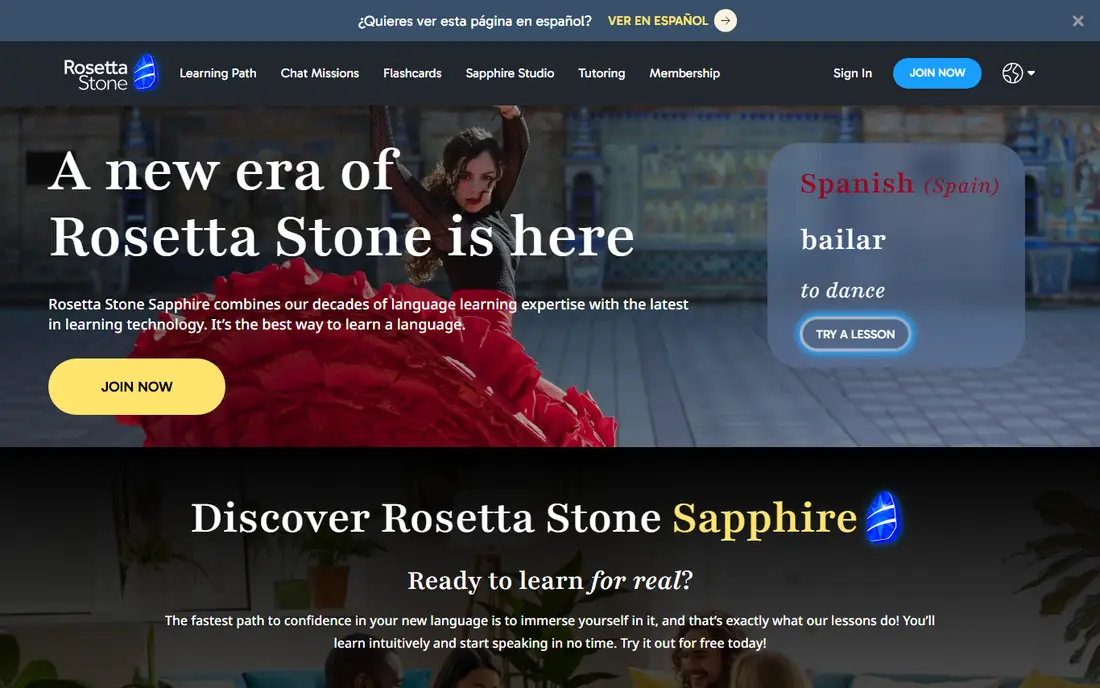
Rosetta Stone has taught languages for decades with one idea: show pictures, play audio, and let you connect words to meanings without translating into English. That immersion method suits visual learners and people who want to think in the new language from the start, and its TruAccent speech recognition gives pronunciation feedback as you speak. One plan includes all of its languages, which helps if you study more than one.
The method is not for everyone. Progress can feel slow, lessons repeat a lot, and learners who want grammar rules spelled out may get impatient. Rosetta Stone also costs more than some rivals on monthly plans, though longer plans bring the monthly figure down. Choose it if immersion appeals to you and you are patient enough to trust the process.
- No-translation immersion method
- Speech recognition for pronunciation
- All languages in one plan
- Progress can feel slow
- Repetition frustrates some learners
Busuu combines structured courses with a community: you complete lessons, then native speakers correct your written and spoken exercises, and you can return the favor for learners of your language. Courses follow CEFR levels from A1 to B2, so you can see real progress toward recognized standards, and offline mode lets you study without a connection. That human feedback is the feature that sets Busuu apart from purely automated apps.
The free tier is useful but limited, and the language range is smaller than Duolingo's, at around a dozen courses. Corrections also depend on community activity, so response times vary. If you want your practice checked by real people and you like clear level goals, Busuu is a strong, affordable choice.
- Lessons aligned to CEFR levels
- Native speakers correct your writing and speaking
- Offline mode
- Fewer languages than Duolingo
- Full features need a paid plan
Pimsleur is built for people who learn by listening and speaking. Each lesson is about 30 minutes of audio: you hear a phrase, repeat it, answer prompts, and gradually build sentences you can actually say. That format works beautifully on a commute, a walk or while doing chores, and it produces speaking confidence faster than most app-based methods. With more than 50 languages on its All Access plan, coverage is broad.
Reading and writing get little attention, so Pimsleur works best alongside an app or book that covers text. The price is also higher than Duolingo or Babbel on a monthly basis, though a free trial lets you test the method first. If your goal is to speak on a trip rather than pass a written exam, Pimsleur is the pick here.
- 30-minute audio lessons build speaking fast
- Hands-free for commutes and chores
- 50-plus languages
- Little reading and writing practice
- Subscription cost is higher than some rivals
Memrise focuses on the words you need most, taught through short video clips of native speakers using them in real contexts, plus spaced repetition to move words into long-term memory. That video-first approach helps with listening and pronunciation in a way flashcards alone cannot, and sessions stay short enough for a coffee break. The free tier covers core courses, which makes Memrise easy to try.
Grammar and full sentence building are weaker here than in Babbel or Busuu, and course depth varies by language, with popular languages far richer than rare ones. Use Memrise as your vocabulary engine alongside a structured course, and it will do more for your word count than almost any other app on this list.
- Short video clips of native speakers
- Spaced repetition for vocabulary
- Fun, quick sessions
- Less structured grammar teaching
- Course depth varies by language
LingoDeer stands out for Asian languages, where many general apps feel thin. Its Japanese, Korean and Chinese courses explain scripts, grammar and sentence structure carefully, with notes that help beginners understand why a pattern works rather than just memorizing it. Lessons are structured and paced sensibly, and the app also covers several European languages.
The overall language list is much shorter than Duolingo's, and the community is smaller, so you will find fewer user discussions and shared resources. If your target language is Japanese, Korean or Chinese, LingoDeer deserves to be your first download. For other languages, Babbel or Busuu will serve you better.
- Strong Japanese, Korean and Chinese courses
- Grammar notes included
- Clear explanations for scripts
- Fewer languages overall
- Smaller community than Duolingo
Mondly offers short daily lessons in more than 40 languages, with a chatbot that lets you practice simple conversations and augmented reality features that place vocabulary in your surroundings on supported devices. Lessons are quick and visual, which makes Mondly a pleasant daily habit, and the breadth of languages includes options that smaller apps skip.
Depth is the limit: advanced learners often find Mondly's content too basic, and quality varies between popular and less common languages. The free tier gives a good taste, but full access needs a subscription. Mondly works best as a fun daily supplement or a way to sample a language before committing to a deeper course.
- 40-plus languages
- Daily lessons and chatbot conversations
- Augmented reality features on some devices
- Depth varies by language
- Advanced learners may outgrow it quickly
How we picked these
We compared official pricing pages, app listings, language counts and public reviews for language apps operating in October 2026. We favored apps with real free tiers or trials, current course libraries, and a distinct teaching style, rather than listing eight apps that all do the same thing. Prices are listed as See website where vendor pricing varies by plan length, region or promotion, since quoting one figure would mislead readers. We did not claim hands-on fluency results; our comparisons rest on published features, course structures and learner feedback.
What to weigh before you choose
Start with your goal and your time. If you have ten minutes a day and want a habit, Duolingo or Mondly will get you moving. If you have a trip in three months and need to speak, Pimsleur's audio lessons will do more for you than any amount of tapping. If you want to understand grammar and pass a level test, Babbel or Busuu's structured, CEFR-aligned courses fit better. Your target language also narrows the field fast: check that your language is actually offered, and at what depth, before paying.
Budget matters, but so does staying power. A free app you use daily beats an expensive subscription you abandon in week two, so try free tiers first and pay only when the method clicks. Finally, plan for conversation: no app replaces speaking with a real person, so pair your pick with a language exchange, a tutor, or even talking to yourself out loud in the new language. That combination is what turns app progress into real fluency.
Frequently asked questions
What is the best foreign language app for beginners?
Duolingo is the best free starting point for most beginners, thanks to short lessons and habit-building features. Babbel is better if you want structured grammar explanations from the start.
Can an app make me fluent?
An app alone rarely makes anyone fluent, but it can build vocabulary, grammar and listening skills that make conversation practice far more productive. Pair app study with real speaking for the best results.
Which app is best for speaking practice?
Pimsleur is the strongest for speaking, with audio lessons built around saying phrases aloud. Busuu adds value through corrections from native speakers on your spoken exercises.
Is Duolingo really free?
Yes, Duolingo's core courses are free with ads, and a paid Super plan removes ads and adds extras. You can complete full courses without paying, though the paid plan is more convenient.
Which app is best for Japanese or Korean?
LingoDeer is the best choice here, with courses designed specifically for Asian languages, including script and grammar explanations that general apps often lack.
How much time should I study each day?
Fifteen to thirty minutes daily beats occasional long sessions for most learners. Consistency matters more than session length, especially for vocabulary retention.
Sources
See where you really rank - block by block
ProMapRanker scans Google Maps across a grid of your service area. Simple monthly plans from $19, white-label on every plan.
Start freeKeep reading
 best freelance platforms for beginners
Best Freelance Platforms for Beginners in 2026
Best freelance platforms for beginners compared, with fees, job types, and first-gig tips to help new freelancers pick a strong starting place in our guide.
Read → best foraging apps for plant identification
Best Foraging Apps for Plant Identification in 2026
These 8 best foraging apps for plant identification help you name wild plants, but never eat a plant based on an app alone. Check our safety notes first.
Read → best file sharing app
Best File Sharing App in 2026
Best file sharing app picks for sending videos and large files, with cloud storage, link sharing, and team plans compared for work and personal use today.
Read →