 ProMapRanker
Best Foraging Apps for Plant Identification in 2026


Fast plant naming and care tips · Pricing starts at: $29.99 per year
Key takeaways
- PlantNet and Seek are the best free starting points for naming wild plants, while PictureThis adds care advice that foragers rarely need.
- No app in this list can prove a plant is safe to eat, and toxic lookalikes are the main risk, so always confirm with a field guide and an expert source.
- iNaturalist adds community confirmation, which is more useful for foraging than a single AI guess, because other people can check the photos.
- Falling Fruit is different from the rest, because it maps known foraging spots shared by the community rather than identifying a single plant.
Quick comparison
| Pick | Great for | Pricing starts at | Free tier | |
|---|---|---|---|---|
| PictureThis | Fast plant naming and care tips | $29.99 per year | Free trial | Visit |
 PlantNet | Free wild plant identification | Free | Yes | Visit |
 Seek by iNaturalist | Beginner-friendly nature identification | Free | Yes | Visit |
 iNaturalist | Community-confirmed observations | Free | Yes | Visit |
 Flora Incognita | Detailed wild plant profiles | Free | Yes | Visit |
 LeafSnap | Simple leaf-based identification | Free | Yes | Visit |
 Falling Fruit | Finding foraging locations | Free | Yes | Visit |
 Google Lens | Quick photo identification anywhere | Free | Yes | Visit |
The best foraging apps for plant identification
Foraging starts with a correct name, and these apps help with that first step. They do not replace a regional field guide, a local expert or common sense, and this article treats them as research tools rather than safety verdicts.
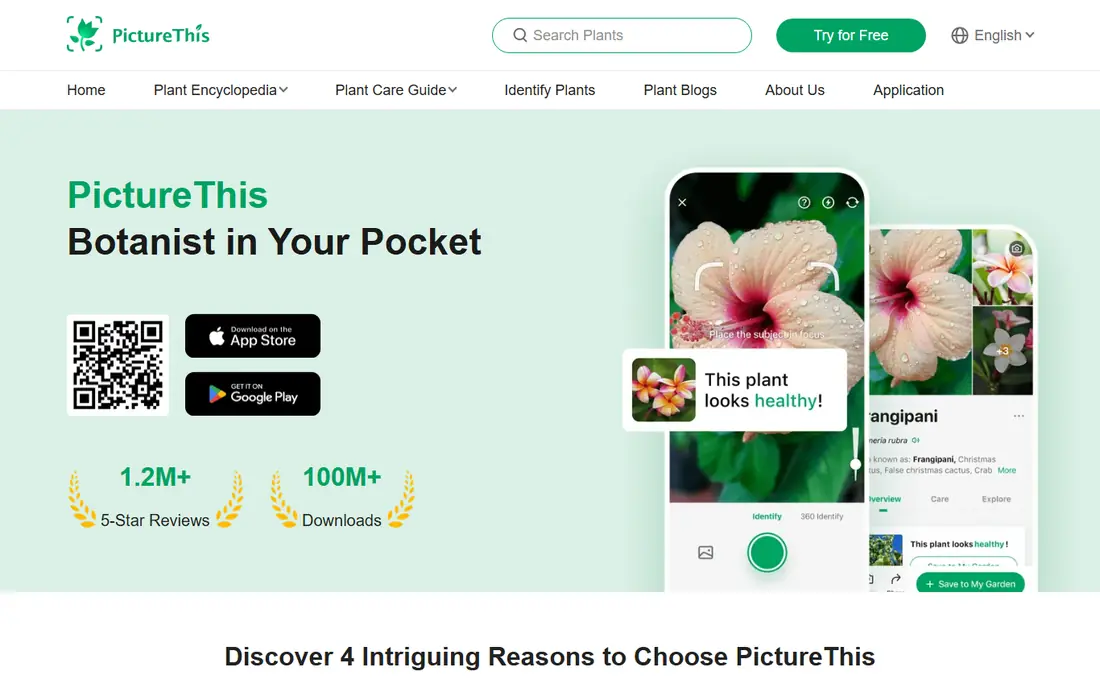
PictureThis is the most polished identification app here, and it names common plants quickly from a clear photo of a leaf, flower or fruit. Each result comes with photos, descriptions and care notes, which helps a beginner learn plant families and terms. That polish makes it easy to use on a walk, when a plant is in front of you and the light is good.
For foraging, the limits matter more than the polish. PictureThis is aimed at gardeners, so it does not focus on edibility, lookalikes or regional wild species in the way a forager needs. A confident name from the app is still only a hypothesis, and a similar-looking toxic plant can sit close by in the same habitat. We would use PictureThis as a fast first guess, then confirm with PlantNet, iNaturalist and a printed guide before considering any plant further.
- Quick photo identification with detailed plant profiles
- Care and pest advice for garden plants
- Large plant database
- Built for garden plants rather than wild edibles
- Subscription prompts are frequent on the free tier
- Does not flag toxic lookalikes clearly
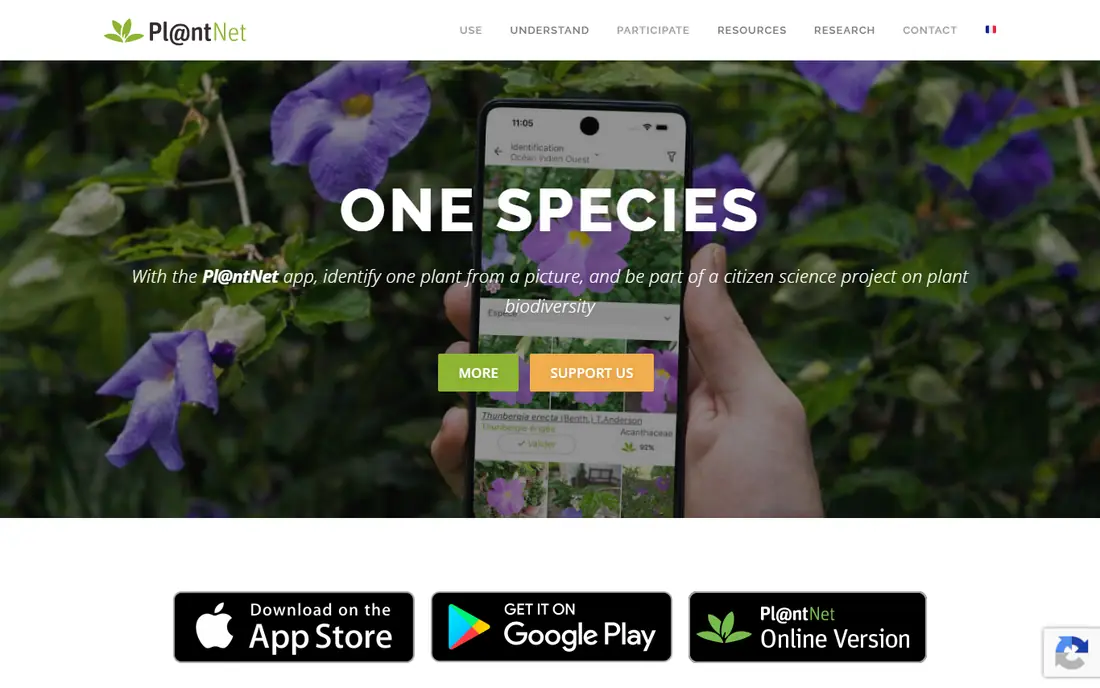
PlantNet is a citizen science project run by research institutions, and that background shows in its focus. It is free, it carries no ads in its core use, and it is strong on wild and native plants rather than garden cultivars. A user can submit photos of leaves, flowers, fruit and bark, and the app returns likely species with similar observations from other users.
The plain interface is a fair trade for a free tool that does not push a subscription. Identification still depends on photo quality, and a single blurry leaf photo will give a weaker result than a set of photos showing the whole plant and its habitat. PlantNet does not tell a user if a plant is edible, and it should not be used as the only check. We would pick PlantNet as the main free identification tool for foraging research, paired with a field guide.
- Free and ad-free core identification
- Strong for wild and native plants
- User photos feed a citizen science project
- Interface is plainer than paid rivals
- Identification works best with clear photos of several plant parts
- No edibility advice
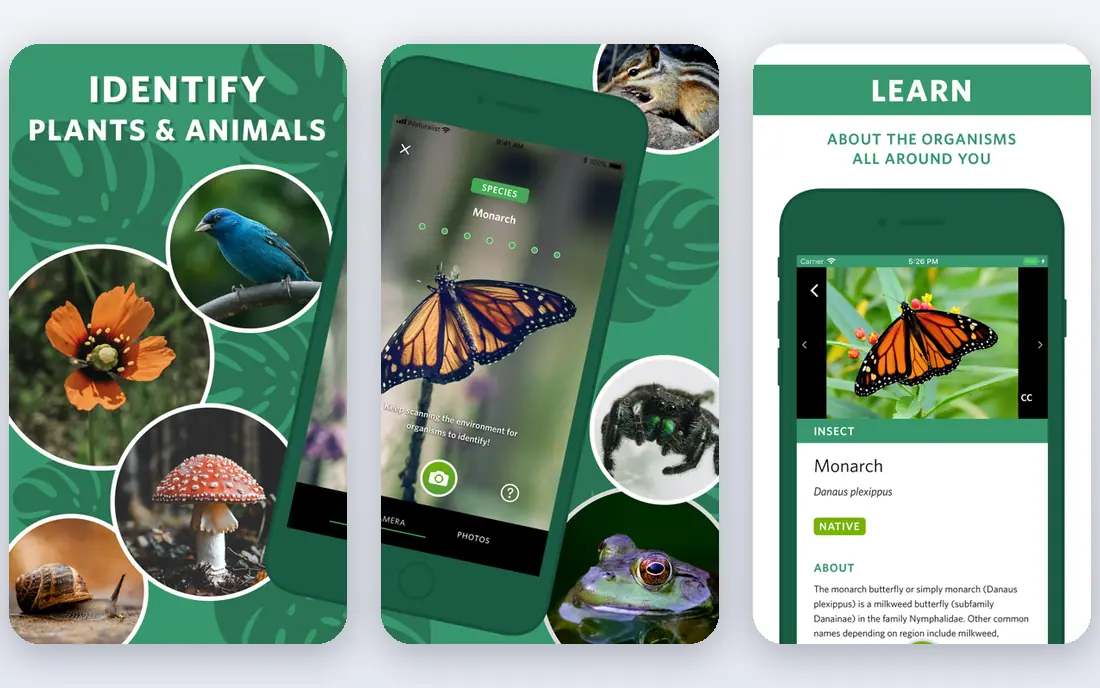
Seek is the beginner-friendly companion to iNaturalist, built to identify what is in front of the camera and to reward observations with badges. It covers plants, insects, birds and other wildlife, so a walk becomes a nature lesson rather than a single-plant check. Families like it because it is free, it has no ads, and it encourages looking closely at leaves, stems and surroundings.
Seek is cautious when it is unsure, and it will offer a broader group, such as a genus or family, rather than a confident species name. That caution is good for safety, even if it feels less helpful than a bold guess. A forager should treat a Seek result as a starting point, photograph several parts of the plant, and seek confirmation elsewhere. We would pick Seek for learning and for walks with children, not as a sole foraging check.
- Free with no ads
- Identifies plants, insects and animals
- Challenges and badges make learning fun for families
- Lower species-level accuracy than PlantNet in some tests
- Declines to guess when unsure, which can frustrate beginners
- No edibility guidance
iNaturalist is the full community platform behind Seek, and it is the strongest research tool in this list for a careful forager. A user posts photos of a plant, the app suggests a name, and other naturalists can agree, correct or discuss the observation. That human check matters, because a second pair of eyes may spot a detail the AI missed, such as a stem shape or leaf arrangement that points to a different species.
The trade-off is time. Confirmation usually takes hours rather than seconds, so iNaturalist does not suit a decision made on the spot. It also gives no advice on eating a plant, and a confirmed name alone does not make a plant safe. We would use iNaturalist to build a record of plants found in a local area over a season, then study those species in a guide before any foraging trip.
- Community of naturalists can confirm or correct an observation
- Free with no ads
- Observations build a useful record of place and season
- Initial AI suggestion can be wrong
- Confirmation may take hours
- Does not give edibility or safety advice
Flora Incognita is a free app from research institutions that identifies wild plants and gives detailed profiles for each species. It asks for clear photos and returns information on characteristics, habitat and distribution, which helps a user learn to tell similar species apart. The research background gives it a careful tone, and it avoids the subscription pressure found in paid garden apps.
Coverage is the main limit. Its database is strongest for European flora, so a user in North America or elsewhere may find fewer exact matches. Even where it works well, it does not advise on eating a plant, and a correct name still needs a guide check. We would pick Flora Incognita as a second free check for wild plants, especially for users in Europe, alongside PlantNet.
- Free identification with detailed species profiles
- Built by research institutions
- Good for European wild plants in particular
- Coverage is stronger in Europe than in some other regions
- Needs a clear photo for best results
- No foraging safety advice
LeafSnap focuses on leaves, which is useful in seasons when a plant has no flowers or fruit to photograph. A user takes a clear leaf photo, and the app returns likely matches with photos to compare. That simplicity suits a beginner who is learning leaf shapes, margins and arrangements, and it can narrow a plant down to a family when other clues are missing.
A leaf alone is rarely enough for a safe foraging decision, and LeafSnap does not fill that gap. Similar species often share leaf shapes, so a leaf match needs stem, flower, fruit and habitat photos in another app or guide. The free tier also carries ads, which can slow a field check. We would use LeafSnap as a quick leaf check, not as a final identification for any plant that might be eaten.
- Simple leaf photo identification
- Free core use
- Useful when flowers or fruit are absent
- Leaf-only focus misses stem, bark and habitat clues
- Free tier carries ads
- Less depth on wild edibles than specialist tools
Falling Fruit answers a different question from the other apps here. Instead of naming a plant in a photo, it maps places where other foragers have reported edible plants, fruit trees and herbs, often on public land or streets. A user can browse a city map, see what grows nearby, and add new spots for others. That makes trip planning easier, especially for urban foraging.
The map is only as good as its community reports, so a spot may be out of date, picked clean, on private land, or misidentified. Local rules also vary, and picking may be banned in some parks or on some land. We would use Falling Fruit to find places worth visiting, then identify every plant on site with PlantNet or iNaturalist and a guide, and check local rules before picking anything.
- Community map of foraging spots and street trees
- Free to browse and add locations
- Covers many cities worldwide
- Locations and plant details are user-submitted and may be out of date
- Does not identify a plant from a photo
- Local rules on picking vary
Google Lens is the fastest general tool here, because it is built into many Android phones and available as an app on iPhone. Point it at a plant, or run it on a saved photo, and it returns visually similar images and web pages within seconds. That speed helps when a specialist app is not installed, or when a plant photo needs a quick cross-check against web sources.
Speed is also the risk. Lens can give a confident wrong answer, and its results mix plant pages with shopping listings and unrelated images. A forager should never trust a Lens result alone, especially for a plant that has a toxic lookalike. We would use Lens only as a fast extra check alongside PlantNet and iNaturalist, and we would ignore it entirely for any eating decision unless a guide and an expert agree.
- Free and already on many phones
- Fast visual search from a photo
- Useful for a first guess when no specialist app is installed
- Prone to confident wrong answers in some tests
- Results mix shopping and web pages with plant data
- No foraging safety checks
How we picked these
We compared official feature pages, app store listings and recent plant identification tests, and we kept only apps that are available now and can identify a plant from a photo or map a foraging location. We checked prices against vendor pages and recent guides, and we used See website where a price was not clear. We did not claim hands-on testing, and we gave extra weight to free tools, community confirmation and a research background, because those features matter more for foraging than garden care advice.
How to use a foraging app safely
Treat every app result as a hypothesis, not a verdict. Photograph the whole plant, leaves, stem, flowers or fruit, and habitat, then run the same photos through two apps and compare the answers. If the apps disagree, or if either gives only a genus, stop and use a regional field guide. Learn the toxic lookalikes for any plant you hope to find, such as poison hemlock beside wild carrot, before you go out, because that pair alone shows why a single photo guess is not enough.
Check local rules, land ownership and pollution before picking, and never eat a plant based on an app alone. A safe routine is: identify with an app, confirm with a guide and, for anything new, an experienced forager or local expert, and only then consider a small, well-identified sample. This article is not medical advice, and anyone who feels unwell after contact with a wild plant should seek medical help at once.
Frequently asked questions
Can a foraging app tell me if a plant is safe to eat?
No. These apps name plants, but they do not prove edibility, and they can confuse a safe plant with a toxic lookalike. Use an app for a first name, then confirm with a regional field guide and an expert source before eating anything.
What is the best free foraging app for plant identification?
PlantNet is our pick for free identification, because it is free, ad-free in core use, and strong on wild plants. Seek is a good free second option for beginners, and iNaturalist adds community confirmation that a single AI guess cannot offer.
Is PictureThis good for foraging?
PictureThis is good for fast naming and garden care, but it is not built for foraging. It does not focus on edibility or toxic lookalikes, so a forager should pair it with PlantNet, iNaturalist and a printed guide rather than relying on it alone.
How accurate are plant identification apps?
Accuracy varies by species, photo quality and season, and it drops for rare plants, hybrids and dormant plants. Clear photos of several plant parts give better results, and two apps agreeing is a stronger signal than one app alone, though it still does not prove safety.
What should I do if two apps give different names?
Treat the plant as unidentified and do not eat it. Photograph more parts, check a field guide for both suggested species, and ask a local expert or the iNaturalist community. If doubt remains, leave the plant alone.
Are there laws about foraging I should check?
Yes. Rules vary by park, landowner and region, and picking may be banned in some places or limited to certain species and amounts. Check local rules before a trip, respect private land, and avoid plants near roads, sprayed fields or polluted ground.
Sources
See where you really rank - block by block
ProMapRanker scans Google Maps across a grid of your service area. Simple monthly plans from $19, white-label on every plan.
Start freeKeep reading
 best freelance platforms for beginners
Best Freelance Platforms for Beginners in 2026
Best freelance platforms for beginners compared, with fees, job types, and first-gig tips to help new freelancers pick a strong starting place in our guide.
Read → best foreign language apps
Best Foreign Language Apps in 2026
Best foreign language apps compared in 2026: Duolingo, Babbel, Rosetta Stone, Pimsleur and more, with prices, free plans and honest trade-offs for learners.
Read → best file sharing app
Best File Sharing App in 2026
Best file sharing app picks for sending videos and large files, with cloud storage, link sharing, and team plans compared for work and personal use today.
Read →