 ProMapRanker
Best Feature Management Software in 2026


Large teams needing governed rollouts · Pricing starts at: $12 per month
Key takeaways
- LaunchDarkly leads for governed enterprise rollouts, while Flagsmith and Unleash lead for teams that want open-source control.
- Statsig and GrowthBook suit teams that want flags and experiments in one workflow, with analytics close to the rollout.
- ConfigCat and PostHog are the simpler picks, with ConfigCat winning on reliability and PostHog winning on bundled analytics.
- Pricing models differ sharply, so compare per-seat, per-user, and usage-based costs on your real traffic before choosing.
Quick comparison
| Pick | Great for | Pricing starts at | Free tier | |
|---|---|---|---|---|
| LaunchDarkly | Large teams needing governed rollouts | $12 per month | Yes | Visit |
 Flagsmith | Teams that want open-source flags | $45 per month | Yes | Visit |
 Statsig | Data-driven teams combining flags and experiments | $150 per month | Yes | Visit |
 Unleash | Self-hosted flags for regulated teams | $75 per user per month | Yes | Visit |
 ConfigCat | Simple, reliable cross-platform flags | $110 per month | Yes | Visit |
 GrowthBook | Open-source flags and experimentation | $20 per user per month | Yes | Visit |
 PostHog | Startups that want flags with analytics | Free | Yes | Visit |
 Harness FME | Teams already using Harness delivery tools | See website | Yes | Visit |
 Optimizely Feature Experimentation | Rigorous experiments at enterprise scale | See website | Yes | Visit |
The best feature management software
We compared official product pages, pricing pages, and SDK and experimentation documentation for tools that manage feature flags, rollouts, and remote configuration. Feature management here means controlled releases, targeting, and rollback, not just a settings file.
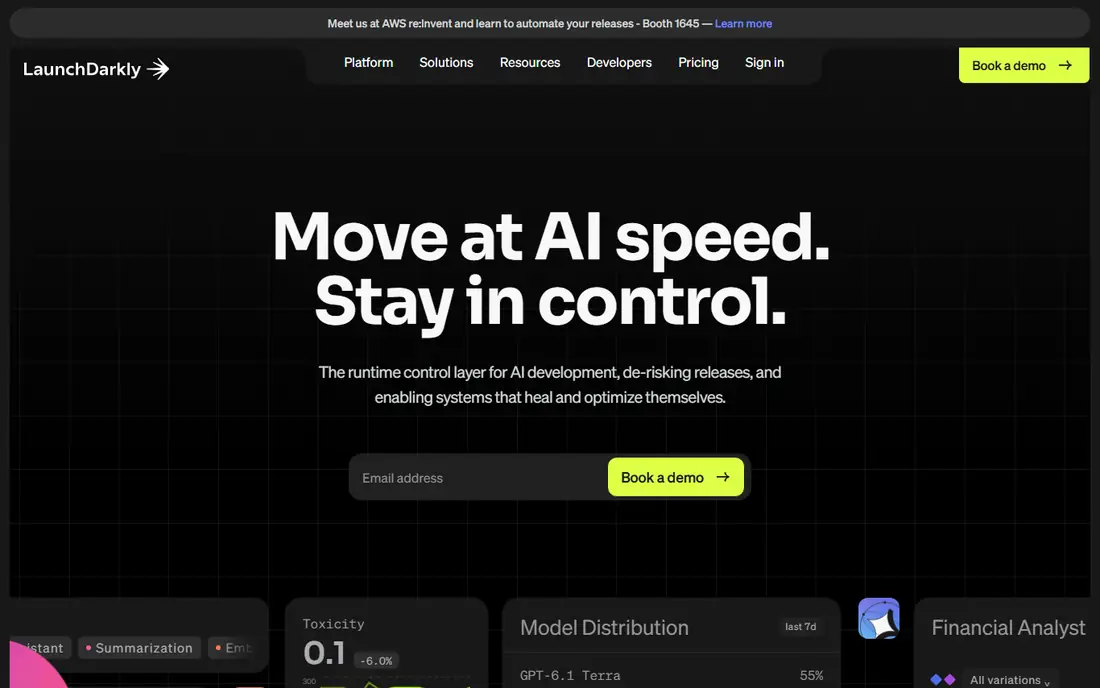
LaunchDarkly is the standard pick for large engineering teams that release often and need control over who sees what. Flags support percentage rollouts, targeted segments, scheduled changes, and approvals, and the audit trail shows who changed a flag and when. Its SDK range covers web, mobile, server, and edge runtimes, which helps teams with many platforms.
The catch is price at scale. Usage-based and seat-based costs can climb as teams and traffic grow, and the full governance feature set sits on higher tiers. For regulated or large teams, that control is worth it, while small teams may prefer a simpler tool.
- Broad SDK coverage
- Strong targeting, approvals, and audit trails
- Experimentation included on higher plans
- Costs rise with usage and seats
- Smaller teams may find the setup heavy
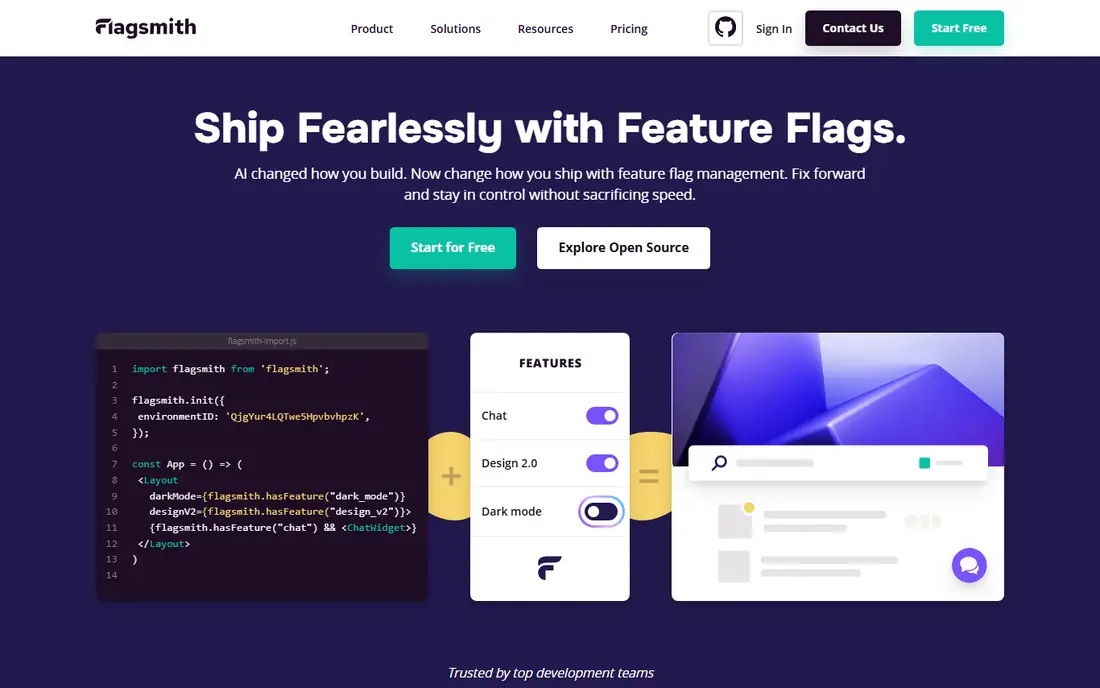
Flagsmith suits teams that want to own their flag infrastructure or run it in a private cloud. The open-source core covers flags, remote configuration, and segments, and the hosted version adds team features and support. Pricing starts near $45 per month for the Startup tier, with a free tier for small use.
The tradeoff is experimentation depth. Flagsmith handles rollouts and remote config well, but teams running many rigorous experiments may want Statsig, GrowthBook, or Optimizely beside it. For security-minded teams, the hosting choice alone is a strong reason to pick Flagsmith.
- Open-source core with self-hosting
- SaaS, private cloud, and self-hosted options
- Clear pricing tiers
- Experimentation is less deep than Statsig or Optimizely
- Enterprise features are paid
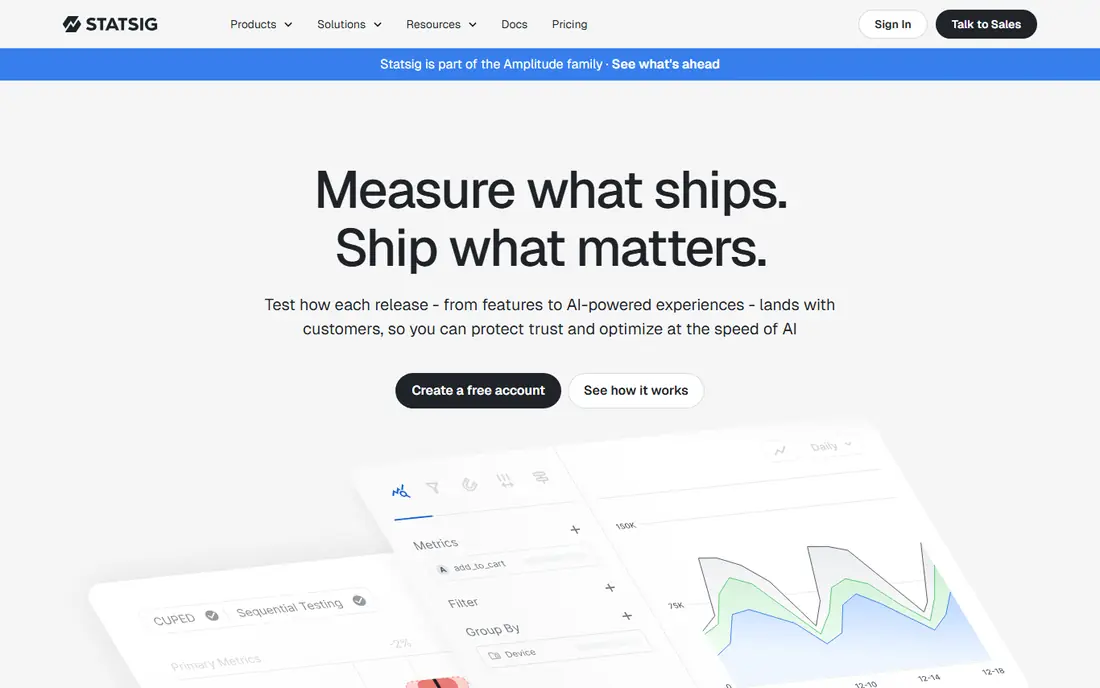
Statsig fits product teams that want a flag rollout and an experiment result in the same place. One SDK can gate a feature, run an experiment, and report on metrics without stitching three tools together. Its stats options include sequential testing and holdouts, and metric-based rollback can pull a bad release automatically.
The catch is metered cost. Event volume drives the bill, so teams should model traffic before launch and set alerts. For teams that already think in experiments and metrics, Statsig removes a lot of plumbing.
- Flags, experiments, and analytics on one SDK
- Strong stats methods
- Auto-rollback tied to metrics
- Metered pricing needs traffic modeling
- Smaller teams may use only part of the platform
Unleash is built for teams that want to run flag infrastructure themselves, especially in regulated industries. The open-source core is free to self-host, and paid cloud and enterprise tiers add single sign-on, role-based access, change approvals, and audit logs. Cloud pricing starts near $75 per seat per month, while self-hosted enterprise carries a seat minimum.
The tradeoff is operations for self-hosters, who own updates and scaling. Teams that accept that work gain control over data location and uptime. For enterprises that cannot send flag data to a third-party cloud, Unleash is a leading pick.
- Open-source core under Apache 2.0
- Self-hosted and cloud options
- Strong access controls and approval workflows
- Self-hosting needs operations effort
- Cloud pricing is per seat
ConfigCat suits teams that want flags that just work, with little ceremony. Configuration values are served from a global CDN, SDKs cover major platforms, and targeting rules handle segments and percentage rollouts. The free tier covers small projects, and paid plans start near $110 per month.
The limit is experimentation. ConfigCat is a flag and remote config tool first, so teams running deep experiments will need analytics elsewhere. For teams that value reliability and simple pricing over experiment stats, ConfigCat is a calm, dependable pick.
- Global CDN for fast flag reads
- Simple setup across platforms
- Open-source SDKs
- Experimentation is thinner than specialist tools
- Pricing follows config fetches
GrowthBook combines feature flags with experimentation in an open-source package that teams can self-host or run in the cloud. Flags support rollouts and targeting, while experiments connect to analytics warehouses and report results with stats controls. The free tier covers small teams, and Pro starts near $20 per user per month.
The catch is that experiment quality depends on data setup, as with any stats tool. Teams should confirm event and warehouse connections during a trial. For teams that want open experimentation without enterprise pricing, GrowthBook is a strong value pick.
- Open-source flags and experiments
- Self-hosted and cloud options
- Warehouse-friendly analysis
- Enterprise polish trails LaunchDarkly
- Setup needs data care for experiments
PostHog fits startups that want product analytics and feature flags in one account. Flags support rollouts, targeting, and experiments, and the same data feeds analytics, funnels, and replay, so a team can see why a rollout behaved as it did. The free tier covers a useful amount of flag requests each month, and usage pricing scales from there.
The tradeoff is governance depth. Large enterprises with strict approval and audit needs may still prefer LaunchDarkly or Unleash. For a small team that wants one product for insight and release control, PostHog is hard to beat on value.
- Flags plus analytics, session replay, and surveys in one product
- Open-source core
- Generous free usage
- Flag governance is lighter than LaunchDarkly
- Large teams may outgrow the bundled model
Harness Feature Management and Experimentation, formerly Split, suits teams that already run Harness for continuous delivery. Flags sit close to pipelines, so a release, a flag change, and a rollback can be managed in one workflow. Experimentation includes guardrails that watch metrics during a rollout, which helps teams catch regressions early.
The catch is that pricing is quoted and the full value shows inside Harness. Teams outside that stack should compare LaunchDarkly and Statsig first. For Harness users, the combined delivery and flag workflow is a clear advantage.
- Flags tied to delivery pipelines
- Experimentation with guardrails
- Broad SDK coverage
- Pricing is quoted
- Best value inside a Harness stack
Optimizely Feature Experimentation
Great for: Rigorous experiments at enterprise scale
Optimizely Feature Experimentation fits enterprises that run high-stakes experiments with strict stats and governance needs. It supports sequential, Bayesian, and frequentist methods, scheduled flag changes, and approvals, and its Rollouts plan gives basic flagging free. That combination suits product and growth teams that must defend results to stakeholders.
The tradeoff is cost and complexity. Quoted pricing and a broad feature set mean smaller teams may use only a fraction of the product. For enterprises where experiment rigor matters more than low cost, Optimizely is a leading pick.
- Strong stats methods and governance
- Broad SDK and edge options
- Free Rollouts plan for basic flags
- Pricing is quoted
- Full experimentation needs a larger budget
How we picked these
We compared official product and pricing pages, SDK coverage, and experimentation features, and we checked each homepage listed here. We favored tools with a live product in October 2026, real rollout controls, and a clear pricing or free tier path. We left out narrow toggle libraries with no targeting, audit, or hosted option, and tools whose status we could not confirm.
What to check before you pick
Start with your release pattern. Teams that ship daily need fast flag reads, easy rollback, and clear ownership, while teams that run experiments need stats and metric guardrails. Test one real rollout end to end, including a percentage ramp, a targeted segment, and a rollback, before judging a tool on its dashboard.
Pricing model
Compare pricing units, not headline prices. Per-seat pricing favors small teams with large traffic, per-user pricing favors large traffic with few managers, and usage pricing favors steady, predictable traffic. Model cost at twice your current traffic and team size, since both tend to grow after adoption.
Governance and cleanup
Check approvals, audit logs, and flag cleanup tools, since stale flags become technical debt fast. A good tool should show flag age, owner, and last evaluation, and make archiving easy. Set a review rhythm for flags, and retire flags once a feature is fully rolled out.
Frequently asked questions
What is the best feature management software for a startup?
PostHog or Flagsmith fits most startups, with PostHog winning when analytics matter and Flagsmith winning when self-hosting matters. Both offer free tiers that cover early use without a sales call.
Which tool is best for enterprise rollouts?
LaunchDarkly leads for governed enterprise rollouts, with Unleash close behind for teams that need self-hosting. Both offer approvals, audit trails, and broad SDK coverage for large teams.
What is the difference between a feature flag and an experiment?
A flag controls who sees a feature, while an experiment measures the effect of that feature on metrics. Tools such as Statsig, GrowthBook, and Optimizely combine both, while ConfigCat and Flagsmith focus more on flags.
Do I need to self-host feature flags?
No, most teams should start with a hosted plan and only self-host when data location, compliance, or uptime rules require it. Self-hosting adds operations work that a small team may not want.
How do I avoid flag sprawl?
Name flags clearly, assign an owner, set an expiry review date, and archive flags after full rollout. Review the flag list monthly, and treat a flag older than a few months as a cleanup task.
Which feature management platform is the best overall?
There is no single best pick, since the answer follows team size, hosting needs, and experiment depth. Large governed teams should start with LaunchDarkly, open-source teams with Flagsmith or Unleash, and experiment-led teams with Statsig or GrowthBook.
Sources
- https://launchdarkly.com/pricing
- https://flagsmith.com/pricing
- https://www.statsig.com/pricing
- https://www.getunleash.io/pricing
- https://configcat.com/pricing
- https://www.growthbook.io/pricing
- https://posthog.com/pricing
- https://www.harness.io/products/feature-management-experimentation
- https://www.optimizely.com/products/feature-experimentation/
See where you really rank - block by block
ProMapRanker scans Google Maps across a grid of your service area. Simple monthly plans from $19, white-label on every plan.
Start freeKeep reading
 who has best internet service
Who Has the Best Internet Service in 2026
Who has best internet service for US homes? We compare fiber, cable, fixed wireless and satellite providers on speed, price, availability and terms today.
Read → which survey tool has the best analytics
Which Survey Tool Has the Best Analytics in 2026
Find which survey tool has the best analytics in 2026, comparing Qualtrics, SurveyMonkey, Typeform, Alchemer, and more on reports, text, and stats today.
Read → which streaming service has the best movies
Which Streaming Service Has the Best Movies in 2026
Answering which streaming service has the best movies, with Netflix, Max, Criterion and more compared on libraries, prices and free options in this guide.
Read →