 ProMapRanker
Best ETF App in 2026: 9 Apps Compared

Key takeaways
- Most major US brokers now charge no commission on online US stock and ETF trades, so the real differences are research, fractional shares, automation and account support.
- Fidelity and Charles Schwab suit investors who want broad research and retirement accounts in the same place as their ETF holdings.
- Vanguard remains a strong fit for long term index investors, while Robinhood, Webull and SoFi suit mobile first investors who want a simpler start.
- Check the expense ratio of each ETF itself, because that ongoing fund cost matters more over time than a one off trade commission.
- This is not financial advice, and investing carries risk, including possible loss of principal. Terms and fees can change, so confirm them on the broker site before you open an account.
Quick comparison
| Pick | Great for | Pricing starts at | Free tier | |
|---|---|---|---|---|
 Fidelity | All round ETF investing and research | Free | Yes | Visit |
 Charles Schwab | Research, education and retirement accounts | Free | Yes | Visit |
 Vanguard | Long term index investing | Free | Yes | Visit |
 Robinhood | Simple mobile ETF trading | Free | Yes | Visit |
 M1 Finance | Automated ETF portfolios | Free | Yes | Visit |
 SoFi Invest | Hands off beginners | Free | Yes | Visit |
 E*TRADE | Active traders who want strong tools | Free | Yes | Visit |
 Webull | Active traders who want charting and practice trading | Free | Yes | Visit |
 Interactive Brokers | Global access and advanced traders | Free | Yes | Visit |
The best ETF apps
We compared official pricing pages, account types, fractional share rules, research tools and automation features to find the best ETF platform for different kinds of investors. The best software ETFs are easy to buy on any of these platforms, but the right app depends on how much help, research and automation you want.
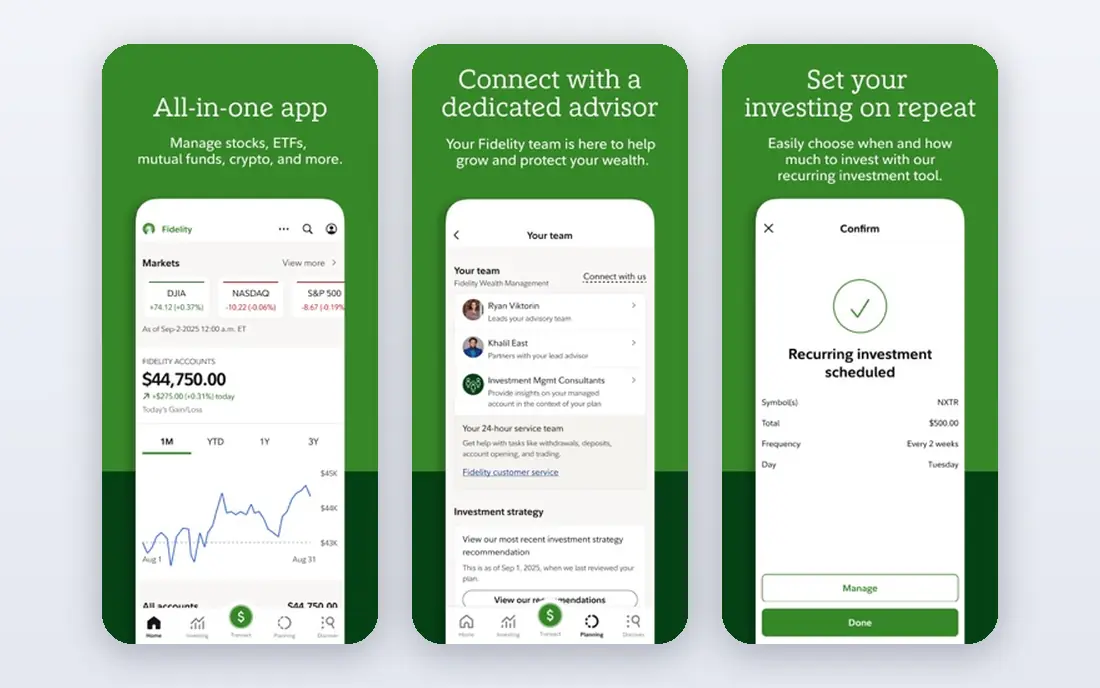
Fidelity is our pick for most people because it covers the basics well and adds depth when you are ready for it. You can buy whole and fractional ETF shares, set up recurring investments, reinvest dividends and hold taxable, IRA and other account types in one login. Its screeners and fund research help you compare expense ratios, holdings and past performance without needing a second service.
The trade off is choice. New investors may find the website and app crowded at first, with many menus, tools and account types to sort through. That breadth becomes a strength once you start comparing funds or planning for retirement, but it is worth taking time to set up watchlists and alerts in a way that fits how you actually invest.
- No commission on online US stock and ETF trades
- Fractional shares from small amounts
- Strong research and retirement account options
- The full platform can feel busy for a first time investor
- Some advanced tools take time to learn
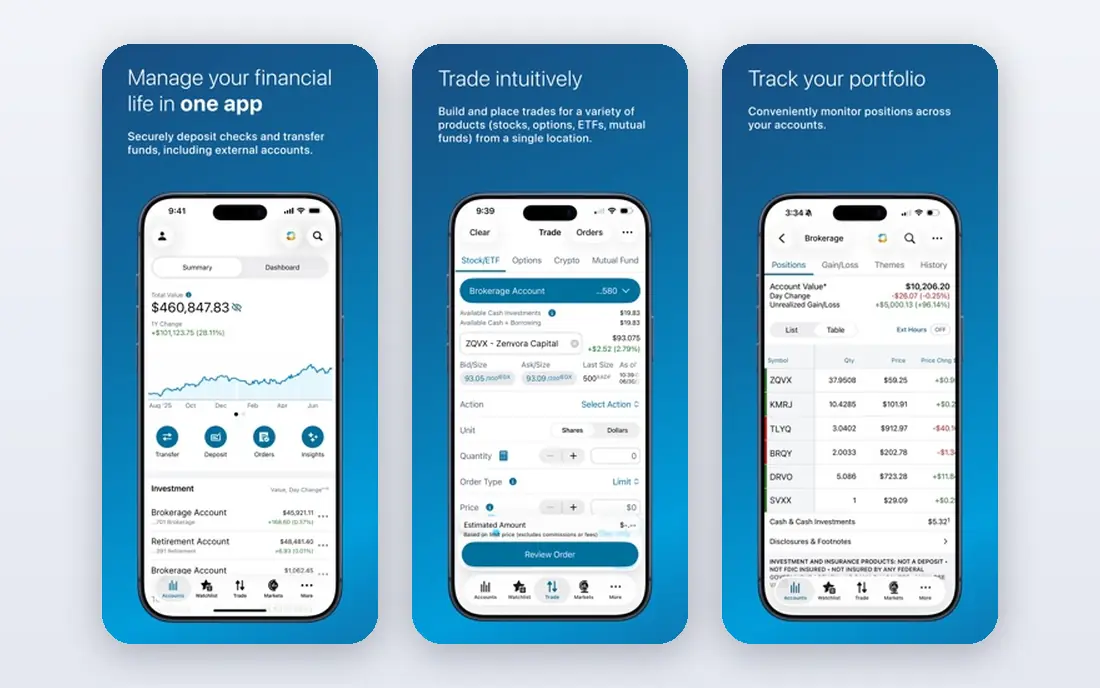
Schwab suits investors who want a full service broker at a low headline cost. It offers a wide ETF range, retirement accounts, research from third party providers and educational material that explains index funds in plain terms. The thinkorswim platform adds charting and analysis for investors who later want more active tools.
Fractional shares are available for some stocks through Schwab Stock Slices, but ETF fractional buying is not as broad as at Fidelity or Robinhood, so check the exact rules for the funds you want. Schwab also offers its own Intelligent Portfolios service for investors who would rather have a managed portfolio, which is a separate service with its own terms.
- No commission on online US stock and ETF trades
- Strong education and research
- Access to human help and branches
- Fractional share options are more limited than some rivals
- The platform range can feel large
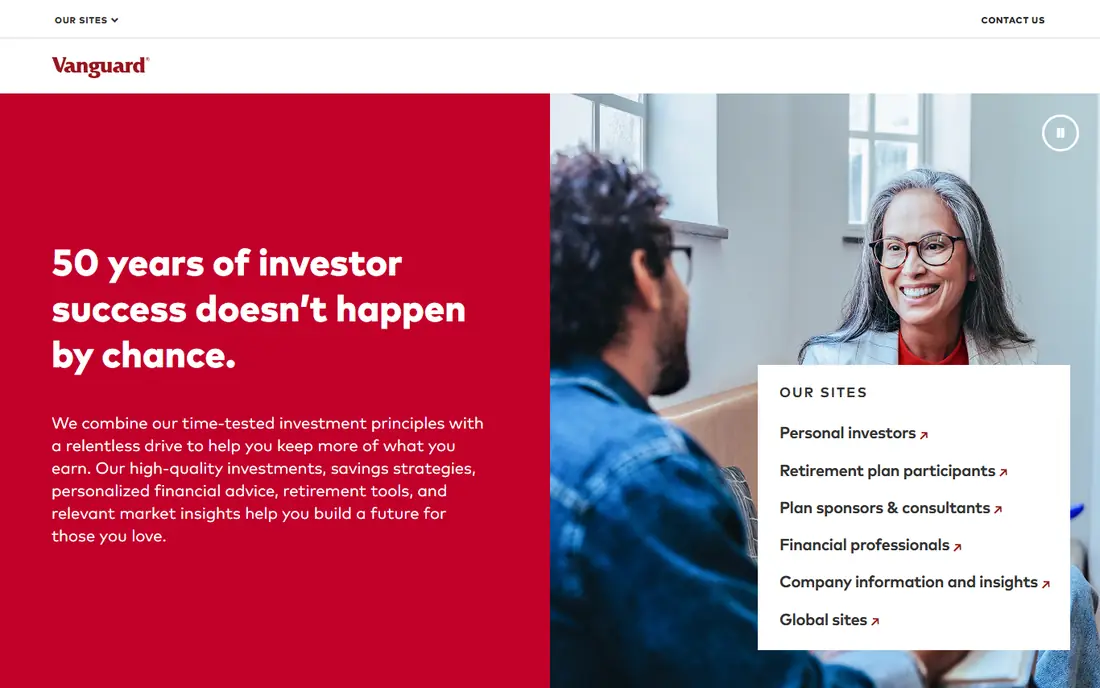
Vanguard is the natural home for investors who plan to buy broad index ETFs and hold them for years. Its own ETFs are known for low expense ratios, and its platform keeps the focus on long term plans, IRAs and regular contributions rather than frequent trading. If your main goal is steady, low cost exposure to the stock market, that focus is a benefit.
The cost of that focus is a less polished app experience and thinner research and charting tools than Fidelity or Schwab offer. Investors who want detailed screeners, analyst reports or an active trading platform may want a second account for research, while keeping their core ETF holdings at Vanguard.
- Low cost index ETFs
- No commission on most online US stock and ETF trades
- Strong retirement account support
- The app and website feel plainer than rivals
- Research tools are more basic
Robinhood is built for phone first investors who want to buy an ETF in a few taps. Fractional shares let you start with small amounts, and the app keeps order types, holdings and performance easy to read. It also offers IRA accounts and options and crypto trading, though those extra products are separate from a plain ETF plan and carry their own risks.
The weakness is depth. Research, fund comparison and planning tools are thinner than at Fidelity or Schwab, so investors who want to compare many funds in detail may need outside research. Robinhood suits a simple, regular ETF habit better than a research heavy strategy.
- No commission on stock and ETF trades
- Fractional shares from 1 dollar
- Clean mobile app
- Research tools are limited
- Customer support has drawn criticism from some users
M1 Finance takes a different approach from a standard brokerage app. You build a portfolio, called a pie, from ETFs and stocks, set target weights, and add money on a schedule. New cash is invested toward those targets, and the platform rebalances over time, which suits investors who want a set plan without placing each trade by hand.
That structure is less flexible for investors who want to trade often or place complex orders during the day, since M1 uses trading windows rather than instant execution for most orders. For a long term ETF portfolio with regular contributions, that trade off is often acceptable, and it can help you stick to a plan.
- No commission on self directed accounts
- Automated rebalancing
- Fractional shares across a portfolio
- Not built for frequent day trading
- The pie based system takes a little learning
SoFi Invest suits beginners who want investing, banking and other money products in one app. Active investing lets you pick your own ETFs, while automated investing builds and manages a diversified portfolio based on your goals and risk level. Small starting amounts make it easy to begin with regular contributions.
The app is simpler than Fidelity or Schwab, which is good for a first account but limiting if you later want deep fund research or advanced charting. Read the automated investing terms carefully, including any fees that apply to that service, and confirm which ETFs are used in the managed portfolios.
- No commission on stock and ETF trades
- Automated investing option
- Investing sits beside banking and lending products
- Research tools are lighter than at full service brokers
- Automated portfolios have their own fees and terms to check
ETRADE, part of Morgan Stanley, gives ETF investors a solid middle ground between a simple app and a professional platform. Its web and mobile tools include screeners, charting and educational content, and Power ETRADE adds more depth for investors who trade more often. Retirement and taxable accounts are both well supported.
New investors may need time to decide between the standard platform and Power E*TRADE, and some tools are clearly built for active traders. If you plan to hold ETFs for the long term and trade only now and then, the standard experience is enough, and the extra tools are there if your needs grow.
- No commission on online US stock and ETF trades
- Strong trading platforms
- Good screeners and education
- The range of platforms can confuse new users
- Some features suit active traders more than buy and hold investors
Webull appeals to investors who like charts, technical indicators and market data in the app itself. ETF traders can screen funds, follow price moves and test ideas with paper trading before risking real money. The app also covers stocks, options and other products, though those carry extra risk and are not needed for a basic ETF plan.
The platform is less focused on retirement planning and human advice than Schwab or Fidelity. That makes Webull a better second account for active research, or a main account for confident self directed investors, than a first choice for someone who wants guided retirement planning.
- No commission on stock and ETF trades
- Strong charting
- Paper trading for practice
- Retirement and planning support is thinner than at full service brokers
- The interface can feel dense
Interactive Brokers is the most powerful platform on this list, and the most demanding. It gives access to markets around the world, advanced order types, detailed reporting and professional grade tools. IBKR Lite is the simpler, commission free tier for US stock and ETF trades, while the Pro tier suits frequent and global traders who accept its fee schedule.
Beginners should expect a learning curve. Menus, data options and account settings are extensive, and the platform assumes you know what you want to do. For experienced investors, or those who need international ETFs and markets that other US apps do not cover well, that depth is the reason to choose it.
- Very wide global market access
- IBKR Lite offers no commission US stock and ETF trades
- Advanced tools and low margin rates for eligible accounts
- The main platform has a steep learning curve
- Account setup can feel complex for beginners
How we picked these
We compared official pricing pages, app store listings, account types and feature pages for the largest US brokers and popular ETF platforms. We kept only platforms that are open to US investors, offer a broad ETF range, and charge no commission on online US stock and ETF trades on at least one tier. We then ranked them by fit for different investors, rather than by one headline feature, because the best ETF app for a beginner is not always the best for an active trader.
We did not claim hands on testing that did not happen. Our comparison rests on published fees, fractional share rules, research and automation features, and account support. Prices and plan terms can change, so treat this list as a starting point and confirm the current fee schedule on the broker site before you fund an account.
What to check before you pick an ETF app
Start with the ETF, not the app. Decide if you want broad market exposure, a sector fund such as a software ETF, international exposure, bonds, or a mix. Then check the fund expense ratio, how closely it tracks its index, and whether it pays dividends that you want reinvested. A low cost broad fund held for years often beats a narrow fund picked for a short term theme.
Next, check the practical details of the app. Confirm fractional shares if you plan to invest small amounts regularly, recurring investment options if you want automation, and IRA support if you are saving for retirement. Also check transfer out fees, margin terms if you ever consider borrowing, and how easy it is to reach support. A free app that is hard to leave, or hard to get help from, can cost more in time and stress than it saves in commissions.
Finally, keep your plan simple. One or two broad ETFs, regular contributions, and periodic rebalancing cover most long term goals. Adding many overlapping sector funds can duplicate holdings and raise costs without adding real diversification. Review your portfolio once or twice a year, and only change course when your goals, time horizon or risk tolerance have genuinely changed.
Frequently asked questions
What is the best ETF app for beginners?
Fidelity and SoFi Invest are strong starting points because they combine no commission ETF trades with simple funding and recurring investment options. Fidelity adds deeper research for later, while SoFi keeps the first steps simpler. Pick the one whose app you find easier to use, since you are more likely to keep investing regularly.
What is the best platform for ETF investing if I want research?
Charles Schwab and Fidelity lead on research, with screeners, fund comparisons, third party reports and education built in. Interactive Brokers adds global data and advanced tools for experienced investors. If research matters most to you, open a free account and test the screener before moving your main holdings.
What is the best software ETF, and does the app matter?
The best software ETF depends on whether you want broad technology exposure, a narrower software focus, or a global fund, and on its expense ratio and holdings. The app matters mainly for access, fractional shares and fees, since the same ETF can often be bought on several platforms. Compare the fund first, then pick an app that offers it with the features you need.
Are ETF apps free?
Most apps on this list charge no commission on online US stock and ETF trades, and have no account minimum on their basic tier. You still pay the ETF expense ratio, and some services such as managed portfolios, margin borrowing, options contracts and transfers can carry fees. Read the full fee schedule on the broker site before you trade.
Which ETF platform is best for retirement accounts?
Fidelity, Schwab and Vanguard all support IRAs with broad ETF ranges and retirement planning tools, which makes them strong for long term savers. Robinhood and SoFi also offer IRAs, but with lighter planning support. If retirement is your main goal, weigh IRA features, contribution tools and access to advice alongside trading costs.
Do I need more than one ETF app?
Most investors do not. One good broker with the ETFs you want, fractional shares and an IRA option covers a long term plan. A second account can make sense if you want a specific tool, such as Webull charting or Interactive Brokers global access, while keeping your core holdings elsewhere. Keep the number of accounts low so your portfolio stays easy to track.
Sources
- https://www.fidelity.com
- https://www.schwab.com
- https://www.vanguard.com
- https://www.robinhood.com
- https://www.m1.com
- https://www.sofi.com
- https://www.etrade.com
- https://www.webull.com
- https://www.interactivebrokers.com
- https://invezz.com/invest/best-etf-platforms/
- https://www.selfemployed.com/6-popular-free-investment-apps-for-self-employed-beginners-in-2026/
See where you really rank - block by block
ProMapRanker scans Google Maps across a grid of your service area. Simple monthly plans from $19, white-label on every plan.
Start freeKeep reading
 top custom software development company
Top Custom Software Development Company in 2026
Looking for a top custom software development company? We compare 9 firms for web, mobile, and enterprise software, covering strengths and fit for 2026.
Read → tableau alternatives
Tableau Alternatives in 2026
Compare the best Tableau alternatives for 2026, from Power BI to Metabase, with prices, hosting options, and picks for small teams and enterprises today.
Read → microsoft teams alternatives
Best Microsoft Teams Alternatives in 2026
Looking for microsoft teams alternatives? We compare 9 chat and video tools for 2026, covering free plans, pricing, meetings, and integrations for teams.
Read →