 ProMapRanker
Best Employee Experience Platforms in 2026


Deep engagement surveys and benchmarks · Pricing starts at: See website
Key takeaways
- Culture Amp and Qualtrics lead on survey depth, benchmarks and large-scale listening, but both use custom pricing that requires a sales quote.
- Lattice and 15Five tie surveys to performance work, which suits midsize firms that want one people system rather than separate survey and review tools.
- Bonusly is the lowest-cost entry here for recognition-first teams, while Workvivo suits firms that need a shared digital workplace for frontline and office staff.
- Ask who owns the survey results and action plans before you buy, because a platform that only reports scores will not change manager behaviour on its own.
Quick comparison
| Pick | Great for | Pricing starts at | Free tier | |
|---|---|---|---|---|
| Culture Amp | Deep engagement surveys and benchmarks | See website | No | Visit |
 Qualtrics EmployeeXM | Enterprise listening at scale | See website | No | Visit |
 Lattice | Engagement plus performance | $4 per user per month | No | Visit |
 15Five | Manager check-ins and weekly signals | $4 per user per month | Free trial | Visit |
 Leapsome | One people platform for mid-market teams | See website | No | Visit |
 Workday Peakon | Large firms already on Workday | See website | No | Visit |
 Bonusly | Peer recognition for small teams | $3 per user per month | Yes | Visit |
 Workvivo | Company communication and culture | See website | No | Visit |
The best employee experience platforms
We compared official product pages, pricing pages and 2026 platform comparisons, focusing on what each tool does after a survey closes. The list below covers listening, performance, recognition and internal communication.
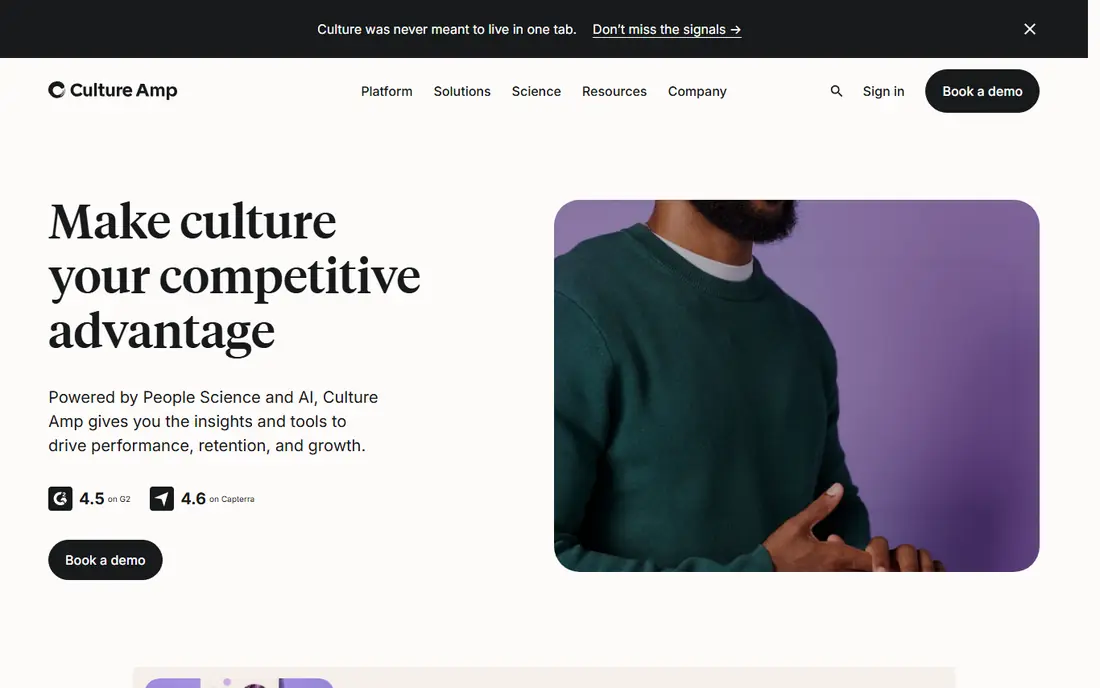
Culture Amp is best known for engagement surveys that go beyond a simple score. Its templates draw on people-science research, and its benchmarks let a firm compare results with similar companies rather than only with its own past scores. Managers get reports that link engagement drivers to action ideas, and open-text comments can be summarised so HR teams can spot themes without reading thousands of responses one by one.
The trade-off is scale and cost. Culture Amp is sales-led, so a small firm cannot quickly price it, and the platform works best when HR has time to run regular survey cycles and follow up on actions. Firms that want a serious listening program, and that will use benchmarks to set targets, get the most from it. Firms that only want a yearly pulse check may find it more platform than they need.
- Research-backed survey design
- Benchmark comparisons
- AI summaries of open-text comments
- Custom pricing with no public entry rate
- Needs dedicated HR time to run well
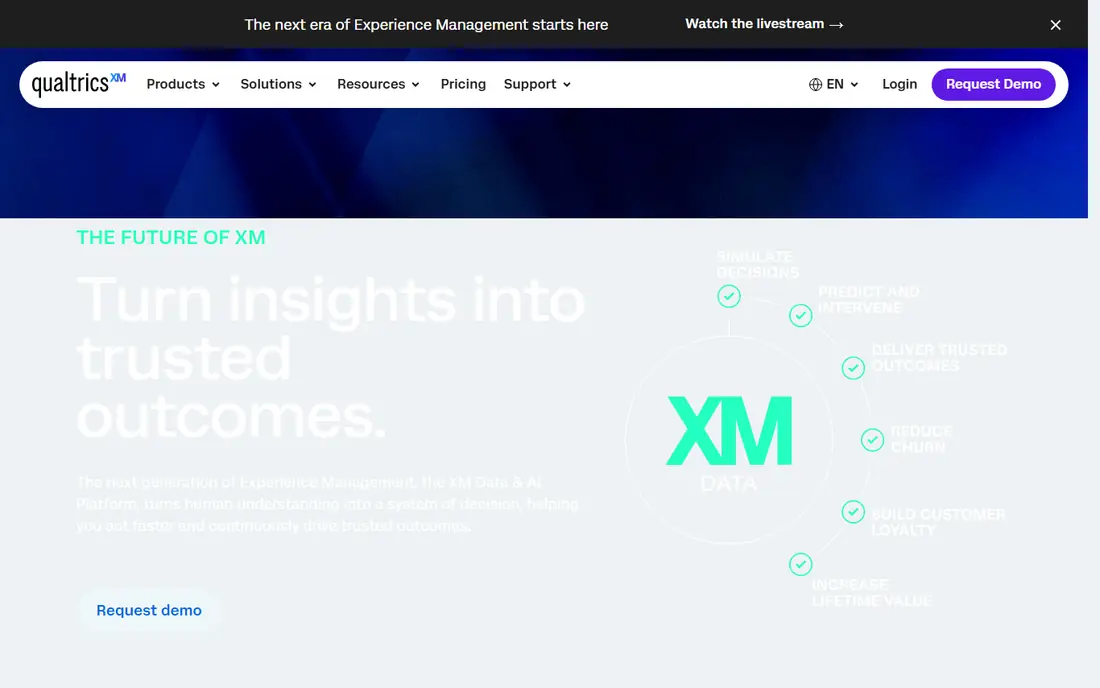
Qualtrics EmployeeXM suits large firms that need feedback at many moments: hiring, onboarding, role changes, manager changes and exit. It can run pulse surveys, lifecycle surveys and deeper research studies in one system, and its analytics help larger HR teams slice results by location, team, tenure and other factors. For firms that also use Qualtrics for customer research, the link between employee and customer experience is a real advantage.
That depth is also the drawback. Implementation and survey design need skilled owners, and smaller firms may find the platform heavy for a simple engagement survey. If your firm has more than a thousand staff, multiple countries and an analyst team, Qualtrics is a strong contender. If you have fifty staff and one HR lead, a simpler tool will serve you better.
- Lifecycle feedback across the whole employee journey
- Strong analytics
- Links employee data to customer experience data
- Custom pricing
- Implementation can be complex and slow for smaller teams
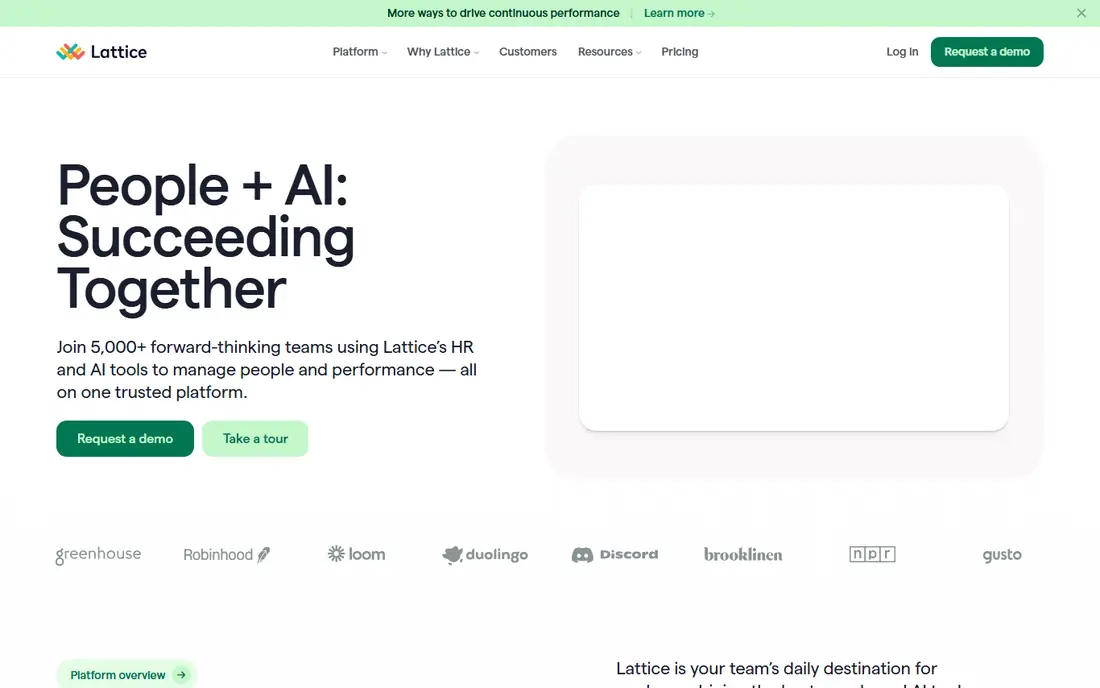
Lattice appeals to firms that are tired of keeping engagement data in one tool and performance data in another. Engagement surveys sit beside performance reviews, goals and one-to-one notes, so a manager can see a team engagement result next to goal progress and review history. The engagement add-on starts at $4 per seat per month in published comparisons, which makes the entry cost easier to budget than a custom quote.
The catch is scope. Lattice works best when a firm adopts its performance side as well, and buying only the survey part may leave some of its value unused. Still, for midsize firms that plan to run reviews and engagement together, Lattice is one of the cleanest combined options on this list.
- Engagement surveys tied to reviews, goals and feedback
- Clear manager workflows
- Published entry price for engagement
- Full value needs the wider Lattice suite
- Smaller firms may pay for features they do not use
15Five is built around the manager-employee relationship. Weekly check-ins, short pulse questions and one-to-one agendas give managers a regular signal, rather than a single annual survey that arrives too late to act on. The Engage plan starts at $4 per user per month on annual billing in published comparisons, which puts it in reach of midsize teams that want a steady rhythm of feedback.
The honest limit is depth. 15Five is strong on manager workflows and regular signals, but it is not a replacement for a large-scale research platform with deep benchmarking and lifecycle analytics. Teams that want managers to act weekly, and HR to see trends over time, will like it. Teams that need complex survey science should look at Culture Amp or Qualtrics instead.
- Weekly check-ins and one-to-one agendas
- Engagement surveys on the Engage plan
- Manager-focused design
- Less of a pure research platform than Culture Amp or Qualtrics
- Pricing varies by module
Leapsome bundles several people tools that firms often buy separately: engagement surveys, 360-degree feedback, goal tracking and learning. For a mid-market firm that wants to cut down on vendors, that bundle is attractive, and it avoids the work of joining survey results to performance and learning data by hand. It also suits firms with staff in several countries, where one platform for the whole people process is easier to govern.
The drawback is the usual bundle trade-off. A firm that needs the deepest survey analytics, or the most advanced learning system, may find a specialist tool stronger in that one area. Leapsome wins when the priority is one coherent system that managers actually use, rather than the best single-purpose tool in each category.
- Surveys, 360 feedback, goals and learning in one place
- Suits global mid-market teams
- Clean interface for managers
- Custom pricing
- Breadth can mean less depth in any single area
Workday Peakon, now part of Workday, is the natural listening tool for firms that already run Workday for HR. Employee data flows into surveys without a separate integration project, and results can be viewed beside other workforce data that HR already trusts. It supports frequent pulse surveys, and its channels include email, SMS and kiosk options that help reach staff who do not sit at a desk all day.
For a firm outside the Workday world, Peakon is a harder sell, because much of its advantage comes from that native fit. It is also an enterprise purchase with custom pricing, so it suits large firms with a Workday contract and a listening program to run at scale, not a small firm looking for a quick survey tool.
- Native fit for Workday customers
- Real-time feedback and benchmarking
- SMS, email and kiosk channels
- Custom pricing
- Weak fit for firms that do not run Workday
Bonusly takes a different route into employee experience: recognition. Team members give each other small bonuses with a public note, and those points can be redeemed for rewards. That habit builds visibility for good work, and it works well inside Slack or Microsoft Teams where staff already spend their day. Published pricing puts the Team plan at $3 per user per month on annual billing, with a free plan for up to eight users.
The limit is scope. Bonusly is not a survey platform, so a firm that needs engagement benchmarks, driver analysis and lifecycle surveys will still need another tool. It earns its place here because recognition is a core part of experience for many small teams, and it is the cheapest credible starting point on this list for a team that wants to begin with culture rather than measurement.
- Low entry price
- Free plan for very small teams
- Peer recognition inside Slack and Teams
- Recognition-first, not a full survey platform
- Limited depth for enterprise analytics
Workvivo is a digital workplace rather than a survey tool. It gives a firm a shared home for company news, team updates, social posts, shout-outs and events, with a mobile app that reaches staff who do not work at a desk. That matters for firms with frontline, retail or field teams, where email alone misses a large share of staff. It connects with Zoom, Slack and Microsoft 365, so it does not require staff to learn a wholly separate work system.
The trade-off is measurement depth. Workvivo can run polls and gather feedback, but it does not replace a dedicated engagement research platform for deep survey analysis. Firms that need a shared culture hub, especially with a mixed desk and frontline workforce, will get more from Workvivo than from a survey-only tool.
- Digital workplace for news, social posts and recognition
- Mobile app for frontline staff
- Integrates with Zoom, Slack and Microsoft 365
- Custom pricing
- Less of a survey research tool than Culture Amp or Qualtrics
How we picked these
We compared official product and pricing pages with 2026 platform comparisons, and we kept only platforms that are still sold and that cover a distinct part of employee experience: listening, performance, recognition or communication. We favoured tools with clear manager workflows and a path from survey results to action, not only reporting. Where a vendor does not publish a price, we wrote See website rather than repeating a third-party estimate as fact.
How to choose the right platform
Start with the problem you need to solve in the next year. If managers do not act on feedback, a manager-focused tool such as 15Five may help more than a deeper survey platform. If you need to compare engagement across countries and business units, a research-led platform such as Culture Amp or Qualtrics fits better. If staff feel unseen, recognition through Bonusly or a shared hub through Workvivo may matter more than another survey.
Next, check who will own the platform. A survey tool needs an owner for survey design, response rates, reporting and action follow-up. A recognition tool needs someone to set reward rules and keep the habit alive. A digital workplace needs editors for news and updates. Ask each vendor what a typical first 90 days looks like, and what happens if response rates fall or manager adoption stalls.
Finally, confirm data and access details before signing. Check how employee data is imported, how anonymity thresholds work, which HR systems integrate, and how frontline staff access the tool. A platform that only works well for desk staff will leave out the very people whose experience you most need to hear about.
Frequently asked questions
What is the best employee experience software for a midsize company?
Lattice and 15Five are strong midsize choices, because they tie surveys to performance and manager work at a published entry price. Culture Amp fits midsize firms that want deeper survey science and benchmarks, but it costs more and needs more HR time.
What is the best employee experience tool for frontline workers?
Workvivo and Workday Peakon both reach staff beyond email, through mobile apps, SMS or kiosk options. Workvivo is stronger as a shared communication hub, while Peakon is stronger for frequent survey listening inside a Workday firm.
Do employee experience platforms offer a free plan?
Most do not, apart from trials. Bonusly is the exception on this list, with a free plan for very small teams. Expect to pay per user per month for survey and performance platforms, and ask for a trial or pilot with one team before a company-wide rollout.
How do employee experience platforms differ from engagement survey tools?
Survey tools measure how staff feel at a point in time. Employee experience platforms cover more of the journey, including onboarding, feedback, recognition, communication and performance. Many firms start with surveys, then add recognition or communication once the survey habit is working.
What should we ask about pricing before we sign?
Ask for the per-user price, the minimum seat count, the contract length and what is included at each tier. Custom-priced platforms should give a written quote that states survey limits, reporting access, integrations and support, so you can compare the total cost rather than a headline rate.
Sources
- https://www.cultureamp.com
- https://www.qualtrics.com
- https://www.lattice.com
- https://www.15five.com
- https://www.leapsome.com
- https://www.workday.com
- https://www.bonusly.com
- https://www.workvivo.com
- https://www.gable.to/blog/post/employee-experience-software
- https://www.culturemonkey.io/employee-engagement/employee-experience-platforms/
- https://rankite.com/blog/best-employee-experience-platforms
See where you really rank - block by block
ProMapRanker scans Google Maps across a grid of your service area. Simple monthly plans from $19, white-label on every plan.
Start freeKeep reading
 best freelance platforms for beginners
Best Freelance Platforms for Beginners in 2026
Best freelance platforms for beginners compared, with fees, job types, and first-gig tips to help new freelancers pick a strong starting place in our guide.
Read → best foreign language apps
Best Foreign Language Apps in 2026
Best foreign language apps compared in 2026: Duolingo, Babbel, Rosetta Stone, Pimsleur and more, with prices, free plans and honest trade-offs for learners.
Read → best foraging apps for plant identification
Best Foraging Apps for Plant Identification in 2026
These 8 best foraging apps for plant identification help you name wild plants, but never eat a plant based on an app alone. Check our safety notes first.
Read →