 ProMapRanker
Best Electrical Estimating Software in 2026


Estimating teams that want cloud collaboration · Pricing starts at: See website
Key takeaways
- Electrical estimating tools differ most in their parts libraries, takeoff style and price update services, not in basic math.
- Cloud tools suit small teams that bid from varied locations, while desktop tools suit estimators who want deep control over assemblies.
- Material price updates matter most on commercial work, where a stale copper or panel price can erase margin before a bid is sent.
- Ask for a demo using one of your own recent jobs, and check how long setup, library cleanup and training will really take.
Quick comparison
| Pick | Great for | Pricing starts at | Free tier | |
|---|---|---|---|---|
| ProEst | Estimating teams that want cloud collaboration | See website | Free trial | Visit |
 Esticom | Small electrical and low-voltage contractors | $139 per month | Free trial | Visit |
 Conest IntelliBid | Commercial electrical estimators | See website | No | Visit |
 STACK | Takeoff and estimating in one cloud tool | See website | Free trial | Visit |
 PlanSwift | Fast digital takeoff for estimators | See website | Free trial | Visit |
 Trimble AccuBid Anywhere | Cloud estimating for larger teams | See website | No | Visit |
 Electrical Bid Manager | Electrical-only estimating on a budget | $800 per year | Free trial | Visit |
 TurboBid | Small teams that want simple cloud bidding | See website | Free trial | Visit |
 Methvin | Budget takeoff and estimating for small firms | $27 per month | Free trial | Visit |
The best electrical estimating software
We compared tools built for electrical work, not general construction estimating alone, and weighed trade libraries, takeoff, price updates and bid output.
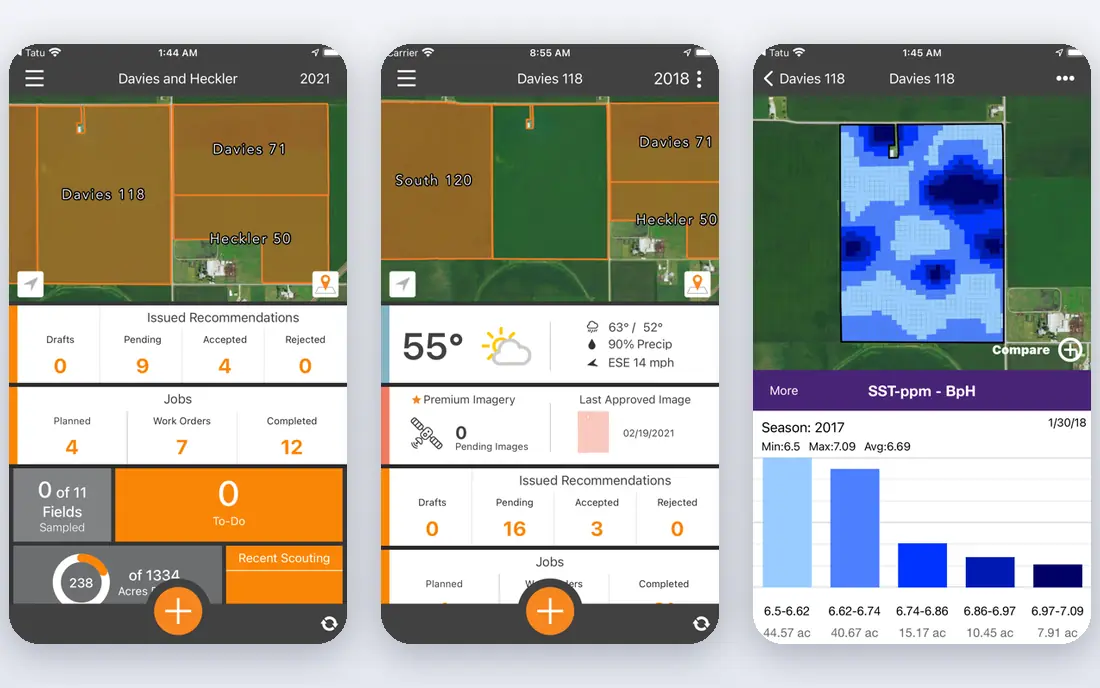
ProEst suits an estimating team that needs one shared place for takeoff, costs and bid-day review. Its cloud design helps when estimators work from the office, home or a job trailer, and it keeps bid documents, costs and reports tied to the same project. For a growing electrical shop, that shared view reduces the risk of two people pricing the same job from different files.
The trade-off is the buying process. Pricing is quoted rather than listed, so a small shop should ask early what is included, how many users are covered and what training costs. Teams that already have a clean cost database will move faster than teams starting from spreadsheets, but either way, plan time to test it on a real past bid before switching.
- Cloud access for the whole team
- Digital takeoff and estimating in one place
- Flexible cost databases and reporting
- Pricing is not published
- Setup can take time for teams moving from spreadsheets
Esticom is a strong fit for a small contractor who wants to start bidding faster without a long install. Its prebuilt libraries for electrical, low-voltage, AV and security work mean less time building assemblies from scratch, and its auto-count and measurement tools help on plans with many repeated devices. The cloud setup also suits a one-person shop or a small crew that does not want server upkeep.
The catch is depth. If you need highly detailed custom reports or unusual labor rules on every line, a larger desktop tool may fit better. For most routine commercial and residential electrical bids, though, Esticom covers the core steps well, and its monthly price is clear enough to budget without a sales call.
- Built for electrical and low-voltage work
- Cloud access from any device
- Prebuilt takeoff types and bid tools
- Reporting is less deep than larger tools
- Customization can feel limited on complex jobs
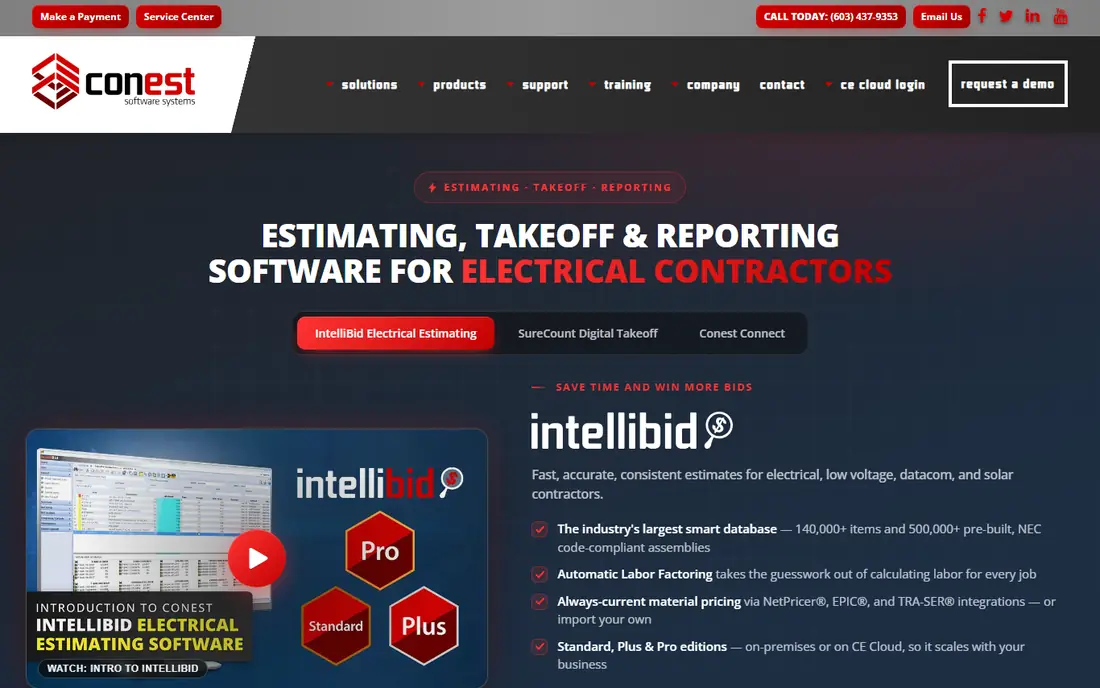
Conest IntelliBid is built for commercial electrical work first, and that focus shows in its database. Estimators get NEC-based items and prebuilt assemblies, plus material price updates through services such as NetPricer, EPIC and TRA-SER. That combination helps on larger jobs where material lists are long and price movement matters.
It is available on-premise or through CE Cloud, which gives larger shops a choice about hosting. The downside is that pricing requires a quote and a demo, so budget planning takes an extra step. New users should also expect training time, since the depth that makes it strong on complex work can feel heavy on a first small bid.
- Large NEC-based item and assembly database
- Material price updates through major services
- On-premise or cloud delivery
- Pricing is not published
- Learning curve for new estimators
STACK works well for an electrical contractor who spends most bid time measuring plans. Its takeoff tools cover linear, area and count measurements, and quantities flow into estimates and proposals without retyping. That link between takeoff and price is where many spreadsheet bids go wrong, so it is a real practical gain.
STACK is a broad preconstruction tool rather than an electrical-only product, so check its item and assembly libraries against the work you bid most. If your jobs are mainly commercial electrical, ask how it handles panels, feeders, devices and fixtures. For teams that value speed and shared plan markup, it is still one of the easier tools to adopt.
- Fast digital takeoff with auto-count
- Estimates and proposals from the same quantities
- Cloud collaboration
- Pricing is not published on the main page
- Electrical-specific libraries need checking against your trade mix
PlanSwift is best viewed as a takeoff-first tool that also handles estimating. Estimators who like to measure plans on screen will find its workflow direct, and its worksheets can be shaped to match how a shop already prices work. That flexibility is useful for electrical contractors who have their own labor factors and material habits.
The limit is that PlanSwift does not hand you a finished electrical database in the same way as an electrical-only tool. You will need to build or import assemblies and keep them current. For a shop with a strong existing database, that is fine. For a new shop, an electrical-specific library may save more time.
- Quick on-screen takeoff
- Flexible estimating worksheets
- Works with many plan formats
- Pricing is quoted
- Electrical database depth depends on your own setup
Trimble AccuBid Anywhere suits larger electrical teams that need several estimators working on the same bid with clear version control. Its graphical takeoff and spec-driven approach help on complex commercial projects, where scope is tied to drawings and specifications rather than a simple count. Being part of the Trimble ecosystem also helps firms that already use other Trimble tools.
For a solo estimator, this is probably more tool than needed, and the quote-only pricing makes it hard to compare at a glance. Larger firms should weigh it against Conest IntelliBid and ProEst on database depth, takeoff speed and total cost across all users, not only the first seat.
- Cloud collaboration and graphical takeoff
- Spec-driven workflows
- Trimble construction ecosystem
- Pricing is not published
- Likely more than a small shop needs
Electrical Bid Manager
Great for: Electrical-only estimating on a budget
Electrical Bid Manager is aimed squarely at electrical contractors, from new shops to larger estimating departments. Its custom takeoff modules cover wire and conduit, feeders, motor hookups, branch circuits, cable, distribution, fixtures and devices, which matches how electrical bids are actually built. The starting price, reported at $800 per year per user, is also easier to budget than quote-only rivals.
The main catch is platform. It is a Windows-based tool, with cloud use through virtual machines, so a Mac-only or fully cloud-based shop should confirm the setup before buying. If your team already works on Windows and wants an electrical-only database without a large subscription, it is a strong value pick.
- Built only for electrical contractors
- Custom takeoff modules for wire, conduit and fixtures
- Lower entry cost
- Windows-based workflow
- Plan takeoff integrations need checking
TurboBid Cloud is pitched at small electrical teams that want to move from spreadsheets without taking on a large system. Its cloud design means no install to manage, and its focus on bidding keeps the workflow short: build the estimate, check the numbers and send a proposal. For a shop bidding smaller commercial and residential jobs, that simplicity can be a benefit, not a gap.
The limit is scale. On large, multi-phase commercial work, a tool with a deeper assembly library and stronger price update links may be safer. TurboBid is best judged on a trial with your own typical job, checking how fast you can build a complete bid and how clean the proposal looks to a general contractor.
- Cloud-based and simple to start
- Designed for small electrical teams
- Bid and proposal tools in one place
- Pricing is not published
- Less depth than large commercial tools
Methvin is the budget option here, and its first-principles approach suits contractors who like to build estimates from labor, material and equipment rather than only from prebuilt assemblies. It supports multi-user work on the same estimate and connects with common tools such as Excel and project apps, which helps a small team that already has a simple workflow.
It is not an electrical-only tool, so electrical contractors should expect more setup for trade-specific items than they would get from Esticom or Conest. If price is the main barrier and your team is comfortable building its own assemblies, Methvin is a practical way to leave spreadsheets behind. If you want a ready electrical library on day one, pay more for a trade tool.
- Low starting price
- First-principles estimating
- Multi-user collaboration
- Less electrical-specific depth than trade tools
- Reporting can feel limited
How we picked these
We compared official feature pages, pricing pages and public reviews, and kept only tools that are still sold and that fit electrical estimating, not general project management alone. We favored tools with electrical libraries, takeoff, material pricing links or bid output, and we left out tools that are only for general contractors or only for takeoff with no estimating. Where a vendor does not publish a price, we wrote See website rather than guessing.
What to check before you buy
Start with your own work, not a feature list. Pull three recent bids: one small, one typical and one large. Run each through your top two tools and time the full job, from plan import to a finished proposal. That test will show library gaps, takeoff speed and report quality far better than a sales demo on a sample project.
Next, check material pricing. Ask which price services are included, how often prices update and whether your main suppliers are covered. A tool with a good library but stale prices can still produce a losing bid. Also ask about labor factors, since electrical labor varies by job type, height, conditions and crew mix, and a tool that forces one rate on every line will distort complex bids.
Finally, check the total cost. Count every estimator, add training, add price service fees and add any per-report or add-on charges. A low monthly price with expensive add-ons can cost more than a higher flat price. Ask about contract length, data export and what happens to your estimates if you cancel, so you are not locked into a tool that no longer fits.
Frequently asked questions
What is the best electrical estimating software for commercial work?
For commercial work, Conest IntelliBid and Trimble AccuBid Anywhere are strong starting points because of their large databases, takeoff tools and price update links. ProEst and STACK are also worth testing if cloud collaboration matters more to your team. The best choice depends on your job mix, so test each one on a real commercial bid.
What is the best estimating software for electrical contractors on a budget?
Electrical Bid Manager and Methvin are the lowest-cost options in this list, with Esticom next for a trade-specific cloud tool. Electrical Bid Manager gives you an electrical-only database at a lower annual price, while Methvin is cheaper but needs more setup. Compare total cost, not only the headline monthly price.
Is there free electrical estimating software?
There is no strong free electrical estimating tool with a full trade library, current material pricing and bid output in this group. Some tools offer free trials, and general spreadsheet templates exist, but they lack price updates and takeoff links. A trial is the safer way to test a tool before paying.
How does electrical estimating software handle material prices?
Most trade tools link to price services or let you import supplier prices, and some update prices on a set schedule. Check which services are included and whether your suppliers are covered, since copper, wire and panel prices move often. Always review the final material list before sending a bid, even with automatic updates.
Do I need takeoff and estimating in the same tool?
It helps, because quantities flow straight into pricing without retyping, which cuts errors. Some estimators still use a separate takeoff tool and import quantities, and that can work if the link is clean. If you bid from plans often, a combined tool usually saves more time than two separate tools.
What is the best electrical bidding software for small teams?
Esticom and TurboBid suit small teams that want a cloud tool with a short learning curve. Electrical Bid Manager suits a small Windows-based team that wants an electrical-only library at a lower price. Test each one on a typical job and check proposal quality, since general contractors judge your bid partly on how clear it looks.
Sources
See where you really rank - block by block
ProMapRanker scans Google Maps across a grid of your service area. Simple monthly plans from $19, white-label on every plan.
Start freeKeep reading
 vimeo alternatives
Best Vimeo Alternatives in 2026
Looking for Vimeo alternatives? We compare 9 video hosting platforms for reach, branded embeds, marketing, sales, live events, and pricing for your team.
Read → sendgrid alternatives
SendGrid Alternatives in 2026
Compare SendGrid alternatives for transactional email, from Resend and Postmark to Mailgun, Amazon SES, Brevo, Mailjet and other email APIs for developers.
Read → midjourney alternatives
Best Midjourney Alternatives in 2026
Looking for Midjourney alternatives? We compare 9 AI image tools for art, photos, text in images, game assets, and commercial use for projects in 2026.
Read →