 ProMapRanker
Best Ecommerce Personalization Platforms in 2026


Enterprise testing and recommendations · Pricing starts at: See website
Key takeaways
- Dynamic Yield and Adobe Target suit large teams that want deep testing plus personalization in one system.
- Nosto and Bloomreach are strong when product discovery, search, and merchandising drive most of the revenue.
- Klaviyo and LimeSpot give smaller stores a faster start, with email and on-site recommendations close together.
- Most enterprise platforms price by quote, so ask for a quote based on traffic, catalog size, and channels before you shortlist.
Quick comparison
| Pick | Great for | Pricing starts at | Free tier | |
|---|---|---|---|---|
| Dynamic Yield | Enterprise testing and recommendations | See website | No | Visit |
 Nosto | Mid-market product discovery | See website | No | Visit |
 Bloomreach | Search-led personalization | See website | No | Visit |
 Optimizely | Experimentation-led personalization | See website | No | Visit |
 Adobe Target | Adobe shops and large-scale testing | See website | No | Visit |
 Insider | Cross-channel journeys | See website | No | Visit |
 Klaviyo | Email and SMS personalization | Free | Yes | Visit |
 LimeSpot | Small Shopify recommendations | $50 per month | No | Visit |
The best ecommerce personalization platforms
We compared platforms on recommendation quality, search and merchandising, testing, channel coverage, and how clear the pricing is for a growing store.
Dynamic Yield, now part of Mastercard, is built for retailers that want one system for recommendations, tailored content, and experimentation. It can change product lists, banners, and offers based on behavior, segment, and context, then test those changes against a control group. That mix matters for large catalogs, where small changes in ranking can shift revenue across many product pages.
The catch is effort and cost. Pricing is by quote, and the platform rewards teams that can plan tests, read results, and keep campaigns tidy. A small store with a simple catalog may get most of what it needs from a lighter tool, while a large retailer with several channels will use more of what Dynamic Yield offers.
- Strong AI recommendations
- Built-in A/B testing
- Works across web, app, and email
- Quote-based pricing
- Needs technical resources to get full value
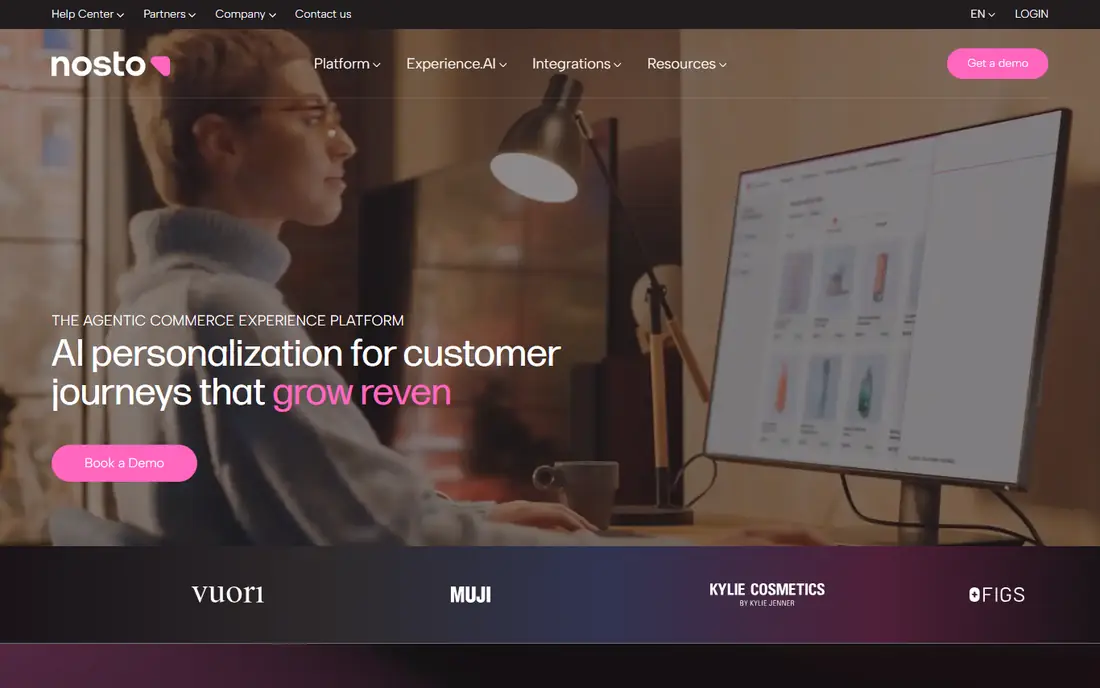
Nosto covers the full shopping path, from search results and category pages to product recommendations and post-purchase offers. Its merchandising tools let teams set rules for ranking and promotion, while personalization adjusts those rules for different shoppers. Dynamic bundles add a practical way to raise order value without building a separate bundle app.
Pricing depends on traffic, order volume, and modules, so two stores can receive different quotes for the same core product. Ask which modules are included in the quote, and check how Nosto connects with your store platform, email tool, and analytics before you sign.
- Personalized search and merchandising
- Dynamic bundles
- Post-purchase offers
- Pricing is not published
- Some features depend on the plan and integration
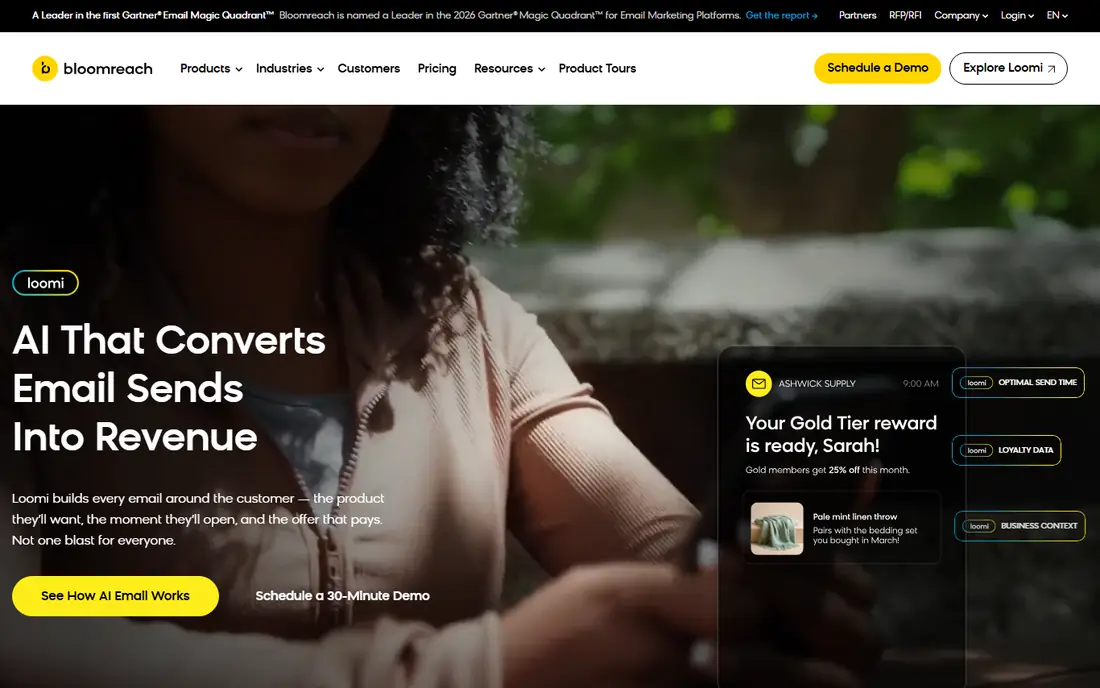
Bloomreach pairs search and product discovery with merchandising and customer data, so a shopper who searches for a vague term can still see relevant products. Its AI search is designed to understand natural language and synonyms, which helps when product titles do not match the words shoppers type. Merchandising rules then let teams promote margin, stock, or seasonal lines inside those results.
The platform is aimed at larger brands, and pricing is not published. That makes sense for a system that touches search, content, and data, but it also means a smaller store should confirm the total cost, including any data or support fees, before comparing it with a simpler recommendation tool.
- Strong AI search and discovery
- Merchandising controls
- Customer data tools
- Enterprise pricing
- Setup can be a project for large catalogs
Optimizely is best known for experimentation, and that strength carries into personalization. Teams can target content and offers by audience, run tests, and roll out the winning version without rebuilding pages. For stores that already test headlines, layouts, and promotions, adding personalization to the same workflow keeps results in one place.
The main question is which Optimizely products you need. Web experimentation, content management, and commerce features are sold in related but distinct bundles, so a quote for one bundle may not cover the full personalization setup you pictured. Get the bundle list in writing, and confirm how it connects with your store platform.
- Strong experimentation tools
- Audience targeting
- Content and commerce options
- Quote-based pricing
- Personalization depth varies by product bundle
Adobe Target is a strong pick for large teams that already use Adobe Analytics or Adobe Experience Platform. It supports A/B testing, multivariate testing, and automated personalization, where the system picks the best experience for each visitor based on past behavior. That automation can help when traffic is high and manual rules would be hard to maintain.
Outside the Adobe stack, the case is weaker. Implementation and licensing can be heavy for a mid-size store, and some of the value comes from shared Adobe data and identity tools. If your team does not already use Adobe products, compare the total setup time with a standalone personalization platform.
- Automated personalization
- Strong A/B and multivariate testing
- Adobe integrations
- Enterprise pricing
- Best value inside the wider Adobe stack
Insider, often sold as Insider One, is built for brands that want personalization to follow the shopper across channels. A web visit, an abandoned cart, and a later message can sit in one journey, with segments updated as behavior changes. That helps stores where email, SMS, and app messages matter as much as the website itself.
Breadth is also the trade-off. A team that only needs on-site recommendations may find the wider journey and data tools more than it wants to manage at launch. Start with one or two high-value journeys, such as cart recovery and post-purchase offers, and add channels once those are working well.
- Journeys across web, app, email, and messaging
- Customer data platform
- Predictive segments
- Quote-based pricing
- Broad scope can slow a simple rollout
Klaviyo is the most practical starting point for stores that earn a large share of revenue from email and SMS. It builds segments from purchase history, browsing, and predicted behavior, then sends tailored flows for welcome, cart recovery, and post-purchase messages. Send-time and content choices can adapt per subscriber rather than staying fixed for the whole list.
The limit is scope. Klaviyo personalizes messages very well, but it is not a full on-site search and merchandising platform. Many stores pair it with a recommendation or search tool, using Klaviyo for retention and the second tool for discovery. That pairing is common, so budget for both if you need both jobs done well.
- Free plan to start
- Predictive segments
- Strong Shopify and WooCommerce links
- Best for email and SMS first
- On-site personalization is narrower than specialist tools
LimeSpot is aimed at small to mid-size Shopify stores that want product recommendations without an enterprise sales process. It places recommendation boxes on product pages, carts, and other key spots, and it can extend recommendations into email and SMS. The published entry price makes it easier to judge than quote-only platforms.
It will not replace a full search, merchandising, and journey platform. Stores with large catalogs, complex merchandising rules, or many channels may outgrow it. For a Shopify store that needs better recommendations first, and wants to test the return before buying a larger system, LimeSpot is a sensible first step.
- Clear entry price
- On-site recommendations
- Email and SMS widgets
- Narrower than enterprise platforms
- Mainly a Shopify-focused tool
How we picked these
We compared official feature pages, pricing pages, and app store and integration listings for each platform, and we favored tools that clearly cover ecommerce personalization rather than generic website testing alone. We looked for recommendation engines, personalized search or merchandising, audience targeting, testing, and channel coverage, plus honest notes on pricing transparency. Where pricing was not published, we wrote See website rather than repeating a third-party estimate as fact.
What to check before you buy
Start with the problem that costs the most revenue. If shoppers cannot find products, put search and merchandising first. If carts are abandoned, put email and on-site cart recommendations first. If repeat purchase is weak, put segments and post-purchase flows first. A platform that solves the top problem well beats a broader platform that does all three poorly.
Check data and integration needs
Personalization is only as good as the data feeding it. Confirm how the tool reads your catalog, stock, prices, orders, and customer events, and how often that data updates. A recommendation that shows out-of-stock products, or an old price, will hurt trust fast. Ask for a list of native integrations for your store platform, email tool, and analytics, and check if custom work is needed.
Check testing and measurement
Ask how the platform proves a lift. Look for control groups, clear revenue reporting, and a way to separate personalization results from sales, discounts, and seasonality. If a vendor reports only clicks or views, ask for order and revenue views by segment. Set one primary metric for the first test, such as revenue per visitor or conversion rate, and keep the test running long enough to reach a stable result.
Check cost at your traffic level
Quote-based pricing often changes with traffic, catalog size, and channels, so a low first quote can grow as the store grows. Ask what happens when you cross a traffic or order threshold, and if overage fees apply. For smaller stores, a published price and a monthly plan can be a real advantage, even if the feature list is shorter.
Frequently asked questions
What is the best ecommerce personalization software for a small store?
Start with a tool that fits your store platform and your main channel. Klaviyo is a strong pick for email and SMS, while LimeSpot suits Shopify stores that need on-site recommendations first. Move to Nosto or a larger platform once traffic and catalog size make search and merchandising a bigger revenue driver.
What is the best ecommerce personalization tool for product recommendations?
Dynamic Yield, Nosto, and Bloomreach all cover recommendations well, but they differ in focus. Dynamic Yield leans on testing, Nosto leans on discovery and merchandising, and Bloomreach leans on search. Pick based on where shoppers most often find products on your site.
Do these platforms work with Shopify?
Most of the tools here integrate with Shopify, including Klaviyo, LimeSpot, Nosto, and Dynamic Yield. Check the integration page for your exact setup, since some features may need a specific plan, app, or data feed. Confirm stock and price syncing before launch.
How much does ecommerce personalization software cost?
Costs range from a free Klaviyo plan and LimeSpot from $50 per month to quote-based enterprise contracts for Dynamic Yield, Nosto, Bloomreach, Optimizely, Adobe Target, and Insider. Ask for pricing tied to your traffic and catalog, and confirm overage and support fees.
Is personalization only about product recommendations?
No. Recommendations are one part, alongside personalized search, category merchandising, tailored banners and offers, email and SMS segments, and post-purchase flows. The best setup matches each tactic to a stage of the shopping path, rather than showing the same recommendation block on every page.
Can I test personalization before buying an enterprise platform?
Yes, in most cases. Ask for a trial, a pilot on one part of the site, or a phased rollout with a control group. Measure revenue per visitor and conversion rate for the test group, and keep the pilot scope small enough that your team can read the results clearly.
Sources
See where you really rank - block by block
ProMapRanker scans Google Maps across a grid of your service area. Simple monthly plans from $19, white-label on every plan.
Start freeKeep reading
 best tour operator software
Best Tour Operator Software in 2026
Compare the best tour operator software for bookings, channel management, waivers and payments, with pricing models for day tours and multi-day trips.
Read → best time clock app for small business
Best Time Clock App for Small Business in 2026
We compare the best time clock app for small business options, with free plans, GPS clock ins, scheduling and payroll links for hourly teams and payroll help.
Read → best test automation tools
Best Test Automation Tools in 2026
Compare the best test automation tools, from Playwright and Selenium to Cypress, Katalon and BrowserStack, with prices, languages and best uses explained.
Read →