 ProMapRanker
Best Disclosure Management Software in 2026

Key takeaways
- Workiva is the broadest pick for public companies that also report on audit, ESG, and board work.
- DFIN ActiveDisclosure suits finance teams that want Excel-based SEC reporting with strong support.
- Most disclosure platforms are quote only, so expect demos and custom pricing, not public price lists.
- Arelle is the only free option here, but it validates XBRL filings rather than replacing a full filing platform.
- Software helps prepare and check disclosures, but it does not make a filing compliant on its own.
Quick comparison
| Pick | Great for | Pricing starts at | Free tier | |
|---|---|---|---|---|
 Workiva | Public companies unifying reporting | See website | No | Visit |
 DFIN ActiveDisclosure | Excel-based SEC reporting | See website | No | Visit |
 Certent Disclosure Management | SEC and proxy reporting tied to equity data | See website | No | Visit |
 Toppan Merrill Bridge | Managed filing plus software | See website | No | Visit |
 RDG Filings | Software plus full-service filing help | See website | No | Visit |
 IRIS CARBON | AI-assisted disclosure across regulators | See website | No | Visit |
 Ez-XBRL | AI-assisted iXBRL tagging | See website | No | Visit |
 Arelle | Free XBRL validation | Free | Yes | Visit |
The best disclosure management software
Disclosure management software helps public companies draft, link, tag, review, and file regulatory disclosures, such as annual and quarterly reports, with consistent numbers and a clear audit trail. The eight tools below cover that job in different ways, from full cloud platforms to a free validation engine. We focused on tools that handle SEC-style disclosure work, including XBRL tagging, rather than general document editors.
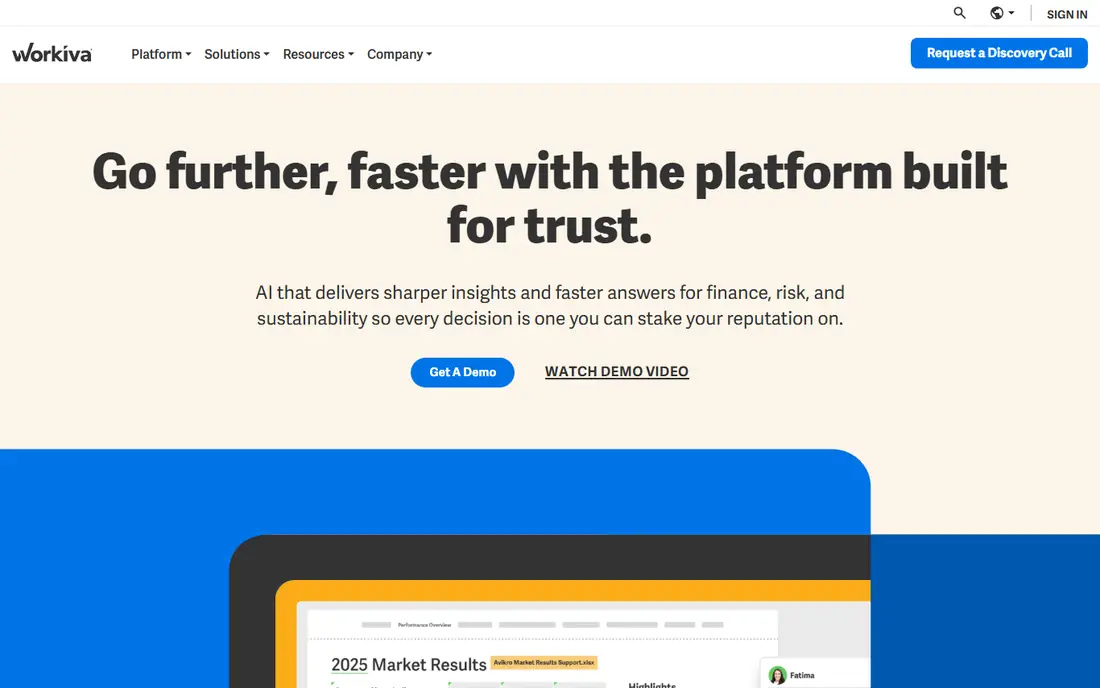
Workiva is the broadest pick in this list. Its cloud platform links data from source systems into reports, so a number changed in one place updates everywhere it appears, which cuts the copy-and-paste errors that plague filing season. Teams can draft SEC reports, ESG reports, and audit work in one place, with version control, comments, and permissions that show who changed what and when.
The honest catch is price and scope. Workiva sells through demos and custom quotes, and smaller filers often find it expensive for SEC work alone. It fits best when a public company wants one reporting home across finance, audit, and sustainability, not just one filing tool. Start with SEC reporting, prove the linked-data model on one filing, then expand to other reports in later cycles.
- One platform for SEC, ESG, audit, and board reporting
- Live data links keep numbers consistent
- Strong collaboration and audit trails
- Pricing is quote only and can be high for smaller filers
- Breadth needs a planned rollout
- Some teams use only part of the platform
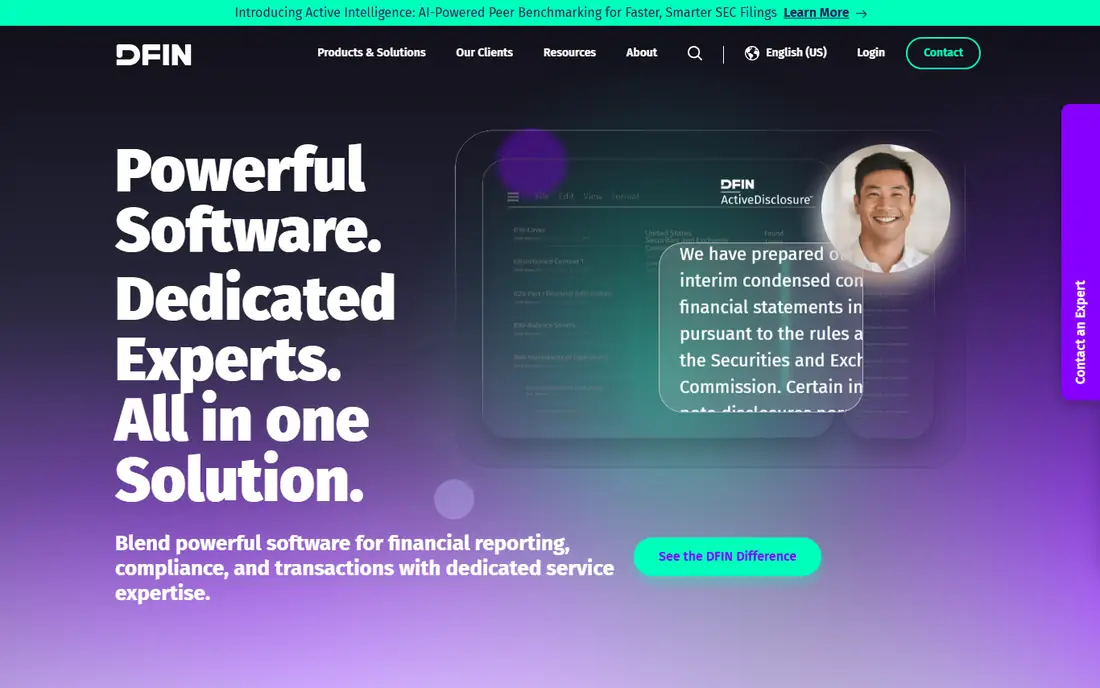
DFIN ActiveDisclosure suits finance teams that live in Excel. Drafting stays in a familiar spreadsheet environment, while the platform handles linked data, XBRL tagging, validation, and EDGAR filing. That familiarity shortens training for finance staff, and public reviews often cite its support quality and value for SEC filings compared with larger suites.
The trade-off is breadth. ActiveDisclosure is strongest for SEC reporting, and firms that want a single home for ESG, audit, and board reporting may need other DFIN products alongside it. It fits best for mid-sized filers and finance-led teams that want a focused, well-supported SEC tool. Test tagging and last-minute number changes in a demo, because those two flows decide filing week stress.
- Familiar Excel-based drafting
- Strong XBRL tagging and EDGAR filing support
- Reviewers praise support and value for SEC work
- Pricing is quote only
- Excel model may suit finance teams more than legal teams
- Broader ESG work needs other DFIN tools
Certent Disclosure Management
Great for: SEC and proxy reporting tied to equity data
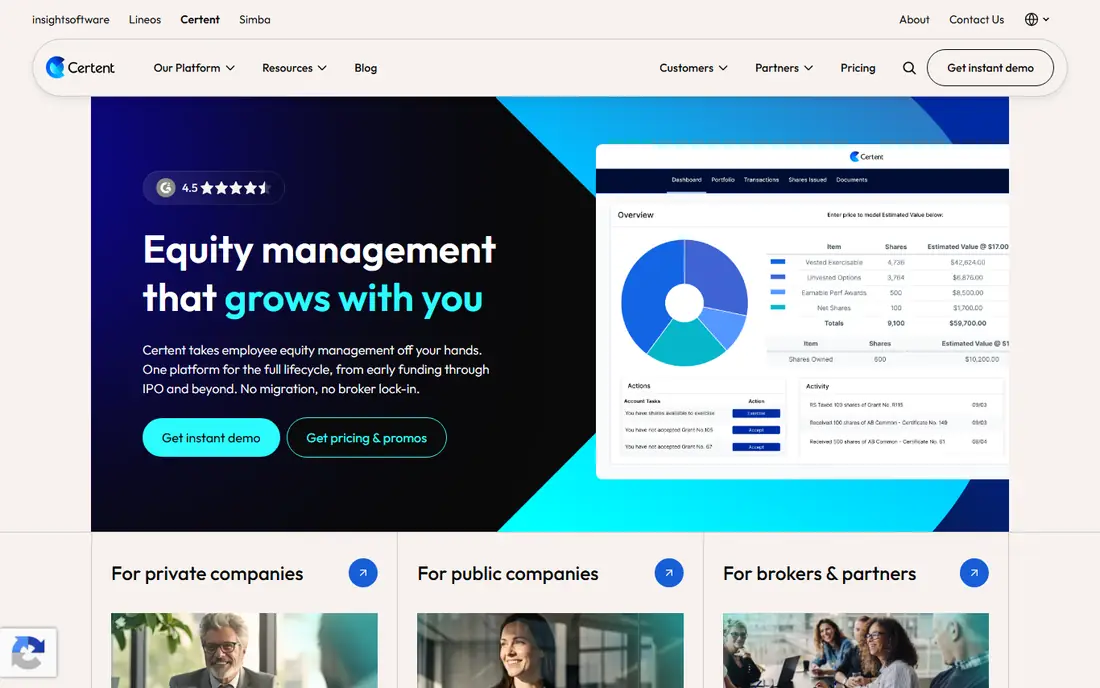
Certent Disclosure Management, from Insightsoftware, covers SEC reporting, proxy statements, and XBRL tagging, with a useful link to equity and compensation data. For firms with stock plans, that link matters: equity figures in disclosures can draw on the same source as plan administration, which reduces manual reconciliation. The platform also supports IFRS taxonomies for firms with global reporting needs.
The catch is fit and price. Pricing is negotiated, and firms without complex equity plans will get less value from that link than firms with them. Certent fits best when disclosure, equity, and proxy work share owners and data. Bring a proxy cycle and an annual report to the demo, and check how equity numbers flow into both before you decide.
- Links disclosure work to equity and compensation data
- Covers SEC, proxy, and XBRL reporting
- Part of the Insightsoftware group
- Pricing is negotiated and quote only
- Equity link matters less for firms without complex plans
- Rollout needs finance and legal alignment
Toppan Merrill Bridge pairs disclosure software with the managed filing services of a long-standing financial printer and filing agent. That combination suits firms that want software for drafting and review, plus human help for submission, formatting, and last-minute filing support. Bridge supports US GAAP filings and IFRS or ESEF filings, which helps firms with global reporting duties.
The trade-off is model. Firms that want pure self-service software may find a managed service heavier than they need, and pricing depends on scope, so a clear service agreement matters. Bridge fits best for firms that value a filing partner alongside the tool, especially around complex or first-time filings. Agree in writing what the service covers, and what stays with your internal team.
- Combines software with managed filing services
- Supports US GAAP and IFRS or ESEF reporting
- Deep capital markets experience
- Pricing is quote only
- Managed service model suits some teams more than pure software buyers
- Scope needs clear agreement
RDG Filings pairs its ThunderDome software with a full-service filing team, which suits companies that want people handling submission, tagging review, and EDGAR work alongside the tool. That human layer helps smaller finance teams, where one person often owns the whole filing, and where filing week has little slack for tool problems. Flat-rate pricing is advertised, though your exact total still depends on filing mix.
The honest limit is scale and comparison. RDG is smaller than Workiva or DFIN, so larger firms with many entities and global reports should test breadth carefully. It fits best for small and mid-sized filers that want software plus a filing partner. Ask for a written scope and price for your full annual filing calendar, not just one form, before you commit.
- ThunderDome software plus a full-service filing team
- Flat-rate pricing advertised
- Good fit for teams that want humans handling submission
- Pricing details need a quote for your filing mix
- Smaller vendor than Workiva or DFIN
- Service scope varies by engagement
IRIS CARBON is an AI-assisted disclosure platform from IRIS Business Services, covering SEC filings and reporting for global regulators. Its pitch is speed: AI help with drafting, tagging, and review, plus templates and validation across jurisdictions. A list price has appeared on its own site, which gives buyers a budgeting starting point that most rivals do not publish, though your final quote will still depend on scope.
The catch is review discipline. AI-assisted drafting still needs human review, especially for numbers, risk language, and forward-looking statements, and global breadth matters less for a US-only filer. IRIS CARBON fits best for firms with multi-regulator reporting or heavy tagging volume. Test its tagging output on your own prior filing, and check every AI-suggested change before it reaches a draft.
- AI-assisted drafting and tagging
- Covers SEC and global regulators
- Published list price gives a starting point for budgeting
- Global breadth may exceed a US-only filer needs
- Pricing and scope need a demo to confirm
- Newer AI features need careful review
Ez-XBRL, from Integix, focuses on AI-assisted Inline XBRL tagging for SEC filings. That narrow focus suits firms that already draft reports in Word or Excel and need tagging handled cleanly, without buying a full disclosure suite. Tagging, validation, and review tools are the core, and the team can support filers that do not want to rebuild their whole reporting process.
The trade-off is scope. Ez-XBRL will not replace a collaborative drafting platform with linked data and audit trails across a full report, so firms that need that breadth should look at Workiva or DFIN instead. It fits best as a tagging specialist alongside an existing drafting process. Run a prior filing through it, check tag accuracy and validation errors, and confirm turnaround times for filing week.
- Focused iXBRL tagging with AI help
- Suits firms that draft elsewhere and need tagging done well
- Lighter scope than full suites
- Pricing is quote only
- Not a full drafting and collaboration platform
- Tagging quality still needs human review
Arelle is the only free tool in this list, and it plays a different role from the rest. It is an open-source XBRL processor that validates filings against SEC EDGAR rules, checks calculations and taxonomy use, and flags errors before submission. Many filers and filing agents use it as an independent second check, even when they draft in another platform.
The honest limit is scope. Arelle will not draft your report, manage collaboration, or file it for you, and running it well needs some technical comfort. It fits best as a free validation layer for any filer, and as a primary tool only for technical teams with a simple filing process. Keep it in your toolkit regardless of which platform you choose, because a free independent check before filing week is worth having.
- Free and open source
- Validates XBRL filings against SEC EDGAR rules
- Useful as an independent check before filing
- Validation engine only, not a drafting platform
- Needs technical skill to run well
- No vendor support contract by default
How we picked these
We compared official product pages, pricing pages, and public reviews for disclosure tools that exist and work today, and we kept only tools that handle SEC-style disclosure, XBRL tagging, or filing validation. We favoured a mix of full platforms, managed filing options, a tagging specialist, and a free validator, so firms of different sizes have useful choices. Where pricing was quote only, we wrote See website rather than guessing. We did not claim hands-on testing, and we compared public pages, pricing, and documented features.
What to check before you buy disclosure software
Start with a prior filing, not a sales demo. Load your last annual report into each shortlisted tool, change one key number, and watch how many places update, how tagging responds, and how the audit trail records the change. That single test reveals more than any feature list, because filing week pain comes from broken links, late changes, and unclear ownership, not from missing buttons.
Next, settle roles, review, and filing support. Agree who drafts, who reviews numbers, who approves language, and who submits, and test permissions for each role. Check validation against EDGAR rules, turnaround help during filing week, and what happens when a filing needs a last-minute amendment. Also confirm data security and access controls, because draft disclosures are sensitive before release.
Finally, get a written price for your full filing calendar, covering forms, entities, users, tagging, and support. Quote-only pricing can hide filing-volume costs, so list every form you file in a year and ask for the total. This is general information only, not legal or accounting advice, and software alone does not make a filing compliant. Your legal, finance, and audit advisers should review disclosures before submission.
Frequently asked questions
What is the best disclosure management software?
Workiva is the best disclosure management software for most large public companies, thanks to linked data and coverage across SEC, ESG, and audit reporting. DFIN ActiveDisclosure suits finance teams that prefer Excel-based SEC work, while Certent suits firms tying disclosure to equity data. The best choice depends on filing volume, team size, and reporting breadth.
How much does disclosure management software cost?
Most disclosure platforms are quote only, so public prices are rare and totals vary with filing volume, entities, users, and support. Budget for a demo and a written quote for your full annual filing calendar, not just one form. Arelle is free for validation, but it does not replace a full drafting and filing platform.
What is XBRL tagging, and why does it matter?
XBRL tagging marks numbers and facts in a filing with standard tags, so regulators and investors can read and compare them by machine. Inline XBRL embeds those tags in the readable report. Errors in tagging can delay a filing or confuse readers, so validation and review matter as much as drafting.
Can small public companies use disclosure software?
Yes, but scope matters. Small filers often do better with a focused tool such as DFIN ActiveDisclosure or RDG Filings, plus Arelle as a free validation check, rather than a broad suite built for large firms. Keep the rollout tight, price the full filing calendar, and add broader reporting only when the team has capacity.
Does disclosure software guarantee a compliant filing?
No. Software helps draft, link, tag, validate, and file disclosures, and it can cut errors and improve audit trails, but compliance depends on accurate data, correct legal language, and proper review. Legal, finance, and audit teams should review every filing before submission, and advisers should confirm duties for your situation.
Sources
See where you really rank - block by block
ProMapRanker scans Google Maps across a grid of your service area. Simple monthly plans from $19, white-label on every plan.
Start freeKeep reading
 who has best internet service
Who Has the Best Internet Service in 2026
Who has best internet service for US homes? We compare fiber, cable, fixed wireless and satellite providers on speed, price, availability and terms today.
Read → which survey tool has the best analytics
Which Survey Tool Has the Best Analytics in 2026
Find which survey tool has the best analytics in 2026, comparing Qualtrics, SurveyMonkey, Typeform, Alchemer, and more on reports, text, and stats today.
Read → which streaming service has the best movies
Which Streaming Service Has the Best Movies in 2026
Answering which streaming service has the best movies, with Netflix, Max, Criterion and more compared on libraries, prices and free options in this guide.
Read →