 ProMapRanker
Best CRM Software for Ecommerce Brands in 2026

Value-first teams that want full CRM features cheaply · Pricing starts at: $14 per user/month (billed yearly) for Standard
Direct answer
For value-first teams that want full CRM features cheaply, Zoho CRM is where this list starts. Listed starting prices: Zoho CRM from $14 per user/month for Standard, Pipedrive from $14 per user/month for Essential and Freshsales from $9 per user/month for Growth. If your case is different, Pipedrive suits sales-first teams that live in the pipeline and Freshsales suits small sales teams that want phone, email and chat built in. The full list of 7 tools follows, with prices and free plan facts.
Short on time? The summary and table above give the quick view of 7 CRM software for ecommerce brands, and the profiles that follow give the detail behind each entry.
Key takeaways
- Zoho CRM takes the first slot, best suited to value-first teams that want full CRM features cheaply.
- Freshsales is the lowest-priced starter here at $9 per user/month.
- Capsule suits small teams that want the simplest good CRM.
- What to know about Pipedrive first: no permanent free plan.
- A free plan is available from 4 of the 7 tools: Zoho CRM, Freshsales, HubSpot, Capsule.
Quick comparison
| Pick | Great for | Pricing starts at | Free tier | |
|---|---|---|---|---|
| Zoho CRM | Value-first teams that want full CRM features cheaply | $14 per user/month (billed yearly) for Standard | Yes | Visit |
 Pipedrive | Sales-first teams that live in the pipeline | $14 per user/month (billed yearly) for Essential | Free trial (14 days) | Visit |
 Freshsales | Small sales teams that want phone, email and chat built in | $9 per user/month (billed annually) for Growth | Yes | Visit |
 Salesforce | Bigger brands that require deep customisation | $25 per user/month for Starter Suite | Free trial (30 days) | Visit |
 Copper | Teams that run their entire practice in Gmail | $23 per user/month (billed yearly) for Basic | Free trial (14 days) | Visit |
 HubSpot | Brands that want a free CRM with room to grow | $20 per seat/month (billed yearly) for Starter | Yes | Visit |
 Capsule | Small teams that want the simplest decent CRM | $18 per user/month (billed annually) for Starter | Yes | Visit |
Every option for CRM software for ecommerce brands explained
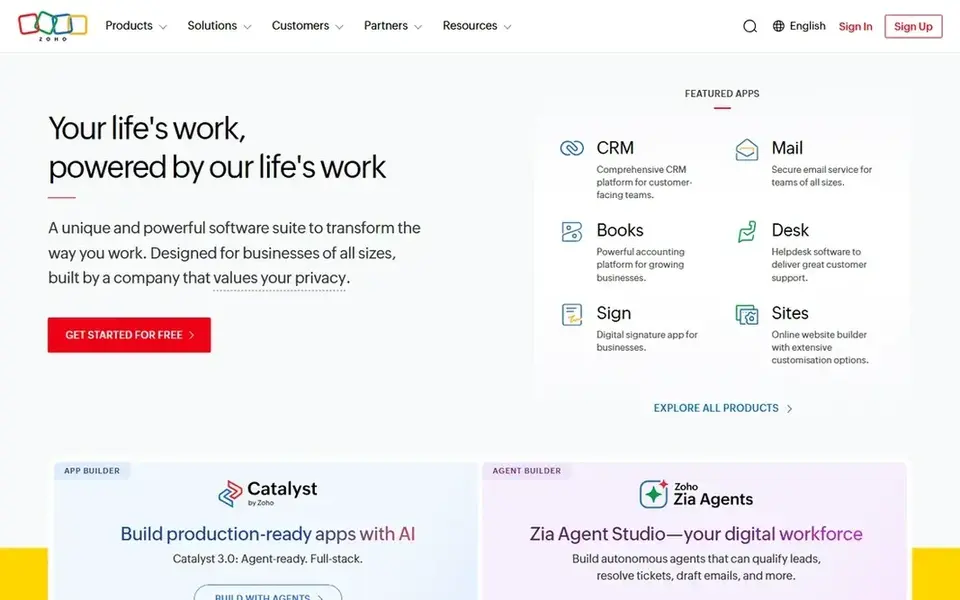
Pick Zoho CRM if this describes you: value-first teams that want full CRM features cheaply. Zoho also sells a broad family of connected apps, from email and finance to support, under one login. For everyday use, Zoho CRM is free for up to 3 users, and Standard costs $14 a user per month on annual billing, or $20 month to month.
On top of that, professional costs $23 a user per month, Enterprise $40 and Ultimate $52. The Zia AI assistant arrives on the higher levels. From a buyer's view, standard layers on email integration, mass email, built-in calling, up to 5 pipelines, sales forecasting, custom modules and storage for 100,000 records. What you pay to start with Zoho CRM: $14 per user/month. Zoho CRM has a free plan.
Downsides: AI assistant needs the Enterprise level.
- Broad Zoho app ecosystem
- Free for up to 3 users
- Interface feels dated next to newer CRMs
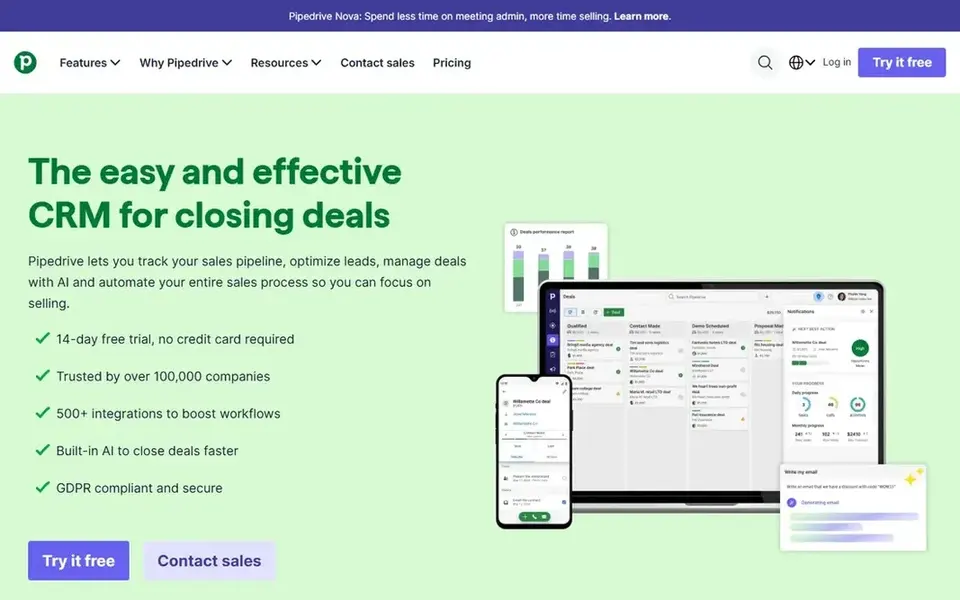
Choose Pipedrive for sales-first teams that live in the pipeline. Advanced costs $29, Professional $49, Power $64 and Enterprise $99, and the Nova AI assistant arrives from Advanced. On top of that, the limits are real: Essential has one-way email sync only, no revenue forecasting and no email sequences, and handy extras for example LeadBooster and Smart Docs are add-ons at about $32.50 a month each.
Limits to weigh: automation and forecasting need higher levels.
Pick Pipedrive if your team is sales-first and wants the clearest pipeline, not the broadest system. Reps adopt it fast since the board presents exactly what to do next. Entry price for Pipedrive: $14 per user/month. Free access: Free trial (14 days).
- Quick setup
- Cleanest visual pipeline in the category
- No permanent free plan
Freshsales
Great for: Small sales teams that want phone, email and chat built in
Freshsales works best for small sales teams that want phone, email and chat built in. Pro costs $39 a user per month and Enterprise $59, and a 21-day free trial handles the full feature set.
Limits to weigh: sequences and lead scoring need Pro at $39.
Beyond that, growth permits only one pipeline, and sales sequences, lead scoring, several pipelines and Freddy AI insights all sit on Pro. So a team that outgrows the basics faces a jump from $9 to $39 a user. On cost, Freshsales starts like this: $9 per user/month. Freshsales offers a free plan.
- Cheapest entry in this list
- Email and chat
- Freddy AI insights need Pro
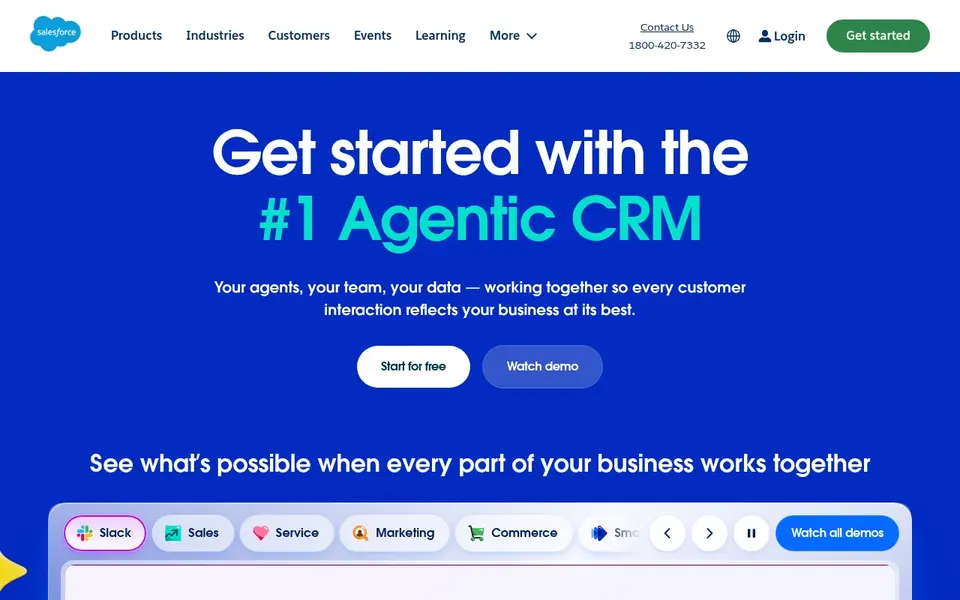
Where Salesforce fits: bigger brands that require deep customisation. Higher levels add forecasting, workflow automation, territory management and deeper reporting. The AppExchange marketplace links Salesforce to Shopify and hundreds of other tools.
Trade-offs to know: costs rise quick with extras and higher levels.
For everyday use, pick Salesforce if your brand is scaling past 10 sellers and needs a CRM that can be shaped to any process. The trade-off is effort: Salesforce takes longer to set up than HubSpot or Pipedrive, and numerous teams bring in an admin or a consultant to shape it. Salesforce pricing: $25 per user/month for Starter Suite. Free access: Free trial (30 days).
- Solid reporting and forecasting
- Large AppExchange marketplace
- Setup takes longer than more straightforward CRMs
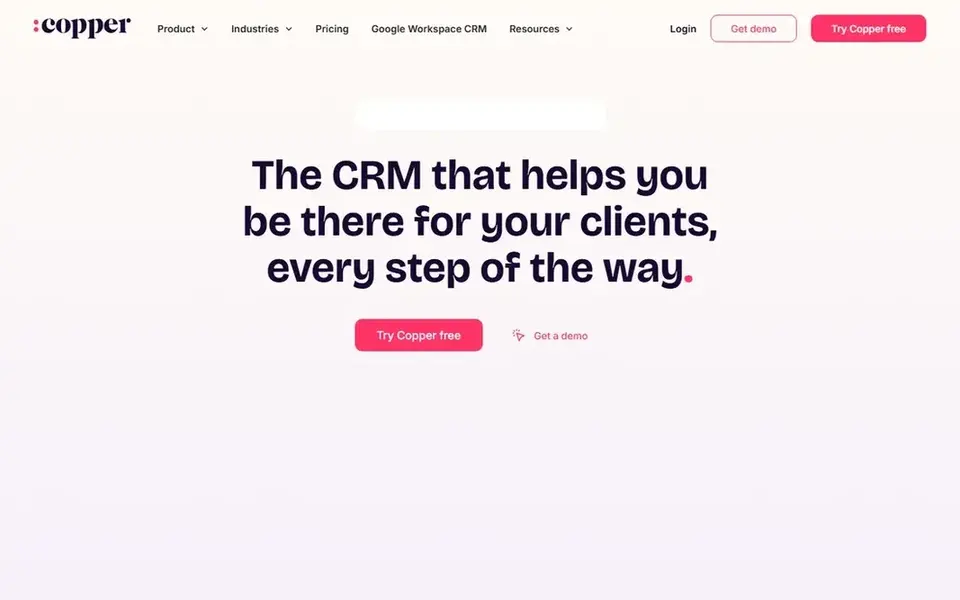
Copper makes the most sense for teams that run their entire practice in Gmail. The Basic cap of 2,500 contacts is low for any business with history, and workflow automation and bulk email start on Professional, so most teams budget for the higher level. In practice, entry-level costs $23 a user per month on annual billing, or $29 month to month, with 2,500 contacts and 25 custom fields.
Watch-outs: real automation opens at Professional for $59.
More specifically, Copper is the CRM for teams that live in Gmail. In practice, professional costs $59 a user per month and Business $99, and the trial runs 14 days with no card required. What you pay to start with Copper: $23 per user/month. As for free access: Free trial (14 days).
- Automatic contact and email capture
- Lives inside Gmail and Google Calendar
- No permanent free plan
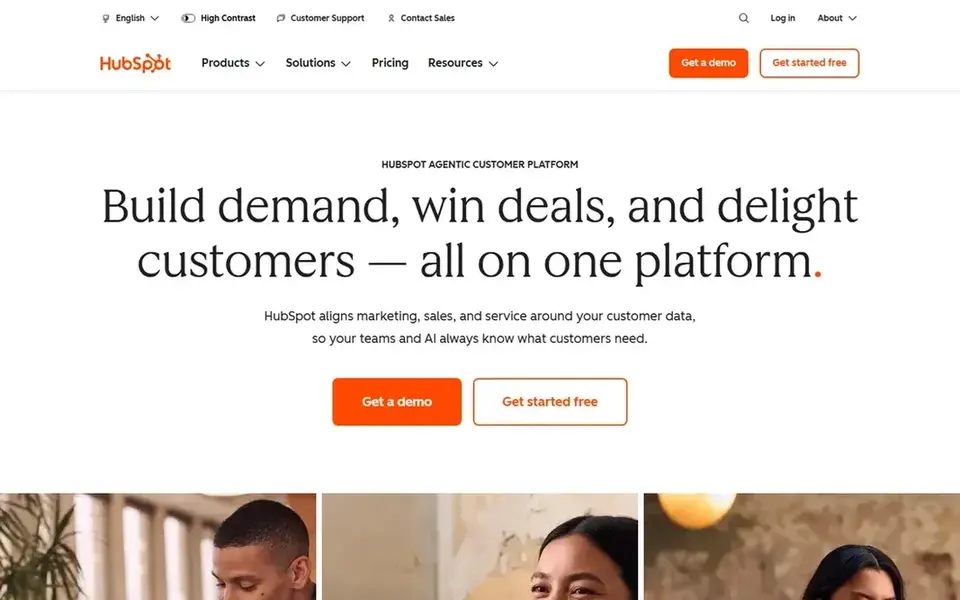
HubSpot is a good fit for brands that want a free CRM with room to grow. HubSpot's free CRM spans 2 users and 1,000 contacts, with contact management, deal tracking, live chat and forms included at no cost. More specifically, starter lists at $20 a seat per month on annual billing, and eligible new customers see a limited-time offer of $7 a seat per month on the same billing.
Where it is weaker: mandatory onboarding fees on Professional.
More specifically, the price cliff arrives at Professional, where Sales Hub seats cost $90 per month on annual billing and onboarding is mandatory, at $1,500 to $3,000 based on the hub. For everyday use, the Shopify integration syncs orders, products and abandoned carts into the CRM, so marketing and sales see the same customer record. As for the details, a small brand can run on Free or Starter for a long time before that matters. What you pay to start with HubSpot: $20 per seat/month. HubSpot includes a free tier.
- Huge app marketplace
- Free CRM for 2 users
- Professional levels jump to $90 a seat
Capsule serves small teams that want the simplest decent CRM. Capsule is a contacts, pipeline and tasks CRM that a small team can set up in an afternoon. As for the details, growth costs $36 and layers on workflow automation, email sync and five pipelines.
Honest limits: email sequences need a separate add-on.
From a buyer's view, pick Capsule if you want the simplest CRM that still tracks contacts, deals and follow-ups properly. In practice, starter costs $18 a user per month on annual billing, or $22 month to month, and raises the limit to 30,000 contacts whereas adding email templates, a shared mailbox, entry-level reporting, premium integrations for example Xero and the AI pipeline generator. More specifically, Capsule stays simple on purpose, so a team that needs deep reporting, forecasting or email sequences will outgrow it. Beyond that, the free plan permits 2 users, 250 contacts and one sales pipeline. What you pay to start with Capsule: $18 per user/month. Capsule includes a free tier.
- Free for up to 2 users
- Straightforward setup in an afternoon
- Workflow automation starts on Growth for $36
A closer look at CRM software for ecommerce brands
Check the free plan user caps, since HubSpot spans 2 users, Zoho handles 3 and Capsule includes 2. Beyond that, check which features sit on higher levels, notably automation, forecasting and email sequences, and check whether the Shopify connection is native or a marketplace app.
How we built this list
For each of the 7 tools we noted price, free plan or trial, fit for CRM software for ecommerce brands and the main limit, using vendor pages and documentation. Figures are shown as the vendors publish them. Billing terms, seat minimums and add-ons can change the real cost. Position on the page reflects fit for a typical buyer first, with price clarity and free access breaking ties. Treat it as a guide, not a ruling.
What to check before you buy
- Check the vendor page for the current price: Freshsales starts at $9 per user/month here, and seats or billing terms can move it.
- Check what the free option really includes: Zoho CRM, Freshsales, HubSpot and Capsule offer a free plan, and usage caps differ.
- Run a trial of Pipedrive, Salesforce and Copper with real work before paying for a year; your own workflow is the best test.
- Read the limits listed for Zoho CRM first: interface feels dated next to newer CRMs.
- Look at the renewal terms for Salesforce: auto-renewal, notice periods and price changes can matter more than the first-year price.
- Verify that exporting from Copper is possible on your plan and covers all your records.
Frequently asked questions
What is the cheapest option for CRM software for ecommerce brands in this list?
On published monthly entry prices, Freshsales is the lowest here at $9 per user/month. Entry price is only part of the cost, because seats, add-ons and billing terms can change the total. Each of the 7 options in this CRM software for ecommerce brands guide has its own card above with the price, free plan and limits.
Is Zoho CRM the right pick for everyone comparing CRM software for ecommerce brands?
No single tool suits every team. Zoho CRM comes first because it fits value-first teams that want full CRM features cheaply, while Pipedrive suits sales-first teams that live in the pipeline and Freshsales suits small sales teams that want phone, email and chat built in. Match the tool to your own size, budget and workflow before deciding.
Can I try these tools before paying?
Often, yes. Zoho CRM, Freshsales, HubSpot and Capsule have a free plan and Pipedrive, Salesforce and Copper offer a free trial. Use your own data and a real task during the test, and check what the free tier or trial limits before you rely on it.
How are the tools for CRM software for ecommerce brands ordered?
Zoho CRM sits first and Capsule last because the order follows typical fit for CRM software for ecommerce brands, then price clarity and free access. It is a judgement call, so read each profile for fit and limits.
What is the best CRM for a small ecommerce brand?
Start with Zoho CRM if you need value-first teams that want full CRM features cheaply. Pipedrive is the better match for sales-first teams that live in the pipeline, and Freshsales for small sales teams that want phone, email and chat built in. The best choice depends on budget, team size and workflow.
What is the difference between a CRM and an email tool?
An email tool sends campaigns and automations to a list. Numerous CRMs bundle email, and plenty of email tools add light contact tracking, but only a CRM keeps the deal pipeline, the conversation history and the order data together.
Sources
See where you really rank - block by block
ProMapRanker scans Google Maps across a grid of your service area. Simple monthly plans from $19, white-label on every plan.
Start freeBrowse all guides
← AI Tools for B2B Marketing in 2026: Top 7 Compared2026 Guide to the Best CRM Software for Wholesale Brands →
 best software for generating leads in gtm
Software for Generating Leads in GTM in 2026: Top 7 Compared
Shortlisting the best software for generating leads in GTM? 7 products compared on cost, free access and ideal buyer. Plus the drawbacks of each tool.
Read → best platforms for integrating pbx with crm
Platforms for Integrating PBX with CRM: Best Picks of 2026
Best platforms for integrating PBX with CRM in 2026: 7 contenders with entry costs and free tiers. Short, factual notes on every option. Updated for 2026.
Read → best outbound tool reviews for gtm automation
Best Outbound Tool Reviews for Gtm Automation in 2026
5 products for the best outbound tool reviews for gtm automation, ranked by fit, with starting costs and free tiers. The weak spots sit next to the strengths.
Read → avalara alternatives
Avalara Alternatives in 2026
Compare trusted avalara alternatives for sales tax calculation, filing and nexus tracking, with pricing notes for small sellers and large enterprises.
Read → best price optimization software
Best Price Optimization Software in 2026
Compare the best price optimization software for retail, B2B and ecommerce, with elasticity, competitor data and honest pricing guidance for buying teams.
Read → best hvac sales software
Which HVAC Sales Software Fits You? 7 Tools Compared
Best HVAC sales software, compared. 7 tools with published prices, free plans and limits. Caveats come with every verdict. Last reviewed November 2026.
Read →More in Sales & CRM · All guides A to Z by date · Latest guides