 ProMapRanker
Best Corporate Credit Card Software in 2026

Key takeaways
- Ramp and Brex lead for startups, with free core plans that combine cards, expenses, and controls.
- Airbase and SAP Concur suit larger firms that need procurement, approval chains, and audit depth.
- Card-first platforms control spend before it happens, while report-first tools process receipts after the fact.
- Always check card eligibility, credit limits, and fees in writing, because free plans depend on qualification.
- Accounting sync matters as much as the card: test the link to your ledger before rollout.
Quick comparison
| Pick | Great for | Pricing starts at | Free tier | |
|---|---|---|---|---|
 Ramp | Startups and growth firms | Free | Yes | Visit |
 Brex | Startups with global spend | Free | Yes | Visit |
 BILL Spend & Expense | Small teams with AP needs | Free | Yes | Visit |
 Airbase by Paylocity | Mid-market procurement control | See website | No | Visit |
 Navan | Travel-heavy companies | Free | Yes | Visit |
 Rho | Startups wanting banking plus cards | Free | Yes | Visit |
 Expensify | Teams keeping existing cards | $5 per member per month | Yes | Visit |
 Pleo | European and UK teams | See website | No | Visit |
The best corporate credit card software
Corporate credit card software issues cards, sets limits, enforces policy before spend happens, and syncs transactions to accounting. The eight platforms below cover that job for different firm sizes, from a funded startup issuing its first cards to a large firm with procurement and audit chains. We focused on platforms that issue or manage corporate cards, not on general expense trackers alone.
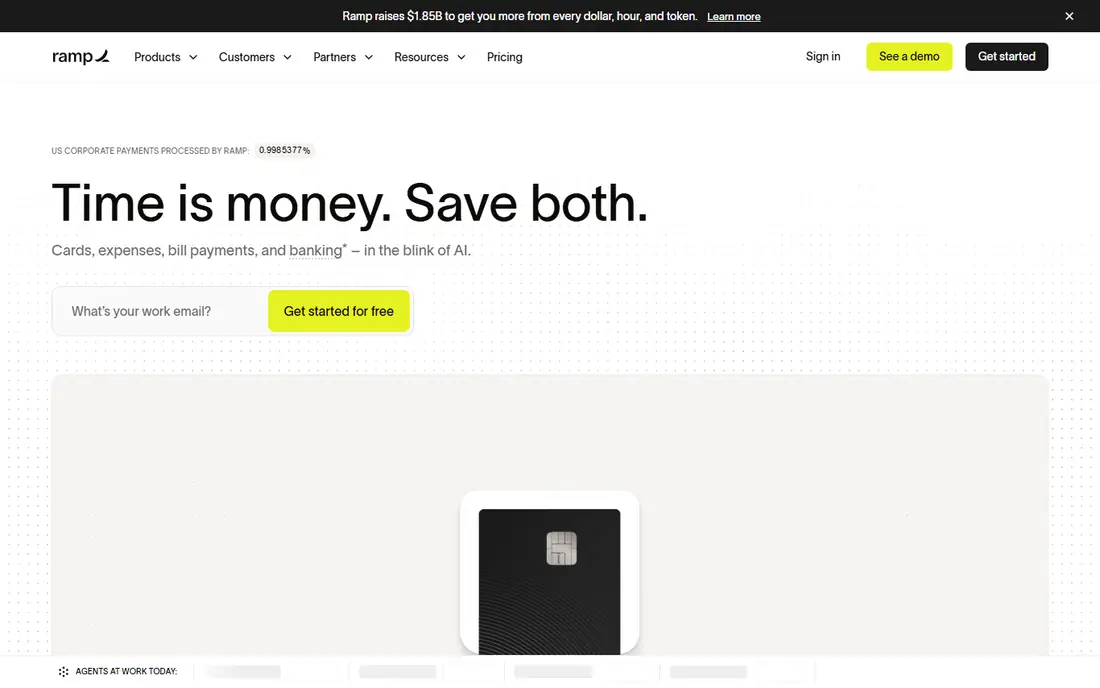
Ramp is our pick for most startups and growth firms. Its free core plan covers corporate cards, expense management, and controls, with limits, approvals, and accounting sync included. Cards can be virtual or physical, limits can be set by person or team, and receipts are captured and matched with less manual chasing. Bill pay, travel booking, and procurement sit in the same platform as the firm grows.
The catch is qualification and paid tiers. Not every business will be approved for the same limits, and Ramp Plus, from 15 dollars per user per month, adds deeper automation and controls. For a team moving off shared personal cards or a basic bank card, though, the free core plan is a strong start. Test the accounting sync and the approval flow with a small group before issuing cards widely.
- Free core plan with unlimited cards
- Strong pre-spend controls and receipt capture
- Bill pay, travel, and procurement in one platform
- Paid Plus plan adds per-user cost
- Card approval depends on business qualification
- Some advanced features sit behind paid tiers
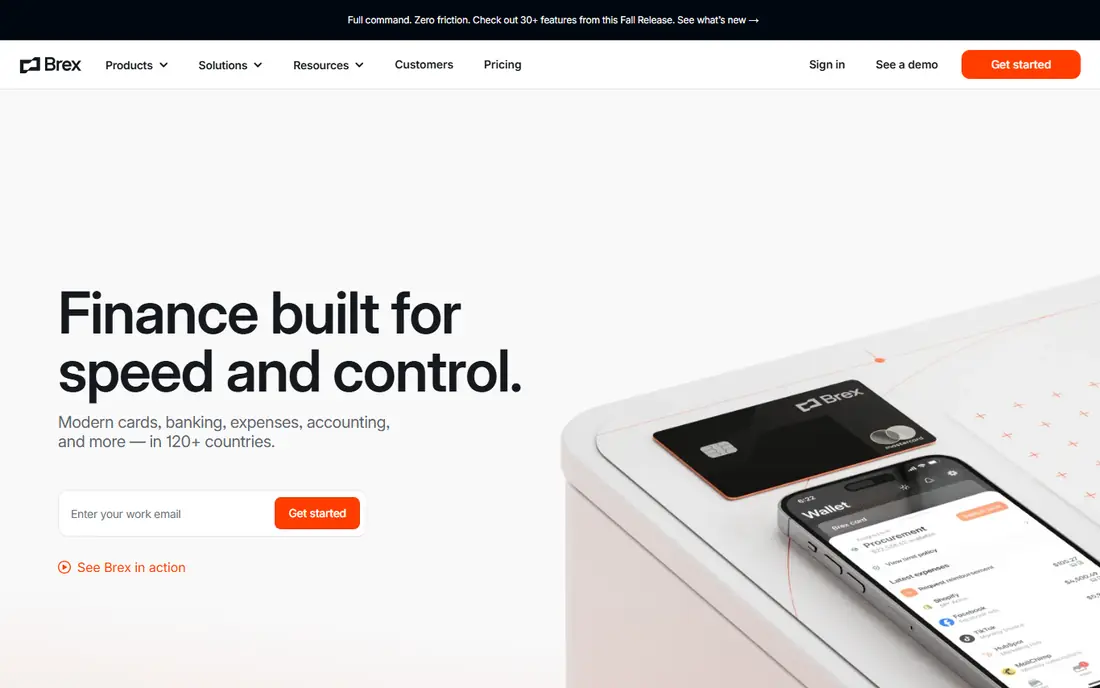
Brex suits venture-backed startups and firms with staff spending across countries. Its free Essentials plan covers cards, expenses, and basic controls, while Premium adds deeper automation, custom approvals, and richer reporting. Travel booking, bill pay, and accounting integrations sit alongside the card, so finance teams can see spend in one place rather than across several tools.
The honest limit is eligibility. Brex card limits and approval depend on business finances, and some firms will qualify for less than they hoped. Premium also adds cost per user, so larger teams should model that total before committing. If your firm is funded, growing fast, and spending globally, Brex is a natural shortlist pick. If your firm is bootstrapped and small, compare Ramp and BILL first.
- Free Essentials plan
- Strong global card acceptance and travel tools
- Bill pay and expense management included
- Card eligibility depends on funding and revenue
- Premium plan costs 12 dollars per user per month
- Enterprise pricing is quote only
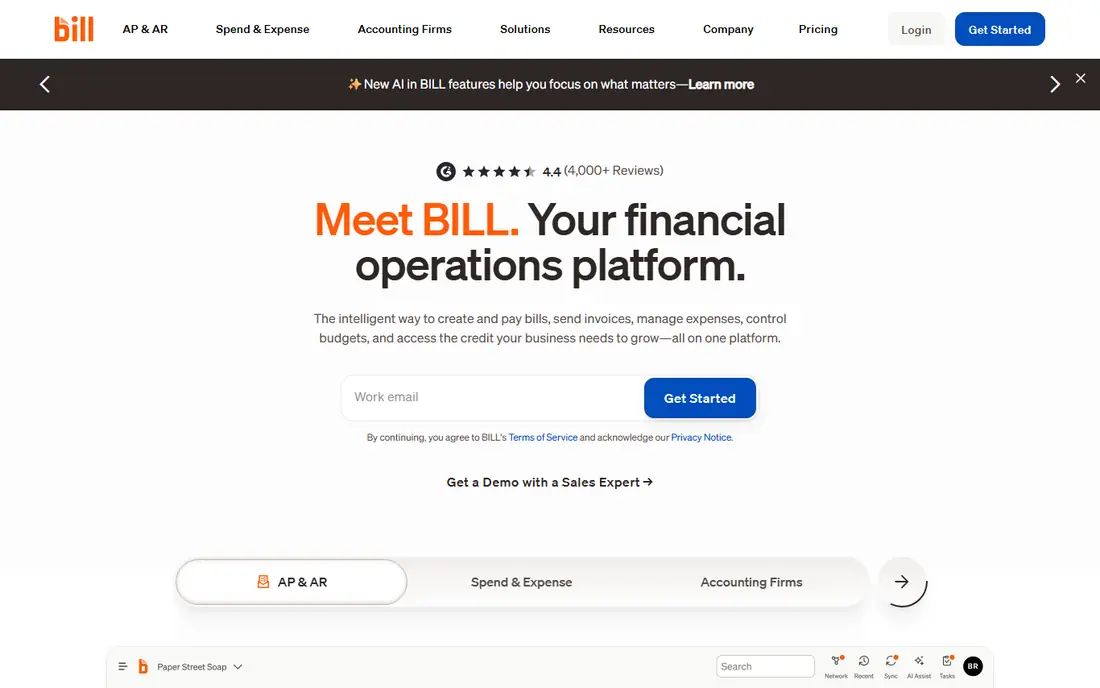
BILL Spend & Expense, formerly Divvy, gives small teams free corporate cards with spend controls, budgets, and expense tracking. Its strength is the link to accounts payable: bills, payments, and card spend can live in one finance workflow, which suits firms where an accountant or bookkeeper runs the process. Cards can be issued quickly, limits set by budget, and transactions synced to common accounting tools.
The catch is that the wider BILL platform, with full accounts payable and receivable features, is paid per user, so the total cost depends on which parts you use. Card credit lines also depend on business qualification. BILL fits best when accounts payable is as important as cards, and when a small team wants one finance hub. Teams that only need cards may find Ramp or Brex simpler.
- Free core card and spend product
- Strong accounts payable alongside cards
- Good fit for accountant-led teams
- Full BILL accounts payable plans are paid per user
- Card credit lines depend on business finances
- Interface can feel AP-first
Airbase, now part of Paylocity, is built for mid-market finance teams that need control over the full spending chain, not just cards. Staff submit requests, managers approve them, cards or purchase orders follow, and bills and expenses flow into accounting with matching and audit trails. That procure-to-pay depth is its main advantage over card-only tools, and it suits firms where procurement discipline matters.
The trade-off is cost and fit. Pricing is quote only, there is no free plan, and small teams may find the setup heavier than they need. Airbase fits best for firms with roughly a hundred to several thousand staff, formal approval chains, and a need to tie cards, bills, and purchase orders together. Smaller firms should start with a free card platform and revisit Airbase as approval needs grow.
- Strong procure-to-pay controls from request to payment
- Approval chains for cards, bills, and purchase orders
- Solid accounting sync
- Pricing is quote only
- No free plan
- Better suited to mid-market firms than very small teams
Navan, formerly TripActions, suits firms where travel is a large share of spend. Staff book flights and hotels inside policy, expenses flow from the same trip, and corporate cards carry the controls that keep bookings inside budget. That single travel-and-expense flow saves finance teams from reconciling bookings, card charges, and expense reports across three tools.
The catch is scope. Firms with little travel will get less value from Navan than from a pure card platform, and paid expense plans add cost as headcount grows. Navan fits best when travel policy, booking, and expense control need to live together. Test a real trip end to end, from booking to card charge to expense report, before judging it against Ramp or Brex.
- Travel booking and expenses in one flow
- Corporate cards with controls
- Good fit for firms where travel is a major cost
- Paid expense plans add per-user cost
- Travel focus may matter less for office-only teams
- Card qualification applies
Rho combines business banking, treasury, corporate cards, and accounts payable, which appeals to startups that want one finance home rather than a bank plus three tools. Its core platform carries no platform fee, cards can be issued with controls, and payments and expenses flow into accounting from the same place. For a small finance team, that consolidation cuts admin time.
The honest limit is geography and fees. Rho is built for US businesses, and while the core platform is free, specific services can carry fees, so read the fee schedule before rollout. It fits best for US startups that want banking and cards together. Firms outside the US, or firms that already love their bank, should compare Ramp, Brex, or Pleo instead.
- Banking, treasury, cards, and accounts payable in one platform
- No platform fee for the core product
- Good fit for US startups
- US business focus
- Some fees apply to specific services
- Card limits depend on business qualification
Expensify is the pick when a firm wants to keep its existing bank cards and still automate expenses. Staff snap receipts, the app matches charges, and managers approve reports that sync to accounting. Its Collect plan starts at 5 dollars per member per month, and a limited free tier covers individuals. That flexibility suits small teams, contractors, and firms with cards they cannot easily replace.
The catch is control. Because Expensify does not issue the card in most setups, it cannot enforce limits before spend happens the way Ramp or Brex can. It processes spend after the fact, well, but it does not prevent it. Pick Expensify when keeping current cards matters most, and pick a card-first platform when pre-spend control is the priority.
- Works with existing corporate cards
- Fast receipt capture and expense reports
- Flexible for small teams and solo founders
- Card controls are lighter than card-first platforms
- Paid plans needed for deeper controls
- Pricing varies by plan and billing
Pleo is the leading card and spend platform for many European and UK firms. It issues smart company cards, physical and virtual, with limits, approvals, and receipt capture, and it syncs expenses to accounting tools used widely in Europe. Reimbursements, invoices, and spend analytics sit alongside cards, so finance teams get a full picture without a separate expense tool.
The trade-off is geography and price. Pleo is strongest in Europe and the UK, and US firms will usually find Ramp, Brex, or BILL a better fit. Pricing is quote-based for many plans, so get a written quote for your headcount and countries. European teams should shortlist Pleo first, alongside Spendesk and Payhawk, and test multi-entity and multi-currency handling in the demo.
- Strong European card and expense coverage
- Smart cards with limits and approvals
- Good accounting integrations for EU firms
- Pricing is quote only in many cases
- US coverage is thinner than US-first rivals
- Paid plans needed for full features
How we picked these
We compared official product pages, pricing pages, and public reviews for corporate card platforms that exist and work today, and we kept only platforms that issue or manage corporate cards with controls and accounting sync. We favoured a mix of free card-first tools, mid-market procurement platforms, and a report-first option for firms keeping existing cards. Where pricing was quote only, we wrote See website rather than guessing. We did not claim hands-on testing, and we compared public pages, pricing, and documented features.
What to check before you choose corporate card software
Start with eligibility and limits, because a free plan means little if your firm qualifies for a low limit or no card at all. Ask each vendor, in writing, what limit your firm can expect, what financial information is needed, and what fees apply beyond the headline plan price. Also check whether cards work in every country your staff travel to, and whether virtual cards cover online subscriptions and ads.
Next, test controls and accounting sync with real transactions. Set a limit, try to exceed it, submit a receipt, approve an expense, and watch the entry land in your ledger. Check approval chains for large amounts, purchase orders if you use them, and how the system handles refunds and disputed charges. A platform that looks clean in a sales demo can still fail on one of these flows, so test with your own staff and vendors.
Finally, plan the rollout in stages. Issue cards to a small group first, set conservative limits, and review spend weekly for the first month. Train managers on approvals, agree on what counts as a policy breach, and keep a written card policy that staff actually read. This is general information only, not financial advice, and card terms, limits, and fees should be confirmed with each vendor before you sign.
Frequently asked questions
What is the best corporate credit card software?
Ramp is the best corporate credit card software for most startups, thanks to its free core plan and strong controls, while Brex suits funded firms with global spend. Airbase suits mid-market firms that need procurement control, and Expensify suits teams keeping existing cards. The best choice depends on firm size, travel share, and whether you need pre-spend control.
What is the top software for corporate credit cards for small businesses?
For small businesses, Ramp, Brex, and BILL Spend & Expense lead, because their core card products are free and cover limits, receipts, and accounting sync. Rho also suits US startups that want banking plus cards. Compare card eligibility and limits first, because free plans still depend on business qualification.
Are corporate card platforms really free?
Many core plans are free because vendors earn from card transaction fees, but paid plans, per-user fees, and specific service fees still apply. Ramp Plus, Brex Premium, and Navan paid plans all add cost, and Airbase and Pleo are quote-based. Always get a written quote and fee schedule for your headcount and volume.
Do I need to change banks to use corporate card software?
No, not always. Ramp, Brex, and BILL issue their own cards and work alongside your existing bank, while Expensify works with cards you already hold. Rho combines banking and cards, which suits firms that want one home, but it is not required. Check whether your accounting tool syncs cleanly before you commit.
How do corporate card controls work?
Admins set limits by person, team, or vendor category, require approvals above a threshold, and block certain merchant types. Virtual cards can be limited to one vendor or one purchase, and receipts are captured and matched to charges. Managers approve exceptions, and finance teams see spend in real time rather than at month end.
Sources
See where you really rank - block by block
ProMapRanker scans Google Maps across a grid of your service area. Simple monthly plans from $19, white-label on every plan.
Start freeKeep reading
 who has best internet service
Who Has the Best Internet Service in 2026
Who has best internet service for US homes? We compare fiber, cable, fixed wireless and satellite providers on speed, price, availability and terms today.
Read → which survey tool has the best analytics
Which Survey Tool Has the Best Analytics in 2026
Find which survey tool has the best analytics in 2026, comparing Qualtrics, SurveyMonkey, Typeform, Alchemer, and more on reports, text, and stats today.
Read → which streaming service has the best movies
Which Streaming Service Has the Best Movies in 2026
Answering which streaming service has the best movies, with Netflix, Max, Criterion and more compared on libraries, prices and free options in this guide.
Read →