 ProMapRanker
Best Contract Management Software for Startups in 2026

Full lifecycle with published pricing · Pricing starts at: $499 a month (billed yearly, 5 users included)
Direct answer
Our first pick is Concord, best for full lifecycle with published pricing. Listed starting prices: Concord from $499 a month, DocuSign from $10 a month and PandaDoc from $19 per user/month. If your case is different, DocuSign suits standard e-signatures with broad integrations and Contractbook suits template-led contracts for expanding teams. Prices, free plans and limits for all 6 tools follow.
If you are comparing contract management software for startups, this page covers 6 tools in one place: what each is best for, what it costs to start, whether it has a free plan, and the main limit to know about.
Key takeaways
- This list starts with Concord, which is built for full lifecycle with published pricing.
- Dropbox Sign fits straightforward signing for one or two senders.
- The cheapest monthly starting price in the list is $10 per month, offered by DocuSign.
- What to know about PandaDoc first: starter keeps a 5-template limit and has no approval workflows.
Quick comparison
| Pick | Great for | Pricing starts at | Free tier | |
|---|---|---|---|---|
| Concord | Full lifecycle with published pricing | $499 a month (billed yearly, 5 users included) | Free trial (14 days) | Visit |
 DocuSign | Standard e-signatures with broad integrations | $10 a month (billed yearly) | Free trial (30 days) | Visit |
 Contractbook | Template-led contracts for expanding teams | Quote only | Free trial (14 days) | Visit |
 PandaDoc | Proposals and signatures in one flow | $19 per user/month (billed yearly) | Yes | Visit |
 Juro | Self-serve contracts with AI review | Quote only | No | Visit |
 Dropbox Sign | Straightforward signing for one or two senders | $15 per month (billed yearly) | Yes | Visit |
6 contract management software for startups in detail
Choose Concord for full lifecycle with published pricing. There is no permanent free plan, though a 14-day free trial is offered for evaluation. For everyday use, Concord is a full contract lifecycle product with drafting, redlining, approvals, e-signature, storage, and deadline reminders in one workspace.
Trade-offs to know: No permanent free plan.
Beyond that, a startup with 5 people who all deal with contracts can justify it. But a smaller team will find less expensive ways to sign. The strength of Concord is also its weakness for a startup: the $499 monthly floor is a serious commitment for a team that signs a handful of contracts a month, and annual billing means the first invoice is close to $6,000. The starting price for Concord: $499 per month. Free access: Free trial (14 days).
- Published pricing with unlimited documents and e-signatures
- AI Copilot and extraction on every plan
- $499 a month entry price is high for a small startup
Where DocuSign fits: standard e-signatures with broad integrations. Standard costs $25 per user a month billed yearly for up to 50 users, with 100 envelopes per user a year, shared templates, branding, and commenting. Worth adding: personal costs $10 a month billed yearly for one user and 5 envelopes a month.
In practice, business Pro costs $40 per user a month billed yearly and layers on web forms, payment collection, bulk send, and PowerForms. Standard and Business Pro each allow 100 envelopes per user a year, about 8 a month, and additional envelopes carry overage charges, so a team that sends heavily can outgrow the allowance quick. Entry price for DocuSign: $10 per month. Free options: Free trial (30 days).
Trade-offs to know: 100-envelope yearly cap per user on Standard and Business Pro.
- Widely accepted e-signature with wide integrations
- Shared templates and branding on Standard
- No permanent free plan
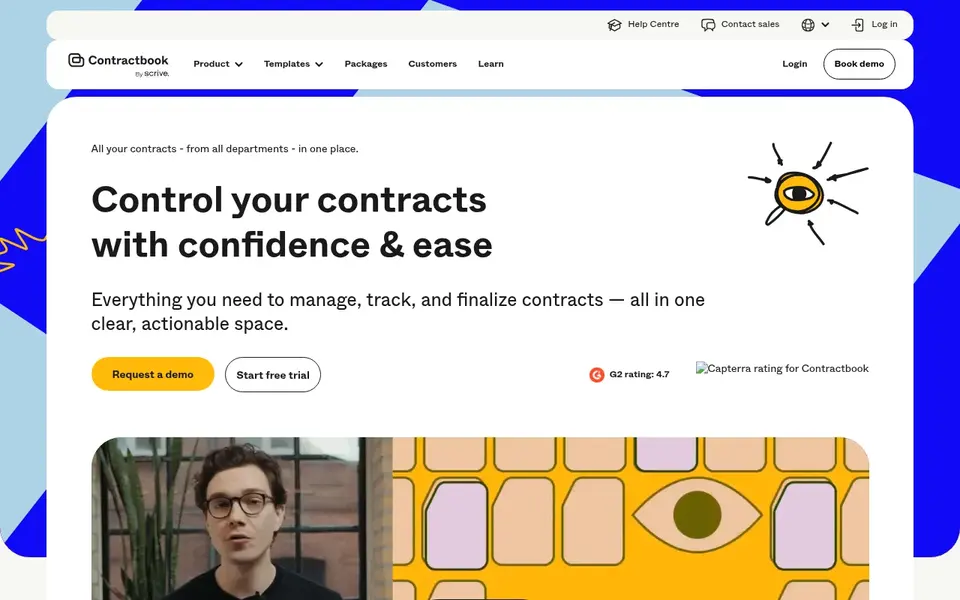
Where Contractbook fits: template-led contracts for expanding teams. As for the details, Contractbook handles contract creation, negotiation, signing, and storage in one place, with form-generated contracts that turn intake answers into a finished draft. The central obstacle for an early startup is that no price is published.
So the cost stays unclear until a sales call, and extras for example automations, user provisioning, API access, and Zapier carry separate charges that can raise the monthly total. The 14-day trial provides full access to all features with no credit card required. A restricted free plan follows after the trial, so evaluation can start without a demo. The Accelerate plan brings 10 users, automations, user provisioning, dynamic templates, up to 500 signed contracts a year, and white-glove onboarding. Both plans are quote only, so a startup must request pricing before it can budget the cost. There is no fixed entry price for Contractbook; pricing comes through a quote. Free options: Free trial (14 days).
Where it falls short: Centralize and Accelerate plans are quote only, so costs stay unclear until a sales call.
- Then a restricted free plan
- 14-day trial with full access
- Extras for example automations and API access carry separate charges
For proposals and signatures in one flow, PandaDoc is a natural candidate. PandaDoc handles document creation, proposals, quotes, and e-signatures in one workspace, which fits a startup that sends client agreements, order forms, and proposals from the same tool. The limits matter at the low end.
Where it falls short: Starter keeps a 5-template limit and has no approval workflows.
The Free eSign plan permits 5 documents a month with up to 2 recipients per document and 5 reusable templates. So a solo founder can start without a subscription. As for the details, Salesforce integration also carries an additional fee on Business, which brings cost for teams that run their pipeline there. Starter keeps the 5-template cap from the Free plan, and it has no approval routing or custom branding. So a team that needs controlled templates or branded documents must move to Business. Starter, at $19 per user a month billed yearly, removes the sending limit and opens the full document editor, whereas Business, at $49 per user a month billed yearly, adds approval workflows, CRM integrations, and payment collection. PandaDoc pricing: $19 per user/month. PandaDoc includes a free tier.
- Free plan spans 5 documents a month
- Document creation, proposals
- Salesforce integration carries an additional fee
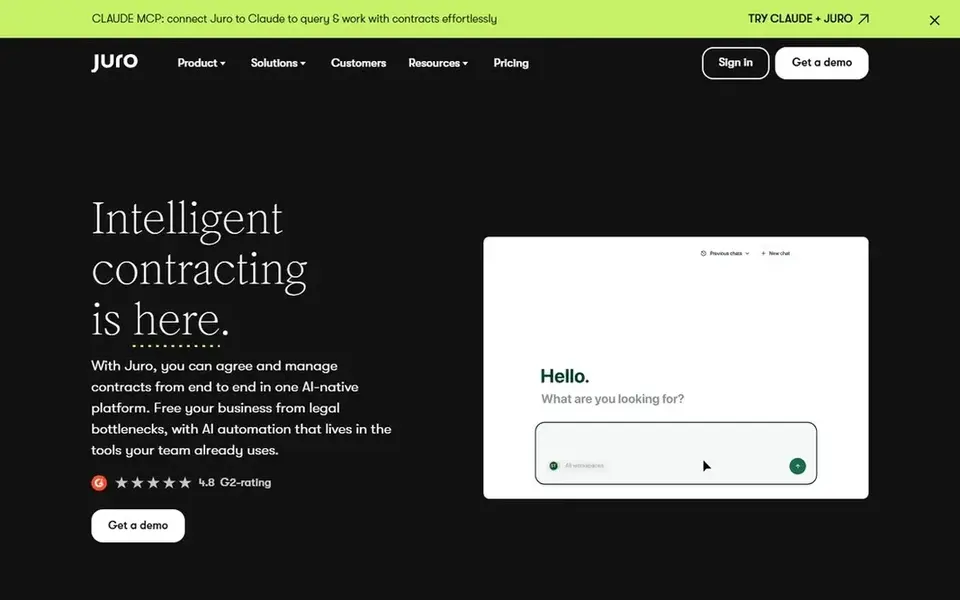
Juro is aimed squarely at self-serve contracts with AI review. Juro is a browser-native contract workspace where a team drafts, negotiates, approves, and signs agreements without leaving the editor.
Limits to weigh: every plan needs a quote.
From a buyer's view, the drawback for a startup is price transparency. Its AI review and extraction features sit on higher levels, so a team on the entry plan does not get the tools that make Juro distinct. There is no fixed entry price for Juro; pricing comes through a quote. Juro has no free tier.
- Browser-native editor with self-serve templates
- Unlimited users on every plan
- No public pricing
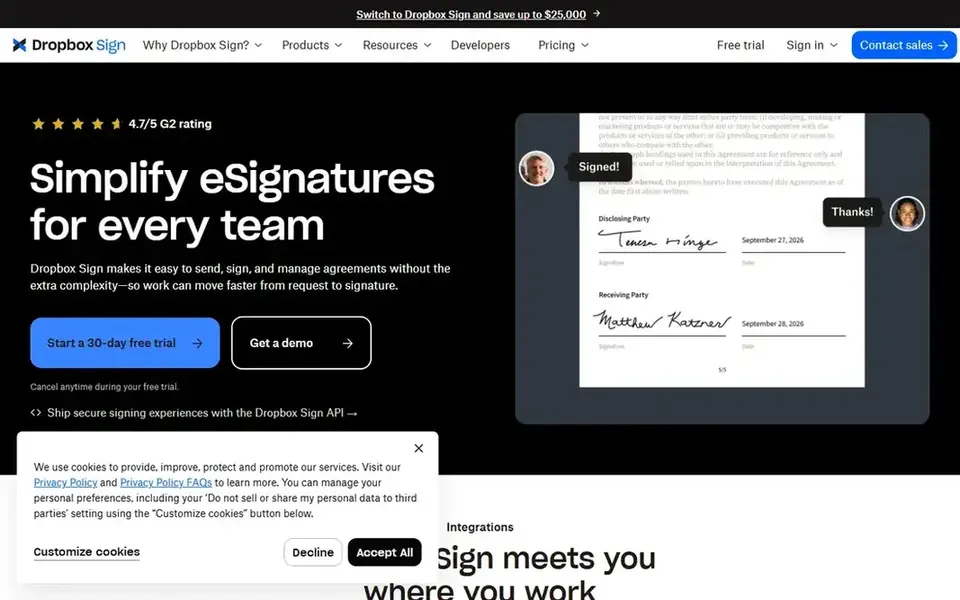
Dropbox Sign is built with straightforward signing for one or two senders in mind. The limit to watch is the seat structure. Also, the Free plan lets 3 signature requests a month with unlimited self-signing.
Limits to weigh: No repository or renewal tracking.
For a startup that only needs signatures, it is the simplest and cheapest choice here. Essentials costs $15 a month billed annually for one user and comes with unlimited signature requests and 5 templates. Essentials includes one sender only, so a second person who sends documents moves the account to Standard at $50 a month for 2 users. Price to start with Dropbox Sign: $15 per month. You can start on Dropbox Sign without paying.
- Free plan includes 3 requests a month
- Unlimited signature requests on subscription plans
- Essentials handles one sender only
What to confirm before you sign up
- Ask Contractbook and Juro for a written quote, since no starting price is shown.
- Look at free plan limits closely: PandaDoc and Dropbox Sign have one, and the caps decide whether it is usable for real work.
- Use real work to test the free trial from Concord, DocuSign and Contractbook, rather than a demo project.
- Read the limits listed for Concord first: $499 a month entry price is high for a small startup.
- List the apps you already depend on and check that DocuSign supports each one on the plan you would buy.
- Compare total cost, not headline price: for Contractbook, add extra seats, add-ons and any usage-based charges.
Frequently asked questions
Is Concord the right pick for everyone comparing contract management software for startups?
No single tool suits every team. Concord comes first because it fits full lifecycle with published pricing, while DocuSign suits standard e-signatures with wide integrations and Contractbook suits template-led contracts for growing teams. Match the tool to your own size, budget and workflow before deciding.
What is the cheapest contract management software for a startup?
The right choice relies on volume: a founder who signs a handful of documents a month can stay on a free plan, whereas a team that sends proposals weekly will outgrow it quick.
Which options for contract management software for startups have a free plan?
On this list, PandaDoc and Dropbox Sign include a free plan. Caps on seats, usage or features are common, so test the free plan against your real workload. Several others offer a trial instead.
Can I try these tools before paying?
Often, yes. PandaDoc and Dropbox Sign have a free plan and Concord, DocuSign and Contractbook offer a free trial. Use your own data and a real task during the test, and check what the free tier or trial limits before you rely on it.
How are the tools for contract management software for startups ordered?
The order follows typical fit for contract management software for startups, with Concord first and Dropbox Sign last, then price clarity and free access. It is editorial judgement, not a score, so another team could rank the tools differently.
Sources
See where you really rank - block by block
ProMapRanker scans Google Maps across a grid of your service area. Simple monthly plans from $19, white-label on every plan.
Start freeBrowse all guides
← Best Cold Outreach Software (2026)Best Contract Negotiation Software in 2026 →
 revenuewell alternatives
Top RevenueWell Alternatives for 2026, With Prices
Need RevenueWell alternatives? We compare 6 tools on cost, free access and who each suits. Fit and flaws are laid out for each entry. Read the profiles.
Read → followup crm alternatives for contractors
FollowUp CRM Alternatives: 6 Tools Compared in 2026
Need followup crm alternatives for contractors? We compare 6 tools on cost, free access and who each suits. Each entry gets a plain verdict. Refreshed for 2026.
Read → best timesheet software for contractors
Timesheet Software for Contractors: Best Picks of 2026
Best timesheet software for contractors in 2026: 7 contenders with entry costs and free tiers. Every profile names its biggest catch. Reviewed this month.
Read → integrate.io alternatives
Best Integrate.io Alternatives in 2026
Compare integrate.io alternatives for data pipelines, including Fivetran, Airbyte, Stitch, and Hevo, with pricing and fit for growing data teams in 2026.
Read → best lead nurturing automation tools
Top 7 Lead Nurturing Automation Tools for 2026, Compared
7 products for the best lead nurturing automation tools, ranked by fit, with starting costs and free tiers. Prices and drawbacks included. Choose faster.
Read → best sales crm tools
Best Sales CRM Tools in 2026
Compare the best sales CRM tools for pipelines, leads, and deals, with pricing, free tiers, and guidance for small teams and large sales organisations.
Read →More in Sales & CRM · All guides A to Z by date · Latest guides