 ProMapRanker
Best Competitor Ad Tracking Platforms in 2026


Teams that need search, social, and SEO together · Pricing starts at: $139.95 per month
Key takeaways
- SpyFu is our pick for most advertisers, starting at $39 per month, because it combines long Google Ads history with keyword and ad copy data.
- Semrush starts at $139.95 per month and suits teams that need search ads, social ads, and SEO research in one subscription.
- PowerAdSpy starts at $69 per month and suits social-first advertisers, since it tracks Facebook, Instagram, YouTube, and native ads.
- Adbeat starts at $249 per month and suits display-focused teams that need landing page and publisher data at scale.
- Free ad libraries from Meta and Google remain useful for current ads, but paid tools add history, spend estimates, and alerts that free libraries lack.
Quick comparison
| Pick | Great for | Pricing starts at | Free tier | |
|---|---|---|---|---|
| Semrush | Teams that need search, social, and SEO together | $139.95 per month | Free trial (7 days) | Visit |
 SpyFu | Search advertisers on a budget | $39 per month | Free trial | Visit |
 Ahrefs | Teams that also need backlink research | $129 per month | Free trial | Visit |
 Similarweb | Market and traffic intelligence at scale | See website | Free trial | Visit |
 Adbeat | Display advertisers at scale | $249 per month | Free trial | Visit |
 PowerAdSpy | Social-first advertisers and affiliates | $69 per month | Free trial | Visit |
 iSpionage | Search advertisers who want alerts | See website | Free trial | Visit |
 WhatRunsWhere | Display and native ad researchers | See website | Free trial | Visit |
 Pathmatics | Enterprise ad spend intelligence | See website | No | Visit |
The best competitor ad tracking platforms
We compared the best competitor ad tracking platforms on search ad history, social ad libraries, display data, spend estimates, and price. Our pick for most advertisers is SpyFu, starting at $39 per month, because it offers deep Google Ads history at a price small teams can afford. Larger teams that need search, social, and display in one tool should look at Semrush and Similarweb, while social-first buyers should test PowerAdSpy.
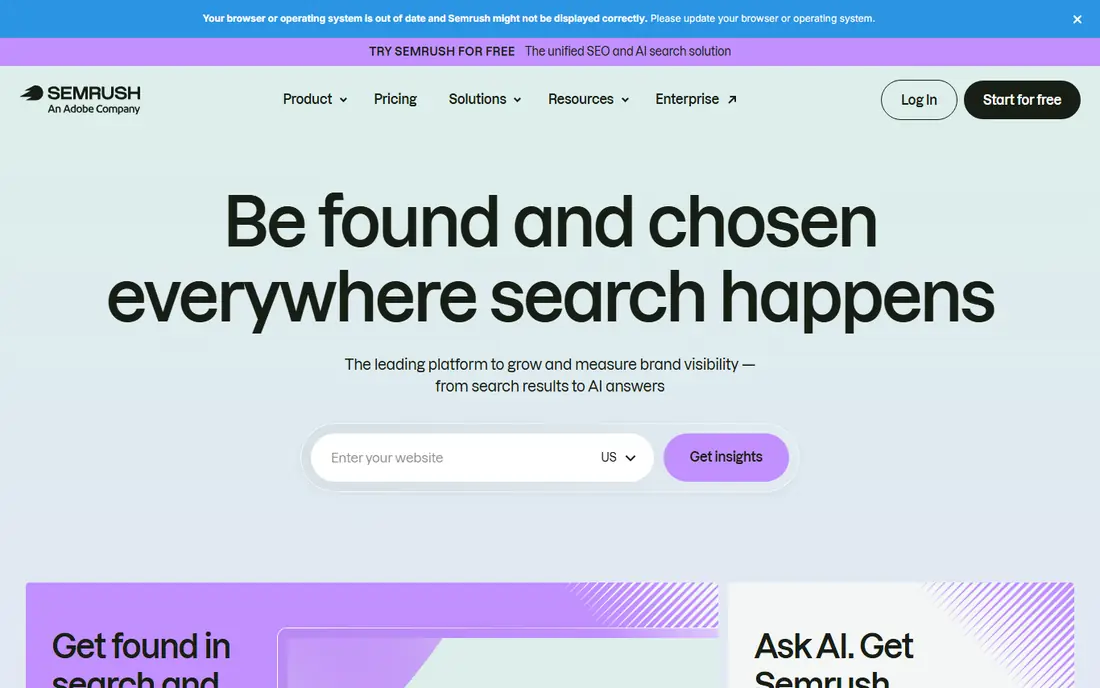
Start here if you want a short answer. Semrush suits teams that want competitor ads, keywords, and traffic in one subscription. Its advertising toolkit covers search, display, social, and shopping ads, beside SEO research tools.
The catch is price, since $139.95 per month is a serious commitment for a small advertiser who only needs ad history. Check the current plan limits before you pay, since limits on users, invoices, or contacts decide the real cost.
- Advertising research across search and social
- Keyword gap tools
- Large ad database
- Higher entry price
- Some ad features need higher tiers
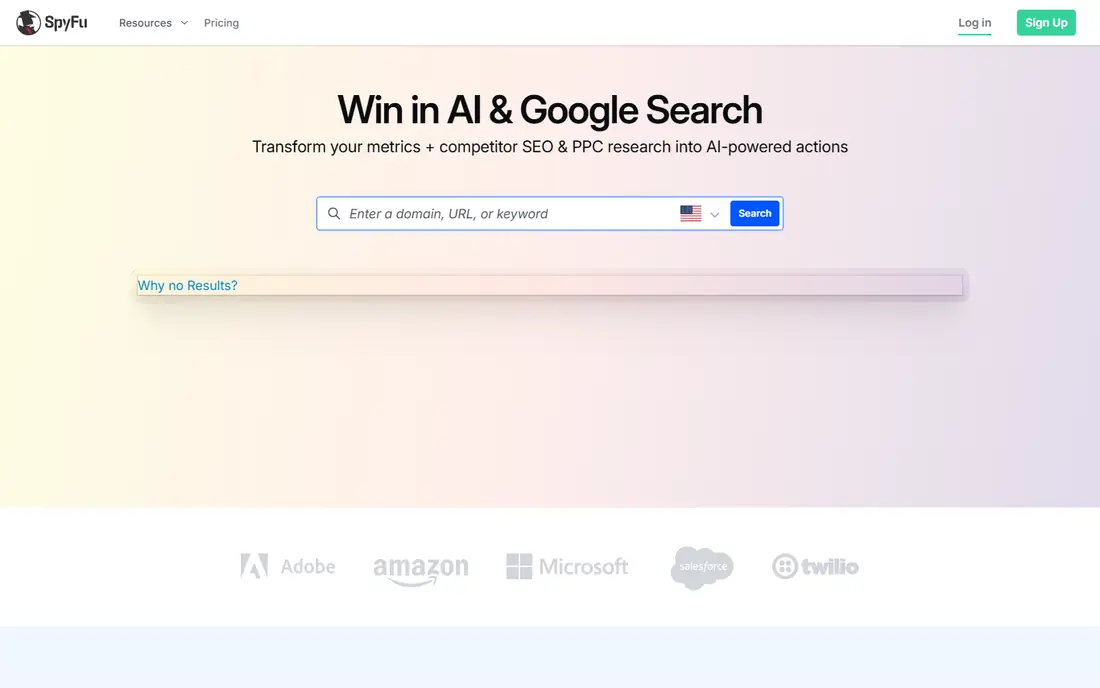
This one earns its place for a clear reason. SpyFu gives small teams long Google Ads history, including keywords, ad copy, and estimated budgets, at $39 per month. You can see which ads a competitor ran years ago, which helps you spot durable messages versus short tests.
The catch is channel scope, since SpyFu shines on search and is thinner on social creative libraries than PowerAdSpy. Run a trial with your own data before you commit, and export a sample so you can see how leaving would work.
- Deep Google Ads history
- Competitor keywords and ad copy
- Rank tracking
- Social ad coverage is thinner than social-first tools
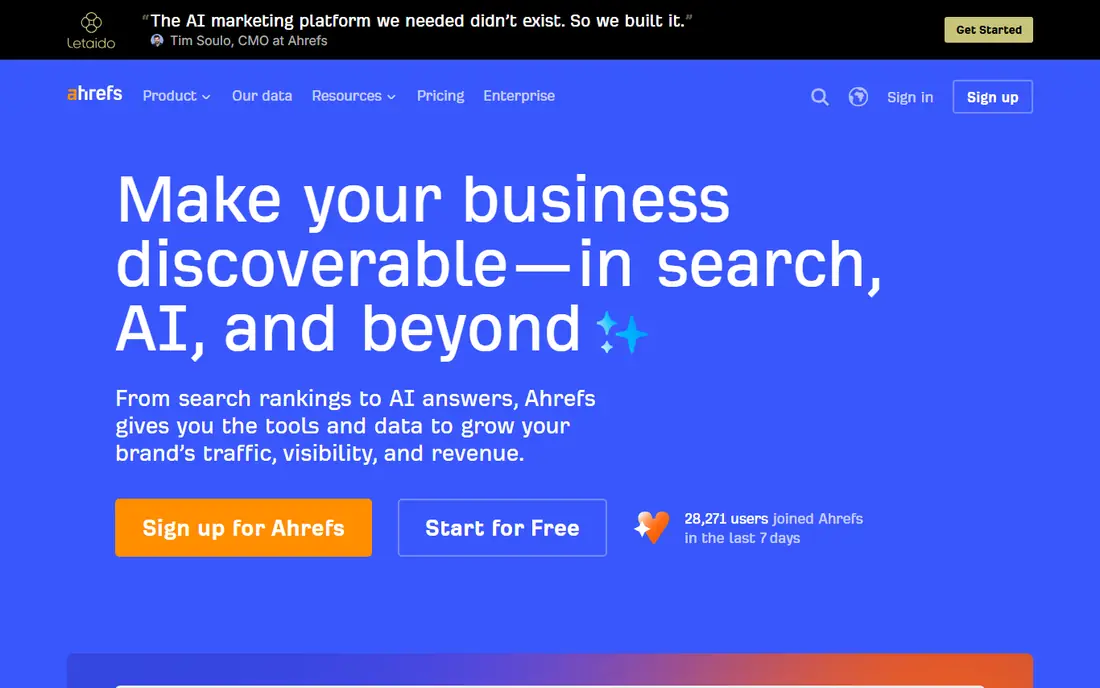
Consider this option when the basics matter more than extras. Ahrefs suits teams that already need backlink and content research, with paid search data beside it. Its Site Explorer and Keywords Explorer help you see which paid pages and keywords drive competitor traffic.
The catch is focus, since ad tracking is not its main job, so pure ad buyers may prefer SpyFu or Adbeat. Compare the total monthly cost, including add-ons and processing fees, rather than the headline price alone.
- Large backlink index
- Paid search and content research
- Site explorer
- Ad tracking is secondary to SEO tools
- No permanent free plan
This pick suits buyers who know what they need and want it done well. Similarweb suits larger teams that need traffic, channel mix, and market context beside ad data. Its ad intelligence covers display and video on higher tiers, with traffic data to judge scale.
The catch is tiering, since ad intelligence sits on higher plans, so small buyers should confirm the tier before budgeting. If the entry plan covers your daily work, stay there for a few months before paying for a higher tier.
- Traffic and channel mix
- Ad intelligence on higher tiers
- Audience insights
- Ad intelligence needs higher tiers
- Entry pricing is not simple
Put this on the shortlist if fit matters more than fame. Adbeat focuses on display ads, showing creatives, landing pages, publishers, and estimated spend. It suits display-heavy advertisers and agencies that need to see where competitors run banners and native ads.
The catch is price, since $249 per month suits serious display buyers more than casual advertisers. Ask support a hard question during the trial, since the answer tells you a lot about help when something breaks.
- Display ad and landing page data
- Publisher insights
- Long history
- High entry price
- Search and social coverage is thinner
This is a practical choice for a specific kind of buyer. PowerAdSpy tracks ads across Facebook, Instagram, YouTube, Google, and native networks from one dashboard. Engagement filters and advertiser bookmarks help you follow competitors and spot winning creatives.
The catch is tier detail, since networks and filters vary by plan, so check that your channels sit on the tier you buy. Check the current plan limits before you pay, since limits on users, invoices, or contacts decide the real cost.
- Social, video, and native ad libraries
- Engagement filters
- Advertiser tracking
- Interface feels dated
- Features vary sharply by tier
We include this one because it solves a real problem well. iSpionage focuses on search competitor tracking, with alerts when rivals change ads or keywords. It suits advertisers who want a focused search tool without paying for a full SEO suite.
The catch is transparency, since pricing is not as clearly published as SpyFu, so request a current quote before comparing. Run a trial with your own data before you commit, and export a sample so you can see how leaving would work.
- Search ad tracking
- Competitor alerts
- Keyword monitoring
- Pricing is less transparent
- Smaller feature set than Semrush
This option stands out for a different reason than the leaders. WhatRunsWhere tracks display and native ads across publishers and networks, with creative and landing page detail. It suits media buyers who need to see where display campaigns run and which creatives persist.
The catch is quoted pricing and an older interface, so demo it with your own competitors before you commit. Compare the total monthly cost, including add-ons and processing fees, rather than the headline price alone.
- Display and native ad data
- Publisher and network insights
- Quoted pricing
- Interface feels older than newer rivals
Do not overlook this one if your needs are narrower than most guides assume. Pathmatics, now part of Sensor Tower, suits enterprises that need cross-channel spend intelligence across mobile, social, and video. Its estimates help large brands benchmark spend, creative, and channel mix against direct rivals.
The catch is scale, since pricing is enterprise-grade and the tool fits large teams better than small advertisers. If the entry plan covers your daily work, stay there for a few months before paying for a higher tier.
- Cross-channel spend estimates
- Creative libraries
- Brand safety data
- Enterprise pricing
- Not built for small advertisers
How we picked these
We checked current pricing pages and plan descriptions for each platform, and we compared search ad history, social ad coverage, display and native coverage, spend estimates, landing page data, and alert tools. We kept only platforms that track real competitor ads today, and we left out generic SEO tools that lack ad-specific history or creative libraries. Where a vendor quotes instead of publishing a price, we say so, and we treat spend estimates as estimates, not audited figures.
How to choose an ad tracking tool that improves your campaigns
Start with the channel where you spend money. A Google Ads buyer needs keyword and ad copy history, while a Meta buyer needs creative libraries and engagement data. Buying a tool built for the wrong channel wastes money, even if its dashboard looks impressive.
Treat spend estimates as direction, not fact
No third-party tool sees a competitor's real ad account, so spend figures are modelled estimates from observed ads, traffic, and keyword data. Use them to rank competitors and spot shifts, not to budget to the dollar. Compare trends over months, since a rising estimate plus new creatives tells you more than a single month's number.
Use history to find winners, not to copy ads
Long-running ads usually signal messages that work, so study which headlines, offers, and landing pages a competitor keeps running. Do not copy ad copy or images directly, since that risks trademark and policy problems and rarely fits your own offer. Use the history to test your own angles faster, with your own creative and landing pages.
Set alerts for the competitors that matter
Pick five to ten direct competitors and set alerts for new ads, new keywords, and landing page changes. Review alerts weekly, not daily, so patterns stand out from noise. If a competitor launches a new offer, a new landing page, and a burst of creatives together, that cluster deserves a closer look than any single ad.
Frequently asked questions
What is the best competitor ad tracking platform?
SpyFu is a strong default for search advertisers, starting at $39 per month, because it offers deep Google Ads history and ad copy data. Semrush suits teams that need search, social, and SEO in one tool. PowerAdSpy suits social-first advertisers who need creative libraries across Meta, YouTube, and native networks.
Can I track competitor ads for free?
Yes, Meta Ad Library and Google Ads Transparency Center show current ads for free, which is enough for a quick check on one competitor. Paid tools add history, spend estimates, keyword data, and alerts, which matter when you track several competitors over time. Start free, then pay once manual checks take too much time.
How accurate are competitor ad spend estimates?
Spend estimates are modelled from observed ads, keyword bids, traffic, and other signals, so they are directional rather than exact. They work well for ranking competitors and spotting trends, but they should not replace your own budget planning. Compare estimates across tools and over time before acting on a single figure.
What is the best tool for tracking Facebook and Instagram ads?
PowerAdSpy suits Facebook and Instagram ad tracking, since it covers social, video, and native ads with engagement filters. Semrush also covers social ads beside search, which helps teams that run both channels. Meta Ad Library remains a free starting point for current ads on those platforms.
Do these tools work for small advertisers?
Yes, SpyFu at $39 per month and PowerAdSpy at $69 per month fit small advertisers, while Semrush and Similarweb suit larger budgets. Start with one or two direct competitors, and set alerts for new ads rather than tracking the whole market. Cancel or downgrade if you stop reviewing the alerts each week.
Sources
See where you really rank - block by block
ProMapRanker scans Google Maps across a grid of your service area. Simple monthly plans from $19, white-label on every plan.
Start freeKeep reading
 best subscription manager app
Best Subscription Manager App in 2026
Find the best subscription manager app for your budget with our 2026 comparison of 8 apps, covering automatic detection, renewal alerts and free plans.
Read → best stock picking service
Best Stock Picking Service in 2026
Compare the best stock picking service options for 2026, with 8 stock recommendation services for long-term, dividend, quant, growth and income investors.
Read → best software wallet
Best Software Wallet in 2026
Compare the best software wallet options for 2026, with 8 crypto wallets for desktop and mobile, covering self-custody, supported chains, fees and security.
Read →