 ProMapRanker
Best Commodity Trading Platform in 2026


Broad global market access · Pricing starts at: See website
Key takeaways
- This is not financial advice. Trading commodities carries risk of loss, and margin-based products can lose money quickly.
- Interactive Brokers and Saxo suit traders who want broad market access and professional tools, while IG and CMC Markets suit active chart-based traders.
- Pepperstone, AvaTrade and OANDA are practical shortlist picks for CFD traders, but check which legal entity serves your country and what protections apply.
- TradeStation is a stronger fit for US futures traders, while eToro-style social features matter only if copy trading is part of your plan.
- Use a demo account first, check spreads, overnight costs and margin rules, and never trade with money you cannot afford to lose.
Quick comparison
| Pick | Great for | Pricing starts at | Free tier | |
|---|---|---|---|---|
| Interactive Brokers | Broad global market access | See website | Free trial | Visit |
 IG | Broad commodities range and research | See website | Free trial | Visit |
 Pepperstone | Active CFD traders | See website | Free trial | Visit |
 CMC Markets | Charting and active trading | See website | Free trial | Visit |
 Saxo | Advanced multi-asset trading | See website | Free trial | Visit |
 AvaTrade | Beginner-friendly CFD trading | See website | Free trial | Visit |
 OANDA | Straightforward pricing | See website | Free trial | Visit |
 TradeStation | US futures trading | See website | Free trial | Visit |
The best commodity trading platform
Commodity trading covers gold, oil, natural gas, wheat, coffee and many other raw materials, through futures, ETFs, stocks or CFDs depending on the platform. This is not financial advice, and trading carries risk of loss, so the platforms below are compared on access, tools and costs, not on predicted returns.
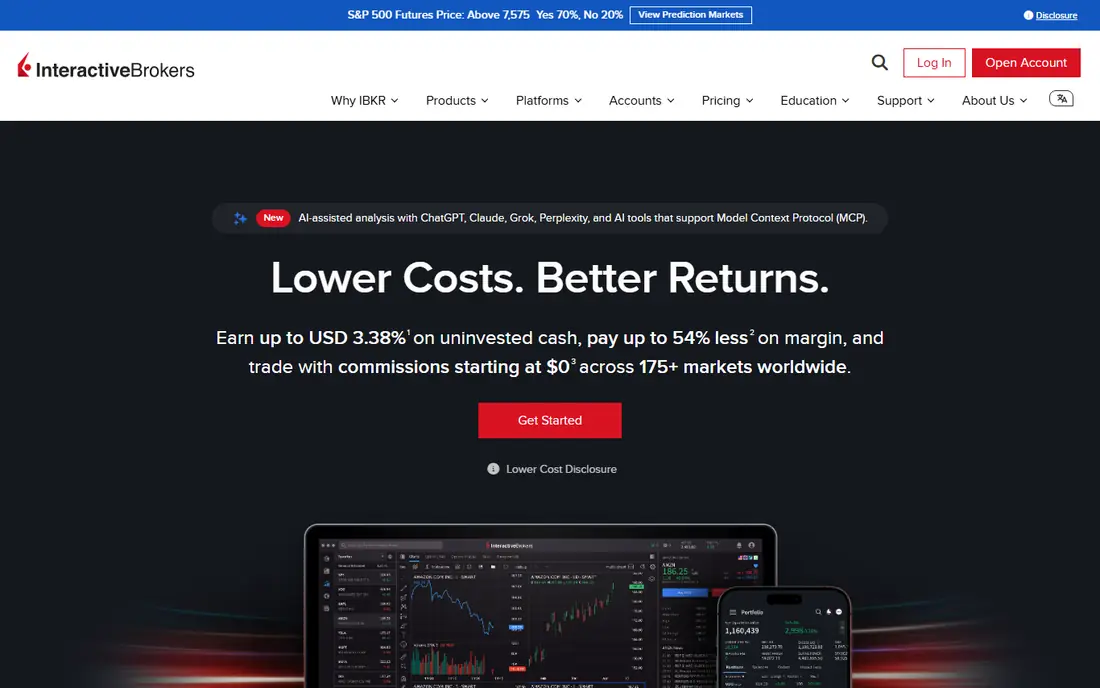
Interactive Brokers is a natural first look for traders who want futures on metals, energy and agriculture, plus stocks and ETFs linked to commodities, in one account. Its Trader Workstation platform offers deep order types, global exchanges and research tools that suit traders who already know how futures contracts, margin and rollover work. For a serious trader, that breadth is the main draw.
The drawback is the learning curve. New traders can feel lost in the platform settings, fee schedules and account choices, and the documentation assumes a level of market knowledge. Start with the demo, read the margin rules for the contracts you plan to trade, and confirm which markets are available in your country before you fund an account.
- Wide futures and global market access
- Professional trading tools
- Competitive commissions for active traders
- Platform can feel complex for beginners
- Account and fee structure needs careful reading
- Minimums and rules vary by account type
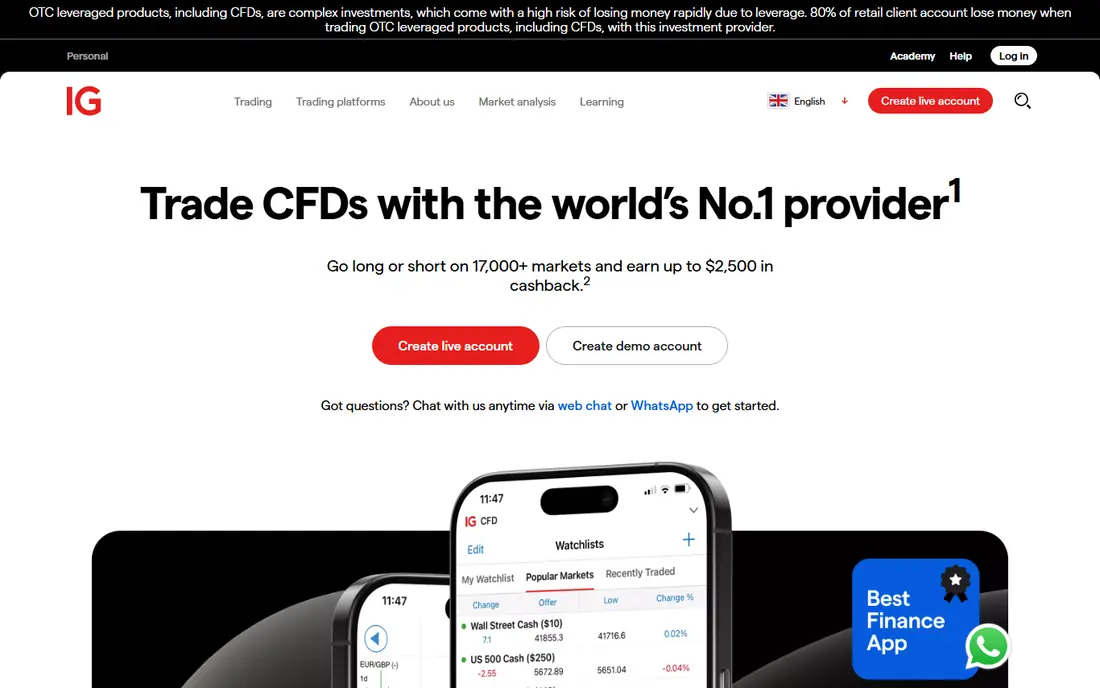
IG is widely used for commodity CFDs, covering metals, energy and agricultural markets with charting, news and research in the same platform. For a trader who wants to follow oil or gold through the day, the combination of market coverage and commentary is useful, and the platform supports stop and limit orders that help manage risk. Guaranteed stops are available on some markets, though they carry their own cost and conditions.
CFDs are margin-based products, so a small price move can produce a large loss relative to the margin posted. Check the risk warning for your region, the spread on the exact market you trade, and the overnight financing cost if you hold positions for days. A demo account is the right place to learn the platform before real money is at stake.
- Wide commodity CFD range
- Strong research and market commentary
- Risk tools including guaranteed stops on some markets
- CFD losses can exceed deposits in some regions without protection
- Spreads and overnight costs vary by market
- Platform depth takes time to learn
Pepperstone suits active traders who already use MetaTrader or TradingView and want commodity CFDs alongside forex and indices. The platform choice is a real advantage, because traders can keep the charting and automation tools they know instead of learning a new system. Standard and Razor account types let traders choose between spread-only pricing and lower spreads with commission.
As with all CFD providers, the risk warning matters more than the headline spread. Most retail CFD accounts lose money, and margin magnifies both gains and losses. Check which Pepperstone entity will hold your account, what margin limits apply, and the total cost on your typical trade size, not just the spread on gold during quiet hours.
- Choice of MetaTrader, cTrader and TradingView
- Tight spreads on Razor accounts for active traders
- Wide commodity CFD range
- CFD trading carries high risk of loss
- Razor accounts add commissions
- Support and entity rules vary by region
CMC Markets is a strong pick for traders who live in charts. Its Next Generation platform offers extensive indicators, drawing tools and pattern recognition, which suits technical traders who plan entries and exits from price action. Commodity coverage spans metals, energy and agriculture, so a trader can follow several markets without switching providers.
The platform depth is also the catch for beginners, since the number of tools can distract from the basics of position size and risk control. Spreads, overnight costs and margin rules still decide the real cost, so test the exact markets you plan to trade on a demo first. Keep position sizes small while you learn how each market moves around inventory data, weather news and macro releases.
- Strong charting and platform features
- Wide commodity CFD range
- Useful research and pattern tools
- CFD risk of loss is high
- Costs vary by market and holding period
- Platform features can overwhelm new traders
Saxo fits traders who want commodities inside a broader portfolio, with futures, CFDs, ETFs and stocks available through one platform. Its SaxoTraderGO and SaxoTraderPRO platforms offer advanced orders, portfolio views and research that suit traders managing several positions at once. For a trader who already invests across asset classes, that single-account view is convenient.
Cost is the main question to settle early. Saxo pricing depends on account tier, market and instrument, and smaller accounts may face higher relative costs. Confirm the commission and spread on your chosen commodity contracts, the margin requirements, and whether the platform tier you need is included. A demo run through a full trade, including an overnight hold, will reveal costs that a feature list hides.
- Multi-asset access including futures and CFDs
- Advanced order types
- Strong portfolio and research tools
- Pricing and minimums can be high for small accounts
- Platform complexity for beginners
- Account tiers affect costs
AvaTrade is a practical choice for newer CFD traders who want a clear platform and a broad commodity list without a steep learning curve. Its own app plus MetaTrader support covers both simple mobile trading and more advanced desktop work, and commodity options on some markets add a different way to express a view. Educational content helps new traders learn order types and risk terms.
The usual CFD cautions still apply, and US availability is limited, so US readers should check eligibility before shortlisting it. Read the spread, overnight cost and any inactivity fee in the account terms, and use the demo to practice position sizing. A platform that feels easy should not make risk feel easy, because margin does not change with the interface.
- Simple platform and mobile app
- Wide commodity CFD range including options on some markets
- Educational material for new traders
- CFD risk of loss is high
- Spreads and inactivity terms need checking
- Not a US futures broker for most US traders
OANDA suits traders who want a straightforward CFD platform with clear pricing and a low barrier to start. Its platform is less cluttered than some professional systems, which helps new traders focus on the market, the order and the risk settings. For gold, oil and a core set of commodity markets, that simplicity is enough for many retail strategies.
The trade-off is range. Traders who want a wide set of agricultural futures or niche contracts may find the list thinner than on a futures broker or a larger CFD provider. Check that the exact markets you want are offered, confirm spreads during volatile hours, and treat the demo as a test of execution and costs, not just of the interface.
- Clean platform and pricing presentation
- No minimum deposit on some account types
- Useful for smaller CFD traders
- CFD risk of loss is high
- Commodity range is narrower than some rivals
- Advanced futures access is limited
TradeStation is a strong fit for US traders who want to trade commodity futures directly, rather than through CFDs. Its platform supports advanced charting, strategy testing and automation, which suits traders who build rules-based approaches to markets like crude oil, gold, corn or natural gas. Futures also give a regulated, exchange-traded route to commodity exposure.
Futures use margin and can produce losses larger than the initial margin, with margin calls when markets move against a position. That risk, plus the platform learning curve, makes TradeStation a better fit for traders who understand futures contracts, tick sizes and rollover. New traders should paper trade first and study margin rules before committing real capital.
- Strong US futures access and tools
- Advanced charting and automation
- Good for active futures traders
- Platform complexity for beginners
- Futures carry risk of loss and margin calls
- Pricing varies by plan and volume
How we picked these
We compared official platform pages, regulator and broker coverage, and recent broker comparisons for commodity access, and we favored platforms that are actively available in October 2026 and that cover distinct routes to commodities, including futures and CFDs. We did not rank by predicted returns, since no platform can promise them. Prices are shown as See website because broker costs depend on market, account type and trade size, and the current fee schedule is the only reliable source.
What to check before you open an account
Decide first which route fits your goal: futures, commodity ETFs, stocks of producers, or CFDs. Futures suit traders who understand contracts and margin. ETFs suit longer-term exposure without margin or rollover work. CFDs suit short-term trading but carry margin risk and overnight costs. That choice narrows the platform list faster than any feature comparison.
Check regulation, entity and protection
Confirm which legal entity will serve you, which regulator oversees it, and what client money and negative balance protections apply in your country. A global brand name alone does not tell you the entity, and protections differ by region. The regulator register, not a marketing page, is the place to verify this.
Model the full cost
Look beyond the headline spread. Add commissions, overnight financing, currency conversion, data fees and any inactivity charges, and test the total on your typical trade size and holding period. A tight spread on gold means little if overnight costs eat the edge on a multi-day hold, and a low commission means little if the spread widens sharply around news.
Practice risk control on a demo
Set a maximum loss per trade, use stops, and keep position sizes small enough that one bad week does not end the account. Test how the platform behaves around volatile releases, when spreads widen and orders can slip. If you cannot explain the margin call rule for your chosen market in plain words, you are not ready to trade it live.
Frequently asked questions
What is the best commodity trading platform for beginners?
A demo-first CFD platform such as OANDA or AvaTrade is easier to learn, but beginners should still study margin and overnight costs before trading live. For longer-term exposure without margin, a brokerage that offers commodity ETFs may be a calmer starting point.
What is the best app for commodity prices?
Most platforms on this list include live commodity prices, charts and alerts in their apps, but price alone is not a trading plan. Check whether the app shows the exact contract or CFD you trade, and whether spreads widen during volatile hours.
Are commodity trading apps safe?
Regulated platforms with segregated client funds are safer than unregulated ones, but no platform removes market risk. Trading itself can lose money, and margin-based products can lose money quickly, so regulation protects the account structure, not the trade outcome.
What is the best online commodity trading platform for US traders?
TradeStation and Interactive Brokers are strong for US futures access, while IG and some CFD providers have limited or no US retail CFD availability. US traders should confirm availability and product range for their state and account type before shortlisting.
Is commodity trading software free?
Most platforms are free to open and to use on demo, but trading costs come from spreads, commissions and overnight financing. Check the fee schedule for your markets and account type, since free access does not mean free trading.
Sources
See where you really rank - block by block
ProMapRanker scans Google Maps across a grid of your service area. Simple monthly plans from $19, white-label on every plan.
Start freeKeep reading
 best tour operator software
Best Tour Operator Software in 2026
Compare the best tour operator software for bookings, channel management, waivers and payments, with pricing models for day tours and multi-day trips.
Read → best time clock app for small business
Best Time Clock App for Small Business in 2026
We compare the best time clock app for small business options, with free plans, GPS clock ins, scheduling and payroll links for hourly teams and payroll help.
Read → best test automation tools
Best Test Automation Tools in 2026
Compare the best test automation tools, from Playwright and Selenium to Cypress, Katalon and BrowserStack, with prices, languages and best uses explained.
Read →