 ProMapRanker
Best Cloud Security Platform in 2026

Key takeaways
- Agentless posture tools like Wiz and Orca find risk fast across clouds, while runtime tools like Sysdig and CrowdStrike matter once workloads are running.
- Most enterprise platforms here use quote-based pricing tied to workload or resource counts, so count your cloud assets before asking for a quote.
- Attack-path views help small security teams focus, since a long list of misconfigurations without priority often gets ignored.
- No single platform covers every cloud risk alone, so check identity, code, container, and runtime coverage together, not just posture scores.
Quick comparison
| Pick | Great for | Pricing starts at | Free tier | |
|---|---|---|---|---|
 Wiz | Attack-path triage | See website | Free trial | Visit |
 Orca Security | Agentless cloud coverage | See website | Free trial | Visit |
 Palo Alto Networks Prisma Cloud | Enterprise breadth | See website | Free trial | Visit |
 CrowdStrike Falcon Cloud Security | Runtime and SOC continuity | See website | Free trial | Visit |
 Microsoft Defender for Cloud | Azure and multi-cloud basics | See website | Yes | Visit |
 Lacework | Anomaly detection | See website | Free trial | Visit |
 Sysdig | Container runtime depth | See website | Free trial | Visit |
 Aqua Security | Container and cloud workload | See website | Free trial | Visit |
 Tenable Cloud Security | Identity and exposure risks | See website | Free trial | Visit |
The best cloud security platform
We compared official feature pages, pricing pages, and public reviews for nine cloud security platforms. This guide covers security tooling for cloud teams, not personal antivirus, and pricing is quote-based for most enterprise picks.
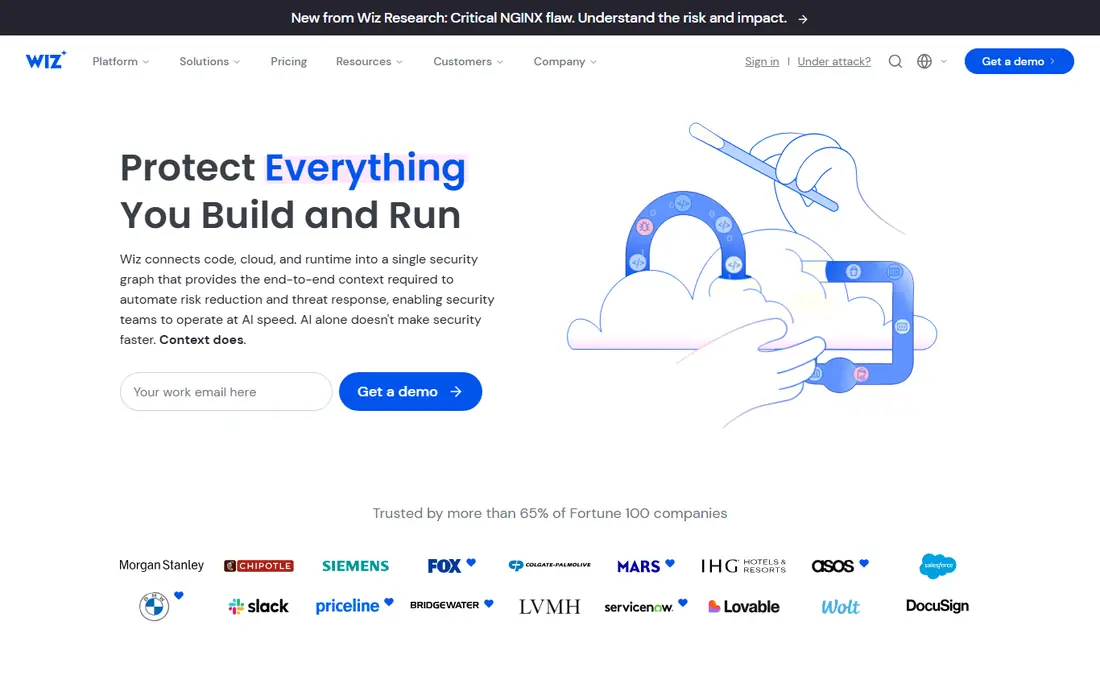
Wiz suits a security team drowning in cloud alerts and needing to know what to fix first. Its security graph links misconfigurations, vulnerabilities, exposed data, and identity risks into attack paths, so a critical combination stands out from a harmless single issue. Agentless scanning covers AWS, Azure, Google Cloud, and other services without agents on every workload.
The catch is pricing scope. Modules for runtime, code, and AI assets can lift the total well above a basic posture quote, so define which modules you need before budgeting. Wiz is the shortlist leader when triage and multi-cloud visibility matter most.
- Clear attack-path and risk prioritization
- Agentless multi-cloud coverage
- Broad module range
- Quote-based pricing
- Module costs vary widely by scope
Orca Security fits teams that want broad cloud coverage quickly, without a long agent rollout. SideScanning reads workload data from outside the running instance, covering virtual machines, containers, serverless functions, and cloud storage. That approach helps teams with large, changing estates get a risk view in days rather than months.
The limit is runtime. Orca covers runtime risks, but teams needing deep container runtime detection may still compare Sysdig or CrowdStrike. Pick Orca when fast, agentless, multi-cloud coverage is the main goal.
- Fast agentless scanning
- Broad workload and data coverage
- Clear risk prioritization
- Quote-based pricing
- Runtime depth varies by deployment
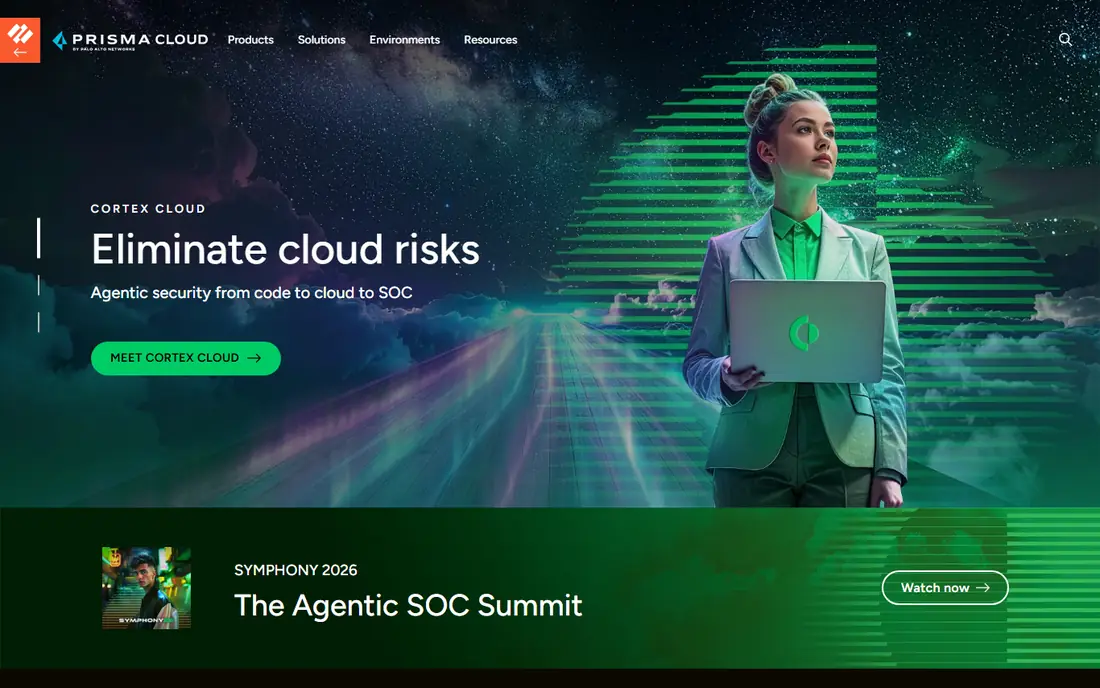
Prisma Cloud, now part of Palo Alto Networks Cortex Cloud offerings, suits large enterprises that want many cloud security modules from one vendor. Posture, workload protection, network security, code security, and data security can sit under one platform, with compliance reporting for common frameworks. That breadth helps firms consolidating several point tools.
The drawback is complexity and pricing. Credit-based licensing maps differently to each resource type, so estimates need a detailed asset inventory. Smaller teams may find Wiz or Orca easier to buy and run, while large Palo Alto estates gain the most from Prisma Cloud.
- Very broad module set
- Strong enterprise and compliance tools
- Palo Alto ecosystem links
- Credit-based pricing is hard to estimate
- Setup and learning curve are steep
CrowdStrike Falcon Cloud Security suits teams that already run CrowdStrike for endpoints and want cloud runtime in the same console. Runtime detection, threat hunting, and posture findings feed one security workflow, so analysts do not switch tools during an incident. That continuity helps a SOC respond faster across endpoints and cloud workloads.
The catch is platform fit. Teams without Falcon may find the learning curve and module pricing harder to judge, and posture-only buyers may prefer Wiz or Orca. Pick CrowdStrike when runtime detection and SOC continuity lead the decision.
- Strong runtime detection and threat hunting
- Links to endpoint security
- Broad cloud workload coverage
- Quote-based pricing
- Full value needs Falcon platform familiarity
Microsoft Defender for Cloud fits Azure-heavy teams that want native posture and workload protection without a separate vendor first. A free tier covers basic cloud posture for Azure, while paid plans add threat protection, regulatory compliance tools, and multi-cloud coverage. Integration with Microsoft Sentinel and Defender XDR helps Microsoft-based SOC teams.
The limit is scope outside Azure. Multi-cloud coverage exists, but depth and pricing vary by resource type, so AWS and Google Cloud teams should trial it against Wiz or Orca. Use Defender for Cloud as the native baseline, and add a dedicated platform when triage or container depth needs more.
- Native Azure protection
- Free basic posture tier for Azure
- Multi-cloud connectors
- Paid plans are usage-based and vary by resource
- Depth varies outside Azure
Lacework, now part of Fortinet, suits teams that worry about unusual cloud behavior rather than just known misconfigurations. Its behavior engine learns normal cloud activity, then flags anomalies that may signal misuse or attack, even when no single setting looks wrong. That approach catches threats that checklist-style posture tools can miss.
The trade-off is breadth. Lacework covers posture and workload risks, but firms wanting the widest module set may prefer Prisma Cloud or Wiz. Pick Lacework when anomaly detection and cloud activity insight are the priority.
- Behavior-based anomaly detection
- Strong cloud activity analysis
- Fortinet ecosystem links
- Quote-based pricing
- Posture breadth is narrower than the biggest platforms
Sysdig fits teams running containers and Kubernetes at scale, where runtime behavior decides real risk. It tracks system calls and container activity, filters vulnerabilities to those actually in use, and helps teams respond to runtime threats without chasing every reported flaw. That runtime depth is its clear edge over posture-only tools.
The limit is focus. Sysdig covers cloud posture too, but buyers who mainly need multi-cloud posture and identity risk may prefer Wiz, Orca, or Tenable. Use Sysdig when container runtime security leads the buying decision.
- Deep container and Kubernetes runtime insight
- In-use vulnerability filtering
- Falco lineage
- Quote-based pricing
- Posture-only buyers may find it specialized
Aqua Security suits teams that build and run containerized apps and want security across the pipeline and runtime. Image scanning, runtime policies, and cloud workload protection help stop risky images before deployment and block bad behavior after it. Pipeline tools add code and infrastructure checks for engineering-led teams.
The catch is packaging. Aqua covers a wide range, but the full cloud-native application protection set depends on the plan and modules chosen. Compare the quoted module list with Wiz and Prisma Cloud if you need one platform for posture, identity, and runtime together.
- Strong container image and runtime controls
- Cloud workload protection
- Pipeline security tools
- Quote-based pricing
- Broad CNAPP breadth varies by package
Tenable Cloud Security suits teams worried about identity sprawl and toxic permission combinations in the cloud. Permission analytics show who can reach sensitive data, just-in-time access tools reduce standing privilege, and exposure views link identity risk to misconfigurations and vulnerabilities. That identity focus fills a gap that posture scores alone can miss.
The limit is runtime specialization. Teams needing deep container runtime detection should also trial Sysdig or CrowdStrike. Pick Tenable when identity, permissions, and exposure risk lead the cloud security plan.
- Strong identity and permission analytics
- Exposure and attack-path views
- Broad vulnerability heritage
- Quote-based pricing
- Runtime depth varies by deployment
How we picked these
We compared official feature and pricing pages, product documentation, and public reviews for cloud security platforms that still operate in October 2026. We kept platforms with real multi-cloud or workload coverage, not single-cloud checklists alone, and we favored tools with clear risk prioritization. We did not claim hands-on testing, and we wrote See website where a vendor does not publish a starting price.
What to check before you buy
Start with an asset count across all clouds, including accounts, workloads, containers, identities, and data stores. That count drives quotes, since most vendors price by workload or resource, and an incomplete count leads to a surprise renewal. Trial each finalist on your real estate, not a demo account, and check whether findings match risks your team already knows.
Next, test the fix workflow. A platform should route a finding to the right owner, show the exact resource and fix, and track closure, not just list problems. Check identity coverage, code and pipeline coverage, and runtime coverage separately, since a platform can be strong in one area and thin in another.
A practical trial checklist
Measure time to first full scan, share of findings with a clear owner, and share of critical findings that turn out to be false positives in your environment. Ask how the platform handles new accounts, ephemeral workloads, and AI-related cloud assets, since those areas grow fast. Those trial numbers matter more than a vendor risk score alone.
Frequently asked questions
What is the best cloud security platform overall?
Wiz leads for attack-path triage across clouds, Orca leads for fast agentless coverage, and Prisma Cloud leads for enterprise breadth. The best cloud security platform for your team depends on cloud mix, team size, and whether runtime or posture matters most.
What is the best cloud security platforms comparison for small teams?
Small teams should start with Microsoft Defender for Cloud as a native baseline, then trial Wiz or Orca for triage if alert volume overwhelms them. Count workloads first, since quote-based pricing can exceed a small security budget quickly.
Do I need agents for cloud security?
No, Wiz and Orca offer agentless scanning that covers much of the estate without agents, though runtime detection often benefits from agents or sensors on key workloads. Many teams combine agentless posture with targeted runtime agents.
How much does cloud security software cost?
Most enterprise platforms here use quote-based pricing tied to workload or resource counts, so costs vary widely. Ask for a quote based on a full asset inventory, and include runtime, code, and AI modules in the first estimate.
Can one platform secure AWS, Azure, and Google Cloud?
Yes, Wiz, Orca, Prisma Cloud, and several others here support multi-cloud coverage, though depth varies by cloud service. Trial each finalist across all three clouds you use, and check identity and data coverage per cloud, not just a headline multi-cloud claim.
Sources
See where you really rank - block by block
ProMapRanker scans Google Maps across a grid of your service area. Simple monthly plans from $19, white-label on every plan.
Start freeKeep reading
 who has best internet service
Who Has the Best Internet Service in 2026
Who has best internet service for US homes? We compare fiber, cable, fixed wireless and satellite providers on speed, price, availability and terms today.
Read → which survey tool has the best analytics
Which Survey Tool Has the Best Analytics in 2026
Find which survey tool has the best analytics in 2026, comparing Qualtrics, SurveyMonkey, Typeform, Alchemer, and more on reports, text, and stats today.
Read → which streaming service has the best movies
Which Streaming Service Has the Best Movies in 2026
Answering which streaming service has the best movies, with Netflix, Max, Criterion and more compared on libraries, prices and free options in this guide.
Read →