 ProMapRanker
Best Cloud Computing Companies in 2026

Key takeaways
- AWS, Microsoft Azure, and Google Cloud lead on breadth, regions, and enterprise services, but their pricing is complex and needs careful monitoring.
- Oracle Cloud offers the most generous always-free tier for small projects, while DigitalOcean and Vultr suit developers who want simple, flat pricing.
- Alibaba Cloud is strongest for workloads aimed at Asia, and IBM Cloud suits regulated industries with existing IBM systems.
- Free credits expire, and data transfer out, idle resources, and backups are the costs that surprise new users most.
- Pick by workload and team skill, not by brand alone, and set billing alerts on day one.
Quick comparison
| Pick | Great for | Pricing starts at | Free tier | |
|---|---|---|---|---|
 Amazon Web Services | Broadest service range | See website | Yes | Visit |
 Microsoft Azure | Microsoft and enterprise shops | See website | Yes | Visit |
 Google Cloud | Data, analytics, and AI | See website | Yes | Visit |
 Oracle Cloud | Generous always-free tier | Free | Yes | Visit |
 IBM Cloud | Regulated and IBM shops | See website | Yes | Visit |
 Alibaba Cloud | Asia-focused workloads | See website | Yes | Visit |
 DigitalOcean | Simple developer hosting | $4 per month | No | Visit |
 Akamai Cloud | Predictable developer hosting | See website | No | Visit |
 Vultr | Low-cost global servers | $2.50 per month | No | Visit |
The best cloud computing companies
We compared providers on service breadth, regions, free tiers, pricing model, and the kind of team each one suits. Prices for the large providers are pay-as-you-go and vary by service, region, and usage, so we use See website where no single starting price would be honest.
Amazon Web Services, known as AWS, remains the default choice for teams that want the widest range of services. From virtual servers and storage to databases, machine learning, and serverless tools, almost every workload has a managed option, and the partner and hiring pool is the largest in the industry. New accounts get a free tier with always-free usage for many services, plus trial credits in current offers.
The catch is cost control. With hundreds of services and per-second billing, an idle server, a forgotten snapshot, or a large data transfer bill can surprise you. AWS suits teams that will set budgets, billing alerts, and tagging from the start, and who value breadth over simplicity.
- Largest service catalog
- Most regions and partners
- Mature tools for startups and enterprises
- Pricing is complex
- Costs can grow fast without monitoring
- Learning curve is steep
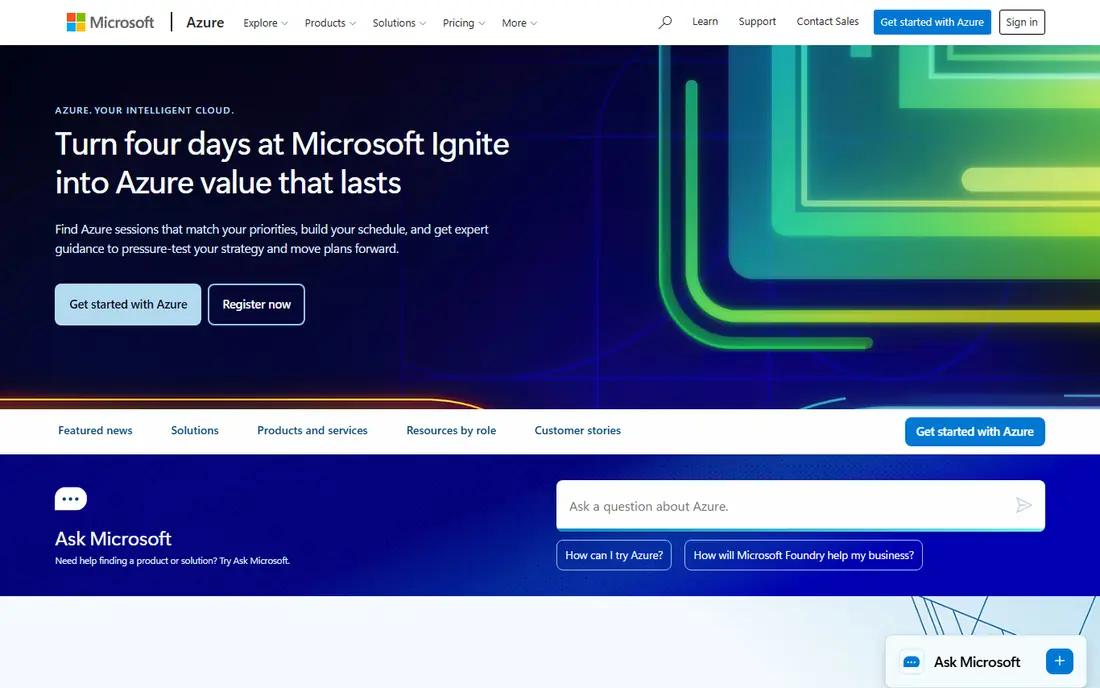
Microsoft Azure is the natural pick for companies already running Microsoft 365, Windows Server, or Active Directory. Identity, security, and hybrid tools fit together well, and many enterprise agreements already include Azure benefits. New accounts typically get $200 in credit for 30 days, plus free services for 12 months and always-free services after moving to pay-as-you-go.
Newcomers can find Azure harder to navigate than a simple host, because the catalog is large and service names overlap. If your team already knows Microsoft tools, that learning cost is low. If you are starting fresh with a small app, a simpler provider may get you live faster.
- Deep Microsoft 365 and Windows integration
- Strong enterprise and hybrid tools
- $200 trial credit for 30 days
- Service naming and pricing can confuse newcomers
- Some services lag AWS in maturity
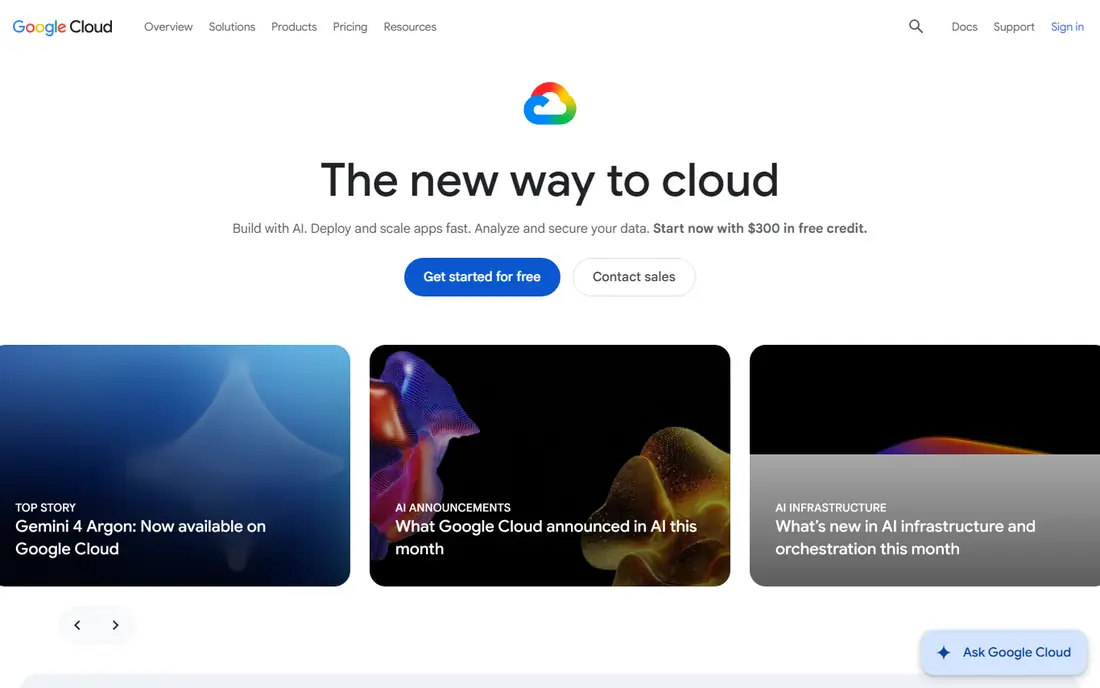
Google Cloud stands out for data, analytics, and AI workloads. BigQuery, its data warehouse, offers a large free monthly query allowance, and its AI and machine learning tools are tightly integrated with its data platform. New accounts typically receive $300 in credit for 90 days, plus always-free tiers for products such as a small virtual machine, storage, and Cloud Run requests.
The trade-off is enterprise reach. In some industries and regions, AWS and Azure have deeper partner networks and more pre-built enterprise integrations. For a data-heavy startup or a team building AI features, though, Google Cloud is often the most productive choice.
- Strong data and AI tools
- $300 trial credit for 90 days
- Generous always-free analytics allowances
- Smaller enterprise partner pool than AWS in some regions
- Pricing varies by service and region
Oracle Cloud Infrastructure is our pick for hobby projects and small production workloads that need to stay free. Its always-free tier includes Arm-based compute, block storage, and Autonomous Databases, with no time limit, plus 10 TB of outbound data transfer a month in current terms. That combination beats every other large provider for a low-cost, always-on project.
The catalog is narrower than AWS, and Oracle's enterprise focus shows in support and sales paths. If you run Oracle databases or enterprise apps, the fit is strong. If you need a niche managed service that only AWS offers, check availability before you commit.
- Always-free compute, storage, and databases with no expiry
- $300 trial credit for 30 days
- Low data transfer costs
- Smaller service catalog than AWS
- Enterprise sales focus can slow small-team onboarding
IBM Cloud suits banks, insurers, health care teams, and other regulated organizations that already use IBM software. Its security, compliance, and hybrid cloud tools are built for that audience, and more than 40 Lite plans offer free usage with monthly quotas. New pay-as-you-go accounts typically get $200 in credit for the first 30 days.
For a small startup, IBM Cloud can feel heavier than DigitalOcean or Google Cloud, and the community and tutorial pool is smaller. Pick it when compliance, existing IBM integration, or enterprise support matters more than community size or simple pricing.
- Strong security and compliance focus
- Lite plans that never expire
- Good fit for existing IBM systems
- Smaller developer community
- Some services feel enterprise-first
Alibaba Cloud is the leading choice for apps aimed at users in China and across Asia. It offers a broad catalog, strong regional data centers, and local compliance and payment integrations that US providers cannot match in that market. Trial offers for new users cover many products, which helps teams test regional performance before committing.
US teams with no Asian audience will get less value here, and documentation can feel less polished than AWS or Google Cloud in English. If your users are mainly in North America or Europe, stick with a provider whose regions and support are closest to them.
- Strong presence across Asia
- Large service catalog
- Competitive pricing for regional workloads
- Less familiar to US teams
- Documentation and support quality varies by region
DigitalOcean is our pick for developers and small teams who want a server without a cloud certification course. Droplets, managed databases, and app hosting use clear monthly prices, starting at $4 per month for a basic server, and the documentation is among the best in the industry. That simplicity makes cost forecasting easy.
The limit is breadth. DigitalOcean does not match the large providers on managed AI, data, or enterprise services, so large or complex systems may outgrow it. For a website, API, or small SaaS product, though, it is often the fastest path from idea to a live, affordable server.
- Simple flat pricing
- Excellent documentation
- Fast setup for servers, apps, and databases
- Fewer managed enterprise services
- No free tier beyond trial offers
Akamai Cloud, formerly Linode, suits developers who want predictable virtual servers backed by a global content delivery network company. Its compute, storage, and Kubernetes offerings use clear pricing, and its network reach helps apps that serve users across regions. New customers have been offered trial credit in recent offers, though terms vary, so check the current page.
It does not offer the same depth of managed data and AI services as the large providers, and its brand change can confuse search results, since older guides still call it Linode. If you want a straightforward virtual server with strong networking, it is a solid alternative to DigitalOcean and Vultr.
- Predictable pricing and global data centers
- Strong networking heritage
- Good developer tools
- Smaller managed service catalog
- Trial credit terms vary for new customers
Vultr is the budget pick for developers who need a cheap server in a specific city. Entry servers start at $2.50 per month, locations span many countries, and bare metal and GPU options cover heavier workloads. The control panel is simple, and billing is easy to predict for a fixed server size.
Managed services are thinner than at DigitalOcean, and support is geared toward self-serve developers rather than enterprise accounts. If you are comfortable managing your own server, Vultr gives you global reach at a low price. If you need managed databases, AI tools, or hands-on support, a larger provider will suit you better.
- Very low entry price
- Many global locations
- Simple server and bare metal options
- Fewer managed services
- Support is less hands-on than enterprise providers
How we picked these
We compared official free tier pages, pricing pages, and region lists for providers with a real global presence and a current free or low-cost entry point. We favored providers that a US small business or developer can actually sign up for today, and we left out niche hosts with no managed cloud catalog. Free credit amounts change often, so we treat the provider page on the day you sign up as the final source, and we flag where an amount could not be confirmed from the vendor page.
How to choose the right provider
Start with your workload, not with a market share chart. A simple website or API belongs on DigitalOcean, Vultr, or Akamai Cloud, where pricing is flat and setup is fast. A data or AI product belongs on Google Cloud, while a Microsoft-heavy enterprise belongs on Azure, and a workload that needs every managed service belongs on AWS. A free, always-on side project belongs on Oracle Cloud, and an Asia-facing product belongs on Alibaba Cloud.
Then budget for the hidden costs. Data transfer out, idle servers, snapshots, logs, and premium support are where bills grow, so set a billing alert at a low threshold on day one and review usage weekly for the first month. Also check regions, compliance needs, and team skill. A provider your team already knows will ship faster than a cheaper provider your team must learn, and that time saving often outweighs a small price gap.
Frequently asked questions
What is the best cloud computing company?
AWS leads on service breadth, Azure leads for Microsoft shops, and Google Cloud leads for data and AI work, so the best choice depends on your workload. For simple developer hosting, DigitalOcean is often the best balance of price and ease. Match the provider to your team skill and your workload before you compare prices.
Which cloud company is best for small businesses?
DigitalOcean and Vultr suit most small businesses with a website or app, because pricing is flat and setup is simple. Oracle Cloud suits a small business that wants a free, always-on project, while Google Cloud suits a small team building data or AI features. Avoid a large enterprise platform unless you need its managed services, since complexity adds cost.
What is the best cloud company for beginners?
DigitalOcean is the easiest large-scale starting point for beginners, thanks to clear pricing and strong documentation. Oracle Cloud is also beginner-friendly for free projects, because its always-free tier has no expiry. Start with one small server, set a billing alert, and learn one service at a time rather than trying to use a full enterprise catalog at once.
Is AWS better than Azure and Google Cloud?
AWS has the largest catalog and partner pool, Azure has the deepest Microsoft integration, and Google Cloud has the strongest data and AI tools, so none is better for every workload. Compare the services you actually need, the regions closest to your users, and the pricing for your usage pattern. A short trial on two providers, with the same workload, will tell you more than any ranking.
Do cloud providers offer free tiers?
Yes. AWS, Azure, Google Cloud, Oracle Cloud, and IBM Cloud all offer free tiers or trial credits, and Oracle Cloud offers an always-free tier with no expiry. DigitalOcean, Akamai Cloud, and Vultr use low flat prices and occasional trial credit instead of a permanent free tier. Free credits expire, so check the expiry date and set a billing alert before the trial ends.
How much does cloud hosting cost per month?
It ranges from free on an always-free tier, to $2.50 to $4 per month for a basic server at Vultr or DigitalOcean, to pay-as-you-go bills that scale with usage at AWS, Azure, and Google Cloud. A small website often costs under $20 per month, while a busy app with databases, storage, and data transfer can cost hundreds or more. Always forecast data transfer and storage, not just server price.
Sources
See where you really rank - block by block
ProMapRanker scans Google Maps across a grid of your service area. Simple monthly plans from $19, white-label on every plan.
Start freeKeep reading
 github alternatives
Best GitHub Alternatives in 2026
Explore the best GitHub alternatives in 2026, from GitLab and Bitbucket to self-hosted Gitea and Forgejo, with prices and trade-offs for developers for readers.
Read → cineby alternatives
Cineby Alternatives in 2026
We compared legal cineby alternatives for licensed streaming, including Netflix, Hulu, Disney Plus, and free options, so you can watch without piracy sites.
Read → best visibility analysis software
Best Visibility Analysis Software in 2026
Compare the best visibility analysis software for search and AI answers. We review 8 tools that track brand mentions, citations, and rankings Updated for 2026.
Read →