 ProMapRanker
Best Certifications for Software Engineers in 2026


Engineers designing systems on AWS · Pricing starts at: $150
Key takeaways
- Cloud certs from AWS, Google and Microsoft give the clearest signal for engineers working on cloud systems, with exam fees from $150 to $200 in this group.
- Security certs such as CompTIA Security+ and CISSP suit different career stages, with Security+ as an entry point and CISSP as a senior credential.
- Kubernetes and Java certs suit engineers who want a focused technical proof of skill, rather than a broad cloud credential.
- A cert helps most when it matches work you already do or want next, and it never replaces a portfolio of real projects.
Quick comparison
| Pick | Great for | Pricing starts at | Free tier | |
|---|---|---|---|---|
| AWS Certified Solutions Architect Associate | Engineers designing systems on AWS | $150 | No | Visit |
 Google Professional Cloud Architect | Engineers designing systems on Google Cloud | $200 | No | Visit |
 Microsoft Azure Developer Associate | Developers building apps on Azure | See website | No | Visit |
 Certified Kubernetes Application Developer | Developers running apps on Kubernetes | See website | No | Visit |
 Oracle Certified Professional Java | Java developers wanting a language credential | See website | No | Visit |
 CompTIA Security+ | Engineers adding a security foundation | $439 | No | Visit |
 CISSP | Senior engineers moving into security leadership | $749 | No | Visit |
 Professional Scrum Master I | Engineers working in Scrum teams | See website | No | Visit |
The best certifications for software engineers
We compared official exam pages and issuer pricing for certifications relevant to working software engineers in October 2026, and kept certs that are still offered and recognised by employers.
AWS Certified Solutions Architect Associate
Great for: Engineers designing systems on AWS
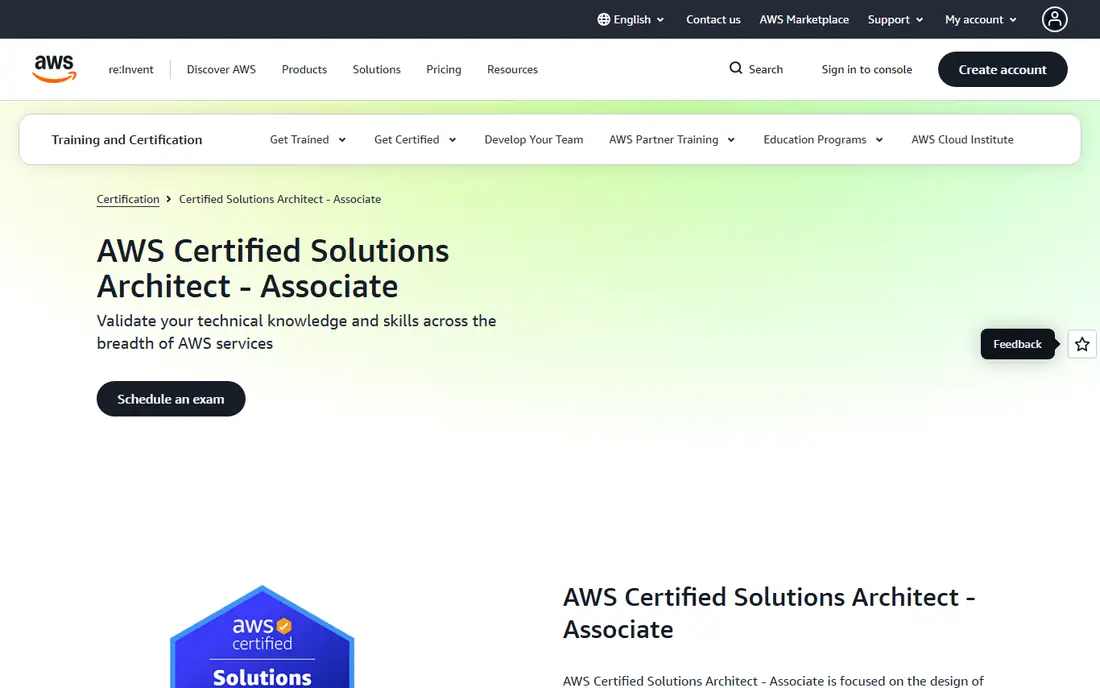
This is the most useful starting cloud cert for many software engineers, because it tests design choices rather than memorised service names alone. The exam covers secure, resilient, high-performing and cost-aware architectures, with 65 questions in 130 minutes and a passing scaled score of 720 out of 1000. Engineers with about a year of hands-on AWS work will find the syllabus familiar.
The limit is scope. It proves AWS design skill, not general software engineering skill, and it will not help much in a shop that runs mainly on Google Cloud or Azure. Pair it with project work that shows the same design thinking in code, so hiring managers see both the credential and the practice behind it.
- Widely recognised for AWS design work
- Clear exam guide and practice material
- Valid for three years
- AWS-specific, so less useful outside AWS shops
- Exam fee plus study time is a real cost
- Needs renewal after three years
Google Professional Cloud Architect
Great for: Engineers designing systems on Google Cloud
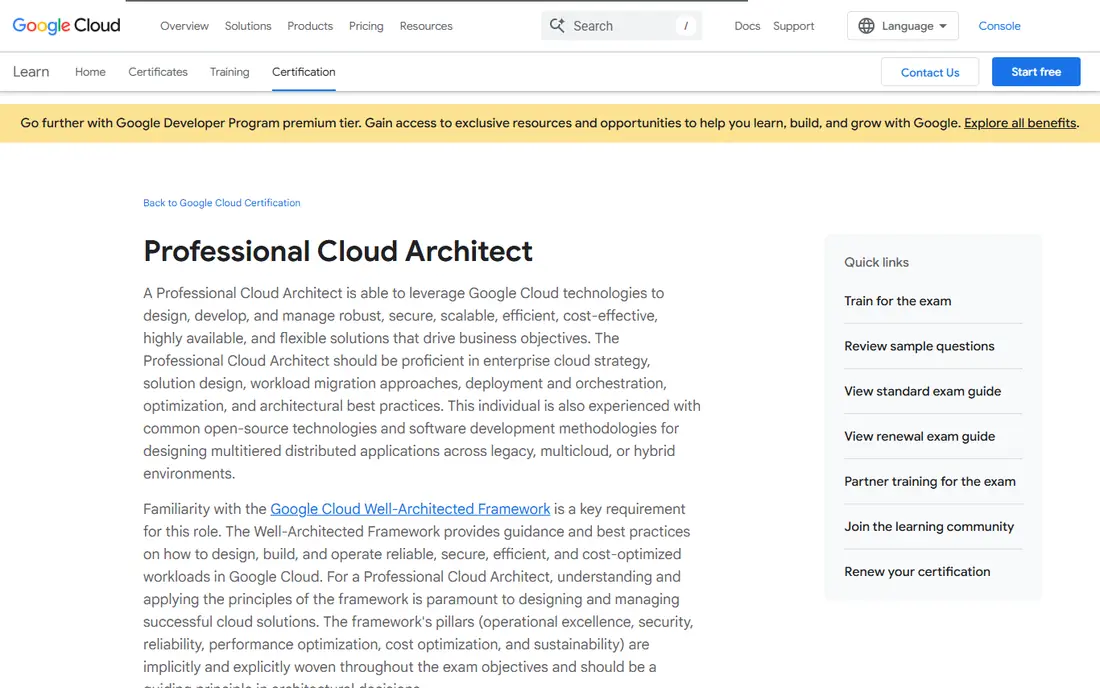
Google's Professional Cloud Architect exam suits engineers who already design systems on Google Cloud and want a professional-level credential. It uses multiple-choice and multiple-select questions, including case studies, over two hours, and it covers design, provisioning, security, reliability and cost. That case-study style rewards judgement, not just recall.
It is not a beginner cert. Google recommends at least three years of industry experience, including a year designing and managing Google Cloud solutions. Engineers early in their careers may get more value from an associate-level cert first, then return to this one after real project experience.
- Professional-level design credential
- Case studies test real trade-offs
- Valid for two years
- Higher exam fee than AWS Associate
- Google recommends several years of experience
- Shorter validity period
Microsoft Azure Developer Associate
Great for: Developers building apps on Azure
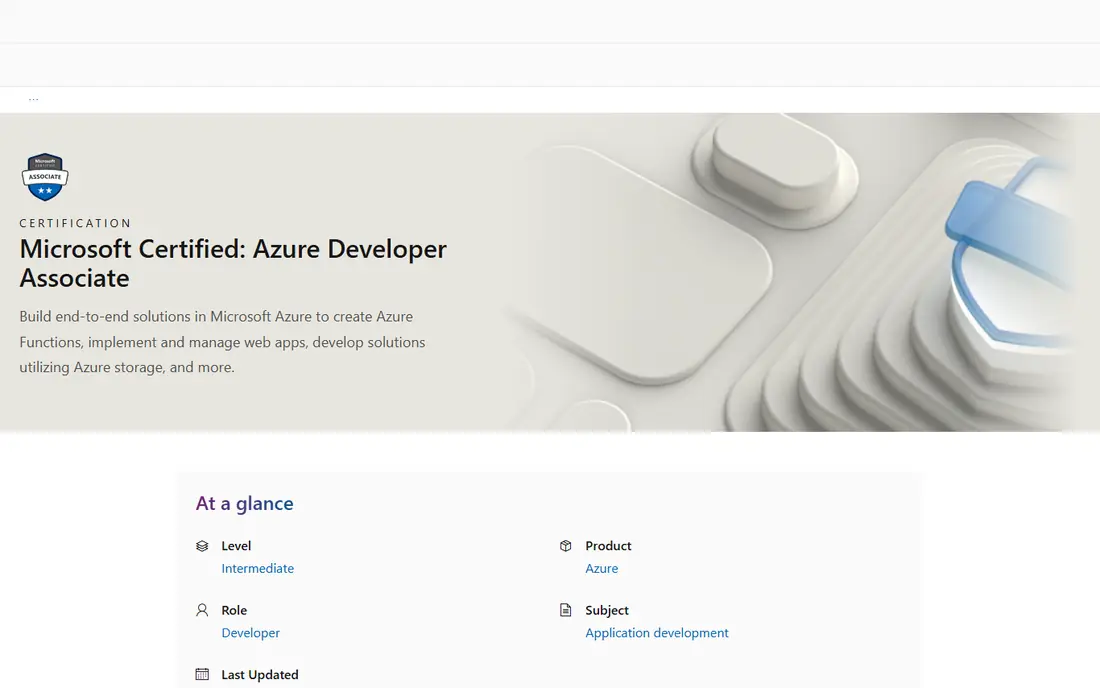
This cert, known as AZ-204, fits developers who build, test and deploy applications on Azure. It covers Azure compute, storage, security, monitoring and integration with Azure services, which maps closely to day-to-day work in a Microsoft-focused shop. The free Microsoft Learn paths make preparation cheaper than many other certs.
The drawback is the same as with any vendor cert: it proves Azure skill, not portable engineering skill. Developers in multi-cloud or non-Azure teams should weigh it against a vendor-neutral option, or pair it with a portfolio project that shows the same patterns outside Azure.
- Focused on building and deploying Azure apps
- Ties closely to Azure services developers use daily
- Microsoft Learn material is extensive
- Azure-specific scope
- Exam content changes as Azure services change
- Pricing should be confirmed at booking
Certified Kubernetes Application Developer
Great for: Developers running apps on Kubernetes
The Certified Kubernetes Application Developer exam, run by the Cloud Native Computing Foundation, stands out because it is practical. Candidates solve tasks in a live Kubernetes environment, covering application design, deployment, observability and service networking. That format gives hiring managers more confidence than a multiple-choice test alone.
Preparation takes lab time. Reading about pods and services is not enough, and engineers who have not run real workloads on Kubernetes will struggle under time pressure. It suits developers already shipping containerised apps who want a vendor-neutral proof of that skill.
- Hands-on, performance-based exam
- Directly relevant to container work
- Recognised across cloud vendors
- Needs real Kubernetes practice, not just reading
- Exam is timed and practical
- Fee should be confirmed on the CNCF site
Oracle Certified Professional Java
Great for: Java developers wanting a language credential
Oracle's Java certification suits developers who work in Java every day, especially in enterprise teams where Java remains the main language. It tests language features, APIs and programming practice in depth, rather than cloud or framework trivia. For a Java developer in banking, insurance or large enterprise software, that depth still carries weight.
It is less useful outside Java work. A hiring manager for a Python or Go role will care more about project work than a Java credential. Check the current exam version before booking, since Java versions change and study material must match the version you will sit.
- Language-specific depth for Java developers
- Long-running Oracle credential
- Useful in enterprise Java shops
- Narrow language scope
- Version-specific content
- Enterprise focus may matter less in startup hiring
CompTIA Security+ is the most common starting point for engineers who want a security credential without committing to a senior, experience-based exam. It covers threats, architecture, operations, incident response and governance at a broad level, with up to 90 questions in 90 minutes. No work experience is required, though CompTIA suggests prior networking and security familiarity.
The breadth is both a strength and a limit. It gives a shared security vocabulary for engineering teams, but it does not prove deep skill in any one area. Engineers should treat it as a foundation, then add hands-on security work or a deeper cert once they know which security direction they want.
- Vendor-neutral security foundation
- Widely recognised for entry and mid-level roles
- No experience requirement
- Exam fee rose in 2026
- Broad syllabus covers many topics lightly
- Renewal needs continuing education
CISSP, from ISC2, is a senior credential for engineers moving toward security architecture, management or governance. It covers security and risk management, asset security, architecture, network security, identity management, testing, operations and software development security. The exam is adaptive, with 100 to 150 questions over three hours.
The experience bar is the main filter. Candidates need five years of paid work across at least two domains, though a degree or approved credential can reduce that by a year. Engineers without that experience can become an Associate of ISC2 after passing, then earn the full credential once experience is met. It is not a first cert, and it should not be the first step for a junior engineer.
- Senior, widely recognised security credential
- Covers eight security domains
- Strong signal for leadership and governance roles
- Requires five years of paid experience in relevant domains
- High exam fee plus annual maintenance fee
- Broad, management-leaning syllabus
Professional Scrum Master I, from Scrum.org, suits engineers who work in Scrum teams and want to show they understand Scrum roles, events and artefacts. It is a single exam without a mandatory course, and it carries no renewal fee at this level. For an engineer who already helps run standups, planning or retrospectives, it formalises that work.
It will not help a purely technical hiring case. A manager hiring for coding skill will weigh project work and technical certs more heavily. Its value is highest in teams that actually use Scrum, where shared language about sprints, backlogs and team accountability improves daily work.
- Focused on Scrum theory and team practice
- No renewal fee for this level
- Useful for engineers who also facilitate teams
- Does not prove coding skill
- Theory-heavy for engineers who only want a technical cert
- Value depends on team use of Scrum
How we picked these
We compared official issuer pages for certifications that working software engineers can still earn in October 2026. We favoured certs with clear exam guides, published fees where available, and recognition across employers, and we avoided training bundles that hide the exam fee. Where a fee was not confirmed on the issuer page during research, we wrote See website rather than repeating a third-party figure.
How to choose a certification
Start with the work you want next, not the cert that looks most impressive. If your next role runs on AWS, an AWS cert makes sense. If it runs on Kubernetes, CKAD makes more sense. A cert that does not match your target stack is a costly distraction, however well known it is.
Next, check the experience bar and renewal rules before paying. CISSP needs years of experience, Google's professional cert recommends several years, and most certs expire after two or three years. A cert that expires before you use it is money spent for little return.
Finally, budget for study time, not just the exam fee. Most of these exams need weeks of focused preparation, plus lab work for practical exams such as CKAD. Pick one cert, finish it, and then build a project that uses the same skills, so the credential and the work reinforce each other.
Frequently asked questions
What are the best software engineer certifications?
AWS Certified Solutions Architect Associate, Google Professional Cloud Architect and Microsoft Azure Developer Associate are strong cloud choices, while CKAD suits Kubernetes developers and CompTIA Security+ suits engineers adding security. The best choice depends on your stack and next role.
What are the best certifications for software developers starting out?
CompTIA Security+ and an associate-level cloud cert such as AWS Solutions Architect Associate are common starting points, since neither requires years of experience. Pair either with real projects, since employers still weigh code and shipped work heavily.
Are software engineering certifications worth it?
A cert can help a resume pass screening and force structured study of a syllabus, but it does not replace hands-on experience. It is worth most when it matches work you already do or want next, and worth least when it sits alone without projects to back it up.
How much do software engineer certifications cost?
In this list, exam fees run from $150 for AWS Solutions Architect Associate and $200 for Google Professional Cloud Architect to $439 for CompTIA Security+ and $749 for CISSP. Training, books and retakes are extra, so check the issuer page for the total before booking.
How long do software certifications last?
AWS certifications are valid for three years, Google Professional Cloud Architect for two years, and CompTIA Security+ for three years with continuing education. CISSP needs annual maintenance and continuing education to stay active. Check the issuer page for current renewal rules.
Sources
- https://aws.amazon.com/certification/certified-solutions-architect-associate
- https://cloud.google.com/learn/certification/cloud-architect
- https://learn.microsoft.com/en-us/credentials/certifications/azure-developer
- https://www.cncf.io/certification/ckad
- https://education.oracle.com/java-certification
- https://www.comptia.org/certifications/security
- https://www.isc2.org/certifications/cissp
- https://www.scrum.org/professional-scrum-master-i-certification
See where you really rank - block by block
ProMapRanker scans Google Maps across a grid of your service area. Simple monthly plans from $19, white-label on every plan.
Start freeKeep reading
 best tour operator software
Best Tour Operator Software in 2026
Compare the best tour operator software for bookings, channel management, waivers and payments, with pricing models for day tours and multi-day trips.
Read → best time clock app for small business
Best Time Clock App for Small Business in 2026
We compare the best time clock app for small business options, with free plans, GPS clock ins, scheduling and payroll links for hourly teams and payroll help.
Read → best test automation tools
Best Test Automation Tools in 2026
Compare the best test automation tools, from Playwright and Selenium to Cypress, Katalon and BrowserStack, with prices, languages and best uses explained.
Read →