 ProMapRanker
Best Call Tracking Software for Junk Removal Companies in 2026
Direct answer
CallRail is my top pick for junk removal companies because it ties every inbound call to the ad, keyword, or Google Business Profile listing that produced it, and its dynamic number insertion works well on the simple one-page sites most haulers run. Pricing is quote-based, so check its pricing page. CallTrackingMetrics suits teams that want deeper routing and IVR control, and WhatConverts fits owners who want call and form leads scored in one place.
I compared these tools from vendor documentation and public sources, and I did not run hands-on tests. My focus was how each one handles the way junk removal work actually arrives: a phone call about a couch, a garage cleanout, or a rental property turnover, often from a homeowner who found you on Google Maps.
Key takeaways
- Junk removal leads arrive by phone more than by form, so attribution has to start with the call, not the web session.
- Dynamic number insertion swaps the tracking number on your site per visitor source, which keeps Google Business Profile and ad data separate.
- Call recording and whisper messages help you hear how dispatchers quote a truckload, a single item, or a garage cleanout.
- Route numbers by service area so you can see which towns and ZIP codes actually produce booked jobs.
- Check that the tool can pass call data into your CRM or job software, because a booked pickup is worth more than a raw call count.
Quick comparison
| Pick | Great for | Pricing starts at | Free tier | |
|---|---|---|---|---|
 CallRail | Most junk removal companies | See website | Free trial | Visit |
 CallTrackingMetrics | Teams with dispatchers and IVR | See website | Free trial | Visit |
 WhatConverts | Lead reporting across calls and forms | See website | Free trial | Visit |
 Local Viking | Google Business Profile lead flow | See website | Free trial | Visit |
 Retreaver | Pay-per-call and buyer routing | See website | Not stated | Visit |
 Invoca | Larger operations with sales teams | See website | Not stated | Visit |
 Marchex | Multi-location brands | See website | Not stated | Visit |
The best call tracking software for junk removal companies compared
CallRail is a call tracking and lead intelligence platform built for small and mid-sized businesses that get most of their enquiries by phone. For a junk removal company, that is the normal pattern. A homeowner with an old hot tub or a pile of moving debris usually calls rather than fills in a form, so the call itself is the lead.
The feature that matters most is dynamic number insertion. You place one snippet on your site, and CallRail shows a different tracking number depending on whether the visitor came from a Google Ads click, an organic search, or a Google Business Profile listing. That lets you see which channel produced the call, and you can record the call and add a whisper message so your dispatcher knows the source before answering. You can also set up call flows that route calls by area or time of day.
The limits show up as you scale. Call volume overages add cost, and some of the reporting and routing options sit on higher plans. A one-truck operation that only wants basic source tracking may find it more than needed, but most haulers with paid ads will use the source data.
- Dynamic number insertion per traffic source
- call recording and whisper messages
- integrations with common CRMs and ad platforms
- Overage charges as call volume grows
- advanced features sit on higher tiers
CallTrackingMetrics is a contact center and call tracking platform that leans toward businesses with real phone workflows. Junk removal fits that because a caller often needs to describe the job, get a rough quote, and book a pickup window, which is a short conversation with a dispatcher rather than a single transfer.
You can build an IVR menu that separates residential pickups from commercial cleanouts, route by service area, and track which dispatcher booked which job. Text tracking matters too, since many customers prefer to text a photo of the pile before they commit. Reports show queue times and missed calls, which is useful when a missed call during a busy Saturday is a lost job.
The trade-off is setup effort. Someone has to plan the menus, numbers, and routing rules before go-live. A two-person hauler who answers every call personally will not get much from the extra control.
- Flexible call routing and IVR menus
- detailed agent and queue reporting
- supports both calls and texts
- More configuration work at setup
- interface can feel dense for a small crew
WhatConverts is a lead tracking platform that captures calls, forms, chats, and transactions and reports them as leads with their source. For junk removal, the appeal is that a phone lead and a web form lead land in the same place, so you can compare which channel produces booked pickups rather than raw enquiries.
You can mark a call as qualified or junk, add the estimated job value, and see which keyword or listing produced it. That is helpful when you run ads for terms like garage cleanout or furniture removal and want to know which ones produce real jobs. The lead timeline shows the call recording next to the form submission when a customer does both.
The limits are about depth. If you need complex IVR trees or heavy dispatcher routing, a dedicated call platform does more. If your main question is which marketing produces booked jobs, the reporting is the point.
- Combines call, form, and chat leads in one report
- lead scoring and qualification fields
- clear source-to-lead view
- Value depends on using its reporting
- call routing is less deep than dedicated call platforms
Local Viking is a local SEO and Google Business Profile management tool with call tracking features attached to listings. That matters for junk removal because a large share of calls come from the map pack, where a customer searches "junk removal near me" and taps the call button on your profile.
Tracking numbers per listing let you see how many calls each profile location generates, which is useful if you run more than one service area listing. You can pair that with geo-grid rank tracking to see where you appear in the map results around your base. It is a listing-first tool, so the call data is there to support profile decisions.
Skip it if you mainly need to attribute Google Ads calls or build routing flows. It is a good companion to a call platform, not a full substitute.
- Built around Google Business Profile management
- call tracking tied to listings
- geo-grid rank tracking alongside
- Narrower than a full call analytics suite
- not a replacement for ad call tracking
Retreaver is a call routing and tracking platform designed for pay-per-call and lead distribution. A junk removal company that also sells overflow leads, or that works with a lead marketplace, can use it to route calls to the right buyer or crew based on area and availability.
The platform tags calls in real time and can route by criteria such as service area, time, or caller history. For a hauler with several crews across a metro, that can keep a call from being sent to a crew that does not cover that ZIP code. It is more of a routing engine than a marketing analytics dashboard.
Most single-location junk removal businesses will not need it. It fits companies in the lead-selling or multi-partner space.
- Built for call routing and buyer distribution
- real-time call tagging
- works for lead sellers
- Aimed at call buyers and sellers
- less useful for a single-location hauler
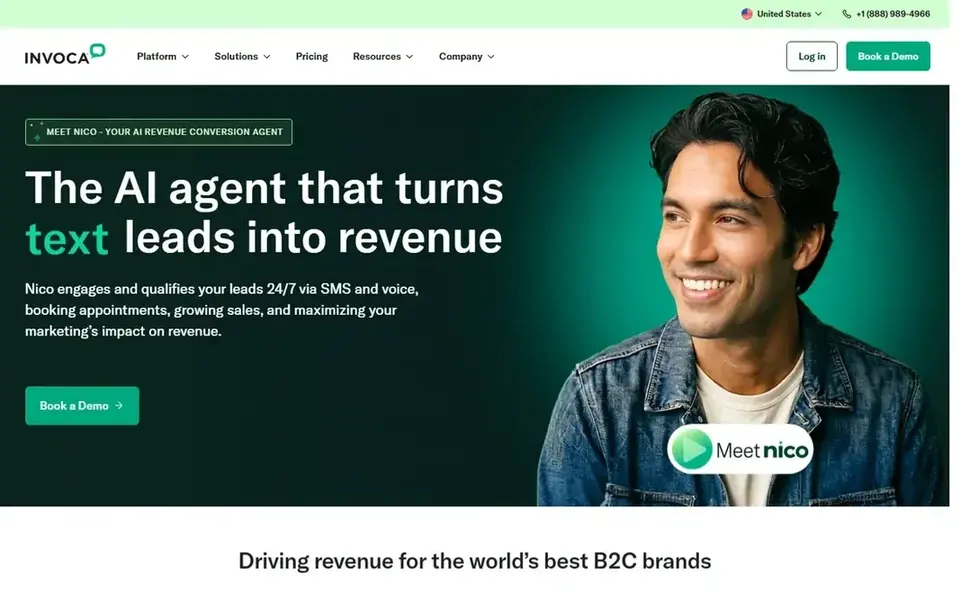
Invoca is a conversation intelligence and call tracking platform used by larger brands with sales and marketing teams. It analyzes call conversations and links them to campaign and revenue data, which helps when you spend heavily on ads and need to know which ones produce booked jobs.
For a junk removal company with a call center, multiple locations, and a real ad budget, the conversation analysis can show which offers and scripts lead to bookings. It is not built for a one-truck operator, and the sales process reflects that.
If you are a small hauler, the cost and complexity will outweigh the benefit. Look at CallRail or WhatConverts first.
- Conversation intelligence on calls
- ties calls to revenue
- strong for paid search attribution
- Enterprise-focused
- more than a small hauler needs
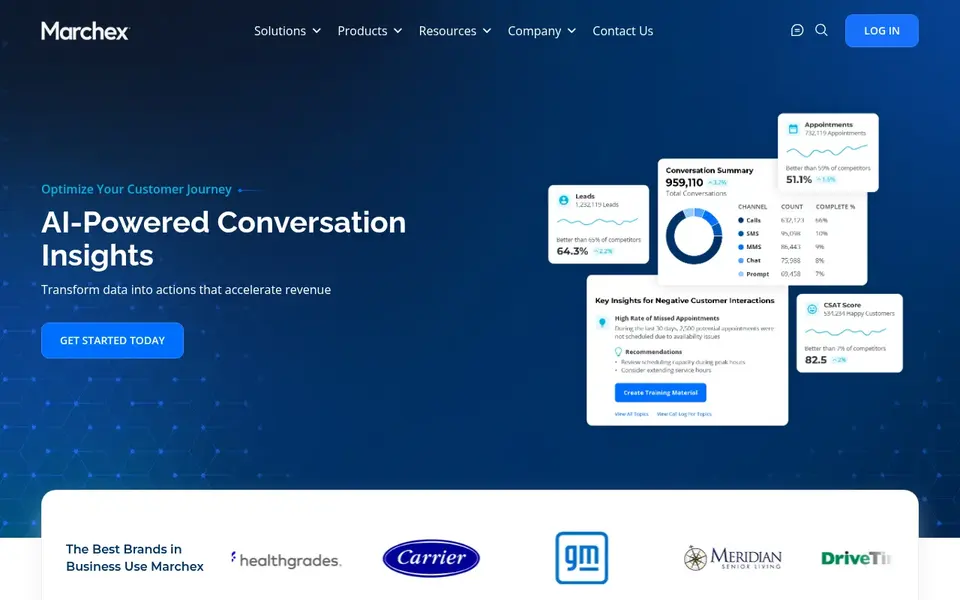
Marchex is a call analytics company that works with multi-location and franchise brands. A junk removal franchise with several territories can use it to see how calls perform across markets and which local marketing produces booked jobs.
The platform focuses on conversation data and attribution, so it suits a marketing team that needs consistent reporting across locations. It is not a self-serve tool for a small operator, and the buying process is enterprise-style.
Small and mid-sized haulers should treat it as out of scope unless they are part of a larger brand.
- Call analytics at scale
- marketing attribution across locations
- conversation data
- Enterprise sales process
- overkill for small businesses
How I chose
I built this list from vendor documentation and public sources, not from hands-on testing. I read each vendor's feature pages, help docs, and integration lists, then judged them against how junk removal companies actually get work: phone-first enquiries, short dispatch conversations, service-area routing, and a mix of Google Ads, map pack, and organic traffic. I did not run trials or measure results for any tool.
I weighted four things: whether the tool can attribute a call to a source, whether it can route or record calls in a way a dispatcher can use, whether it connects to the CRM or job software a hauler is likely to run, and whether the product is aimed at small local businesses or at enterprises. I left out tools I could not confirm as real and operating, and I did not include any pricing figures because plans change. Where a tool is clearly built for larger brands, I said so rather than pretending it fits a one-truck operation.
What to check before you buy
- Confirm dynamic number insertion works on your site platform, since many junk removal sites are built on simple page builders.
- Ask how tracking numbers handle Google Business Profile, because map pack calls are often the biggest source.
- Check whether call recording and whisper messages are included or cost extra, since dispatch scripts depend on them.
- Confirm the tool can pass call data into your CRM or job scheduling software, so booked pickups are tracked, not just calls.
- Ask about number provisioning by area code, because a local number builds more trust with homeowners than an out-of-state one.
- Review overage pricing and contract terms before you scale ads, since call volume can jump in spring and summer.
Frequently asked questions
Do junk removal companies really need call tracking?
Yes, if you spend money on ads or rely on Google Business Profile. Most junk removal enquiries arrive by phone, so without call tracking you cannot tell which keyword, ad, or listing produced the call. That makes it hard to cut wasted ad spend or double down on what books jobs.
Will call tracking hurt my Google Business Profile rankings?
Using a tracking number on your website is normal and widely done. The safer approach is to keep your main business number as the primary number on your Google Business Profile and use tracking numbers on your site and ads. Follow Google's guidelines and avoid changing your core business details just to chase rankings.
Can call tracking tell me which jobs were booked?
Only if the tool connects to your CRM or job software, or if you mark leads manually. Some platforms let you tag a call as booked and add a job value. Without that link you get call counts and sources, not revenue per channel.
What is the difference between call tracking and a virtual phone system?
Call tracking focuses on attribution, recording, and reporting so you know where calls came from. A virtual phone system focuses on answering, routing, and voicemail. Some platforms, such as CallTrackingMetrics, do both, which is useful if you also want an IVR menu for residential versus commercial pickups.
Is a free trial enough to judge a call tracking tool?
A trial lets you test number setup, recording, and reporting on real calls, which is the main thing to check. Use the trial to confirm dynamic number insertion works on your site and that call data reaches your CRM. Read the contract terms before the trial ends so you know what happens to your numbers.
Sources
See where you really rank - block by block
ProMapRanker scans Google Maps across a grid of your service area. Simple monthly plans from $19, white-label on every plan.
Start freeBrowse all guides
← Best Call Tracking Software for Interior Designers in 2026Best Call Tracking Software for Solar Installers in 2026 →
 best call tracking software for driving schools
Best Call Tracking Software for Driving Schools in 2026
A practical guide to the best call tracking software for driving schools in 2026, with features, limits and who each tool fits.
Read → best call tracking software for daycares
Best Call Tracking Software for Daycares in 2026
A guide to the best call tracking software for daycares in 2026, compared from vendor documentation, with tools for tours, waitlists and enrollment calls.
Read → best call tracking software for computer repair shops
Best Call Tracking Software for Computer Repair Shops in 2026
A practical guide to call tracking software for computer repair shops in 2026, comparing tools for call attribution, recordings, and follow-up.
Read → ahrefs rank tracker alternatives
7 Tools That Compete With Ahrefs Rank Tracker in 2026
7 options for Ahrefs Rank Tracker alternatives, with entry costs, free tiers and the buyer each one serves. Read the caveats before you buy. Start here.
Read → local seo for dance studios
Local SEO for Dance Studios
A local SEO guide for dance studios: Google Business Profile setup, reviews, and class-schedule-focused local SEO.
Read → local seo for solar installers
Local SEO for Solar Installers
How solar installation companies can rank higher locally and build trust through GBP and reviews.
Read →More in Local SEO & Google Maps · All guides A to Z by date · Latest guides