 ProMapRanker
Best Call Tracking Software for Golf Cart Dealers in 2026
Direct answer
WhatConverts is my top pick for golf cart dealers because it ties each inbound call to the ad, keyword or page that produced it and keeps the lead record next to the call. It has no free plan stated, so check its pricing page. CallRail suits dealers who want a familiar call tracking setup with routing, and Nimbata fits small dealerships that mainly want to see which marketing source drives phone orders and service bookings.
I compared these tools from vendor documentation and public sources, not from hands-on tests. I looked at how each one handles call attribution, routing, recording and reporting for a business that takes sales calls, service calls and parts enquiries on the same main number. The notes below describe what each vendor says it does and where the limits sit for a golf cart dealership.
Key takeaways
- Golf cart dealers sell and service, so a call tracker should separate new-cart sales calls from service, parts and rental enquiries.
- Dynamic number insertion on your website shows the source of each call without printing a different number on every page.
- Call recording and lead scoring help you judge whether a Google Ads campaign brings buyers or tire-kickers.
- Routing rules matter when your sales desk and service desk are staffed by different people at different hours.
- Check how the tool reports calls that ring out or come in after closing, because those are lost sales you can win back.
Quick comparison
| Pick | Great for | Pricing starts at | Free tier | |
|---|---|---|---|---|
 WhatConverts | Lead-level call attribution | See website | Not stated | Visit |
 CallRail | General call tracking and routing | See website | Free trial | Visit |
 Nimbata | Small dealer marketing calls | See website | Free trial | Visit |
 CallTrackingMetrics | Flexible routing and IVR | See website | Free trial | Visit |
 Invoca | Larger dealers with sales teams | See website | Not stated | Visit |
 RingCentral | Phone system plus call data | See website | Free plan | Visit |
 Weave | Dealer phone and customer contact | See website | Not stated | Visit |
The best call tracking software for golf cart dealers compared
WhatConverts is a lead tracking tool that treats a phone call as a lead record, the same way it treats a web form. For a golf cart dealer this matters because a call about a four-seater for a resort and a call about a brake job are not the same lead. The tool records the source of each call and stores it alongside the caller details, so your sales manager can review the day's enquiries in one place.
In practice you place tracking numbers on your site and in your Google Business Profile, then use dynamic number insertion so visitors see a number that matches the page they are on. A call from your new inventory page and a call from your service page can land in different queues. You can mark which calls turned into booked appointments, which gives you a clearer view of which ads and pages bring buyers rather than browsers.
The limits show up at setup. You need to decide your number pool, your routing rules and your lead categories before you go live, and the tool has more options than a small dealership will use. Skip it if you only want a simple count of calls per month.
- Ties calls to source and keyword
- keeps call and form leads in one record
- supports call recording and lead scoring
- Needs careful setup
- pricing is quote-based
CallRail is one of the best-known call tracking services, and it fits a golf cart dealership that wants a straightforward way to see which marketing brings phone calls. You can set up tracking numbers for your website, your Google Ads campaigns and your Google Business Profile listing, then route calls to the right person on your team.
For a dealer, the useful part is routing by time and team. A call that comes in during sales hours can ring the showroom, while an after-hours call can go to a service line or a voicemail that captures the caller's details. Call recording and transcripts help you check whether your staff are quoting delivery times and financing options correctly, and the source data tells you which channel produced the call.
The main limit is cost as you add numbers and users, and some reporting features sit on higher plans. A very small dealer with one number and one person answering may find it more than needed.
- Clear call attribution
- call recording and transcripts
- routing by time and team
- Extra numbers add cost
- advanced features sit on higher tiers
Nimbata is a call tracking tool aimed at smaller businesses that want to know which ads and pages produce phone calls. For a golf cart dealer running Google Ads for terms like "golf cart dealer near me" or "electric golf cart service", it gives a readable view of which campaigns lead to calls and which do not.
The workflow is simple: you add tracking numbers, connect your ad accounts and website, and the tool reports calls by source. You can record calls and review them when a sales conversation goes wrong. For a dealership with a small sales team and one service desk, that level of detail is often enough to decide where to spend the ad budget next month.
It is lighter on deep CRM integration and complex routing than the bigger platforms, so a multi-location dealer with a call centre should look elsewhere. A single-location dealer that mainly wants source data will find it easier to run.
- Simple attribution for small teams
- call recording
- works with common ad platforms
- Lighter on deep CRM features
- fewer enterprise options
CallTrackingMetrics is a contact centre style platform with call tracking built in. It suits a golf cart dealer that wants an automated menu, for example press one for new carts, two for service, three for parts and rentals, and then wants each path reported separately.
That structure helps a dealership with several departments because each caller reaches the right desk without a receptionist guessing. You can record calls, set business hours, and report on call outcomes by department. For dealers who also take rental enquiries for events, an IVR path for rentals keeps those calls out of the sales queue.
The trade-off is setup effort. You need to map your departments, hours and escalation rules before launch, and a small team may not have the time. It is a better fit for a dealer with steady call volume and clear departmental lines.
- Detailed routing and IVR
- call recording and reporting
- supports multiple teams
- More configuration work
- can overwhelm a small team
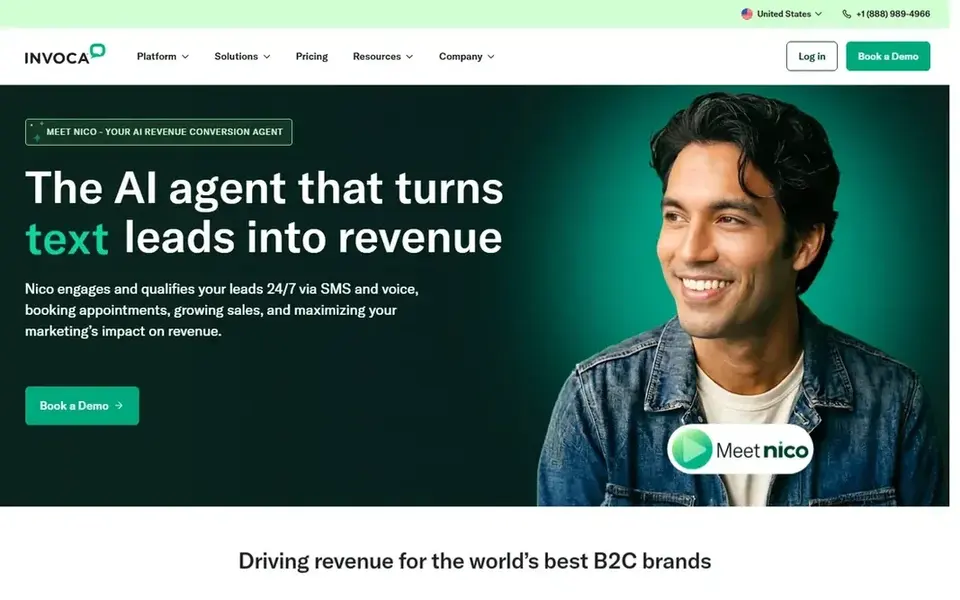
Invoca is a call intelligence platform built for larger sales operations. It analyses call conversations and connects them to marketing campaigns, which suits a golf cart dealer with a real sales floor, multiple reps and a marketing budget that needs defending.
For a dealership, the value is in seeing which campaigns produce calls that turn into quotes and deposits, and which produce calls that never go anywhere. The platform can surface patterns in conversations, such as frequent questions about delivery times or battery range, that your team can address on the website instead.
It is not a small-business tool. Pricing is quote-based, the setup assumes a marketing and sales operation, and a single-location dealer with two staff will not get value from the depth. Skip it unless you have a team to run it.
- Conversation analysis
- attribution across channels
- built for sales teams
- Aimed at larger operations
- quote-based pricing
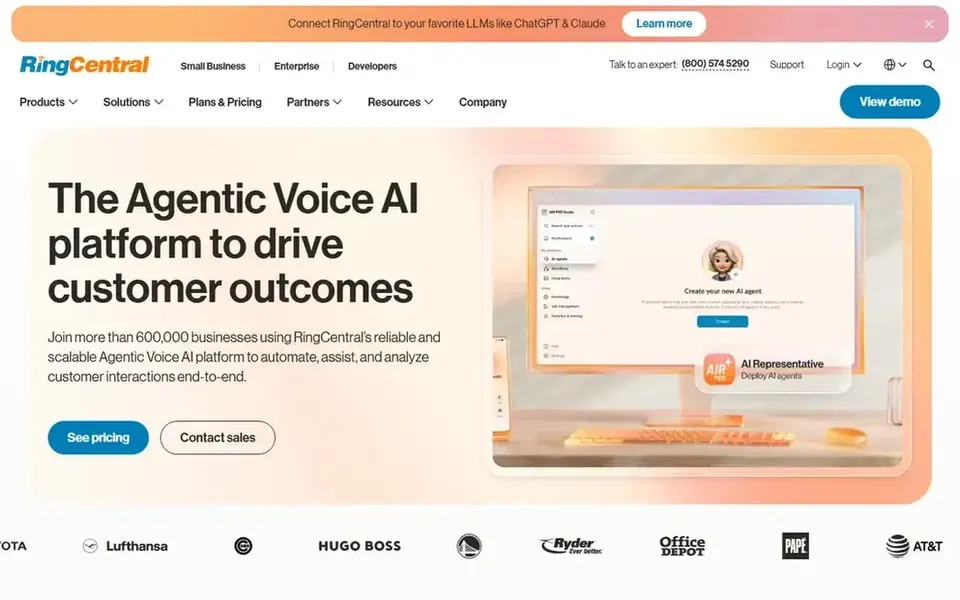
RingCentral is a cloud phone system, and call tracking is one part of what it does. A golf cart dealer that wants one system for the showroom phone, the service desk and staff mobiles can use it to route calls, record them and see call activity in reports.
For tracking purposes, you can use separate numbers for your website, your ads and your Google Business Profile, then review which number received which calls. That gives you a rough view of source without adding a second phone platform. Call recording and voicemail transcripts help you follow up on missed enquiries.
The limit is depth. It is not built to tie a call to a keyword or a landing page the way a dedicated call tracker is, and the reporting is about phone activity rather than marketing attribution. Choose it if the phone system comes first and tracking is secondary.
- Full business phone system
- call routing and recording
- reporting on call activity
- Tracking is one part of a suite
- not a dedicated local SEO tracker

Weave is a phone and customer communication platform aimed at local service businesses, including dealership-style operations. For a golf cart dealer it can handle the main phone line, missed-call follow-up and text messaging with customers waiting on a service job or a delivery date.
The tracking side is practical rather than analytical. You can see call history, record calls and review missed calls so the front desk can call people back. For a dealership where the phone is the main sales channel, that missed-call recovery is often more valuable than deep attribution.
It is not a dedicated call tracking tool, so if your goal is to tie every call to a Google Ads keyword, look at the tools above. Pricing is quote-based, so ask for a walkthrough of the reporting before you commit.
- Phone system built for local businesses
- call recording and missed-call handling
- customer contact features
- Tracking depth varies by plan
- quote-based pricing
How I chose
I chose these tools by reading vendor documentation and public sources, then judging each one against how a golf cart dealership actually works. That means a business that takes sales calls about new carts, service calls about repairs and battery issues, parts enquiries, and rental questions for events, often on the same main number. A tool that cannot separate those call types or route them to different desks is a poor fit, however good its general reporting looks.
I also weighed limits honestly. Some tools are built for large sales operations and will overwhelm a two-person showroom, while others are phone systems with tracking bolted on. I did not run hands-on tests, so treat the notes as a starting point for your own demo. Ask each vendor how they handle after-hours calls, missed calls and the reporting you need before you sign anything.
What to check before you buy
- Confirm the tool can separate new-cart sales calls from service, parts and rental calls, and route each to the right desk.
- Ask how dynamic number insertion works on your website so visitors see a number that matches the page.
- Check whether calls from your Google Business Profile can be tracked, since that listing often drives the first call.
- Ask how missed and after-hours calls are reported, because those are lost sales you can recover.
- Confirm call recording is allowed in your state and that you have a process for consent and storage.
- Check how the tool reports call outcomes, so you can tell a booked appointment from a price enquiry.
Frequently asked questions
What is call tracking software for a golf cart dealer?
It is software that gives your business different phone numbers for different marketing sources, then records which number was called and what happened. For a dealer it shows whether a call came from Google Ads, your website, your Google Business Profile or a print ad, and it can route sales and service calls to different desks.
Can call tracking show which Google Ads bring phone orders?
Yes, if you use a tracking number on your landing pages and connect the tool to your ad account. You can then see which campaigns and keywords produce calls, and mark which calls turned into quotes or bookings. That helps you move budget toward the campaigns that bring buyers rather than casual enquiries.
Will a tracking number hurt my local listings?
Not if you follow Google's guidelines. Keep your main business number as the primary number on your Google Business Profile and use tracking numbers on your website and ads. Check the current guidance before you change anything, and keep your name, address and phone details consistent across listings.
Do I need call recording?
It helps if you want to review how staff handle quotes, delivery times and service questions. Before you record, confirm the consent rules in your state and set a retention policy. If recording feels heavy, start with source attribution and missed-call reporting, then add recording later.
How many tracking numbers does a small dealership need?
Start with a small set: one for your website, one for your main ad campaign and one for your Google Business Profile, then add numbers only when you need to separate a source. More numbers mean more cost and more to manage, so match the set to the questions you actually want answered.
Sources
See where you really rank - block by block
ProMapRanker scans Google Maps across a grid of your service area. Simple monthly plans from $19, white-label on every plan.
Start freeBrowse all guides
← Best Call Tracking Software for Bathtub Refinishers in 2026Best Call Tracking Software for Sod Installers in 2026 →
 best call tracking software for after school programs
Best Call Tracking Software for After School Programs in 2026
A practical guide to call tracking software for after school programs, comparing tools for phone leads, enrollment follow-up and local search visibility.
Read → best review request software for test prep centers
Best Review Request Software for Test Prep Centers in 2026
A practical guide to review request software for test prep centers in 2026, covering automated asks, timing, SMS and email workflows, and Google policy.
Read → best review request software for pet bakeries
Best Review Request Software for Pet Bakeries in 2026
A practical guide to the best review request software for pet bakeries in 2026, with tools compared on workflow, reminders and Google review compliance.
Read → local seo for handyman services
Local SEO for Handyman Services
A local SEO guide for handyman services: Google Business Profile setup, reviews, and broad-service-list local SEO for handymen.
Read → local seo for tutoring centers
Local SEO for Tutoring Centers
A local SEO guide for tutoring and learning centers to rank for parent searches in their area.
Read → whitespark alternative
Whitespark Alternative for Geo-Grid Rank Tracking
A Whitespark alternative that adds geo-grid rank tracking and AI visibility in one tool.
Read →More in Local SEO & Google Maps · All guides A to Z by date · Latest guides