 ProMapRanker
Best Call Tracking Software for Elevator Companies in 2026

Source-level tracking for service calls · Pricing starts at: See website
Direct answer
CallRail is my first pick for most elevator companies because it ties incoming service and emergency calls to the marketing source that produced them. It has a free trial, so you can test the setup before committing. If you mainly want to see which suburbs and map areas generate calls, look at Local Viking. If your office also needs a phone system with call routing built in, look at Weave.
I compared these tools from vendor documentation and public sources. I did not run hands-on tests, so treat this as a fit guide rather than a lab review. Elevator work has a specific rhythm: a building manager calls about a stuck car, a property firm calls about a maintenance renewal, and a developer calls about a new installation. The right tool separates those calls and shows where they came from.
Key takeaways
- Elevator companies get urgent calls from building managers, so knowing which ad or listing produced each call matters more than raw call volume.
- Dynamic number insertion shows a tracking number on your website while keeping your main line visible on Google Business Profile.
- Call recording and transcripts help you confirm whether a caller needs a repair visit, a maintenance contract or a modernization quote.
- Call tracking only works if your staff tags calls and notes the source, so pick a tool your office team will actually use.
- Check that the tool can split calls by service line, because emergency repair, scheduled maintenance and new installs are different jobs.
Quick comparison
| Pick | Great for | Pricing starts at | Free tier | |
|---|---|---|---|---|
| CallRail | Source-level tracking for service calls | See website | Free trial | Visit |
 Local Viking | Local rank tracking with call context | See website | Free trial | Visit |
 Weave | Phone system with built-in call tracking | See website | Not stated | Visit |
 Invoca | Larger teams with sales pipelines | See website | Not stated | Visit |
 CallTrackingMetrics | Flexible routing and detailed reports | See website | Free trial | Visit |
 WhatConverts | Lead reporting across calls and forms | See website | Free trial | Visit |
 Ringba | Pay-per-call and partner campaigns | See website | Not stated | Visit |
The best call tracking software for elevator companies compared
CallRail is a call tracking platform that assigns tracking numbers to your marketing channels and records what happens on each call. For an elevator company, that means a call from a Google Ads campaign about emergency repairs lands in a different bucket than a call from your Google Business Profile about maintenance. It fits small and mid-sized firms that run ads and want to know which ones produce booked service visits.
In daily use, you set up a tracking number for your website, one for Google Ads, and one for directory listings, then route them all to your office line. When a building manager calls, the record shows the source, the call length and a recording you can check. Your dispatcher can tag the call as repair, maintenance or install, which gives you a clean picture of where each type of work comes from.
The limit is that CallRail is a tracking layer, not a full phone system. If you need extensions, voicemail trees and mobile apps for technicians, you will pair it with your existing provider. Skip it if your office makes almost no outbound marketing calls and you only want a simple log.
- Clear source attribution
- call recording and transcripts
- works with Google Ads and local listings
- Number management gets busy at scale
- advanced routing costs more
Local Viking is known for local rank tracking and Google Business Profile management, and it includes call tracking as part of its local marketing toolkit. For an elevator company competing in a metro area, it helps you see where you rank in the map pack for terms like "elevator repair" across different neighborhoods, then connect those rankings to the calls you receive.
The workflow suits a firm that wants one dashboard for local visibility and phone leads. You can watch how a new service page or a fresh set of photos on your profile affects calls from a specific area. That is useful when you are deciding whether to push harder in one suburb or another.
Its call tracking is not as deep as a dedicated platform, so skip it if call routing, IVR and detailed transcripts are your priority. It fits best as a companion to a primary tracking tool.
- Google Business Profile monitoring
- local grid rank views
- call tracking add-on
- Call features are secondary
- not a full phone system

Weave is a communications platform that combines a business phone system with call tracking, texting and scheduling features. An elevator company with a front desk that handles repair requests, maintenance renewals and new installs can keep all of that in one system rather than stitching together a phone provider and a separate tracker.
The practical benefit is that every inbound call is logged with a source and can be followed by a text message, such as a confirmation that a technician will call back. For property managers who prefer texting, that reduces phone tag. Call records also give you a view of which marketing channels drive the most conversations.
The trade-off is that Weave is built for service businesses broadly, so its local SEO reporting is lighter than a dedicated tracker. Skip it if you already have a phone system you like and only need attribution.
- Combines phones, texting and tracking
- call analytics in one place
- good for office teams
- Aimed at service businesses generally
- not a pure SEO tool
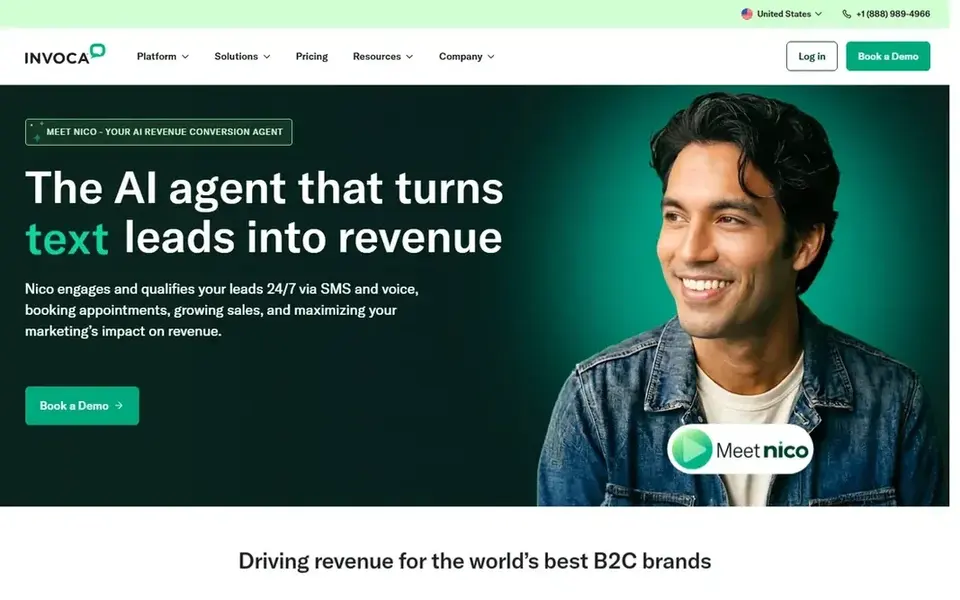
Invoca is a call intelligence platform that analyzes conversations and connects them to outcomes. A larger elevator company with several branches and a sales team handling modernization projects can use it to see which campaigns produce qualified calls rather than just any call.
For elevator work, the value shows up when you need to separate a genuine maintenance inquiry from a wrong number or a supplier call. Conversation analysis can flag keywords like "stuck," "inspection" or "quote," which helps your team prioritize follow-up. That matters when a building manager is deciding between you and a competitor.
The setup is more involved than a basic tracker, and it assumes a sales process worth measuring. A small firm with one office and a handful of lines should skip it.
- Conversation analytics
- ties calls to revenue
- strong for multi-location firms
- Heavier setup
- overkill for a small office
CallTrackingMetrics is a call tracking and contact center platform with routing rules, IVR and reporting. An elevator company that wants calls routed by service type, such as sending emergency repair calls to an on-call technician and maintenance calls to the office, can build that in.
The reporting side helps you compare channels over time. If a new landing page for elevator modernization starts producing calls, you can see it in the same place as your repair calls. That gives you a reason to keep or drop a campaign based on real conversations.
The downside is complexity. You need someone who will spend time configuring numbers, flows and reports. If nobody in the office owns that, a simpler tool will serve you better.
- Custom routing rules
- form and call tracking together
- detailed reporting
- Learning curve
- configuration takes time
WhatConverts focuses on leads rather than just calls. It captures phone calls, form submissions and chat inquiries and ties each one to a source. For an elevator company, that means a quote request form from a property manager and a phone call about a broken door operator both show up as leads with the same attribution logic.
This is useful when your marketing mixes a website contact form, a Google Business Profile call button and paid ads. You get one view of which channel produces actual inquiries, not just traffic. Your office can mark each lead as qualified or not, which keeps the data honest.
The cost and setup are higher than a simple call logger. Skip it if calls are your only lead source and you do not need form tracking.
- Combines calls, forms and chats
- lead-level reporting
- clear source data
- Costs more than basic loggers
- setup needs planning
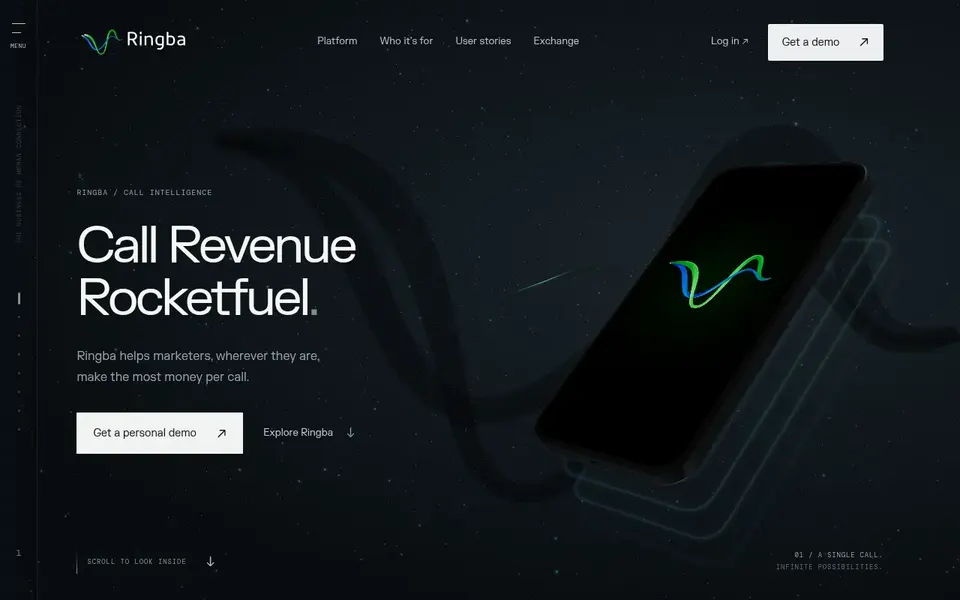
Ringba is a pay-per-call platform used by call marketplaces and lead generators. It is not the typical choice for an elevator company, but it can fit if you buy calls from a partner network or run a referral arrangement where you pay per qualified call.
In that setup, Ringba lets you define what counts as a qualified elevator call, route it to the right office, and track the outcome. That protects you from paying for wrong numbers or supplier calls. It is a specialist tool for a specific arrangement.
Most elevator companies should skip it. If you are not buying or selling calls through a network, a standard tracker like CallRail is a better fit.
- Built for call marketplaces
- detailed call flow control
- real-time reporting
- Not aimed at local service firms
- needs technical setup
How I chose
I built this list from vendor documentation and public sources, including each company's own product pages and published feature descriptions. I did not run hands-on tests, and I did not measure results for any elevator company. Where a tool's call features are secondary, I say so, because a firm that needs routing and transcripts should not pick a rank tracker for its phone system.
My main filters were fit for a local service business, how well the tool separates call sources, and whether the workflow suits an office that handles emergency repairs alongside scheduled maintenance. I also weighed setup effort, because a tool nobody configures is a tool that produces no useful data. Limits matter as much as features, so each entry notes who should skip it.
What to check before you buy
- Confirm the tool supports dynamic number insertion so your main line stays visible on Google Business Profile while the website shows a tracking number.
- Ask whether calls can be tagged by service type, such as emergency repair, maintenance contract and modernization quote.
- Check that call recordings and transcripts are included, since they help you verify what a building manager actually asked for.
- Make sure the tool integrates with Google Ads and your Google Business Profile so source data lines up with your listings.
- Ask how numbers are managed if you run several campaigns, because a messy number list makes reports hard to read.
- Confirm your team will review and tag calls weekly, since untagged data tells you little about which channels work.
Frequently asked questions
Do elevator companies need call tracking?
Yes, if you spend money on ads or listings and want to know which ones produce calls. Elevator work brings in urgent repair calls, maintenance renewals and installation inquiries, and those come from different sources. Tracking shows which channel produces each type so you can put budget where it works.
Will a tracking number hurt my Google Business Profile ranking?
Not if you follow Google's guidelines. Keep your main business number as the primary number on your profile and use tracking numbers on your website and campaigns. Dynamic number insertion swaps the number for website visitors while the profile keeps the main line. Avoid stuffing keywords into your business name.
Can call tracking handle emergency repair calls?
It can route them, but you must configure it. Set a rule that sends calls from your emergency line to an on-call technician, and keep the office line as a backup. Test the flow before you rely on it, because a misrouted emergency call costs you the job.
How do I connect calls to specific service pages?
Use a separate tracking number for each campaign or landing page, or use dynamic number insertion so the source is captured automatically. Then tag each call by service type in the tool. Over a few weeks you can see which pages produce repair calls versus maintenance inquiries.
Is a full phone system better than a standalone tracker?
It depends on your office. If you need extensions, texting and scheduling in one place, a combined system like Weave may suit you. If you already have a phone provider you like, a standalone tracker like CallRail gives you attribution without replacing your phones.
Sources
See where you really rank - block by block
ProMapRanker scans Google Maps across a grid of your service area. Simple monthly plans from $19, white-label on every plan.
Start freeBrowse all guides
← Best Call Tracking Software for Comic Book Shops in 2026Best Call Tracking Software for Hobby Shops (2026) →
 best call tracking software for aquarium stores
Best Call Tracking Software for Aquarium Stores in 2026
A practical guide to call tracking software for aquarium stores, covering call attribution, recordings, routing and local SEO reporting.
Read → best review request software for well drilling companies
Best Review Request Software for Well Drilling Companies in 2026
A practical guide to the best review request software for well drilling companies in 2026, compared from vendor documentation and public sources.
Read → best review request software for recording studios
Best Review Request Software for Recording Studios in 2026
A practical guide to the best review request software for recording studios in 2026, comparing tools by workflow, channels and Google review policy.
Read → keyword difficulty local seo
How to Check Keyword Difficulty for Local SEO
How to check keyword difficulty for local search terms and pick winnable keywords for your business.
Read → geo grid scan frequency
How Often Should You Run a Geo-Grid Rank Scan?
How often to run geo-grid rank scans based on competition, budget, and campaign stage.
Read → local ranking phone call
Local Ranking Phone Call: A Complete Guide
Everything you need to know about local ranking phone call: what it is, why it matters for local SEO, and exactly how to act on it.
Read →More in Local SEO & Google Maps · All guides A to Z by date · Latest guides