 ProMapRanker
Best Business Internet Service in 2026


Fiber reliability and scale · Pricing starts at: $69 per month
Key takeaways
- Verizon Business and AT&T Business lead on fiber, while Comcast Business leads on availability.
- Spectrum Business is the flexibility pick for teams that want to avoid a long contract.
- Prices, speeds, and availability vary by plan and location, so always get an address-specific quote.
- Fiber beats cable on uploads; cable beats wireless on consistency in most offices.
Quick comparison
| Pick | Great for | Pricing starts at | Free tier | |
|---|---|---|---|---|
| Verizon Business | Fiber reliability and scale | $69 per month | No | Visit |
 AT&T Business | Symmetrical fiber and satisfaction | $70 per month | No | Visit |
 Comcast Business | Wide availability and bundles | $60 per month | No | Visit |
 Spectrum Business | No-contract flexibility | $65 per month | No | Visit |
 Cox Business | Cable plus phone bundles | $65 per month | No | Visit |
 Frontier Business | Value fiber where available | See website | No | Visit |
 T-Mobile for Business | Fast 5G deployment | $50 per month | No | Visit |
 Google Fiber for Business | Simple high-speed fiber | $70 per month | No | Visit |
The best business internet service
The best business internet service for a small business depends on what reaches your address, how much upload speed you need, and whether you want a contract. Note: prices and coverage vary by plan and location, so treat every price here as a starting point to confirm for your site.
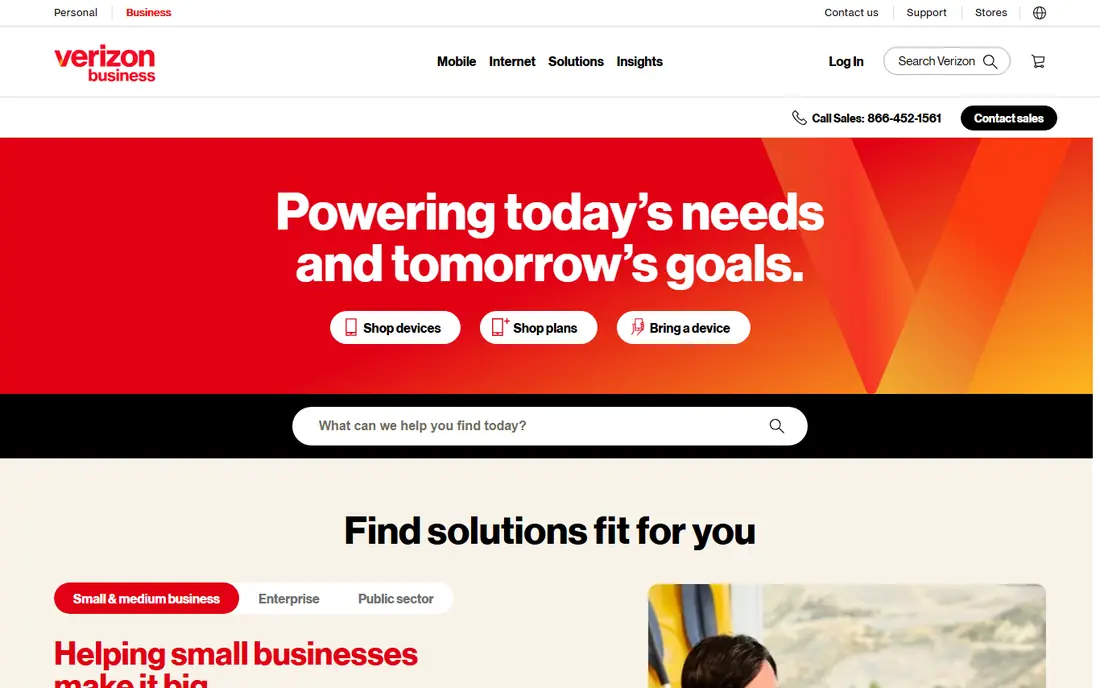
Verizon Business is our pick for most small businesses that can get its fiber service, because symmetrical upload and download speeds help with video calls, cloud tools, and large file uploads alike. Plans start around $69 per month in published comparisons, with faster tiers for larger teams, and business support is geared to keeping a workplace online rather than a household. That combination of speed and support is why it tops many business internet comparisons.
The limit is coverage: fiber is not available everywhere, and wireless options behave differently from fiber, so check your exact address before choosing. Faster tiers and added services also raise the bill well above the entry price. Prices and coverage vary by plan and location, so confirm the quoted speed and price for your site in writing.
- Symmetrical fiber speeds
- Wireless backup options
- Strong business support
- Fiber availability varies by area
- Higher tiers cost much more
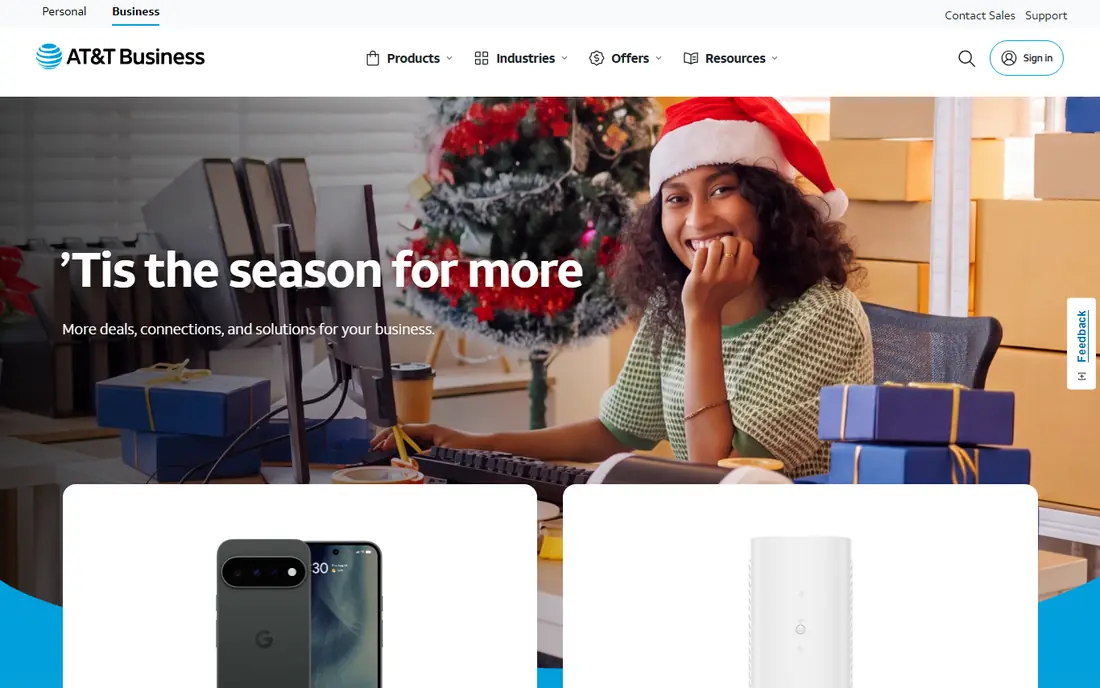
AT&T Business Fiber suits workplaces that need fast, symmetrical speeds and a provider with a large fiber footprint. Entry business pricing is often quoted around $70 per month, with higher tiers reaching multi-gigabit speeds where the network supports them. For teams that upload large files, host video meetings all day, or run cloud phones, symmetrical speed is a real daily benefit, not a spec-sheet detail.
Top speeds are not available in every market, and the final price depends on speed, contract, and location, so a headline price may not match your address. Installation and equipment terms also vary by plan. Still, where AT&T fiber is available, it is one of the strongest business internet options in this guide.
- Fiber speeds up to multi-gigabit in some areas
- Wireless backup
- 24/7 support
- Availability varies
- Top speeds only in selected markets
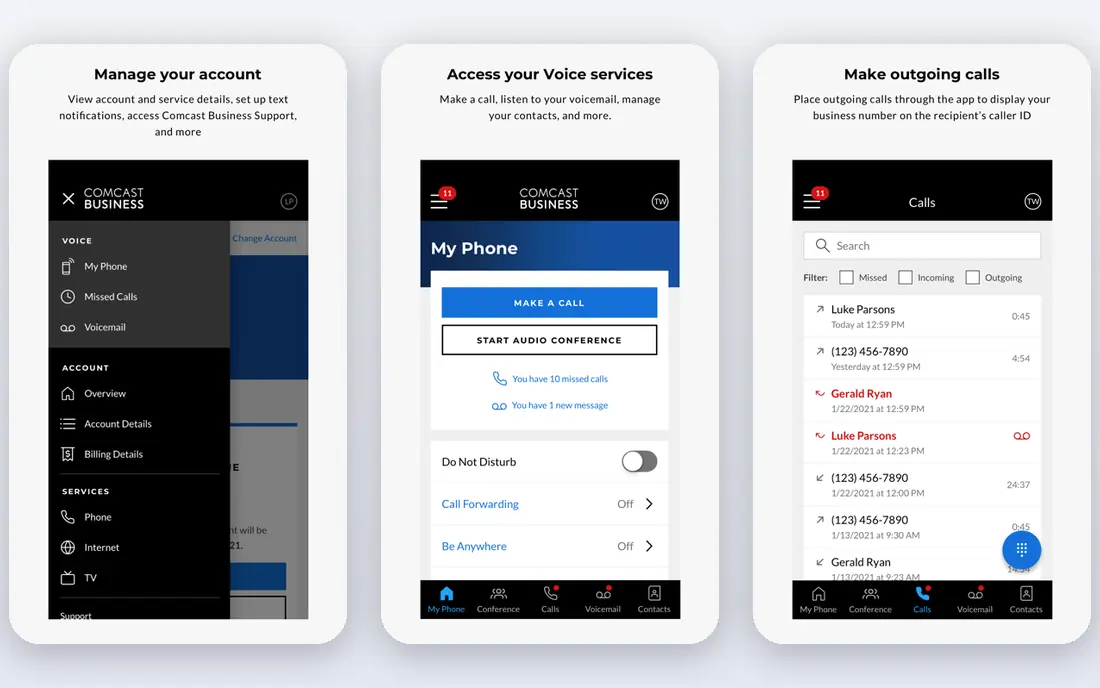
Comcast Business is the availability pick: its cable network reaches many areas where fiber has not arrived, and it offers business speed tiers, security features, and bundles with phone and mobile services. Published comparisons often quote entry pricing around $60 per month, with higher tiers for larger offices. For a growing business that needs a dependable connection now, without waiting for a fiber build, that reach matters.
Cable upload speeds generally trail fiber, which can matter for heavy cloud backups or video production, and contract terms vary, so read the term and renewal language before signing. Prices and coverage vary by plan and location. If fiber is not an option at your site, Comcast Business is often the strongest available alternative.
- Broad cable coverage
- Speed tiers to 2 Gbps in some areas
- Phone and mobile bundles
- Upload speeds lag fiber
- Contract terms vary by plan
Spectrum Business appeals to small businesses that want flexibility, because many plans avoid a long annual contract and include unlimited data. Entry pricing is often quoted around $65 per month, with faster tiers in selected markets, and the service covers cable and fiber-powered internet depending on location. That no-contract stance makes it easier to change plans as headcount or needs change.
The trade-off is that cable upload speeds and top download speeds vary by market, so the plan at your address may differ from a national headline. Equipment and added services, such as advanced Wi-Fi or static IP, also affect the monthly bill. Prices and coverage vary by plan and location, so get an address-specific quote.
- No annual contract on many plans
- Unlimited data
- Cable and fiber options
- Upload speeds vary
- Availability depends on market
Cox Business serves many small and midsize workplaces in its regions with cable internet, phone bundles, and managed service options. Entry pricing is often quoted around $65 per month, and bundles can simplify billing when a business also needs voice service. For offices in Cox territory that want one provider for internet and phones, that simplicity is a genuine benefit.
Coverage is regional, so it will not be an option for many readers, and cable upload performance generally trails fiber. Contract and price-lock terms vary by plan, so confirm them in writing. Prices and coverage vary by plan and location. Within its footprint, Cox Business is a solid, practical choice.
- Cable internet with phone bundles
- Business support
- Managed services options
- Fiber-style symmetrical speeds not standard
- Coverage is regional
Frontier Business is worth checking where its fiber network reaches your site, because fiber plans can offer symmetrical speeds at competitive entry pricing in some markets. For a small office that lives on cloud apps and video calls, symmetrical fiber removes the upload bottleneck that cable plans often leave. Business plans are aimed at small offices rather than only large enterprises.
The footprint is the main limit: many addresses cannot get Frontier fiber, and pricing and speeds vary by market. Confirm availability, installation timing, and contract terms for your exact site before relying on a headline offer. Prices and coverage vary by plan and location. Where available, it can be a strong value pick.
- Fiber options with symmetrical speeds in some areas
- Business plans for small offices
- Footprint is limited
- Pricing varies by market
T-Mobile for Business suits sites where wired options are slow, unavailable, or too slow to install, because 5G fixed wireless can be up and running quickly without a cable or fiber build. Entry business pricing is often quoted around $50 per month, and it can also serve as a backup connection for a wired primary line. For temporary sites, pop-up locations, and rural offices with strong 5G signal, that speed of deployment is the main selling point.
Wireless speeds vary with signal strength, congestion, and location, so a speed test at your site matters more than a national claim. Heavy, sustained uploads and latency-sensitive uses may still favor fiber. Prices and coverage vary by plan and location. As a primary line where wired choice is poor, or as backup, it is a useful option.
- 5G fixed wireless with fast setup
- No wired build needed
- Static IP on some tiers
- Speeds vary with signal and congestion
- Not ideal for heavy upload loads
Google Fiber for Business stands out for simple, fast fiber in the cities it serves, with entry pricing often quoted around $70 per month and no annual contract on many plans. The appeal is straightforward: high speeds, symmetrical performance on fiber tiers, and a plan structure that is easier to understand than many enterprise quotes. Small teams that want speed without a complex bundle will like that clarity.
Coverage is the obvious catch, because Google Fiber serves a limited set of cities and neighborhoods. It also offers fewer bundled voice and managed services than larger business carriers. Prices and coverage vary by plan and location. If your address qualifies, it is one of the cleanest business fiber choices available.
- Fast fiber speeds
- Simple pricing
- No annual contract on many plans
- Very limited city coverage
- Fewer bundled business services
How we picked these
We compared official product pages, pricing pages, feature descriptions, and public documentation, and we checked that each product is still offered in October 2026. We kept only products that match the topic directly, and we left out products that were discontinued, renamed without a live successor, or too broad to be useful for this job. Where a vendor does not publish a price, we wrote See website rather than guessing a figure, and we noted the trade-offs that matter most in everyday use, such as setup effort, limits on cheaper plans, and how much admin work the tool creates.
Choosing the right business internet service
Start with an address check for every provider in this guide, then compare symmetrical speed, upload speed, contract length, and support hours for the tiers actually available to you. Test speeds during work hours if you can, ask about backup options and static IP needs, and get the total monthly cost including equipment and fees. Start with a small pilot, measure the time saved or the problem solved, and only then expand to more users or sites. Ask for a written quote that covers implementation, training, and any usage limits, and keep a note of the renewal terms before you sign.
Frequently asked questions
What is the best internet service for small business?
Where fiber is available, Verizon Business or AT&T Business are strong first checks for symmetrical speeds. Where fiber is not available, Comcast Business or Spectrum Business are often the best available wired options.
What is the best internet service provider for a small business with no contract?
Spectrum Business and Google Fiber are known for no-contract options on many plans, and T-Mobile for Business also avoids annual contracts on many tiers. Confirm the contract term for your exact plan, because terms vary by market.
What are the best business internet services for rural offices?
T-Mobile for Business can work where 5G signal is strong, and a wired provider is better where one reaches the site. Check signal, test speeds on site, and consider a wireless backup alongside any wired primary line.
What is the best business internet service for video calls and cloud tools?
Fiber plans from Verizon, AT&T, Frontier, or Google Fiber suit heavy video and cloud use, because symmetrical speeds keep uploads fast. Cable plans can work, but check upload speed, not just download speed.
How much does business internet cost?
Entry business pricing in published comparisons often falls between about $50 and $70 per month, with faster tiers costing more. Prices and coverage vary by plan and location, and equipment, installation, and contract terms change the final bill.
Sources
See where you really rank - block by block
ProMapRanker scans Google Maps across a grid of your service area. Simple monthly plans from $19, white-label on every plan.
Start freeKeep reading
 best user research tools
Best User Research Tools in 2026
Best user research tools compared for 2026: eight live platforms for testing, interviews, recruiting, and research synthesis to help your team choose wisely.
Read → best spa booking software
Best Spa Booking Software in 2026
Looking for the best spa booking software? We compare eight spa and salon booking tools on price, marketplace fees, and features for spas in 2026 today.
Read → best software for editing video podcasts
Best Software for Editing Video Podcasts in 2026
Best software for editing video podcasts compared for 2026: eight live editors for recording, transcript edits, and polished episodes for creators today.
Read →