 ProMapRanker
Best Business Expense Tracking Apps in 2026

Key takeaways
- Ramp, Brex and BILL offer free core expense platforms funded by their corporate cards, which suits startups that qualify.
- Expensify and Zoho Expense suit teams that want to keep existing cards while automating receipts and approvals.
- Navan suits companies where travel booking and expenses should live in one flow, while SAP Concur and Emburse suit complex enterprises.
- This is general information, not accounting advice, so check tax and policy rules with a qualified adviser for your business.
Quick comparison
| Pick | Great for | Pricing starts at | Free tier | |
|---|---|---|---|---|
 Ramp | Card-first spend management | Free | Yes | Visit |
 Brex | Startups and scaling companies | Free | Yes | Visit |
 Expensify | Keeping existing corporate cards | $5 per member per month | Yes | Visit |
 Zoho Expense | Budget teams and Zoho users | $4 per active user per month | Yes | Visit |
 BILL Spend & Expense | Free card-based budgeting | Free | Yes | Visit |
 Navan | Travel booking plus expenses | $15 per user per month | Yes | Visit |
 SAP Concur | Large enterprises | See website | No | Visit |
 Emburse | Audited enterprise workflows | See website | Free trial | Visit |
The best business expense tracking apps
We compared expense tracking apps by receipt capture, card controls, approvals, accounting links and price. This is general information, not accounting advice, so confirm how each tool handles your tax, reimbursement and approval rules before you rely on it.
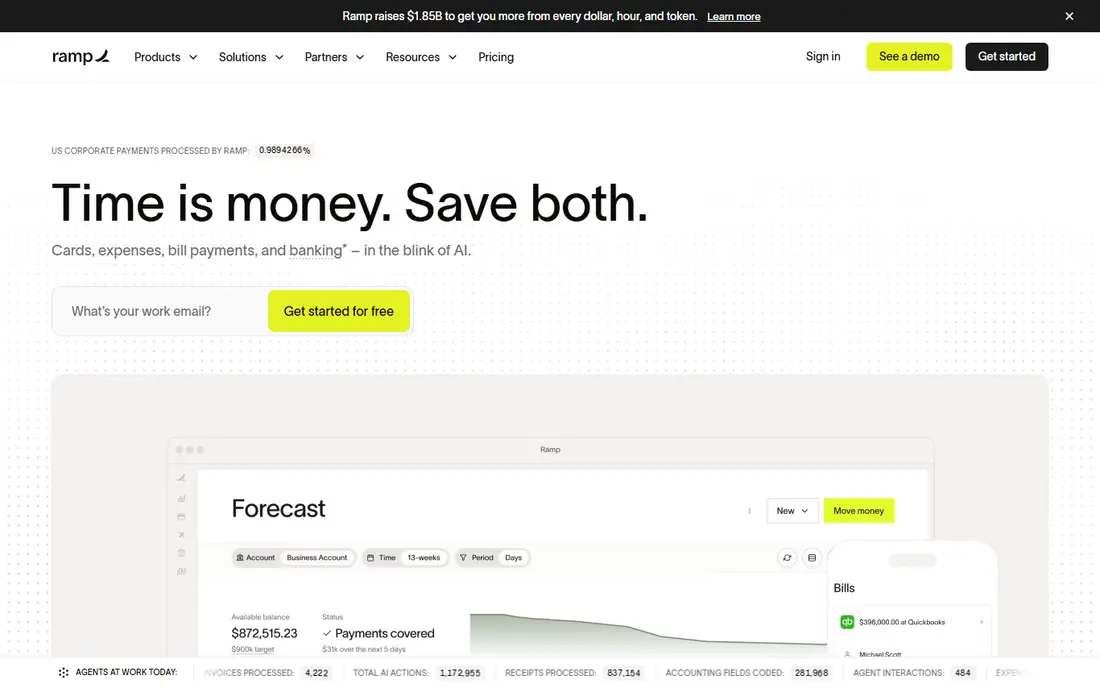
Ramp combines corporate cards, expense management and bill pay in one platform, with a free core tier for eligible companies. Employees spend on Ramp cards with preset limits, receipts are matched automatically, and finance teams can see spending in real time. That card-first model removes much of the manual chasing that makes expense reports painful.
The trade is that you must use Ramp cards to get the free platform, and advanced controls sit on the paid Plus tier. Companies that already have a bank card program they want to keep may prefer a card-neutral tool. For startups and growth companies starting fresh, Ramp is one of the strongest free starting points in this list.
- Free core platform with corporate cards
- Automated receipt matching and controls
- Bill pay and accounting links
- Requires Ramp cards
- Paid Plus tier needed for advanced controls
- Eligibility rules apply
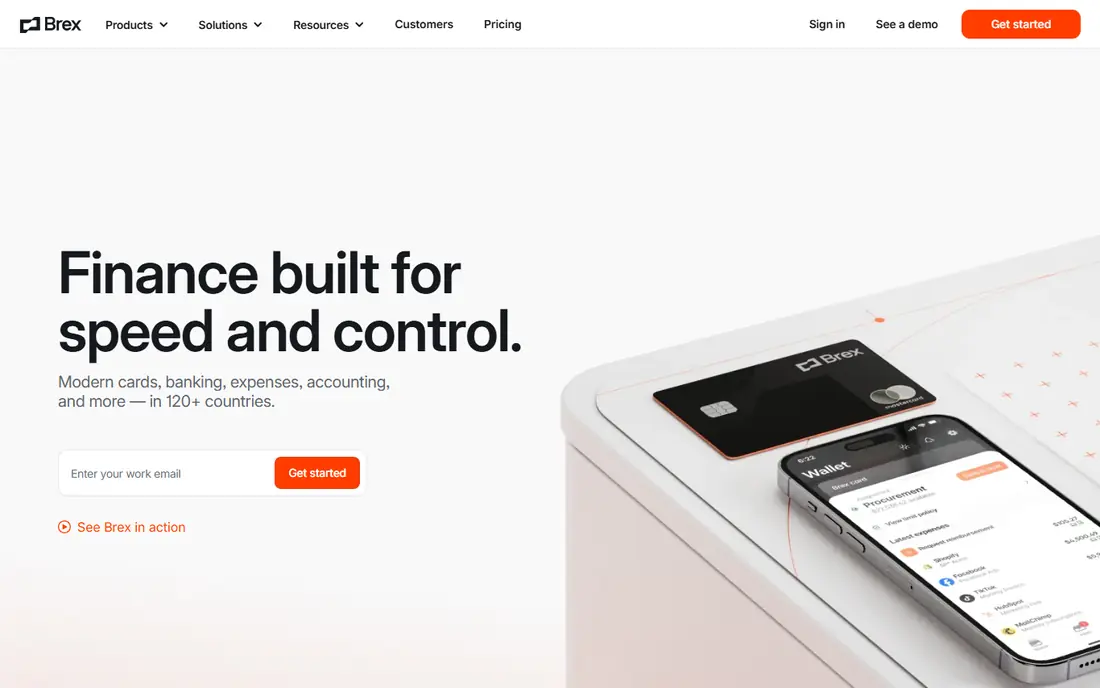
Brex offers a free Essentials tier that pairs corporate cards with expense management, reimbursements and bill pay. It suits startups and scaling companies that want spend controls, global capabilities and a single finance hub without paying per user from day one. Receipt capture and policy controls help finance teams stay close to spending as headcount grows.
As with Ramp, the model works best when you adopt Brex cards. Teams that need to keep an existing card program will find the fit weaker, and advanced controls require the paid Premium tier. Eligibility and card terms should also be checked, since they vary by company type and location. For eligible startups, Brex is a compelling free core platform.
- Free Essentials tier with cards and expenses
- Global spend features
- Bill pay and accounting links
- Requires Brex cards for the full model
- Premium tier needed for advanced controls
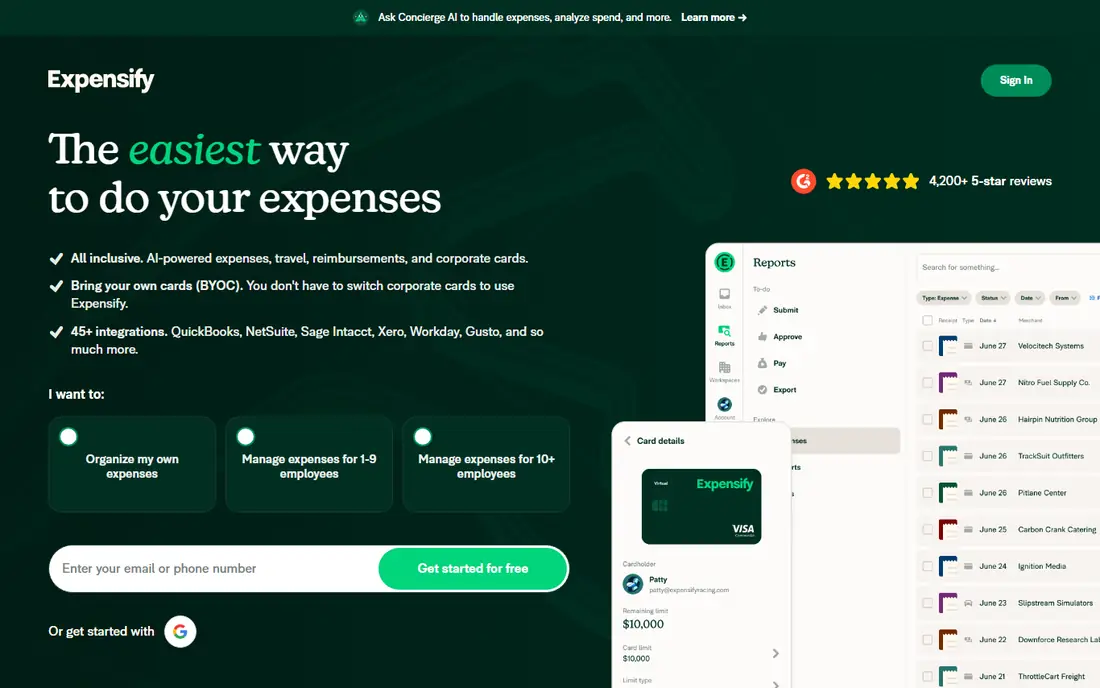
Expensify remains the classic expense reporting tool for teams that do not want to change cards. It scans receipts, builds reports, handles approvals and reimbursements, and syncs with common accounting tools. The free tier suits individuals, while paid Collect and Control plans add team features for growing companies.
The honest catch is that the best automation and card benefits sit with the Expensify Card, so card-neutral teams get a slightly less integrated experience. Pricing is also per member, which adds up for larger teams with occasional submitters. For small and midsize teams that value simplicity and card freedom, Expensify is still a safe default.
- Works with existing cards
- Fast receipt scanning and SmartScan
- Simple reports and approvals
- Paid plans needed for team controls
- Expensify Card features are separate from card-neutral use
Zoho Expense is the budget pick in this list, with a free version for up to three users and low-cost paid plans for larger teams. It handles receipt scanning, approvals, mileage, per diems and accounting sync, and it fits naturally for companies already using Zoho Books. For small businesses that need solid expense tracking without a card switch, it is hard to beat on price.
It is less of a card-first spend platform than Ramp or Brex, so teams that want real-time card limits and instant blocking may find it lighter on controls. The interface is also more functional than beautiful. If low cost and accounting links matter most, Zoho Expense delivers the core job well.
- Low-cost paid plans
- Free version for small teams
- Strong links to Zoho Books and other accounting tools
- Card controls are less card-first than Ramp or Brex
- Interface is functional rather than polished
BILL Spend & Expense, formerly Divvy, gives small teams free employee cards with budgets and expense tracking built in. Managers set limits by team or category, employees spend within those limits, and receipts and transactions flow into accounting tools. For a small business that wants control without a software bill, that model is attractive.
The limit is the same as other card-first tools: you need to use BILL cards to get the free platform. Companies with an existing card program, or with complex approval chains, may need a different tool. For lean teams starting fresh, BILL Spend & Expense offers a simple, free way to stop expense surprises.
- Free spend platform with employee cards
- Budgets and controls built in
- Accounting links
- Requires BILL cards
- Less suited to teams that want to keep existing cards
Navan, formerly TripActions, combines travel booking with expense management. Employees book flights and hotels inside policy, spend on Navan cards or submit receipts, and finance teams see travel and expenses together. That single flow is valuable for companies where travel is a large and messy part of spending.
If your team rarely travels, Navan is more than you need, and its expense plan costs more than free card-first rivals. Travel booking itself is free on some plans, with expensing priced separately, so check the exact plan structure for your company size. For travel-heavy teams, Navan removes a common source of duplicate work.
- Travel booking and expenses in one flow
- Card controls and receipt capture
- First users free on some plans
- Expense pricing is higher than free card tools
- Best value when travel is a major cost
SAP Concur is the enterprise standard for travel and expense management. It handles complex policies, multi-entity structures, global currencies and audit trails that smaller tools cannot match. Large companies with many travelers, strict compliance needs and SAP systems often choose Concur for that depth.
Small businesses will find it heavy. Pricing is quote-led, implementation takes time, and admin work suits a dedicated finance team rather than a founder. If your company has simple expenses and a handful of staff, a free or low-cost tool will be faster. If you run a large, regulated travel program, Concur is the benchmark to compare against.
- Mature travel and expense controls for complex policies
- Global and multi-entity support
- Deep audit trails
- Quote-led pricing
- Implementation and admin work suit larger teams
Emburse, which brought together Certify, Chrome River and Abacus, serves midsize and large companies that need audited travel and expense workflows. It offers receipt capture, approvals, policy enforcement and reporting, with controls that suit finance teams facing audits or complex reimbursement rules. Its history in enterprise expense management gives it depth in this area.
Pricing is quote-led, and most buyers will need a demo and a scoping conversation before they see a firm figure. That makes it a poor fit for a small team that wants a quick, self-serve signup. For larger companies that need auditable workflows and are willing to run a proper evaluation, Emburse belongs on the shortlist alongside SAP Concur.
- Strong audit and policy controls
- Travel and expense in one system
- Experience with complex enterprises
- Quote-led pricing
- Demo and setup needed before a clear price emerges
How we picked these
We compared official pricing pages, feature pages and recent expense-software roundups, favoring tools that are actively sold in 2026 and that fit a distinct business size or spending model. Where pricing depended on a quote, platform fees or company eligibility, we wrote See website rather than publishing a figure we could not confirm.
How to choose the best expense tracking app for your business
Start with your cards, not the app. If you are happy to switch to a new corporate card, free card-first platforms such as Ramp, Brex or BILL can save a software bill and give you real-time controls. If you must keep existing bank cards, choose a card-neutral tool such as Expensify or Zoho Expense, and accept a per-user fee in exchange for that freedom.
Next, map your approval and accounting flow. List who submits, who approves, how reimbursements are paid, and which accounting tool must receive the data. A tool that syncs cleanly to QuickBooks, Xero or NetSuite will save more time than a tool with a nicer receipt scanner but a messy export. Test the full flow with three real expenses, including a mileage claim and a split receipt, before you roll it out.
Finally, check the total cost at your headcount. Free tiers can be excellent for small teams, but paid tiers, platform fees and per-user charges change the math as you grow. Review the plan each year, remove inactive users, and confirm that policy controls actually stop out-of-policy spending rather than just reporting it afterwards. The best expense tracking app is the one your team uses without chasing receipts at month end.
Frequently asked questions
What is the best app for tracking business expenses?
Ramp and Brex are strong free starting points for card-first teams, while Expensify suits teams that want to keep existing cards. Zoho Expense is the budget pick, and Navan suits travel-heavy companies. The best app for tracking business expenses depends on your cards, team size and travel volume.
What is the best software for tracking business expenses for a small business?
Zoho Expense, BILL Spend & Expense and Ramp all suit small businesses, with free or low-cost entry points. Zoho Expense works with existing cards, while Ramp and BILL require their own cards in exchange for a free core platform. Test receipt capture and accounting sync before you commit.
What is the best app for small business expense tracking with existing cards?
Expensify and Zoho Expense are the clearest card-neutral options in this list. Both scan receipts, handle approvals and sync to accounting tools without forcing a card switch. Compare per-user pricing and approval features for your team size.
Do free business expense tracking apps really cost nothing?
Free card-first platforms earn revenue from card use, so the software can be free for eligible companies that use their cards. Check eligibility, paid tiers for advanced controls, and any platform fees before you assume the total cost is zero for your team.
Is expense tracking software accounting advice?
No, this is general information, not accounting advice. Expense tools help you record and control spending, but tax treatment, reimbursement policy and audit rules vary by business and location. Check important decisions with a qualified accountant or adviser.
Sources
- https://rankite.com/blog/best-corporate-expense-tracking-software
- https://rankite.com/blog/best-expense-management-software-for-small-business
- https://ramp.com
- https://brex.com
- https://www.expensify.com
- https://www.zoho.com/expense/
- https://www.bill.com
- https://navan.com
- https://www.concur.com
- https://www.emburse.com
See where you really rank - block by block
ProMapRanker scans Google Maps across a grid of your service area. Simple monthly plans from $19, white-label on every plan.
Start freeKeep reading
 best user research tools
Best User Research Tools in 2026
Best user research tools compared for 2026: eight live platforms for testing, interviews, recruiting, and research synthesis to help your team choose wisely.
Read → best spa booking software
Best Spa Booking Software in 2026
Looking for the best spa booking software? We compare eight spa and salon booking tools on price, marketplace fees, and features for spas in 2026 today.
Read → best software for editing video podcasts
Best Software for Editing Video Podcasts in 2026
Best software for editing video podcasts compared for 2026: eight live editors for recording, transcript edits, and polished episodes for creators today.
Read →