 ProMapRanker
Best Business Cell Phone Service in 2026

Key takeaways
- Verizon suits businesses that prioritise nationwide coverage and reliability, while T-Mobile suits high data use and larger hotspot allowances.
- AT&T suits growing teams that want security tools and the option to bundle site internet with wireless.
- Google Voice and RingCentral suit small or remote teams that need a business number and call handling without a carrier contract per handset.
- Per-line pricing falls as lines are added, so compare quotes at your actual line count, not at a single-line price.
Quick comparison
| Pick | Great for | Pricing starts at | Free tier | |
|---|---|---|---|---|
 Verizon Business | Nationwide coverage | See website | No | Visit |
 T-Mobile Business | Unlimited data and hotspots | See website | No | Visit |
 AT&T Business | Security and growing teams | See website | No | Visit |
 Google Voice | Basic affordable business number | $10 per user per month | No | Visit |
 RingCentral | Remote team call handling | $30 per user per month | No | Visit |
 UScellular Business | Rural Midwest coverage | See website | No | Visit |
 Spectrum Business Mobile | Bundled internet customers | See website | No | Visit |
 Comcast Business Mobile | Comcast internet customers | See website | No | Visit |
 Nextiva | Small business phone system | See website | No | Visit |
The best business cell phone services
Business cell phone service means either a carrier plan for company handsets or a cloud phone service that gives staff a business number on their own devices. We compared carrier business pages, independent 2026 plan comparisons, coverage, hotspot allowances, security tools and per-line pricing.
Prices for carrier plans vary by line count, contract and discounts, so we use See website where a single figure would mislead. Published comparison prices for Google Voice and RingCentral are shown where they are stable across sources.
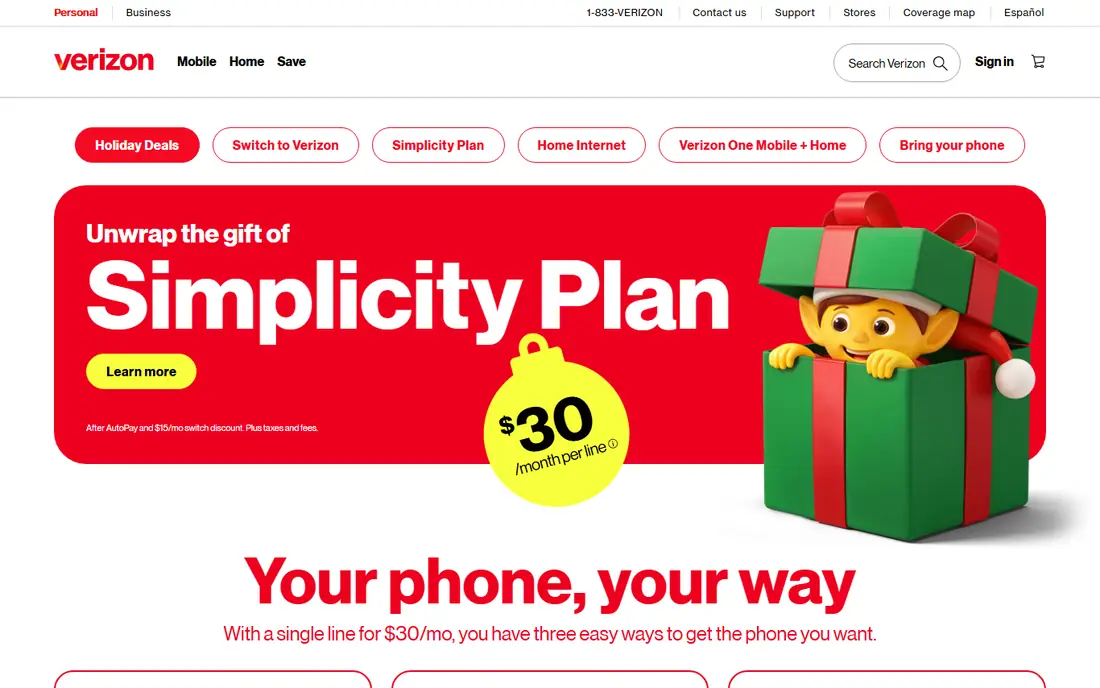
Verizon Business is the default pick for companies that cannot afford dead zones. Its network coverage and reliability rank near the top in business comparisons, and its business plans let lines sit on different tiers, so a field team and an office team need not share one plan. Call Filter, Wi-Fi calling and fleet management tools round out a business-grade offer.
Price is the trade. Verizon business pricing is premium, and the largest hotspot allowances sit on higher tiers. Small firms with light data use may pay more than they need, while firms with staff in rural areas or on the road will value coverage that keeps calls and data working.
- Widest reliable nationwide coverage in many comparisons
- Per-line flexibility
- Call Filter and fleet tools
- Premium pricing
- Top plans needed for the largest hotspot allowances
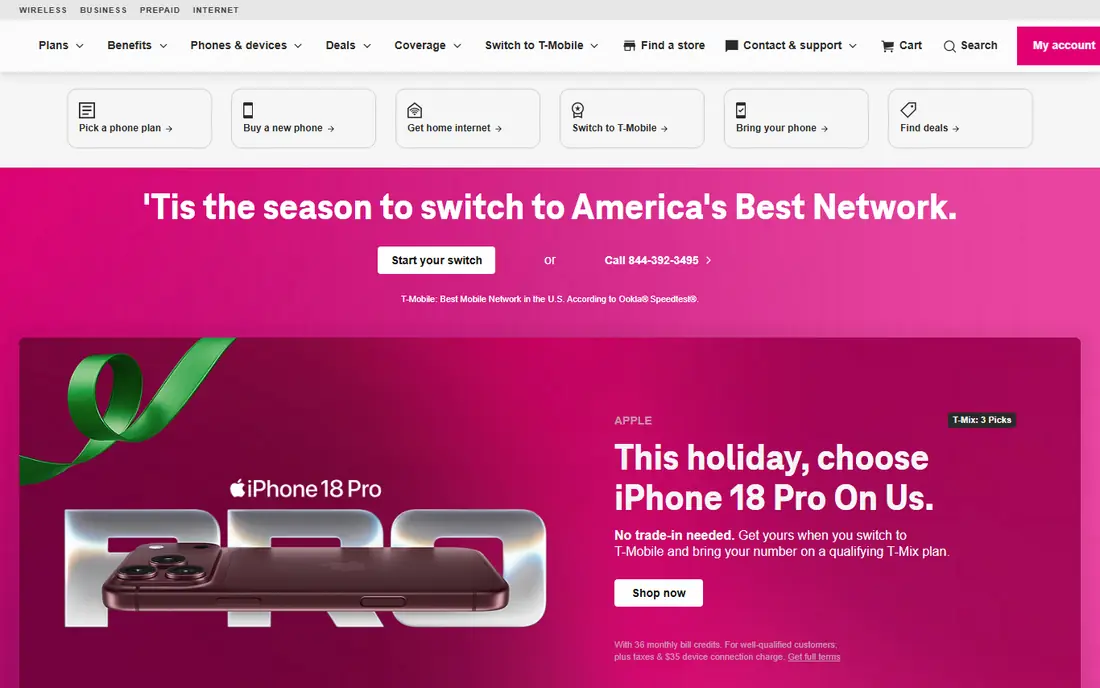
T-Mobile Business suits teams that use a lot of data. Its business plans offer generous hotspot allowances, unlimited talk, text and data on higher tiers, and Scam Shield for spam protection. In the 2026 J.D. Power business wireless study, T-Mobile ranked first for large enterprise and small business satisfaction, which supports its value reputation.
Coverage is the check to run. T-Mobile's 5G footprint is large, but rural coverage can still lag Verizon in some regions, so a team that works outside cities should test coverage at its actual sites. If coverage checks out, T-Mobile often gives the most data for the money.
- Large hotspot allowances
- Scam Shield
- Top-ranked business satisfaction in the 2026 J.D. Power study
- Rural coverage can lag Verizon in some areas
- All lines on one plan in some structures
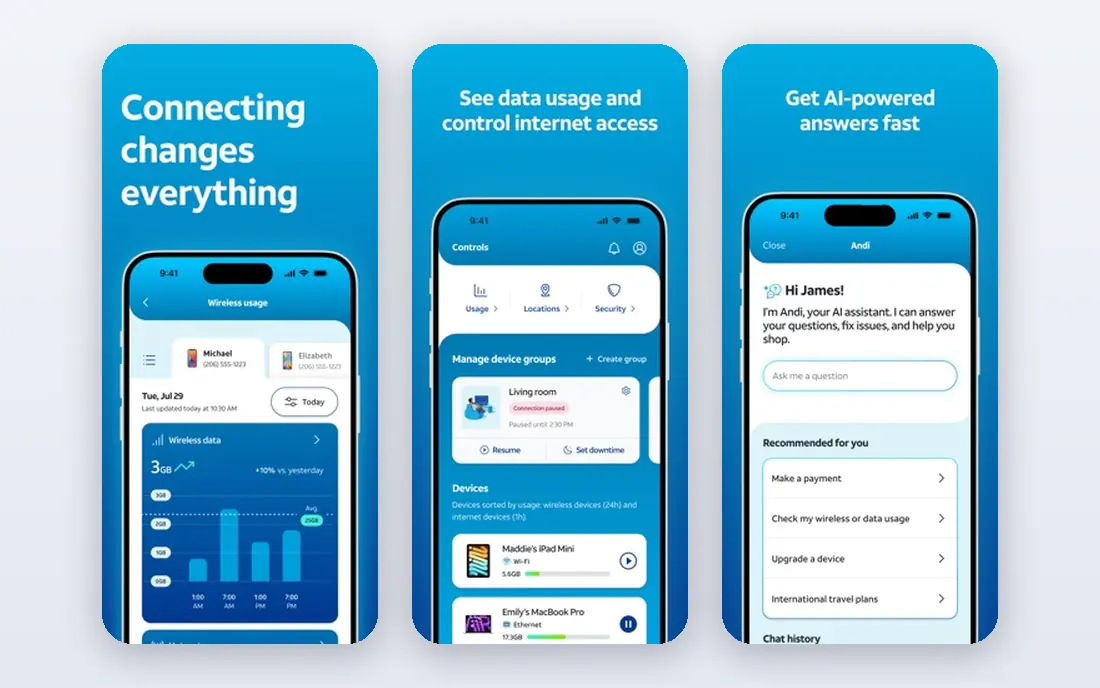
AT&T Business appeals to growing teams that want security built into the plan. ActiveArmor tools help block spam and fraud calls, hotspot allowances are sizable, and businesses can bundle mobile with AT&T internet for a site, which simplifies billing. Its nationwide coverage is strong, and its business support routes are well established.
The value case depends on bundling. Standalone AT&T pricing can sit above T-Mobile for similar data, and international roaming usually needs an add-on package. AT&T fits best when security and a single vendor for mobile plus site internet matter more than the lowest per-line price.
- ActiveArmor security tools
- Sizable hotspot allowances
- Option to bundle site internet with wireless
- Best value often needs a bundle or contract
- International features are add-ons
Google Voice gives a small business a professional number without buying handsets or signing a carrier contract per phone. Staff answer on their own phones or computers, calls can be routed and screened, and admin is simple through Google Workspace. At $10 per user per month in published comparisons, it is the cheapest business number on this list.
Call handling is the limit. Google Voice lacks the advanced call queues, analytics and integrations of a full cloud phone system, and it needs a Google Workspace subscription, which adds to the true cost. It fits solo founders and tiny teams, not a call centre or a sales floor.
- Low $10 per user starting price
- Business number on existing devices
- Simple admin
- Requires Google Workspace
- Call handling is basic compared with a full phone system
RingCentral is a cloud phone system rather than a carrier, which makes it ideal for remote and hybrid teams. Staff get a business number, call queues, voicemail, analytics and, on higher tiers, video and team messaging, all on their own devices. That structure suits companies with no office phone hardware and staff spread across locations.
Cost and setup are the trade-offs. At $30 per user per month in published comparisons, RingCentral costs more than Google Voice, and a larger team should plan number porting, call flows and training before launch. For a team that lives on the phone, the call handling is worth the price.
- Full cloud phone system with call queues and analytics
- Works on phones and computers
- Video and messaging in higher tiers
- $30 per user starting price adds up for large teams
- Setup needs more planning than Google Voice
UScellular Business suits teams based in its core regions, where its local network can beat a national carrier on rural coverage. Its business plans are budget-friendly, and its regional focus can mean more personal support for a small local firm. For a business whose staff rarely leave the Midwest or Northwest, that local strength matters.
National reach is the limit. Staff who travel widely will roam onto other networks, and international features lag the big three. UScellular is a regional pick, not a national one, and buyers should confirm coverage at every site their team visits.
- Strong local coverage in parts of the Midwest and Northwest
- Budget-friendly business plans
- Local support feel
- National footprint is smaller than the big three
- International features are weaker
Spectrum Business Mobile is best judged as part of a bundle. Customers who already use Spectrum Business Internet can add mobile lines at a competitive price and keep billing in one place, and Spectrum ranked second for small business satisfaction in the 2026 J.D. Power study. For a small firm in a Spectrum area, that pairing is attractive.
As a standalone mobile service, it is less compelling, since the best pricing ties to an internet account. Businesses outside Spectrum's footprint cannot use it at all. Check bundle terms and line pricing at your line count before comparing it with a national carrier.
- Good value when bundled with Spectrum internet
- Ranked well for small business satisfaction in 2026
- Simple plans
- Requires Spectrum internet for the best value
- Standalone value is weaker
Comcast Business Mobile follows the same bundle logic as Spectrum. Firms already on Comcast Business Internet can add mobile lines, consolidate billing and gain perks on top plans, while the service runs on a major national network. For an office already wired with Comcast, adding mobile is a low-friction step.
Standalone buyers will find better value elsewhere, and frequent international travellers should check roaming terms carefully, since global features are not its strength. Comcast Business Mobile is a bundle pick, and it should be judged on the combined internet plus mobile bill.
- Consolidates billing for Comcast internet customers
- Perks on top plans
- Uses a major national network
- Less competitive as a standalone service
- Global travel features are limited
Nextiva gives small businesses a full phone system without carrier handsets, much like RingCentral, with call handling, voicemail, analytics and team tools on phones and computers. Its support reputation and small business focus make it a good alternative for firms that want a phone system but do not want to manage carrier contracts per handset.
Pricing needs a direct quote, since tiers and add-ons change the total, and Nextiva does not replace a carrier plan for staff who need a company handset and data plan. It fits office and remote teams that mainly need a professional phone presence, not a fleet of company phones.
- Business phone system with call handling and analytics
- Works on existing devices
- Customer support focus
- Pricing is quote and tier based
- Not a carrier plan for company handsets
How we picked these
We compared carrier business pages, independent 2026 business plan comparisons and the 2026 J.D. Power business wireless satisfaction study. We favoured providers with live US business plans, published business features and a clear fit for a business size or working pattern. We left out consumer-only plans with no business support route, and we kept cloud phone systems separate from carrier plans so the comparison stays honest.
How to choose a business cell phone service
Start with coverage at your actual sites. Ask staff to test signal at offices, client sites and travel routes, since a national coverage map does not show indoor or rural gaps. A cheaper plan that drops calls at a key site is poor value, however low the per-line price looks.
Next, count lines and data honestly. Per-line prices fall as lines rise, hotspot needs vary by role, and a field team will use far more data than an office team. Quote every provider at your real line count, with the hotspot allowance each role needs, and include taxes, fees and any required add-ons.
Finally, decide between carrier handsets and a cloud number. Carrier plans suit staff who need a company phone and data plan. Cloud systems such as Google Voice, RingCentral and Nextiva suit staff who can use their own devices with a business number. Many firms use both, with carrier plans for field staff and a cloud system for office and remote staff.
Frequently asked questions
What is the best business cell phone service?
Verizon suits coverage and reliability, T-Mobile suits data-heavy teams and value, and AT&T suits security and bundling. For a business number without handsets, Google Voice suits tiny teams and RingCentral suits remote teams that need call handling. Test coverage at your sites before choosing.
How much do business cell phone plans cost?
Published 2026 comparisons put carrier business plans roughly from $25 to $70 per line per month, depending on carrier, tier and line count. Google Voice starts near $10 per user per month plus Workspace, and RingCentral near $30 per user per month. Always compare at your line count, including taxes and fees.
Do business plans need a contract?
It varies. Some carrier business plans run without a long contract, while others offer savings with a term commitment. Cloud phone systems usually run monthly or annually. Ask about early termination fees and what happens to your numbers if you leave before signing.
Can staff keep their own phones with a business plan?
Yes, with a cloud phone system, staff use a business number on their own devices. With a carrier plan, you can often bring your own device or buy company handsets. A bring-your-own-device policy needs clear rules on reimbursement, security and what happens when staff leave.
Which carrier has the best business coverage?
Verizon is most often cited for nationwide reliability, with AT&T close behind and T-Mobile strong on 5G in cities and suburbs. UScellular can beat all three in parts of its home regions. Coverage varies by site, so test it where your team actually works rather than relying on a national map.
Is Google Voice enough for a small business?
For a solo founder or a tiny team that needs a professional number, call screening and voicemail, Google Voice is enough and cheap. For a team that needs call queues, analytics, integrations or a sales floor workflow, RingCentral or Nextiva will fit better. Choose by call volume and handling needs, not by price alone.
Sources
See where you really rank - block by block
ProMapRanker scans Google Maps across a grid of your service area. Simple monthly plans from $19, white-label on every plan.
Start freeKeep reading
 who has best internet service
Who Has the Best Internet Service in 2026
Who has best internet service for US homes? We compare fiber, cable, fixed wireless and satellite providers on speed, price, availability and terms today.
Read → which survey tool has the best analytics
Which Survey Tool Has the Best Analytics in 2026
Find which survey tool has the best analytics in 2026, comparing Qualtrics, SurveyMonkey, Typeform, Alchemer, and more on reports, text, and stats today.
Read → which streaming service has the best movies
Which Streaming Service Has the Best Movies in 2026
Answering which streaming service has the best movies, with Netflix, Max, Criterion and more compared on libraries, prices and free options in this guide.
Read →