 ProMapRanker
Best Brokerage Apps for Beginners in 2026

Key takeaways
- Fidelity is the best overall beginner app, with 0 dollar stock and ETF commissions, fractional shares from 1 dollar, and strong research.
- Charles Schwab suits beginners who want education plus paper trading before risking real money.
- Robinhood is the simplest first app, while Webull suits beginners who want charts and paper trading from the start.
- This article is general information only, not financial advice. Investing carries risk, including loss of money, and past returns do not promise future returns.
Quick comparison
| Pick | Great for | Pricing starts at | Free tier | |
|---|---|---|---|---|
 Fidelity | Best overall for beginners | $0 commission | Yes | Visit |
 Charles Schwab | Education and paper trading | $0 commission | Yes | Visit |
 Robinhood | Simplest first trades | $0 commission | Yes | Visit |
 Webull | Charts and paper trading | $0 commission | Yes | Visit |
 SoFi Invest | Simple plus automated investing | $0 commission | Yes | Visit |
 Public | Simple multi-asset investing | $0 commission | Yes | Visit |
 E*TRADE | Balanced research and tools | $0 commission | Yes | Visit |
 Moomoo | Active learning with data | $0 commission | Yes | Visit |
 Interactive Brokers | Global platform for growth | $0 commission | Yes | Visit |
The best brokerage apps for beginners
Beginner brokerage apps should make a first trade clear, show total costs, and offer education without pushing frequent trading. These nine meet that bar in different ways, from simple mobile apps to full-service brokers with retirement accounts. This is general information only, not financial advice.
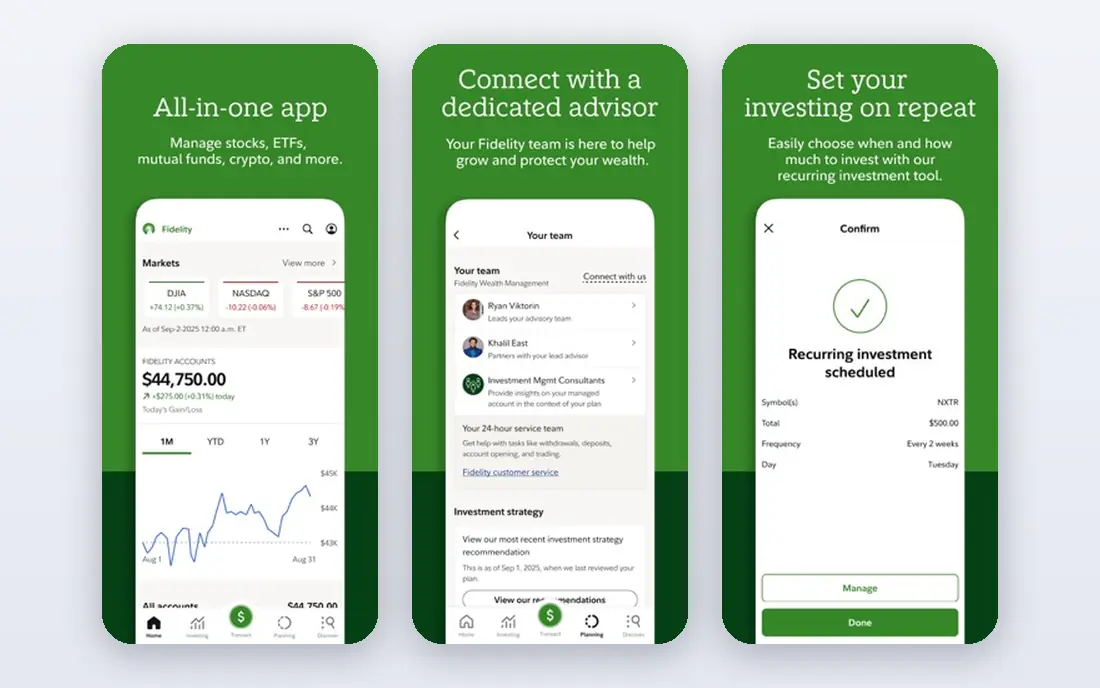
Fidelity is our pick for most beginners because it covers both first trades and long-term goals. You can buy fractional shares from 1 dollar, open a retirement account in the same app, and read research before buying. Customer support and education resources are also stronger than most mobile-first rivals.
The app is less minimal than Robinhood, and new users may need a few sessions to find every feature. That depth becomes a plus over time, since beginners rarely need to switch brokers as they learn. Fidelity fits savers who want one account for investing and retirement planning.
- 0 dollar online stock and ETF commissions
- Fractional shares from 1 dollar
- Strong research and retirement accounts
- Mobile app can feel busy beside simpler rivals
- Some advanced tools take time to learn
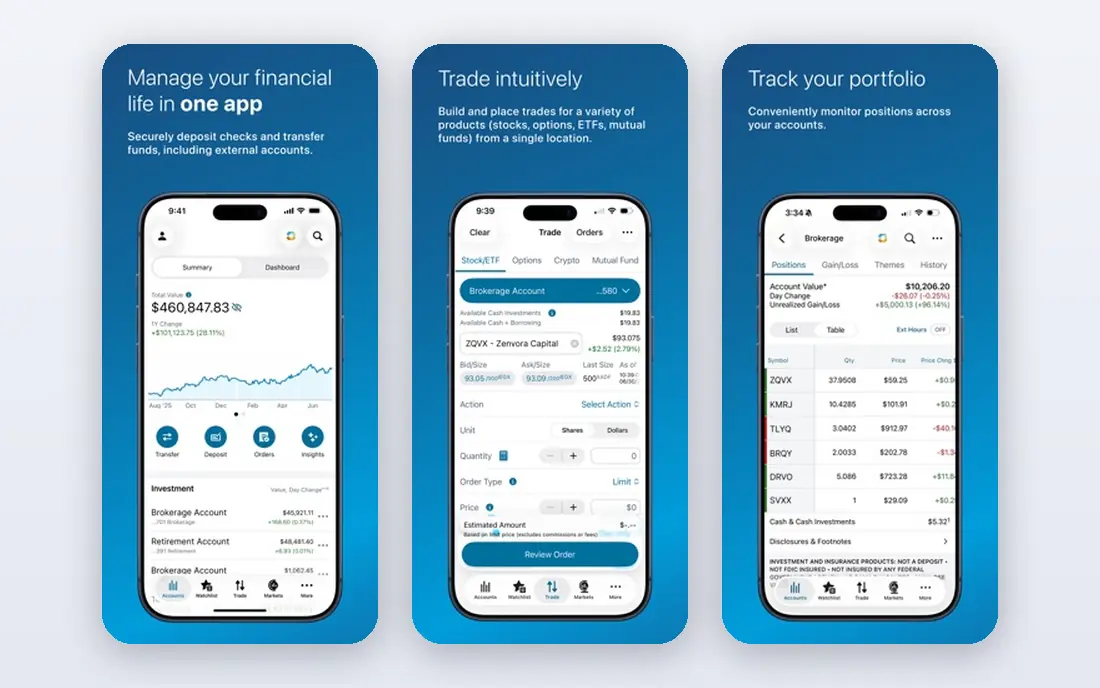
Charles Schwab suits beginners who want to learn before they trade. Its education library covers basics in plain language, and paper trading lets new investors practice with virtual money and real market data. That practice step helps beginners learn order types and market moves without risking savings.
The range of accounts and platforms can feel large at first, especially when moving between the main app and thinkorswim. Schwab fits beginners who want a full-service broker, strong support, and a practice mode they can use for weeks before a first real trade.
- 0 dollar online stock and ETF commissions
- Extensive education
- Paper trading through thinkorswim
- Product range can feel complex at first
- Interface varies between app and desktop platform
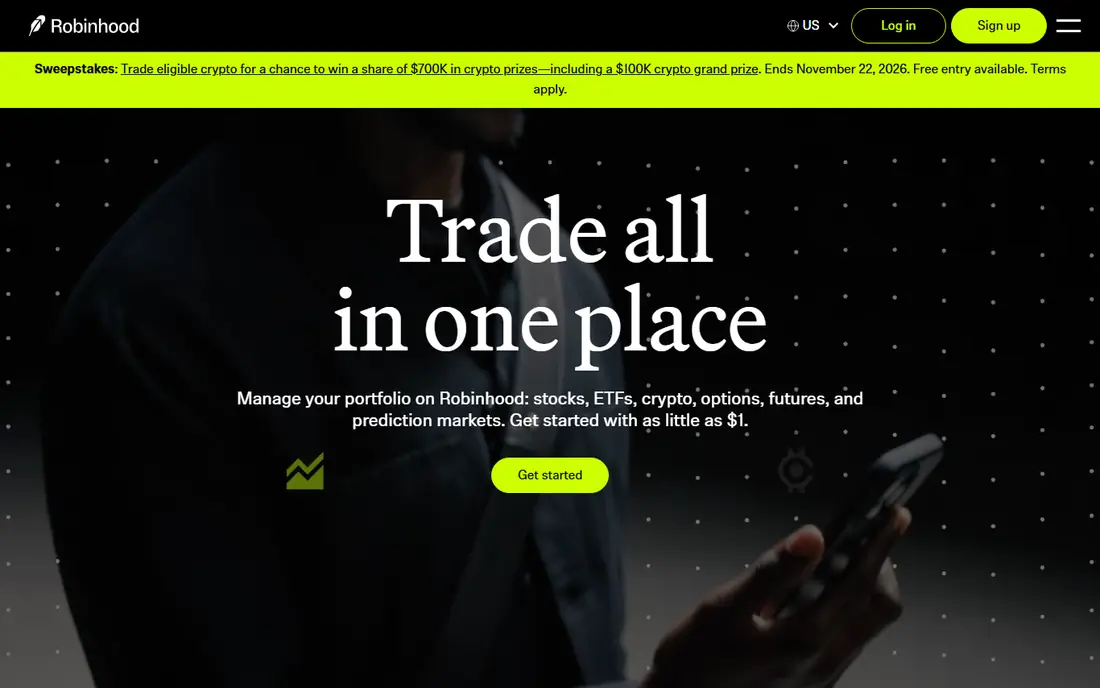
Robinhood remains the easiest app for a first trade. Opening an account, funding it, and buying a fractional share takes only a few steps, and the interface avoids jargon that confuses new investors. Recurring investments also help beginners build a habit without timing the market each week.
Simplicity has costs. Research is thinner than at Fidelity or Schwab, there is no paper trading mode, and the clean design can make trading feel like a game. Robinhood fits beginners who want a low-friction start and will pair it with outside reading, not as a sole source of investing education.
- 0 dollar stock and ETF commissions
- Fractional shares from 1 dollar
- Very simple mobile onboarding
- Research tools are lighter than full brokers
- No paper trading mode
- Simple design can encourage frequent trading
Webull suits beginners who want to learn active trading tools from the start. Paper trading with real pricing lets new users test ideas without risk, and charts offer far more detail than a simple buy screen. Extended-hours trading is also available for users who understand its extra risks.
That depth can overwhelm a first-time investor, and Webull is less focused on retirement planning than Fidelity or Schwab. It fits curious beginners who enjoy charts and data, and who will use paper trading first rather than jumping straight into live trades.
- 0 dollar commissions on US stocks, ETFs, and many options
- Free paper trading
- Detailed charts and indicators
- Steeper learning curve than Robinhood
- Less suited to simple retirement planning alone
SoFi Invest fits beginners who are unsure whether they want to pick stocks or let a portfolio be managed for them. Both options live in one app, so a user can start with automated investing and later try self-directed trades without opening a second account. The interface stays clean and avoids the clutter of professional platforms.
Research depth is the limit, and automated investing does not remove market risk. SoFi Invest fits beginners who want a simple, low-cost start and a clear choice between doing it themselves and using an automated portfolio.
- 0 dollar stock commissions
- Self-directed and automated accounts in one app
- Fractional investing from 5 dollars in summaries
- Research and trading tools are lighter than specialist brokers
- Automated portfolios still carry market risk
Public suits beginners who want more than stocks in a simple app. Bonds, Treasuries, and ETFs sit beside stocks, and recurring plans help build a steady habit. The layout explains each asset in plain terms, which helps new investors who are still learning how different investments behave.
Fees need checking, since some subscriptions and asset types carry separate charges even though stock commissions are 0 dollars. Public fits beginners who want a broad, simple portfolio in one app and will read fee details before adding a new asset type.
- Stocks, ETFs, bonds, and Treasuries in one app
- Recurring plans
- Simple multi-asset view
- Some plans, subscriptions, and asset types carry separate fees
- Research is lighter than full brokers
E*TRADE offers a balanced middle ground between simple apps and professional platforms. Research, screeners, and educational content are stronger than at mobile-first rivals, while the mobile app still handles everyday trades well. Retirement accounts and banking links also make it a practical long-term choice.
The design feels less modern than Robinhood or Public, and some users may find the desktop platform busy. E*TRADE fits beginners who want research depth without jumping straight to a professional trading platform, and who plan to stay with one broker as they learn.
- 0 dollar online stock and ETF commissions
- Solid research and screeners
- Retirement accounts available
- Interface can feel dated beside newer apps
- Options fees and cash rates need checking
Moomoo appeals to beginners who learn by watching data. Real-time quotes, charts, and community discussion sit beside paper trading, so new users can test ideas and see how other investors think about the same stocks. That learning loop can build confidence faster than a bare buy screen.
The interface is busy, and the focus on active trading can distract from long-term saving habits. Moomoo fits data-curious beginners who will use paper trading first, set clear limits, and treat community posts as ideas to research, not as advice to follow blindly.
- 0 dollar stock and ETF commissions in US summaries
- Rich market data
- Paper trading and community learning
- Data-heavy interface can overwhelm beginners
- Some features suit active traders more than long-term savers
Interactive Brokers is the growth pick, not the easiest first app. Its Lite pricing offers 0 dollar US stock and ETF commissions for eligible clients, and its global market access goes far beyond US-only apps. Beginners who plan to invest internationally or learn advanced tools will not outgrow it quickly.
The learning curve is real, and the main platform assumes more knowledge than Robinhood or SoFi. Interactive Brokers fits beginners who are comfortable with complexity, want global access, and are willing to spend time learning the platform before trading live.
- Access to many global markets
- Low-cost Lite pricing for eligible US clients
- Strong tools for growth
- Steepest learning curve here
- Advanced platform can confuse first-time investors
How we picked these
We compared official pricing pages, account features, and recent beginner broker summaries, and we kept only US-accessible brokers that are still operating in October 2026 with 0 dollar online stock and ETF commissions. We favored brokers with fractional shares, paper trading, or strong education, and we noted where options fees, margin rates, and cash sweep terms still apply. This article is general information only, not financial advice, and no broker here can promise returns.
What to check before you open an account
Start with costs beyond commission. Check options per-contract fees, margin interest, mutual fund transaction fees, and what the broker pays on uninvested cash, since those costs differ even when stock trades are free. Also check account minimums, fractional share minimums, and whether retirement accounts are included if you plan to save for retirement.
Next, decide how you will learn. Use paper trading where offered, read the broker education pages, and set a small starting amount you can afford to lose. Avoid margin borrowing as a beginner, avoid frequent trading based on social posts, and consider speaking with a qualified financial adviser before making decisions that affect retirement or large sums.
Frequently asked questions
What is the best brokerage platform for beginners?
Fidelity is the best overall pick for most beginners, with 0 dollar commissions, fractional shares from 1 dollar, and strong research and retirement accounts. Charles Schwab is close for education and paper trading, while Robinhood is simplest for a first trade.
How much money do I need to start investing?
Many brokers here allow fractional shares from 1 dollar or 5 dollars, so a large lump sum is not required. Start with an amount you can afford to leave invested, and remember that investing carries risk, including possible loss.
Are commission-free trades really free?
Stock and ETF commissions may be 0 dollars, but other costs can still apply, including options fees, spreads, margin interest, and fund fees. Read the broker fee schedule before funding an account, and do not assume free means cost-free.
Should beginners use paper trading first?
Yes, paper trading is a useful way to learn order types and market moves without risking real money. Schwab, Webull, and Moomoo offer practice modes, and a few weeks of practice can prevent costly early mistakes.
Is investing through an app safe?
Major brokers are regulated broker-dealers, and SIPC protection may apply if a member firm fails and customer assets are missing, but it does not protect against market losses. Keep passwords strong, use two-factor authentication, and only use official app store listings to download a broker app.
Sources
See where you really rank - block by block
ProMapRanker scans Google Maps across a grid of your service area. Simple monthly plans from $19, white-label on every plan.
Start freeKeep reading
 who has best internet service
Who Has the Best Internet Service in 2026
Who has best internet service for US homes? We compare fiber, cable, fixed wireless and satellite providers on speed, price, availability and terms today.
Read → which survey tool has the best analytics
Which Survey Tool Has the Best Analytics in 2026
Find which survey tool has the best analytics in 2026, comparing Qualtrics, SurveyMonkey, Typeform, Alchemer, and more on reports, text, and stats today.
Read → which streaming service has the best movies
Which Streaming Service Has the Best Movies in 2026
Answering which streaming service has the best movies, with Netflix, Max, Criterion and more compared on libraries, prices and free options in this guide.
Read →