 ProMapRanker
Best Blockchain Intelligence Tool in 2026


Enterprise compliance and investigations · Pricing starts at: See website
Key takeaways
- Chainalysis, TRM Labs and Elliptic lead for enterprise compliance and investigations, but their pricing is usually quoted rather than published.
- Arkham Intelligence and Bitquery are the most approachable starting points for researchers who need public data without an enterprise contract.
- Nansen suits market research and wallet tracking, while Crystal Intelligence and Merkle Science suit tracing and risk monitoring work.
- Chain coverage, attribution quality and alerting matter more than a long feature list, so test a tool on your own cases before signing.
- This is not financial advice, and crypto activity carries risk, so treat risk scores as one input among others, not as proof of wrongdoing.
Quick comparison
| Pick | Great for | Pricing starts at | Free tier | |
|---|---|---|---|---|
| Chainalysis | Enterprise compliance and investigations | See website | No | Visit |
 TRM Labs | Cross-chain risk and investigations | See website | No | Visit |
 Elliptic | Screening and monitoring | See website | No | Visit |
 Crystal Intelligence | Forensic tracing | See website | No | Visit |
 Arkham Intelligence | Public wallet research | Free | Yes | Visit |
 Nansen | Market and wallet research | See website | Free trial | Visit |
 Bitquery | Developer data and APIs | $39 per month | Free trial | Visit |
 Merkle Science | Risk monitoring and fraud detection | See website | No | Visit |
The best blockchain intelligence tools
We compared tools that turn public chain data into usable answers for compliance teams, investigators and researchers. The list below mixes enterprise platforms with research tools, because one buyer may need sanctions screening while another only needs to follow a wallet.
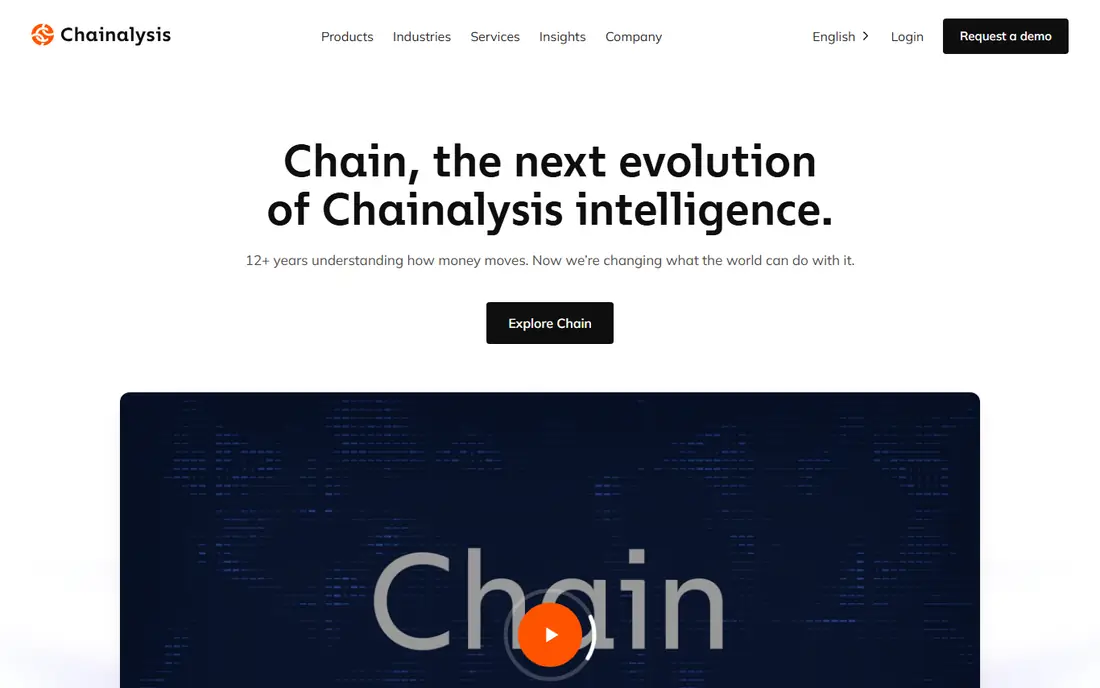
Chainalysis is the default name in this field for a reason. Its Reactor product supports investigation work, while its KYT product supports transaction monitoring for exchanges and financial firms. Together they cover tracing funds, screening wallets and watching for risky activity over time. For a compliance team that must show its work to a regulator, that breadth is hard to match.
The catch is access. Chainalysis sells enterprise contracts, and a small team may find the price and the sales process out of reach. We would start here if the budget allows and the work involves formal investigations, sanctions screening or ongoing monitoring. Smaller researchers should look at Arkham or Bitquery first and keep Chainalysis in mind for later.
- Broad platform for tracing, monitoring and screening
- Deep attribution data
- Widely used by exchanges and agencies
- Pricing is quoted, not published
- Likely too costly for small teams
- Setup can be involved
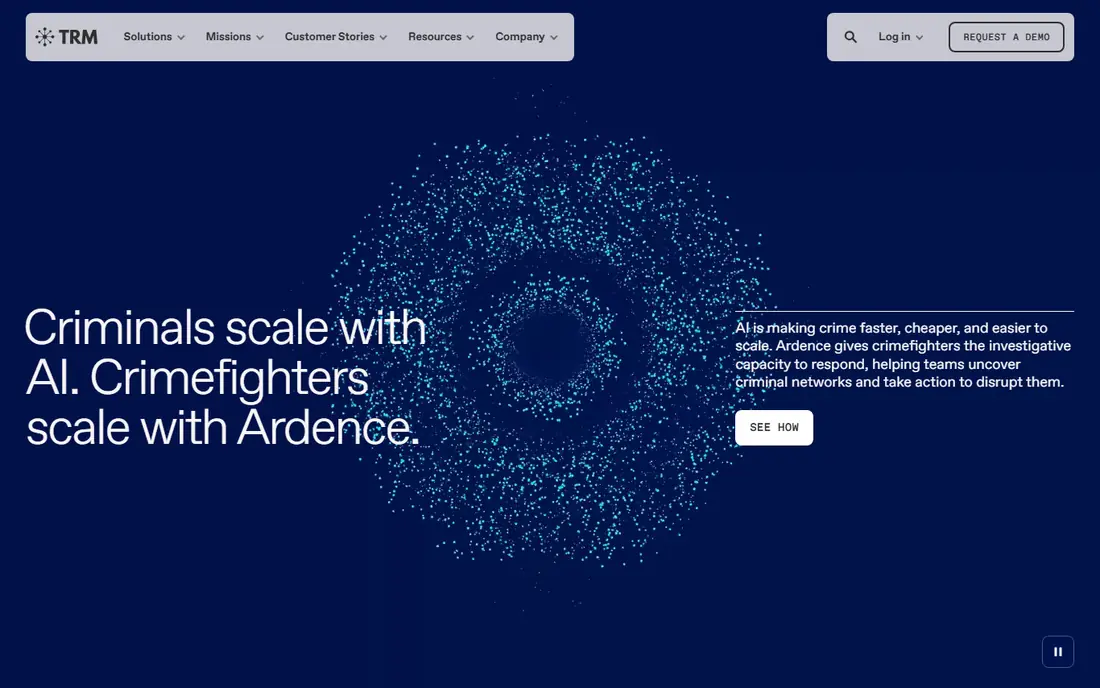
TRM Labs has grown into the closest rival to Chainalysis, with a clear focus on risk operations across many chains. Its tools link investigation, monitoring and screening, so a team can move from an alert to a traced flow without switching systems. Stablecoin and cross-chain routes get particular attention, which matters because funds rarely stay on one chain.
For a mid-size exchange or a financial crime team, TRM Labs is a serious alternative rather than a cheaper copy. The downside is similar to Chainalysis, since pricing is quoted and the product is aimed at professional teams. Ask for a demo on your own transaction types, and check how it handles the chains your customers actually use.
- Strong cross-chain tracing
- Unified risk and investigation workflows
- Real-time risk scoring
- Enterprise pricing is quoted
- Not built for casual retail research
- Onboarding takes time
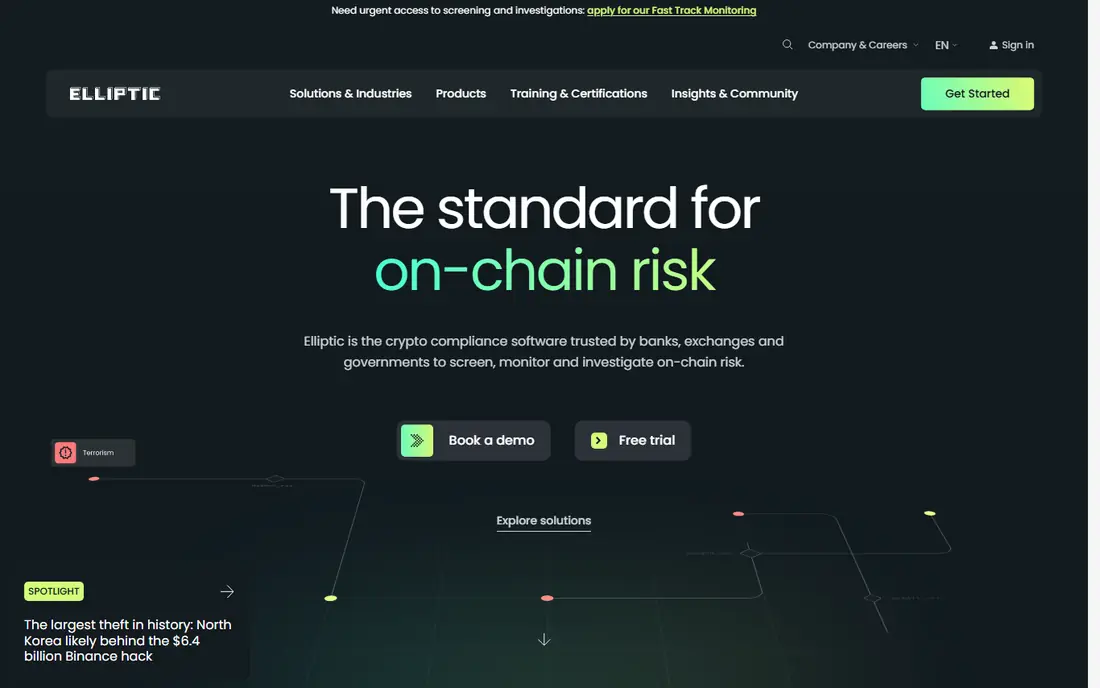
Elliptic, based in London, serves banks, exchanges and law enforcement with screening and investigation products. Its screening tools flag risky wallets and transactions, while its Investigator product helps analysts follow flows across chains and bridges. For a European firm, or a team that needs clear audit trails, Elliptic is a natural shortlist entry.
The trade-off is cost and complexity. This is not a tool you open for a quick wallet lookup, and smaller teams may struggle to justify the contract. We would place Elliptic high for regulated firms that need defensible screening, and lower for independent researchers who mainly need public data.
- Screening across many chains
- Investigation tools for case work
- Strong focus on banks and exchanges
- Quoted enterprise pricing
- Less suited to casual research
- Feature depth varies by plan
Crystal Intelligence, formerly Crystal Blockchain, focuses on tracing and forensic analysis across hundreds of blockchains. Its reports are built for investigators who need a clear chain of transfers they can present to colleagues or authorities. That audit-ready style sets it apart from research dashboards that show a chart but little supporting detail.
A smaller compliance team may still find value here if tracing is the main job, but the quoted pricing means you need a sales conversation before you know the cost. Compare it directly with TRM Labs and Elliptic on the same case, and judge which graph is easiest to read and explain.
- Tracing across a large number of blockchains
- Audit-ready forensic reports
- Entity attribution
- Quoted pricing
- Enterprise focus
- May be more than a small team needs
Arkham Intelligence is the easiest place to start if you want to explore wallets without an enterprise budget. It labels entities, shows portfolio holdings and maps flows between addresses, which helps a researcher understand who holds what and where funds moved. The free tier makes it useful for journalists, analysts and curious traders.
Do not mistake it for a compliance tool. Arkham shows public on-chain data, and its labels should be checked against other sources before you act on them. For research and early-stage due diligence, though, it is a strong free starting point, and we would use it before paying for a larger platform.
- Free access for public research
- Entity labels for wallets
- Portfolio and flow views
- Public data only, not a compliance screening system
- Labels can need independent checking
- Advanced features may cost
Nansen takes a different angle from the compliance platforms. It tracks notable wallets, token flows and market activity, which helps traders and researchers spot trends early. If your question is what smart money is doing, rather than whether a transaction breaches a rule, Nansen fits better than Chainalysis or Elliptic.
The weakness is scope. Nansen is a research tool, not a sanctions screening system, and its plans can get costly as you add features. Use it for market insight, and pair it with a screening tool if you also handle customer funds.
- Smart money and wallet tracking
- Dashboards for market research
- Labels for notable wallets
- Pricing is not simple to compare
- Aimed at traders and researchers, not compliance screening
- Some features need higher plans
Bitquery suits teams that want to build on chain data rather than read a dashboard. Its APIs give indexed, multi-chain data through GraphQL or REST, and its Coinpath tool supports money-flow analysis. For a developer team building a product, that data access matters more than a polished compliance report.
Non-technical users may find Bitquery less welcoming, since much of its value sits in queries and code. If your team can write queries, the published starting price makes budgeting easier than with quoted enterprise tools. If not, a dashboard tool will serve you better.
- GraphQL and REST APIs
- Indexed data across chains
- Money-flow analysis tools
- Developer focus means a learning curve
- Dashboards are thinner than research tools
- Free use is limited
Merkle Science focuses on risk monitoring and fraud detection for Web3 firms, with behavioural scoring that looks beyond simple blocklists. That approach can help a team catch new patterns rather than only known bad addresses. Its modular setup also lets firms pick monitoring or investigation tools without buying a full suite at once.
The main risk for a buyer is comparison. Merkle Science is less widely known than the top two, so you should test its coverage on your own chains and its alert quality on real cases. For a mid-market firm that wants a focused monitoring tool, it deserves a demo alongside Elliptic and TRM Labs.
- Behavioural risk scoring
- Monitoring for Web3 compliance
- Modular products
- Quoted pricing
- Smaller name than Chainalysis or Elliptic
- Coverage varies by chain
How we picked these
We compared official product pages, pricing pages where prices were published, and public descriptions of chain coverage, screening and tracing features. We left out tools that only offer a single wallet check, tools with no clear vendor site, and tools aimed only at price charts. Where a vendor quotes pricing instead of publishing it, we wrote See website rather than guessing a figure.
Choosing the right tool for your job
Start by naming the job in one sentence. A compliance team needs screening, alerts and records it can show a regulator. An investigator needs tracing, graphs and reports that hold up in a case file. A researcher needs labels, flows and dashboards that answer questions fast. Those jobs point to different tools, and buying the biggest platform for a research job wastes money.
Next, check chain coverage for the assets you actually handle. A tool that covers many chains in name may be thin on the one chain your customers use most, so run a test case on that chain. Look at how alerts are explained too, since a risk score without a reason is hard to act on and hard to defend. Finally, confirm who can see the data and how long it is kept, because chain intelligence often involves sensitive case work.
Frequently asked questions
What is a blockchain intelligence tool?
It is software that reads public blockchain data, links addresses to entities where possible, and turns transfers into scores, alerts, graphs or reports. Compliance teams use it for screening and monitoring, investigators use it for tracing, and researchers use it for market and wallet analysis.
Are blockchain intelligence tools only for large companies?
No, although the leading compliance platforms are enterprise priced. Free and developer priced tools such as Arkham Intelligence and Bitquery serve researchers and small teams, while larger firms usually need a quoted contract for screening and monitoring.
Can these tools identify the person behind a wallet?
They can link a wallet to a known entity, such as an exchange, when that link is supported by data. They cannot always name a private person, and a label should be checked against other evidence before you treat it as proof.
What are the best blockchain intelligence tools for compliance?
Chainalysis, TRM Labs and Elliptic are the usual shortlist for regulated screening and monitoring, with Crystal Intelligence and Merkle Science as strong alternatives for tracing and risk work. The right pick depends on your chains, your volume and your regulator's expectations.
Do I need more than one tool?
Many teams do use two tools, one for screening and one for research or tracing, because no single product is best at every job. Start with one, learn where it falls short on your cases, and add a second only for a clear gap.
Sources
See where you really rank - block by block
ProMapRanker scans Google Maps across a grid of your service area. Simple monthly plans from $19, white-label on every plan.
Start freeKeep reading
 who has best internet service
Who Has the Best Internet Service in 2026
Who has best internet service for US homes? We compare fiber, cable, fixed wireless and satellite providers on speed, price, availability and terms today.
Read → which survey tool has the best analytics
Which Survey Tool Has the Best Analytics in 2026
Find which survey tool has the best analytics in 2026, comparing Qualtrics, SurveyMonkey, Typeform, Alchemer, and more on reports, text, and stats today.
Read → which streaming service has the best movies
Which Streaming Service Has the Best Movies in 2026
Answering which streaming service has the best movies, with Netflix, Max, Criterion and more compared on libraries, prices and free options in this guide.
Read →