 ProMapRanker
Best Birdwatching App in 2026


Bird ID for beginners and everyone · Pricing starts at: Free
Key takeaways
- Merlin Bird ID is our pick for most people: free, accurate for common birds, and it identifies birds by photo, sound, and a short quiz.
- eBird is the best birding app for records and citizen science, with checklists, hotspots, and rare-bird alerts built in.
- Audubon Bird Guide is a strong free second guide, with rich species accounts and tools for comparing similar birds.
- Paid guides such as iBird Pro and Sibley Birds suit serious birders who want deep field-mark detail and offline use.
- Use playback sparingly in the field, and never use it near nests or for endangered species, since it can disturb birds.
Quick comparison
| Pick | Great for | Pricing starts at | Free tier | |
|---|---|---|---|---|
| Merlin Bird ID | Bird ID for beginners and everyone | Free | Yes | Visit |
 eBird | Checklists, hotspots, and records | Free | Yes | Visit |
 Audubon Bird Guide | Free guide with deep species info | Free | Yes | Visit |
 iBird Pro | Detailed North America field guide | See website | No | Visit |
 Sibley Birds | Expert field-mark illustrations | See website | No | Visit |
 BirdNET | Sound ID from research labs | Free | Yes | Visit |
 Picture Bird | Fast photo ID for casual users | Free | Yes | Visit |
 BirdsEye | Finding birds reported near you | Free | Yes | Visit |
 Song Sleuth | Song ID with learning tools | See website | No | Visit |
The best birdwatching apps
We compared nine apps on ID accuracy for common birds, species coverage, offline packs, checklist tools, and price. The best bird apps below include free Cornell Lab tools, paid field guides, and sound ID apps, so you can pick by how you bird, not just by price.
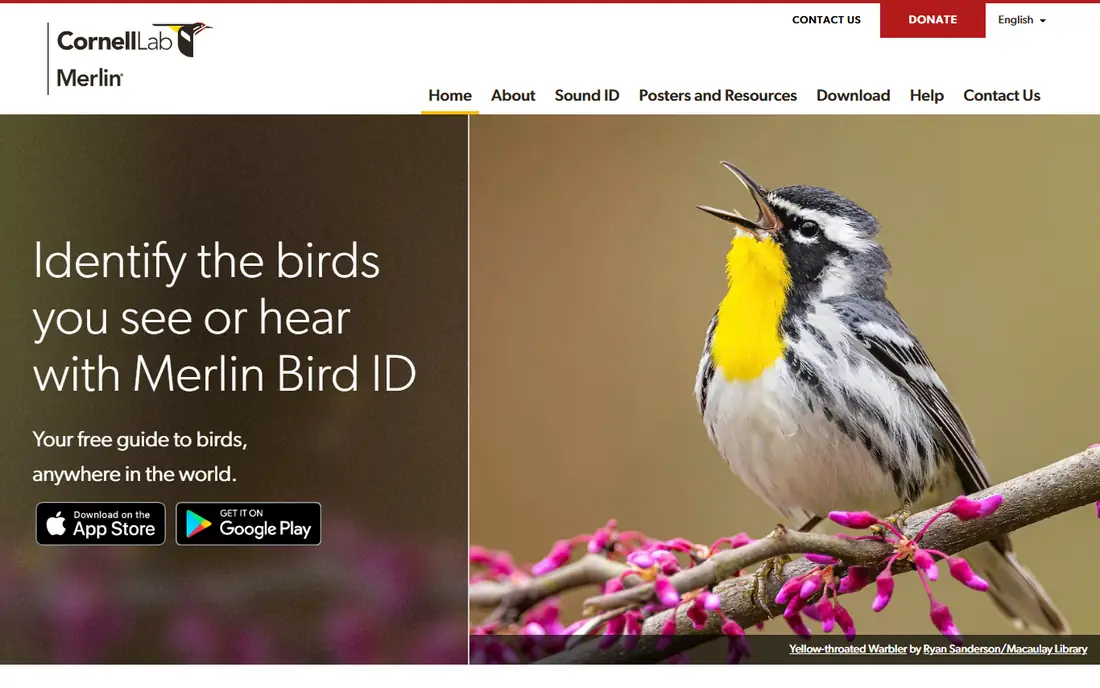
Merlin Bird ID, from the Cornell Lab of Ornithology, is the app we suggest first to almost everyone. You can answer a few questions about size, color, and location, upload a photo, or record a singing bird, and Merlin suggests likely matches with photos, sounds, and range maps. It is powered by sightings from eBird, so its suggestions fit what is actually likely where you stand.
The app is completely free, with no paid tier locking core features away. That makes it easy to keep on your phone for a walk, a garden visit, or a trip abroad, where you can download the bird pack for that region. Like every ID app, it can get a distant or unusual bird wrong, so treat a suggestion as a lead and check field marks before you report it.
- Photo ID, Sound ID, and step-by-step ID
- Free with no subscription
- Bird packs for regions worldwide
- Can misidentify uncommon or distant birds
- No desktop version
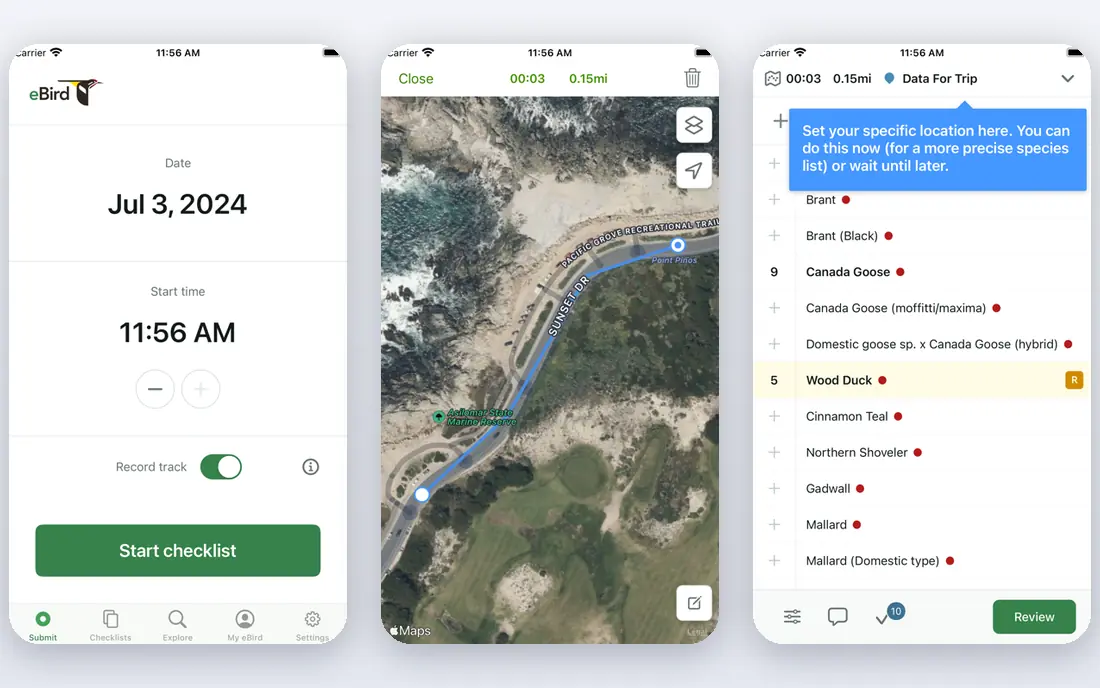
eBird is the record-keeping home for serious birding, and it is also free. You submit checklists with species, counts, location, and effort, and you can explore hotspots, recent sightings, and species maps for any area. Alerts can tell you when a rare bird is reported near you, which is handy for a planned outing.
New birders sometimes open eBird expecting instant ID, but that job belongs to Merlin. eBird shines once you know, or think you know, what you saw. Used together, the pair covers the full loop: Merlin helps you identify, and eBird keeps the record and shares it with science. That shared data also improves Merlin over time.
- Global checklists and hotspot explorer
- Rare-bird alerts
- Your lists sync across devices
- Built for recording, not instant photo ID
- Best with a Merlin account for full use
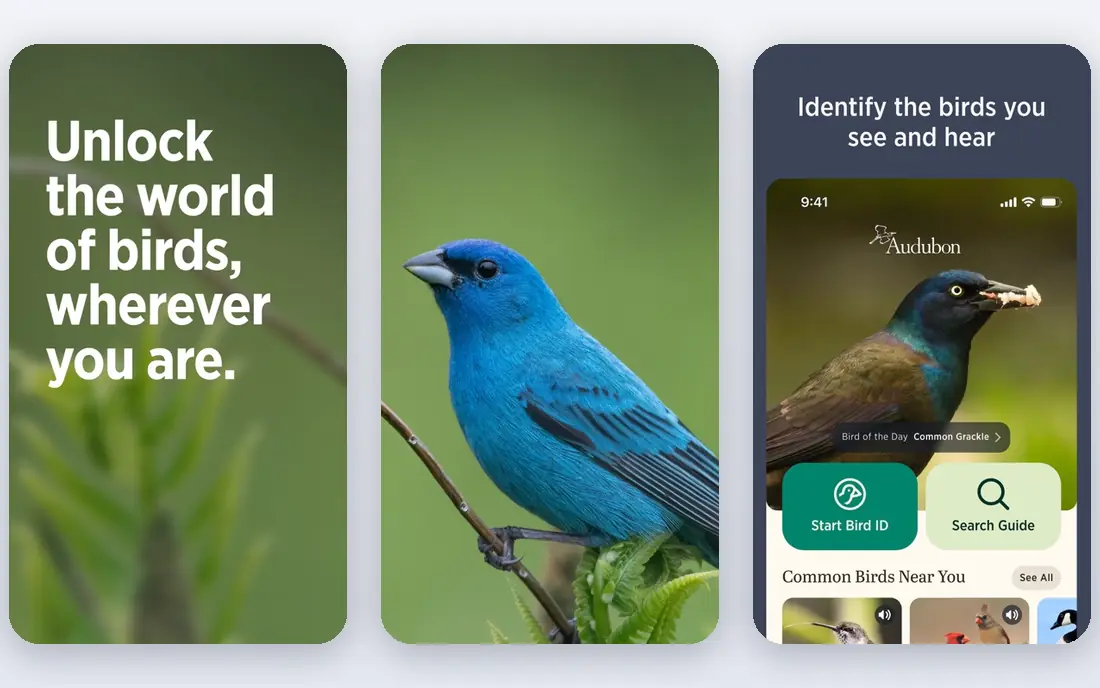
The Audubon Bird Guide, from the National Audubon Society, is a free field guide app with detailed species accounts, photos, songs, and calls. It helps you narrow birds by size, shape, and habitat, and it makes comparing look-alike species easier than a simple photo search. You can also find birds reported near your location, which helps when you plan a morning walk.
It does not match Merlin for instant sound ID, and the layout packs in a lot of content. For learning, though, the depth is a plus. If you want a second opinion after Merlin, or a guide that reads more like a field book, Audubon is a strong free choice and one of the best birdwatching apps for study at home.
- Free with broad North America coverage
- Tools to compare similar species
- Sightings near you by location
- Interface can feel busy
- ID by sound is less central than Merlin Sound ID
iBird Pro is a paid field guide built for birders who want detail in the field. It covers a large set of North American species with illustrations, photos, songs, and notes on field marks to look for. Search tools let you filter by location, size, shape, and color, which helps when you only caught a brief view.
The price is a one-time app purchase rather than a subscription, but check the current store price before buying, since it changes over time. It is less useful outside North America than Merlin, which offers packs worldwide. For a North America birder who wants a full guide offline, iBird Pro is still a solid buy.
- Deep species accounts for North America
- Illustrations with field marks
- Search by shape, color, and range
- Paid app
- North America focus limits use abroad
Sibley Birds brings David Allen Sibley's well-known illustrations to your phone, with a focus on the small differences that separate similar species. That focus is why many experienced birders keep it alongside Merlin. When two warblers or sparrows look alike, Sibley's drawings and notes on posture, bill shape, and plumage can settle the question.
Beginners may find it less welcoming than Merlin, since it assumes some field knowledge and does not lean on automatic ID. Check the store listing for the current price and for the edition that matches your region. If you are moving past beginner ID and want to learn field marks properly, Sibley is a top pick.
- Illustrations from the Sibley guides
- Side-by-side similar species
- Offline use
- Paid app
- Less hand-holding for total beginners
BirdNET, developed with Cornell and Chemnitz University of Technology, identifies birds from sound recordings. You record a bird, and the app suggests species with a confidence view, which helps you judge a match. It is free, and it suits birders who hear more birds than they see, such as in dense woods or at dawn.
It does not identify photos, and noisy wind or distant song can lower accuracy. Use it as a learning tool for songs, and confirm a rare suggestion with Merlin or a field guide before you log it. For sound-focused birding, BirdNET is one of the best birding apps available at no cost.
- Free sound ID built on research
- Identifies many species from recordings
- Simple recording screen
- Sound only, no photo ID
- Needs a clear recording for best results
Picture Bird identifies birds from a photo and gives a short species profile, which suits casual users who spot a bird in the garden and want a fast answer. The interface is simple: take or upload a photo, wait for a match, and read the facts. That speed is its main appeal.
Free use is limited, and the app may prompt you to upgrade for full features, so check the current store terms before you rely on it daily. It also lacks the checklist and hotspot depth of eBird. For quick curiosity, it works well. For regular birding, pair it with Merlin and eBird rather than using it alone.
- Quick photo ID with species facts
- Easy for casual users
- Works for garden birds
- Free use has limits and paid prompts
- Less depth than Merlin or Sibley for study
BirdsEye helps you answer a different question: what has been seen near me lately. It draws on eBird data to show nearby sightings, hotspots, and rare birds, with maps that make trip planning simple. If you are visiting a new area, a quick check can shape where you go first in the morning.
The base app is free, with extra features offered as in-app purchases, so check what is included before you pay. It is not a full ID guide, so keep Merlin handy for identification. As a finder tool, though, BirdsEye is one of the best bird apps for making the most of a short outing.
- Maps of recent sightings near you
- Powered by eBird data
- Handy for trip planning
- Some features need a subscription
- ID tools are thinner than Merlin
Song Sleuth, from Wildlife Acoustics, records bird song and suggests a match, with tools to help you learn songs over time. It suits birders who want to build ear skills rather than just get a name. You can review spectrograms and compare recordings, which turns a walk into a study session.
It is a paid app, so check the current store price, and its coverage is strongest in North America. Merlin Sound ID is free and broader, so Song Sleuth is best as a second tool for learners who like its teaching approach. For dedicated song study, it earns its place on this list.
- Records and identifies songs
- Learning tools for bird song
- Works offline for ID after recording
- Paid app
- Coverage is strongest for North American birds
How we picked these
We compared official app pages, store listings, and Cornell Lab, Audubon, and developer documentation for each app. We favored apps that are actively maintained in October 2026, that truly fit birdwatching, and that cover a clear need: instant ID, sound ID, field-guide depth, or finding birds. We left out general nature apps with only thin bird coverage, and apps that were no longer sold. Prices are from store listings and vendor pages, and we wrote See website where a price could not be verified on the day of writing.
How to choose the right bird app
Start with how you bird most often. If you want fast answers on a walk, Merlin alone may be enough, with eBird added once you want to keep lists. If you study birds at home or in a hide, a paid guide such as Sibley or iBird Pro gives the depth that instant ID apps skip. Sound learners should try Merlin Sound ID first, then BirdNET or Song Sleuth for a second view.
Check offline needs before a trip. Download bird packs or guide data while you have Wi-Fi, since rural birding spots often have weak signal. Also think about ethics. Keep distance from nests, stay on paths in sensitive habitat, and avoid playing calls repeatedly to lure a bird into view. A good app helps you enjoy birds without adding stress to them, and that habit matters more than any feature list.
Frequently asked questions
What is the best birdwatching app for beginners?
Merlin Bird ID is the best birdwatching app for most beginners, because it is free and identifies birds by photo, sound, and a short quiz. Start there, then add eBird when you want to keep checklists. Audubon Bird Guide is a good free second guide for learning species in more depth.
What is the best birding app for keeping lists?
eBird is the standard for checklists, life lists, and hotspot data, and it is free. It syncs across phone and web, and your sightings feed into research. Merlin can send sightings to eBird, so the two Cornell Lab apps work well as a pair.
Are there good free bird apps?
Yes. Merlin, eBird, Audubon Bird Guide, and BirdNET are all free, and BirdsEye has a free base version. Together they cover ID, sound, guides, and finding birds without a subscription. Paid apps mainly add deeper guide art, offline detail, or song-learning tools.
Can a bird app identify birds by sound reliably?
For common, clear songs, Merlin Sound ID and BirdNET are quite good, but no app is perfect. Wind, distance, overlapping songs, and rare species can cause errors. Treat sound ID as a suggestion, listen for field marks such as habitat and behavior, and confirm unusual results before you report them.
What is the best bird app for finding rare birds near me?
eBird alerts and BirdsEye both surface recent and rare sightings near your location, using eBird data. Set alerts for your county or a radius you can travel, and check hotspot pages before you head out. Always respect private land and local access rules when you chase a report.
Sources
See where you really rank - block by block
ProMapRanker scans Google Maps across a grid of your service area. Simple monthly plans from $19, white-label on every plan.
Start freeKeep reading
 best chat tool for website
Best Chat Tool for Website in 2026
Best chat tool for website owners compared, with live chat, AI agents, free plans, and pricing for small stores, SaaS teams, and support teams of all sizes.
Read → best bird identification app
Best Bird Identification Apps in 2026
Find the best bird identification app for photos, songs and calls. We compare 9 bird apps, including Merlin, BirdNET and Audubon, to help you choose today.
Read → best binaural beats app
Best Binaural Beats App in 2026
We compared the best binaural beats app options for focus, sleep and relaxation, with free tiers, headphone use and honest limits for each app listed here.
Read →