 ProMapRanker
Best Banking Services for Venture Capital in 2026

Key takeaways
- Mercury, Brex and Rho suit venture-backed startups that want digital accounts, cards and treasury in one place.
- First Citizens Innovation Banking and First Citizens Fund Banking suit firms and companies that want specialist venture and fund banking.
- HSBC Innovation Banking suits venture-backed companies with international needs, especially in the UK and Europe.
- This is general information only, not financial advice, and deposit coverage, fees and eligibility vary by provider and account.
Quick comparison
| Pick | Great for | Pricing starts at | Free tier | |
|---|---|---|---|---|
 Mercury | Digital-first venture-backed startups | Free | Yes | Visit |
 Brex | Funded startups and spend control | Free | Yes | Visit |
 Rho | Finance operations and treasury | Free | Yes | Visit |
 First Citizens Innovation Banking | Innovation economy companies | See website | No | Visit |
 First Citizens Fund Banking | Venture capital and private equity funds | See website | No | Visit |
 HSBC Innovation Banking | International venture-backed companies | See website | No | Visit |
 J.P. Morgan Innovation Economy | Large venture-backed companies | See website | No | Visit |
 Grasshopper Bank | Startup checking and savings | See website | No | Visit |
The best banking services for venture capital
Banking services for venture capital cover two related needs: venture capital firms that need fund banking, capital calls and investor services, and venture-backed startups that need operating accounts, cards and treasury after a raise. The eight services below cover both sides, but they are not interchangeable, so a fund should weigh fund banking depth while a startup should weigh operating accounts and cash coverage. This article is general information only and is not financial advice.
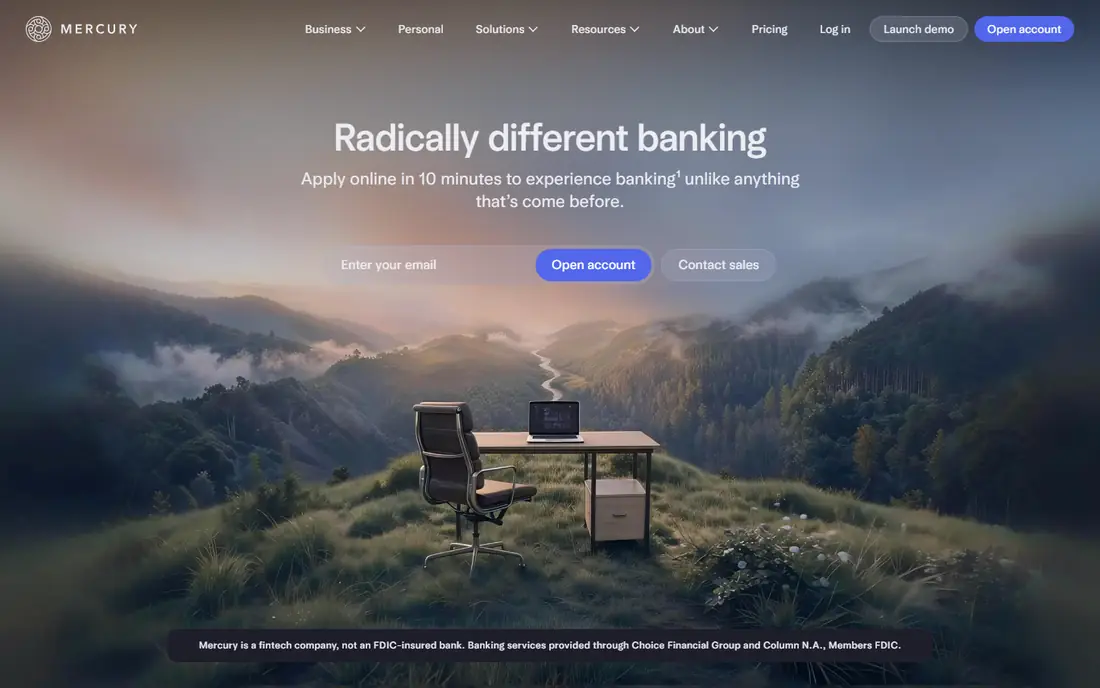
Mercury is the default digital account for many venture-backed startups, from pre-seed to Series B. It offers fee-free business accounts in US dollars, free same-day ACH and domestic wires on its base plans in recent comparisons, multiple checking and savings accounts, and integrations with accounting tools such as QuickBooks and Xero. Deposit coverage through partner banks is reported at up to $5 million via a sweep network, which matters once a round lands.
The limits are physical. Mercury has no branches and no cash deposit support, so a company that handles cash needs a second bank. Advanced accounting and expense features also sit on paid Plus and Pro tiers. For a digital-first startup, Mercury remains a strong primary account, paired with a treasury plan for large balances.
- Free base accounts
- Extended deposit coverage via partner banks
- Strong API and integrations
- No branches or cash deposits
- Some features sit on paid tiers
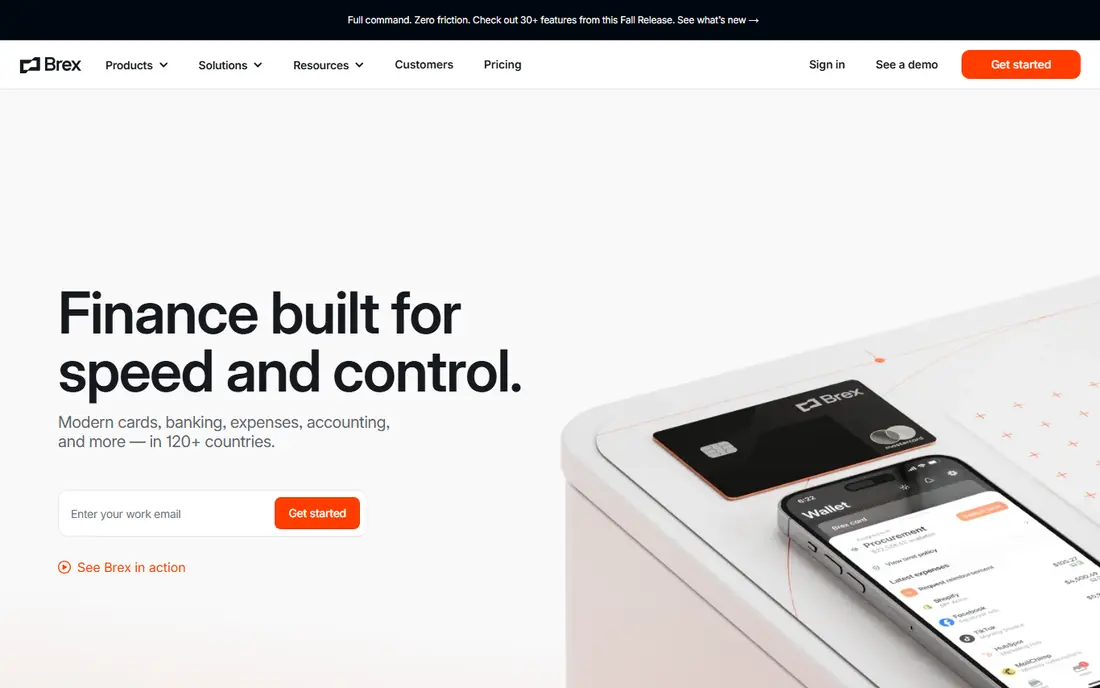
Brex suits a funded startup that needs tight control over team spending as it scales. Corporate cards, expense management, bill pay and travel tools sit alongside business accounts, and Brex Vault is reported to offer expanded deposit coverage. Multi-entity and international tools help companies that grow beyond a single US entity.
Brex is less suited to an early bootstrapped company, because eligibility and product design favour venture-backed teams with strong funding and balances. There are also no branches for cash deposits. For a funded team that wants cards and finance controls in one place, Brex is a strong pick, and it now sits within Capital One following its acquisition.
- Corporate cards and spend controls
- Treasury and Vault options
- Multi-entity support
- Eligibility favours funded companies
- No branches
- Some features need higher tiers
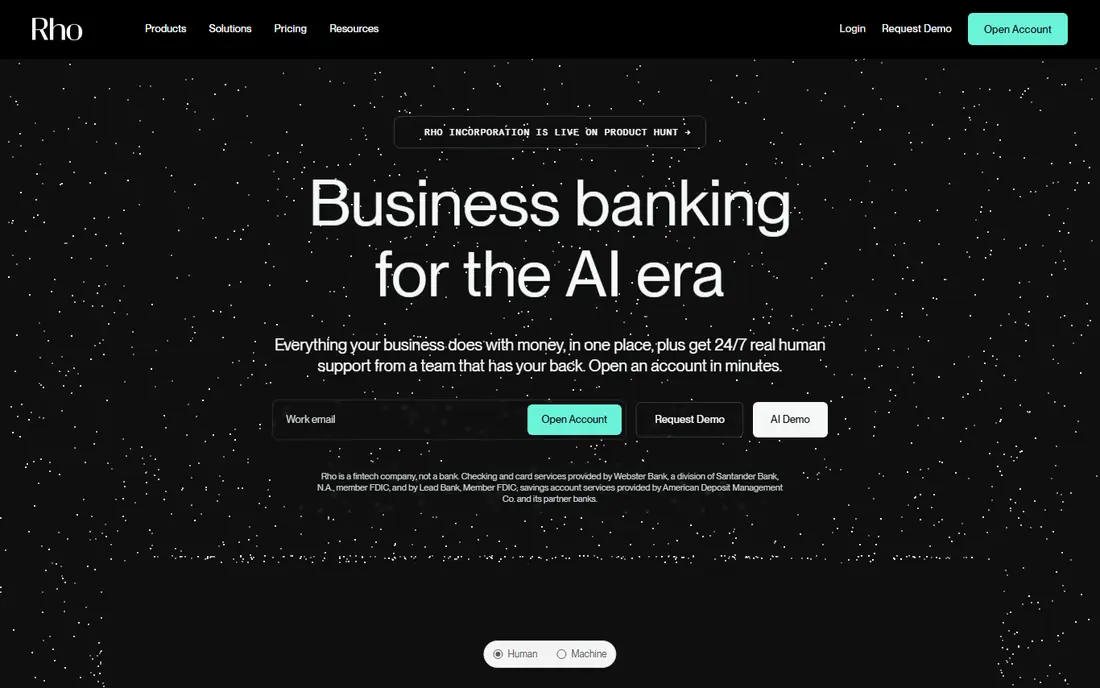
Rho is built for finance teams that want banking, corporate cards, bill pay, accounts payable and expense controls without per-user fees. The core platform is reported at $0 per month, with free same-day ACH and domestic wires, which makes it attractive once finance operations get complex. Treasury and cash management options help teams handle post-raise balances more deliberately.
Rho serves US-incorporated companies, so a non-US company should check eligibility first. It also has no branch network for cash deposits. For a venture-backed US startup with a growing finance team, Rho offers a broad stack at a low base cost.
- No monthly or per-user fees on core platform
- Cards and AP automation
- Treasury options
- Serves US-incorporated companies
- No branches
- Formation help is separate
First Citizens Innovation Banking is the successor brand to Silicon Valley Bank's technology and healthcare banking business, following First Citizens' acquisition of Silicon Valley Bank assets in 2023. It serves technology, life sciences and healthcare companies and investors in the innovation economy, with commercial banking, sector expertise and venture debt options. The launch of the First Citizens Innovation Banking brand in October 2026 formalised that successor role.
This is a relationship-led service, not a self-serve fintech account, so pricing, credit and onboarding are bespoke and selective. Companies that want a dedicated banker, venture debt and sector connections may value that depth. Early-stage teams may still prefer a digital primary account and add First Citizens later, when scale and credit needs justify it.
- Specialist innovation banking team
- Venture debt options
- Large bank resources
- Relationship-led and selective
- Pricing and terms are bespoke
First Citizens Fund Banking
Great for: Venture capital and private equity funds
First Citizens Fund Banking, launched alongside Innovation Banking in October 2026, serves private equity and venture capital clients directly. That focus matters because fund banking differs from startup banking: capital calls, distributions, investor reporting and fund credit facilities need specialist handling. A general business account rarely covers those workflows well.
Fund Banking is not a startup operating account, so a venture-backed company should not pick it as a general primary account. For a venture capital firm itself, however, a dedicated fund banking team can simplify operations across funds and portfolio reporting. Terms are bespoke, so firms should compare service, credit and reporting depth, not just fees.
- Fund-specific banking
- Capital call and investor services
- Venture ecosystem links
- Built for funds, not general startups
- Terms are bespoke
HSBC Innovation Banking
Great for: International venture-backed companies
HSBC Innovation Banking grew from HSBC's acquisition of Silicon Valley Bank UK in 2023, and it serves venture-backed technology and life sciences companies, with a strong UK and European presence. Its international network helps companies that raise, hire or sell across borders, and venture and growth lending options suit later-stage companies. HSBC also built a US innovation practice from former Silicon Valley Bank bankers, though coverage varies by region.
HSBC Innovation Banking is relationship-led, so pricing and eligibility are bespoke and onboarding takes time. A US-only early-stage startup may find a digital account simpler, while a UK or European venture-backed company with cross-border needs may find HSBC a natural fit. Confirm which entity and services apply in your country before you apply.
- UK innovation banking heritage
- International network
- Venture and growth lending
- Geographic focus is uneven
- Onboarding is relationship-led
J.P. Morgan's Innovation Economy banking serves fast-growth technology and healthcare companies, with dedicated bankers, venture lending and commercial banking services. Its scale suits companies that need treasury, payments, foreign exchange and credit alongside operating accounts, and its innovation team has grown steadily since 2021, including a UK expansion in 2023.
J.P. Morgan is most convincing at larger scale, where a dedicated relationship and broad services add real value. A very early startup may find onboarding slower and service less tailored than a startup-native platform. For a later-stage venture-backed company, J.P. Morgan offers a credible large-bank alternative with innovation expertise.
- Large bank scale
- Innovation banking team
- Broad commercial services
- Best for larger companies
- Small startups may get less attention
Grasshopper Bank is a digital bank focused on startups and venture-backed companies, with interest-bearing checking and savings and a digital-first service model. It suits a startup that wants its operating balance to earn interest while keeping banking simple, and it has built a presence in the venture ecosystem through partnerships and startup-focused products.
Grasshopper has no branch network, and its product range is narrower than a large commercial bank or a full finance platform such as Rho or Brex. Teams that need complex treasury, fund banking or venture debt should pair it with a specialist provider. For a startup that wants simple, interest-bearing accounts, Grasshopper is worth a look.
- Interest-bearing startup accounts
- Digital-first service
- Venture ecosystem focus
- No branch network
- Product depth is narrower than large banks
How we picked these
We compared official provider pages and public comparisons for operating accounts, fund banking, treasury, cards, deposit coverage and venture ecosystem fit. We favoured services that are live in October 2026 and that serve venture capital firms or venture-backed companies specifically, rather than general small business accounts alone. Where fees and coverage are bespoke, we wrote See website and described the service type instead of inventing a price.
How to choose venture capital banking
Start by separating fund banking from startup banking. A venture capital firm needs fund accounts, capital calls and investor services, while a portfolio company needs operating accounts, payroll, cards and treasury. Choosing one provider for both roles only works if that provider truly covers both, which few do well.
Protect a large raise
After a raise, do not leave the full amount in a single checking account without checking deposit coverage. Compare sweep networks, treasury products and money market options, and ask how coverage is calculated and what happens above the limit. Many startups use a primary operating account, a treasury account and a secondary bank, which spreads risk and keeps operating cash accessible.
Match the stack to your stage
An early-stage startup usually needs a simple digital account, cards and accounting links. A growth-stage company needs spend controls, bill pay, multi-entity support and treasury. A fund needs specialist fund banking and reporting. Buying a large-bank relationship too early can slow you down, while staying on a simple account too long can leave treasury and controls behind.
Check eligibility and onboarding
Confirm incorporation, investor, revenue and balance requirements before you apply, because venture banking eligibility varies widely. Ask how long onboarding takes, what documents are needed and who your contact will be after opening. A fast online account is useful, but a fund or a large raise may still need a named banker and a clear escalation path.
Frequently asked questions
What are the best venture capital banking services?
For venture-backed startups, Mercury, Brex and Rho are strong digital starting points. For specialist venture and fund banking, First Citizens Innovation Banking, First Citizens Fund Banking and HSBC Innovation Banking are strong options. The best choice depends on whether you are a fund, a startup, and how international your business is.
What is the best banking service for a venture-backed startup?
Mercury is a strong default for a digital-first venture-backed startup, while Brex suits funded teams that need spend control and Rho suits finance teams that need AP and treasury tools. Compare deposit coverage, card controls and treasury options at your raise size, and consider a secondary bank for large balances.
What is fund banking for venture capital firms?
Fund banking covers accounts and services for the fund itself, including capital calls, distributions, investor reporting and fund credit facilities. First Citizens Fund Banking is an example of a dedicated fund banking service. It differs from startup banking, which covers a portfolio company's operating accounts and payroll.
How does deposit coverage work after a funding round?
Deposit coverage depends on the bank, the account type and any sweep network that spreads funds across partner banks. Mercury reports up to $5 million through partner banks, while Brex reports expanded coverage through Vault, but terms and limits change. Read the provider's current coverage terms and consider treasury products for large balances.
Do venture-backed startups need a traditional bank?
Not always, but many add one later for venture debt, credit, cash deposits or a dedicated relationship. A digital account often works well early, while a specialist or large bank adds value at growth stage. This is general information only, not financial advice, and the right mix depends on your stage, cash and risk tolerance.
Can a startup use more than one bank?
Yes, and many do. A common setup is a digital primary account for operations, a treasury account for reserve cash and a second bank for redundancy or specific services such as venture debt. Keep the setup simple enough for your finance team to reconcile, and document which account pays payroll, vendors and taxes.
Sources
See where you really rank - block by block
ProMapRanker scans Google Maps across a grid of your service area. Simple monthly plans from $19, white-label on every plan.
Start freeKeep reading
 who has best internet service
Who Has the Best Internet Service in 2026
Who has best internet service for US homes? We compare fiber, cable, fixed wireless and satellite providers on speed, price, availability and terms today.
Read → which survey tool has the best analytics
Which Survey Tool Has the Best Analytics in 2026
Find which survey tool has the best analytics in 2026, comparing Qualtrics, SurveyMonkey, Typeform, Alchemer, and more on reports, text, and stats today.
Read → which streaming service has the best movies
Which Streaming Service Has the Best Movies in 2026
Answering which streaming service has the best movies, with Netflix, Max, Criterion and more compared on libraries, prices and free options in this guide.
Read →