 ProMapRanker
Best Backend as a Service in 2026

Key takeaways
- Firebase suits mobile apps with real-time sync, while Supabase suits teams that want PostgreSQL.
- Appwrite, PocketBase and Back4App give more hosting control, including self-hosting.
- Xano and Backendless suit teams that want visual logic without writing server code.
- Data model and pricing model matter more than feature lists, so test with a real app before committing.
Quick comparison
| Pick | Great for | Pricing starts at | Free tier | |
|---|---|---|---|---|
 Firebase | Mobile apps and real-time sync | Free | Yes | Visit |
 Supabase | PostgreSQL apps | $25 per month | Yes | Visit |
 AWS Amplify | AWS app backends | See website | Free trial | Visit |
 Appwrite | Self-hosted backends | $15 per month | Yes | Visit |
 Back4App | Parse-based backends | $25 per month | Yes | Visit |
 Backendless | Visual backend logic | $15 per month | Yes | Visit |
 PocketBase | Single-file self-hosted backends | Free | Yes | Visit |
 Convex | Reactive web apps | $25 per month | Yes | Visit |
 Xano | No-code backends | $85 per month | Yes | Visit |
 Nhost | PostgreSQL and GraphQL apps | $25 per month | Yes | Visit |
The best backend as a service
We compared official feature pages, pricing pages and public documentation for platforms that provide databases, authentication, storage and server logic as a managed backend.
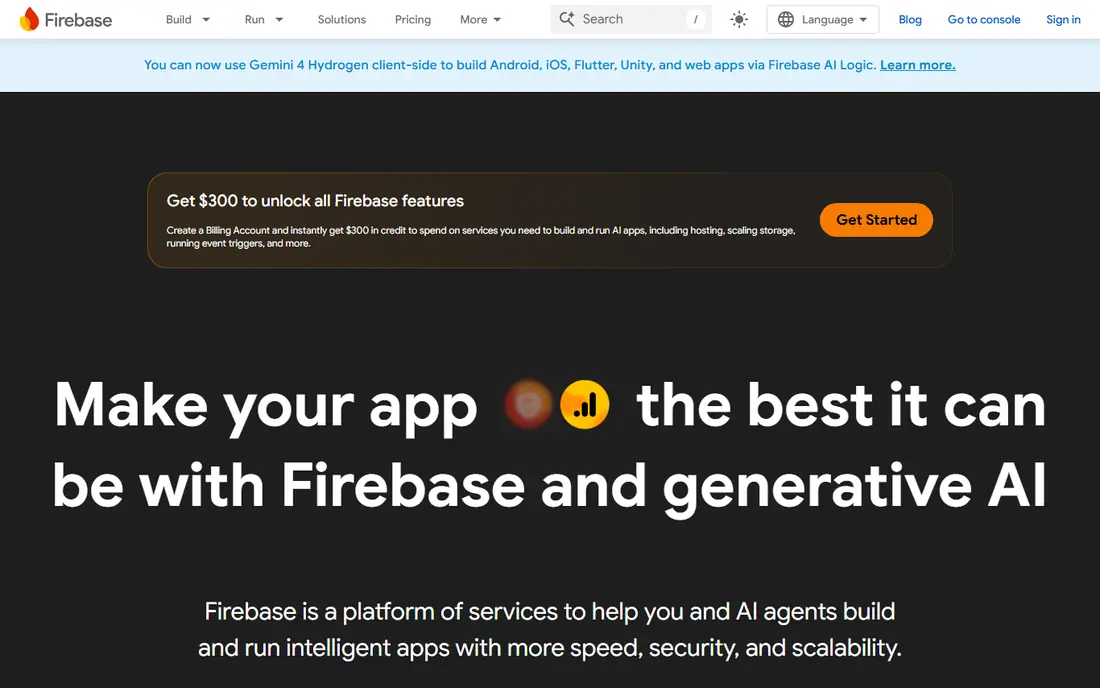
Firebase remains the fastest way to ship a mobile app with real-time sync. Firestore and Realtime Database update clients as data changes, authentication covers email and social sign-in, and Cloud Functions add server logic. Offline support helps mobile apps that lose connectivity, and Google Cloud integration suits teams already on Google infrastructure.
The catch is the data model and pricing. Firestore suits document-shaped data, but complex relational queries are harder than in PostgreSQL, and usage-based Blaze pricing can rise sharply with reads, writes and bandwidth. Plan data access carefully, and set billing alerts from day one.
- Real-time sync and offline support
- Strong mobile SDKs
- Google integration
- Firestore data model limits complex queries
- Costs can rise with usage
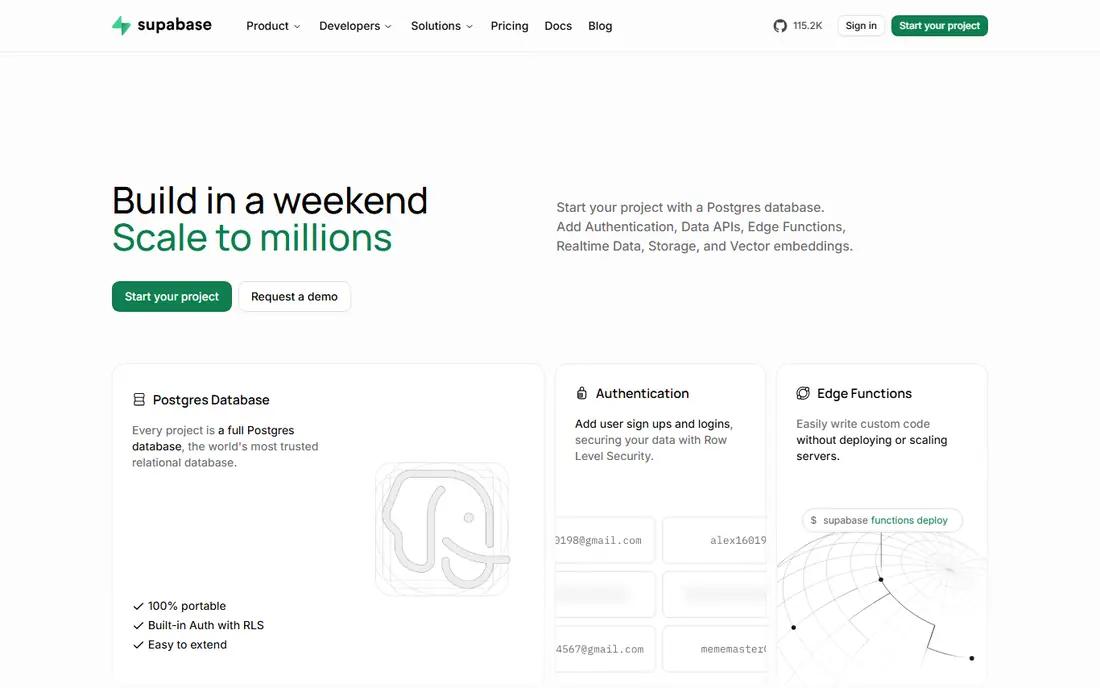
Supabase is the default pick for many web and SaaS teams because it pairs a real PostgreSQL database with instant REST and real-time APIs. Authentication, storage, edge functions and row-level security cover most app needs, and developers keep direct SQL access to their data. That makes later migration and complex reporting far easier than with a document-only backend.
Free projects pause after a week of inactivity in public listings, which can surprise hobby projects. Paid plans start at $25 per month and add more database size, bandwidth and support. For teams that want SQL without managing a server, Supabase is hard to beat.
- Real PostgreSQL database
- Auto-generated APIs
- Row-level security
- Free projects pause after inactivity
- Self-hosting is more complex
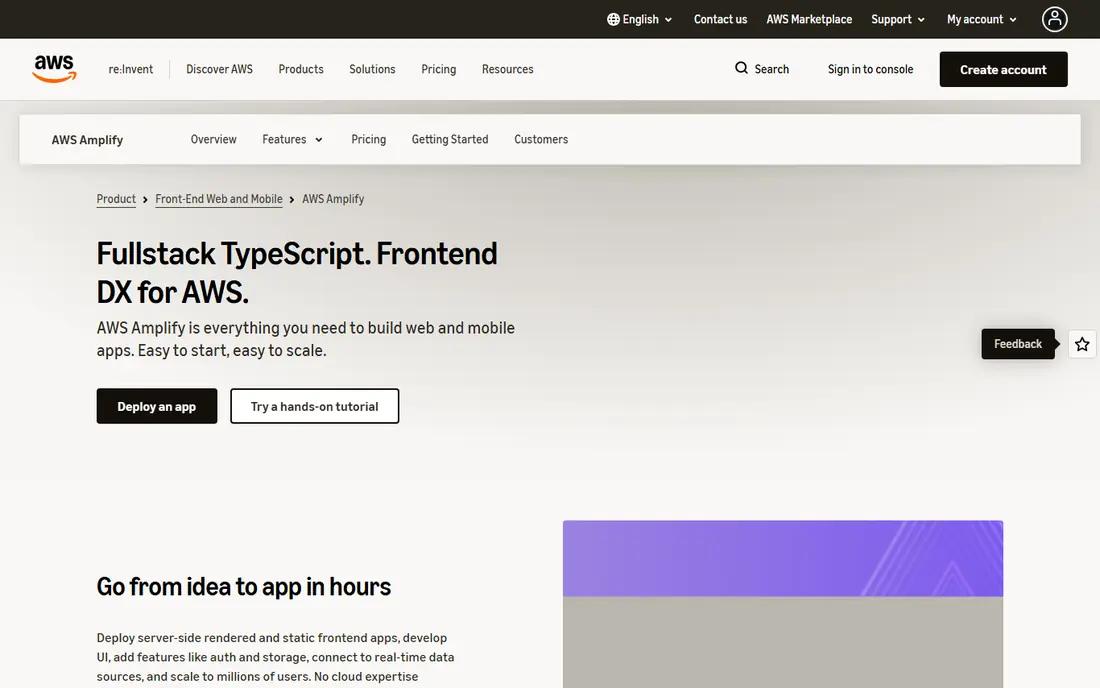
AWS Amplify suits teams already running on AWS that need a backend, hosting and authentication in one workflow. It can generate GraphQL or REST APIs from a data model, connect to DynamoDB or relational databases, and deploy front ends with continuous deployment. Scaling and security controls come from AWS itself.
Pricing is pay-as-you-go, with a free tier period for new accounts, so costs depend on usage across several AWS services. The AWS console and permission model also take time to learn. For AWS-native teams, the integration is worth it, while others may prefer a simpler platform.
- Full AWS backend and hosting
- GraphQL and REST APIs
- Strong scaling
- Pay-as-you-go pricing
- AWS learning curve
Appwrite suits teams that want a backend they can host themselves for privacy or compliance reasons. It provides authentication, databases, storage, functions and messaging, with a console that keeps setup approachable. The open-source core means you can inspect the code and run it on your own servers.
Its database layer is document-style rather than full PostgreSQL, so teams with heavy relational needs should test complex queries early. Cloud pricing starts at $15 per month in some listings and $25 per month in others, so check the current cloud page, since self-hosted costs are separate.
- Self-hosting with Docker
- Auth, databases and functions in one place
- Open source
- Database model is less relational than PostgreSQL
- Cloud limits differ from self-hosted
Back4App hosts Parse Platform, an open-source backend framework, as a managed service. It offers databases, authentication, cloud code, file storage and push notifications, with GraphQL and REST APIs for web and mobile apps. Teams that already know Parse, or that want its class-based data model, can move quickly.
Parse is less widely used than Firebase or Supabase, so community examples are fewer. Pricing starts at $25 per month in recent comparisons, with a free tier for small projects, and costs rise with requests and storage. Check current limits against your expected request volume.
- Parse Platform hosting
- Real-time queries
- GraphQL and REST APIs
- Parse model takes learning
- Pricing tiers need a careful read
Backendless suits teams that want backend logic without writing server code. Its Codeless editor lets builders create workflows, validation and automation visually, while the database, authentication and file services cover standard app needs. That makes it a good fit for no-code and low-code teams building business apps.
Visual logic will not replace custom code for every case, and complex rules can become hard to maintain in a visual editor. Pricing starts at $15 per month in recent listings, with a free tier, but check whether your plan is priced per user or per unit before estimating costs.
- Codeless logic builder
- Visual data and API tools
- User management
- Codeless logic has limits for complex code
- Pricing is per-unit in some listings
PocketBase is a single-file backend built on SQLite, with authentication, file storage, real-time subscriptions and an admin UI. It suits side projects, prototypes and small internal tools where a full managed platform would be overkill. Running it is as simple as launching one binary, and there is no monthly platform fee beyond your own hosting.
SQLite is not the right database for very large, high-write production apps, and you own hosting, backups and updates. For small apps, personal projects and teams that want full control, PocketBase is one of the simplest backends available.
- Single binary to run
- SQLite database
- Admin UI included
- SQLite limits very large-scale use
- You manage hosting and backups
Convex is built for reactive web apps where the interface updates as soon as data changes. Developers write TypeScript functions for queries and mutations, and the client stays in sync without manual polling or websocket code. That makes it a strong fit for collaborative tools, dashboards and real-time feeds.
Its database model is custom rather than PostgreSQL, so teams that need direct SQL access or existing Postgres tools should weigh that. Paid plans start at $25 per month in recent listings, with a free tier for development. For TypeScript teams building live apps, the developer experience is a real draw.
- Reactive queries that update live
- TypeScript-first
- Server functions built in
- Custom database model
- Smaller ecosystem than Firebase or Supabase
Xano suits no-code builders who need a serious backend behind a front-end tool. It provides a PostgreSQL database, a visual API builder and a function stack for logic, so a non-technical team can build a backend that would normally need server code. That makes it popular with teams using no-code front ends.
The entry price is high, starting at $85 per month in recent listings, with a free tier for learning. The function stack also takes time to learn, despite being visual. For a no-code product with real backend needs, the cost can still be lower than hiring backend developers.
- Visual API builder
- PostgreSQL under the hood
- No-code logic and functions
- High entry price
- Learning curve for the function stack
Nhost combines PostgreSQL, Hasura for instant GraphQL APIs, authentication, storage and serverless functions. It suits teams that prefer GraphQL over REST and want a managed Postgres backend without building the stack themselves. The open-source core gives an exit route for teams that later self-host.
The community is smaller than Supabase, so examples and third-party guides are fewer. Paid plans start at $25 per month in recent listings, with a free tier for development. For GraphQL-first teams, Nhost is a focused and credible alternative.
- PostgreSQL with Hasura GraphQL
- Authentication and storage
- Open source
- Smaller community than Supabase
- GraphQL-first approach suits some teams less
How we picked these
We compared official feature pages, pricing pages and public documentation, and favoured platforms that are still offered in October 2026 and that provide a database, authentication and APIs as a managed backend. We excluded pure hosting services and pure database hosts, since this article covers full backend platforms.
What to check before you choose
Choose the data model first. PostgreSQL suits relational data, reporting and complex queries, while document databases suit flexible, mobile-first data. Changing data models later is painful, so prototype your hardest query and your auth rules before committing.
Test auth, rules and real-time behaviour
Build a small app with sign-in, role rules, a list view and a real-time update, and test it on a slow connection. That exercise reveals more than a feature table, especially for security rules, which are easy to get wrong. Check how the platform handles offline data, conflicts and permission errors.
Model pricing at scale
Free tiers are generous for prototypes, but reads, writes, bandwidth and function calls can multiply in production. Price your app at ten times current usage, and check what happens when you exceed a tier. A flat monthly plan is easier to budget than pure usage pricing for a growing app.
Keep an exit route
Prefer platforms that let you export data in a standard format and that use open databases such as PostgreSQL where possible. Document any platform-specific functions or rules you rely on, so a move later does not require rebuilding the whole backend.
Frequently asked questions
What is backend as a service?
Backend as a service provides a database, authentication, storage, APIs and server logic as a managed platform, so front-end and mobile developers do not need to run their own servers. It is often shortened to BaaS, and the related term mBaaS means mobile backend as a service.
What is the best mBaaS software?
Firebase suits mobile apps with real-time sync, Supabase suits PostgreSQL-based mobile and web apps, and Appwrite suits teams that want self-hosting. The best mBaaS software depends on your data model, platform and hosting needs.
Is Firebase still a good backend in 2026?
Yes, for mobile apps with real-time and offline needs. Supabase is often better for relational data and reporting, while Firebase remains strong for mobile sync, push and Google integration.
Can I self-host a backend as a service?
Yes. Appwrite and PocketBase are built for self-hosting, Supabase can be self-hosted with more setup, and Parse-based Back4App has an open-source core. Self-hosting gives control but adds maintenance, backups and security work.
How much does backend as a service cost?
Many platforms offer a free tier, with paid plans starting around $15 to $25 per month for small apps. Usage-based platforms such as Firebase and AWS Amplify have no fixed monthly price, so costs depend on reads, writes, bandwidth and function use.
Sources
See where you really rank - block by block
ProMapRanker scans Google Maps across a grid of your service area. Simple monthly plans from $19, white-label on every plan.
Start freeKeep reading
 who has best internet service
Who Has the Best Internet Service in 2026
Who has best internet service for US homes? We compare fiber, cable, fixed wireless and satellite providers on speed, price, availability and terms today.
Read → which survey tool has the best analytics
Which Survey Tool Has the Best Analytics in 2026
Find which survey tool has the best analytics in 2026, comparing Qualtrics, SurveyMonkey, Typeform, Alchemer, and more on reports, text, and stats today.
Read → which streaming service has the best movies
Which Streaming Service Has the Best Movies in 2026
Answering which streaming service has the best movies, with Netflix, Max, Criterion and more compared on libraries, prices and free options in this guide.
Read →