 ProMapRanker
Best Baby Food Delivery Service in 2026


Babies through toddlers in one plan · Pricing starts at: See website
Key takeaways
- Little Spoon covers the widest age range, from first purees to toddler plates, in one subscription.
- Once Upon a Farm and Yumi suit parents who want cold-pressed or staged purees with clear ingredient lists.
- Nurture Life is the stronger pick once your child is ready for complete toddler meals rather than purees alone.
- Prices vary a lot by meal type, so compare the cost per meal for the stage your child is in, not just the box total.
- Check ingredients and talk with your paediatrician about allergens, iron, and portion sizes before starting a new food.
Quick comparison
| Pick | Great for | Pricing starts at | Free tier | |
|---|---|---|---|---|
| Little Spoon | Babies through toddlers in one plan | See website | No | Visit |
 Yumi | Parents who want staged purees | See website | No | Visit |
 Once Upon a Farm | Cold-pressed pouches and snacks | See website | No | Visit |
 Nurture Life | Complete toddler and kids meals | See website | No | Visit |
 Cerebelly | Nutrient focused early feeding | See website | No | Visit |
 Serenity Kids | Savoury, protein rich pouches | See website | No | Visit |
 Happy Baby Organics | Widely available organic basics | See website | No | Visit |
 Sprout Organics | Simple organic pouches and snacks | See website | No | Visit |
 Mission MightyMe | Early peanut and tree nut introduction | See website | No | Visit |
The best baby food delivery services
We compared official menus, pricing pages, allergen filters, and delivery options. These nine services all sell food made for babies or toddlers in the United States, and each one fits a different stage or feeding style.
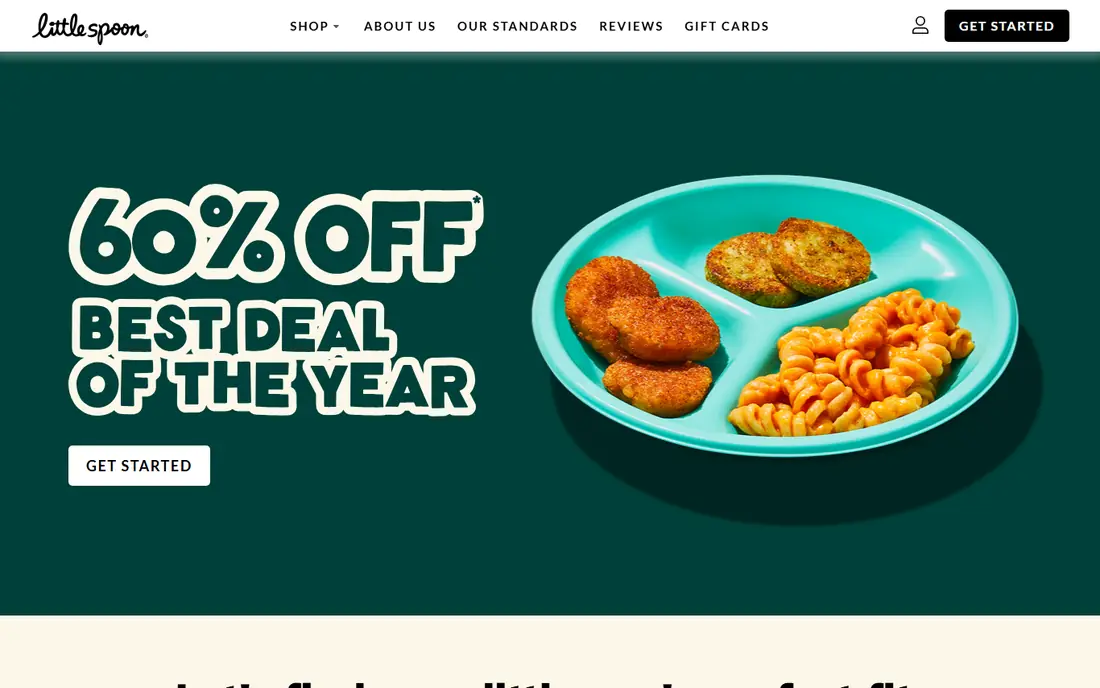
Little Spoon is our pick for most families because it grows with your child. Babyblends cover early purees, Biteables add finger foods, and Plates move on to toddler meals. That range means you do not need to switch services every few months as feeding skills change.
The ordering side is practical too. You can filter out common allergens, skip weeks, and freeze meals that will not be eaten in time. The catch is cost. Fresh, organic-style meals cost more than shelf-stable jars, and delivery fees add up on smaller orders. Check the per-meal price for your exact box before you commit.
- Wide age range
- Allergen filtering
- Fresh Babyblends, plates, and smoothies
- Shipping adds to the cost
- Menu varies by location

Yumi takes a structured path through weaning. Its stages move from single-ingredient purees to more complex blends, which helps first-time parents who are unsure what to offer next. The menu is broad, and the blends read like real food rather than a single sweet fruit repeated in every pouch.
Weekly delivery keeps food fresh, but it also means more boxes to manage. If your baby eats slowly or you travel often, you may need to pause or freeze more often. Yumi is best when you want guidance built into the plan, not just a box of pouches.
- Clear stage progression
- Many puree options
- Weekly delivery
- Less suited to older toddlers
- Weekly boxes may feel frequent
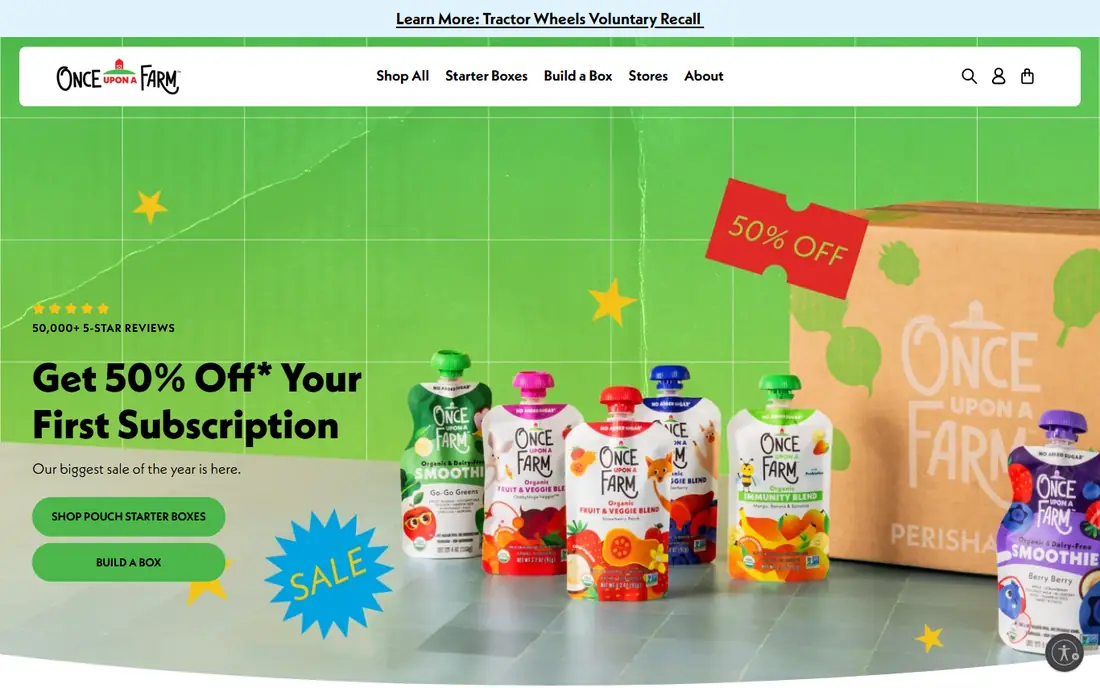
Once Upon a Farm is known for cold-pressed fruit and vegetable blends that are kept refrigerated rather than shelf-stable. That approach suits parents who want fresh-tasting pouches with short, readable ingredient lists. The brand also sells snacks and meals for older toddlers, so it is not only a puree service.
The trade-off is format. If your child has moved past pouches, you will get less value here than from a full meal service. Use it as a main puree source early on, then as a snack and pouch add-on later.
- Cold-pressed pouches
- Organic ingredients
- Wide retail and subscription availability
- More pouch focused than full meals
- Subscription savings vary by plan
Nurture Life is built for the stage after purees. Its meals are portioned for toddlers and older children, with proteins, vegetables, and grains in one dish. Parents can mix meal types in one order, which helps when siblings or children at different stages share a box.
That completeness costs more per serving than a simple pouch. It is also not the first choice for a baby just starting solids. Pick Nurture Life when you want dinner handled, not just a snack or a puree top-up.
- Balanced complete meals
- Finger foods and smoothies
- Mix and match ordering
- Higher cost per meal
- Less focused on early purees
Cerebelly frames its pouches around specific nutrients linked to early brain development, such as iron, DHA, and choline where the product includes them. Its quiz asks about age and stage, then suggests pouches that fit that window. That can reduce guesswork for parents who want a clear reason behind each blend.
The range is narrower than Little Spoon or Yumi. You get pouches and bars, not full toddler plates. It works well as a focused puree service, and pairs well with home-cooked meals once your child eats family food.
- Brain development nutrient focus
- Organic pouches
- Quiz based recommendations
- Narrower meal range
- Pouches only for most products
Serenity Kids stands out because many of its pouches are savoury rather than sweet. Blends built around grass-fed meat, poultry, or vegetables with healthy fats give parents an option beyond fruit-heavy purees. That focus suits families who want to build a taste for savoury food early.
Some babies will still prefer sweet blends at first, so expect some trial and error. Serenity Kids is also pouch led, so it will not replace full meals for toddlers. It is a strong add-on, and a good main pouch brand for families who value protein and fat content.
- Meat and vegetable blends
- Low sugar focus
- Ethically sourced ingredients
- Savoury flavours may not suit every baby
- Smaller meal range
Happy Baby Organics, sold under the Happy Family Organics name, covers pouches, cereals, snacks, and toddler foods with clear stage labels. Its wide retail presence is a real benefit. You can top up in a store between deliveries instead of waiting for a box.
The downside is that delivery is not the core of the brand in the same way it is for Little Spoon or Yumi. Treat it as a reliable staple brand with delivery options, rather than a fully managed meal plan. It suits families who mix subscription boxes with store shopping.
- Broad product range
- Easy to find in stores
- Clear stage labelling
- Subscription is less central
- Some products are retail only
Sprout Organics keeps its pouches simple, with fruit, vegetable, and grain blends that are easy to read on the label. That simplicity appeals to parents who want fewer ingredients per pouch and no added sweeteners. The brand also sells toddler snacks for the finger-food stage.
It does not offer the same depth of meal planning as Nurture Life, and its delivery range is smaller than the larger subscription brands. Sprout works best as a straightforward pouch and snack source, especially for families who already cook most meals at home.
- Simple ingredient lists
- Organic pouches
- Toddler snacks
- Smaller subscription range
- Fewer complete meals
Mission MightyMe is different from the rest of this list. Its puffs are made to introduce peanut and tree nut proteins in measured amounts during the early feeding window. That specific job matters for families following current guidance on early allergen introduction, but it is not a general baby food service.
Talk with your paediatrician before starting any allergen introduction, especially if your child has eczema, a known allergy, or a family history of food allergy. Use Mission MightyMe alongside a main food service, not instead of one. Its value is focus, not variety.
- Clear allergen introduction system
- Paediatric guidance on packaging
- Puff format toddlers can handle
- Narrow purpose
- Not a full meal service
- Check paediatric advice first
How we picked these
We compared official product pages, menus, pricing pages, and allergen information for services selling baby and toddler food in the United States. We kept only services that were still selling in October 2026 and that clearly stated what age or stage each product was for. We favoured services with transparent ingredients, clear storage guidance, and a way to pause or cancel. Prices change often in this category, so where we could not confirm a current price on the vendor site at the time of writing, we wrote See website rather than repeating an older figure.
What to check before you subscribe
Start with your child's stage, not the prettiest box. A baby starting solids needs smooth purees and single ingredients. A toddler needs soft finger foods and complete meals with protein. A service that covers only one stage will feel wrong within a few months, so look at the full range before you sign up.
Ingredients and allergens
Read the full ingredient list, not just the front of the pouch. Look for added sugars, salt, and common allergens, and check whether the service filters for your child's needs. If your child has a diagnosed allergy, confirm how the company handles cross-contact and whether it makes any guarantee. No delivery service replaces medical advice on allergies.
Delivery, storage, and cost
Check how often boxes arrive, how long meals last in the fridge, and whether they can be frozen. Fresh meals with a short fridge life waste money if your child eats slowly. Compare cost per meal, not just the box price, and add shipping. A cheaper box with high shipping can cost more than a larger box with free or flat-rate delivery.
Flexibility
Babies change fast. A good service lets you skip a week, swap flavours, change quantities, and cancel without a phone call or a penalty. Test the account controls before your second box. If pausing is hard, that is a warning sign, even if the first box tastes great.
Frequently asked questions
What is the best baby food delivery service for most families?
Little Spoon is a strong default because it covers purees, finger foods, and toddler plates in one account. If your child is still on purees only, Yumi or Once Upon a Farm may fit better. Pick by stage first, then by price and allergen filters.
How much does baby food delivery cost?
It varies by meal type. Simple pouches cost less per serving than complete toddler meals, and shipping adds to smaller orders. Compare the per-meal price for your exact plan on the vendor site, since plans and discounts change often.
Is delivered baby food as healthy as homemade?
It can be, if the ingredients are simple and the meals are balanced for the child's age. Homemade food gives you full control, while delivery gives you consistency and time back. Check sugar, salt, iron, and protein on the label either way, and ask your paediatrician about gaps.
Can I use these services if my child has allergies?
Many services offer allergen filters, but filtering is not the same as a guarantee against cross-contact. Read the allergy information on each product page and talk with your paediatrician, especially for severe allergies. Mission MightyMe is a separate allergen introduction product, not a general allergy-safe meal service.
Do I need a subscription, or can I buy one box?
Most of these services are built around subscriptions, but you can usually skip, pause, or cancel after the first box. Check the cancellation terms before ordering, and try a smaller box first if you are unsure about flavours or portion sizes.
Sources
See where you really rank - block by block
ProMapRanker scans Google Maps across a grid of your service area. Simple monthly plans from $19, white-label on every plan.
Start freeKeep reading
 top custom software development company
Top Custom Software Development Company in 2026
Looking for a top custom software development company? We compare 9 firms for web, mobile, and enterprise software, covering strengths and fit for 2026.
Read → tableau alternatives
Tableau Alternatives in 2026
Compare the best Tableau alternatives for 2026, from Power BI to Metabase, with prices, hosting options, and picks for small teams and enterprises today.
Read → microsoft teams alternatives
Best Microsoft Teams Alternatives in 2026
Looking for microsoft teams alternatives? We compare 9 chat and video tools for 2026, covering free plans, pricing, meetings, and integrations for teams.
Read →