 ProMapRanker
Best Automated Underwriting Platforms in 2026


Insurers needing a governed underwriting workbench · Pricing starts at: See website
Key takeaways
- Guidewire PolicyCenter and Duck Creek Policy lead for insurers that need a full underwriting workbench tied to policy administration.
- Cytora, ZestyAI, and Federato help insurers enrich submissions and steer risk selection with external data and portfolio rules.
- Zest AI, Taktile, and Scienaptic AI serve lenders, with Zest AI focused on credit models and Taktile on changeable decision strategies.
- Socotra suits teams that want an API-first core with governed referral rules, while hyperexponential suits complex commercial pricing.
Quick comparison
| Pick | Great for | Pricing starts at | Free tier | |
|---|---|---|---|---|
| Guidewire PolicyCenter | Insurers needing a governed underwriting workbench | See website | No | Visit |
 Duck Creek Policy | Insurers wanting a flexible policy suite | See website | No | Visit |
 Cytora | Insurers enriching submissions with external data | See website | No | Visit |
 ZestyAI | Property insurers needing climate risk models | See website | No | Visit |
 Zest AI | Lenders using machine learning credit models | See website | No | Visit |
 Taktile | Lenders that change credit strategies often | See website | No | Visit |
 Federato | Insurers steering portfolio risk selection | See website | No | Visit |
 hyperexponential | Complex commercial pricing and underwriting | See website | No | Visit |
 Socotra | Insurers wanting an API-first core | See website | No | Visit |
The best automated underwriting platforms
We compared official product pages, workflow documentation, and public coverage of insurer and lender use cases for platforms that automate intake, risk assessment, referral, and decisioning. Automated underwriting supports decisions, but lenders and insurers remain responsible for fair lending, insurance regulation, and model governance, so human review and audit trails matter.
Guidewire PolicyCenter
Great for: Insurers needing a governed underwriting workbench
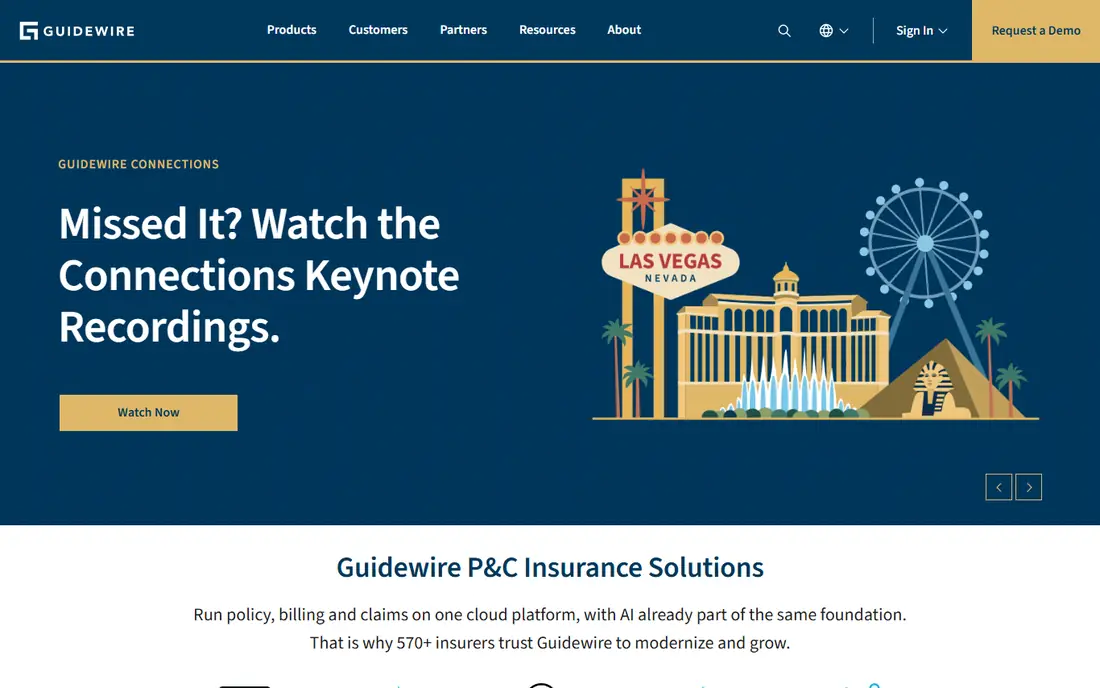
Guidewire PolicyCenter is the workbench many large property and casualty insurers build around. Submissions move through underwriting cases with authority rules, referral queues, and a clear audit trail from intake to issuance. Rating, quoting, and policy administration sit in the same family of products, which reduces handoff gaps between underwriting and servicing.
The catch is scale. PolicyCenter is an enterprise core system with implementation work, and it suits carriers that need that depth. Smaller insurers may prefer a lighter core, but for large commercial and personal lines teams, the governance and ecosystem are hard to match.
- End-to-end policy lifecycle tied to underwriting
- Referral governance with audit trails
- Broad insurer ecosystem
- Enterprise pricing and implementation
- Heavy for a small carrier
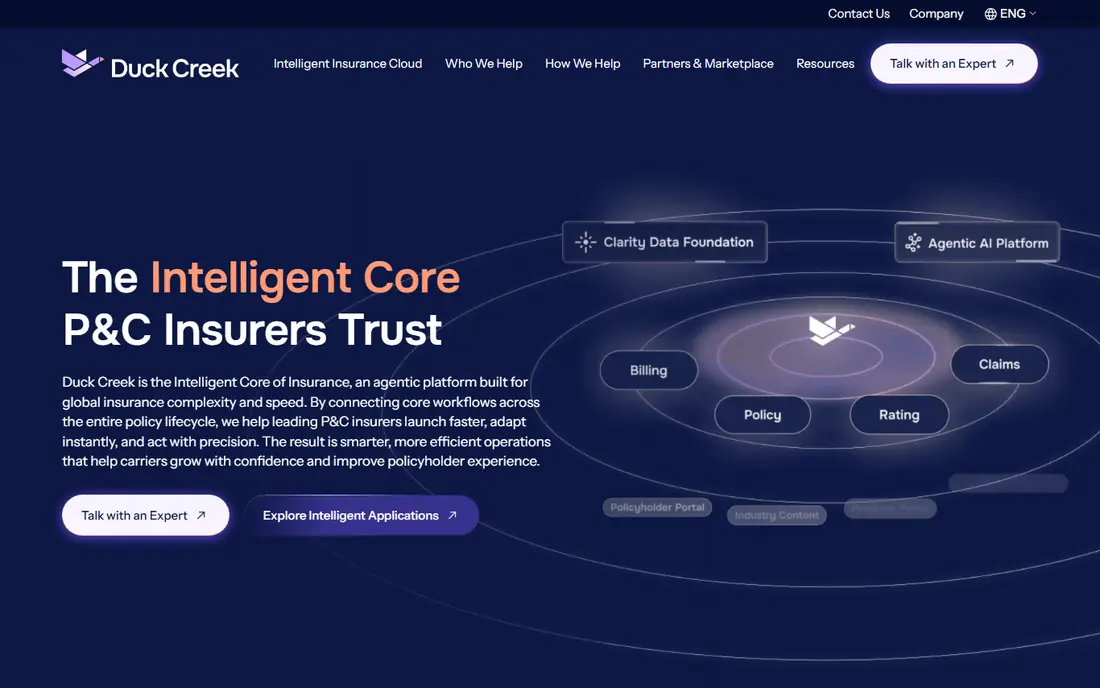
Duck Creek Policy covers underwriting, rating, quoting, and issuance in a configurable suite, with partner integrations for data and risk models. Its underwriting workbench helps teams triage submissions, enrich data, and route referrals, and newer agentic features aim to prepare decision-ready submissions faster. The open platform also makes it easier to add specialist data vendors.
The tradeoff is effort. Configuration and integration need skilled teams, and total cost includes implementation alongside licensing. For insurers modernizing a core system, Duck Creek is a leading shortlist pick.
- Configurable policy and underwriting workflows
- Open partner ecosystem
- Newer agentic underwriting workbench features
- Enterprise pricing and implementation
- Configuration needs skilled teams
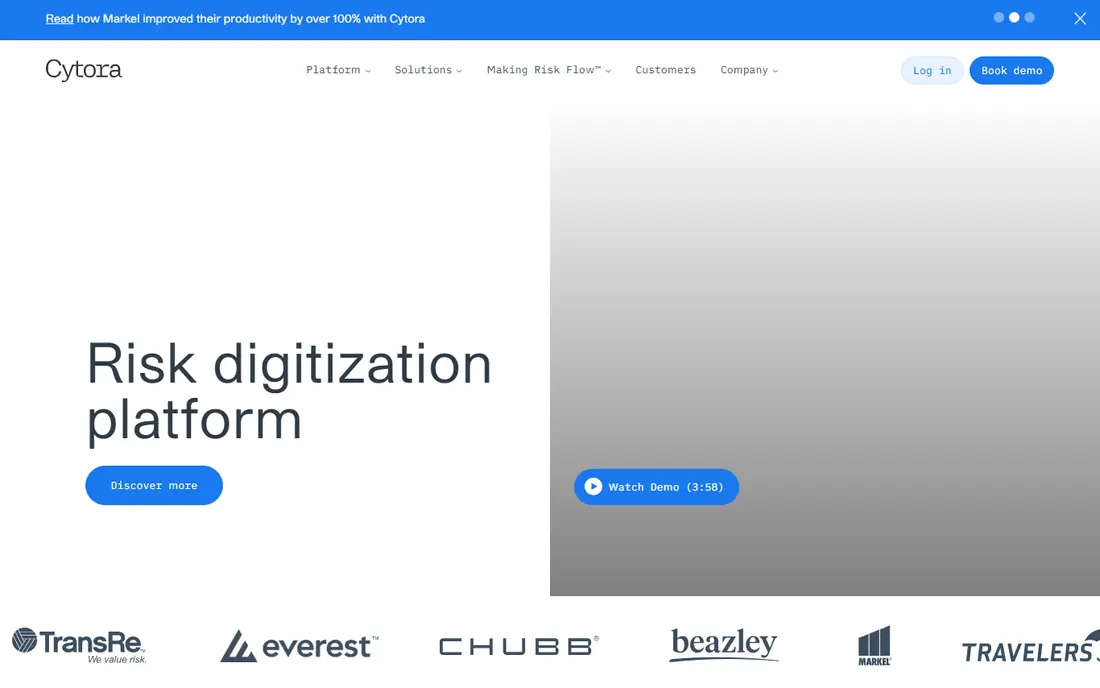
Cytora helps insurers turn a thin submission into a decision-ready risk picture. Its APIs enrich property and business submissions with location, property, and risk data, and its workflow tools support triage, referral, and audit. That design suits teams that want automation without losing the reasoning behind each referral.
The limit is scope. Cytora augments underwriting rather than replacing policy administration, so buyers should plan how it sits beside Guidewire, Duck Creek, or another core. For insurers whose bottleneck is submission quality, Cytora is a strong pick.
- API-first enrichment from many data sources
- Explainable decision traces
- Human-in-the-loop referral handling
- Not a full policy admin system on its own
- Needs a core system beside it
ZestyAI gives property insurers detailed risk views for individual addresses, covering wildfire, hail, wind, storm, water, and roof quality. Underwriters can triage low risks for straight-through handling, flag high risks for review, and price with property detail that postcode averages miss. Integrations with core systems help the data arrive inside existing workflows.
The catch is governance. Climate models need validation, documentation, and fair-use review, especially where they affect pricing and eligibility. For property carriers facing climate exposure, ZestyAI is a specialist tool worth testing alongside a workbench.
- Property-specific models for wildfire, hail, wind, and water risk
- API and platform integrations
- Broad US coverage described on its site
- Property-focused, not a general underwriting workbench
- Model use needs governance
Zest AI, distinct from ZestyAI, builds machine learning credit models for banks, credit unions, and other lenders. Its models rank applicant risk, support policy tuning, and help lenders expand approvals while tracking portfolio performance. Compliance reporting and model documentation support the governance lenders need for credit decisions.
The tradeoff is that Zest AI is a decisioning layer, not a full loan origination system. Lenders still need intake, verification, and servicing around it. For lenders whose bottleneck is credit ranking, Zest AI is a focused and credible pick.
- Client-specific credit risk models
- Policy optimization tools
- Lender-focused compliance and reporting features
- Lending-focused, not an insurance workbench
- Model work needs data and governance
Taktile suits lenders that do not run one fixed policy, but many strategies across products and segments. Its decision engine lets credit teams build rules, test strategies before deployment, compare versions, and monitor performance after launch. That iteration speed matters when bureau thresholds, affordability rules, or verification sources change often.
The catch is ownership. Taktile needs a credit strategy team that can design, test, and govern decisions, and it must connect cleanly to the loan origination system and data providers. For lenders that iterate strategy as a core skill, Taktile is a strong pick.
- Low-code decision engine with testing and backtesting
- Reusable rules and models
- Strategy monitoring after launch
- Needs lending and data skill to run well
- Pricing is quoted
Federato helps insurers move from case-by-case underwriting to portfolio-steered selection. Underwriters see how a submission fits appetite, concentration, and portfolio goals, and triage rules can prioritize or route cases accordingly. That view helps carriers balance growth with risk, rather than judging each case in isolation.
The limit is data maturity. Federato works best when portfolio goals, appetite, and risk data are already defined, and smaller carriers may not need that layer yet. For insurers managing a book across lines and regions, it is a distinctive pick.
- Portfolio-level risk appetite controls
- Underwriting triage tied to portfolio goals
- Workflow and data tools for underwriters
- Insurer-focused
- Needs portfolio data and governance to reach full value
hyperexponential, written as hx, suits commercial insurers pricing risks that do not fit simple rating tables. Its platform connects intake data to underwriting guidelines and pricing models, with workflow steps that record decisions for audit. That structure helps teams handle specialty and complex commercial lines with more consistency.
The tradeoff is fit. Personal lines carriers with standard products will find a general workbench simpler, and hx needs pricing and underwriting expertise to configure. For complex commercial books, it is a leading specialist pick.
- Guideline-driven underwriting workflows
- Flexible pricing models for complex risks
- API-first integration options
- Commercial focus
- Enterprise pricing and implementation
Socotra gives insurers a modern, API-first core for policy, underwriting, and billing, with configuration that avoids heavy code changes for many product updates. Referral rules can be governed and executed through APIs, which suits teams building digital distribution and partner channels. That openness also helps insurers connect data vendors and workflow tools.
The catch is ecosystem size. Guidewire and Duck Creek offer broader partner and talent pools, so Socotra buyers should confirm integration coverage for their lines. For insurers that prize API design and product speed, Socotra is a strong modern alternative.
- API-first policy core
- Governed referral rule execution
- Flexible product configuration
- Enterprise implementation
- Ecosystem smaller than Guidewire or Duck Creek
How we picked these
We compared official product pages, workflow and integration documentation, and public buyer coverage, and we checked each homepage listed here. We favored platforms with a live product in October 2026, a clear underwriting role, and a real insurer or lender customer base. We left out document-only tools with no decision workflow, and tools whose underwriting role we could not confirm.
What to check before you buy
Start with one real workflow, such as a commercial submission or a personal loan application, and run it end to end in a trial. Check intake, enrichment, rules, referral, decision, and audit trail, since a gap in any step becomes manual work later. Confirm how decisions are explained, who can override them, and what record is kept for regulators and auditors.
Model governance and fairness
Ask how models are validated, monitored, and documented, and how adverse action reasons are produced for lending decisions. Check for bias testing, data lineage, and version control on rules and models. A platform that cannot show its reasoning will create compliance risk, even when its accuracy looks strong.
Integration and data
List your core system, bureau and data vendors, document sources, and servicing tools, and confirm native or API coverage for each. Underwriting automation fails most often on data gaps, not on rule logic, so test enrichment and verification on real submissions before signing.
Frequently asked questions
What is the best automated underwriting platform for insurers?
Guidewire PolicyCenter and Duck Creek Policy lead for full workbench and policy needs, while Cytora, ZestyAI, and Federato add enrichment and portfolio steering. The best pick follows whether the bottleneck is workflow, data, or risk selection.
What is the best automated underwriting platform for lenders?
Zest AI suits lenders focused on credit models, while Taktile suits lenders that change strategies often. Both sit beside a loan origination system, so confirm integration before choosing on model features alone.
Can automated underwriting approve loans or policies without a human?
Straight-through processing works for simple, standardized risks, but most commercial insurance and complex lending still uses assisted underwriting with human review. Keep a referral path for edge cases, and record every automated decision for audit.
How long does implementation take?
Timelines vary by scope, from weeks for a data or decisioning layer to many months for a full core replacement. Ask vendors for a phased plan, a pilot scope, and the data work required before full rollout.
Do these platforms handle both insurance and lending?
Most are built for one side, since policy, rating, and credit rules differ. A few pricing and decision tools span both, but buyers should judge fit on their own workflow, regulation, and data, not on a general claim.
What should I check for compliance?
Confirm model documentation, bias testing, adverse action support, audit trails, and data retention controls. Involve compliance and legal early, and keep human review for decisions that affect pricing, eligibility, or credit.
Sources
See where you really rank - block by block
ProMapRanker scans Google Maps across a grid of your service area. Simple monthly plans from $19, white-label on every plan.
Start freeKeep reading
 who has best internet service
Who Has the Best Internet Service in 2026
Who has best internet service for US homes? We compare fiber, cable, fixed wireless and satellite providers on speed, price, availability and terms today.
Read → which survey tool has the best analytics
Which Survey Tool Has the Best Analytics in 2026
Find which survey tool has the best analytics in 2026, comparing Qualtrics, SurveyMonkey, Typeform, Alchemer, and more on reports, text, and stats today.
Read → which streaming service has the best movies
Which Streaming Service Has the Best Movies in 2026
Answering which streaming service has the best movies, with Netflix, Max, Criterion and more compared on libraries, prices and free options in this guide.
Read →